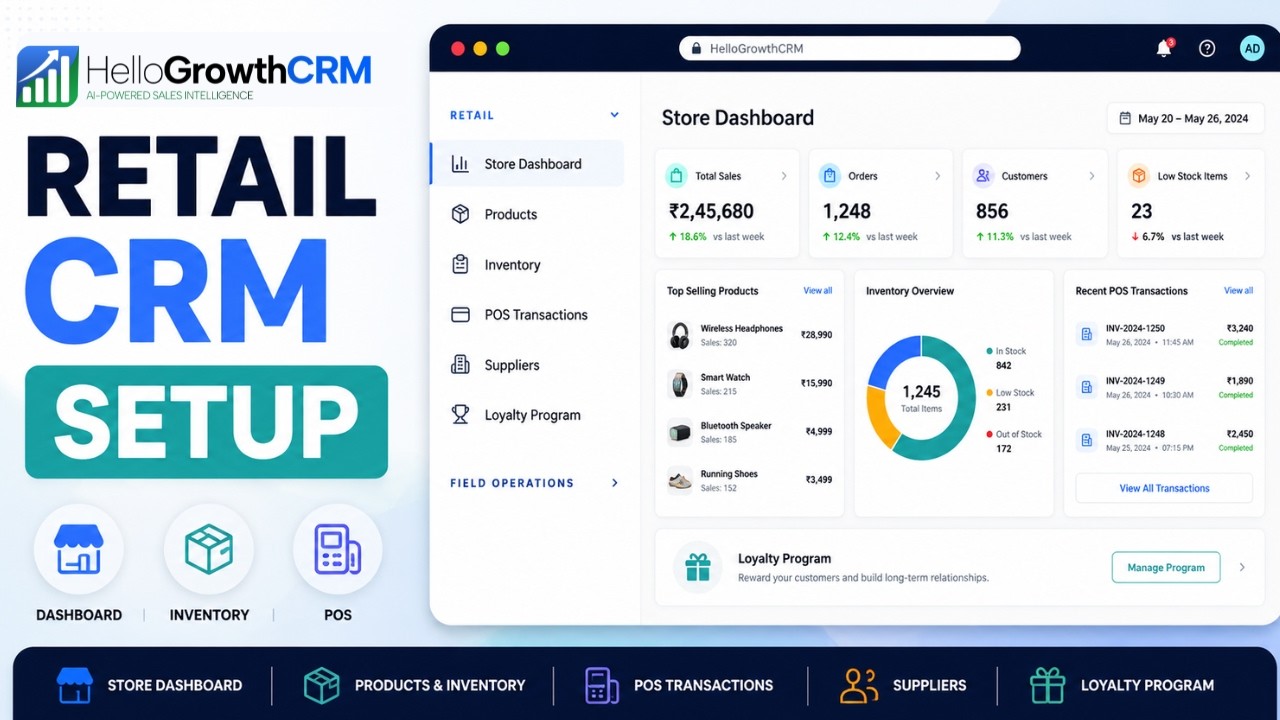
A customer walks into a furniture and home store asking about a dining set that is beyond today's budget. Instead of losing her when she walks out, the counter staff saves her as an enquiry — thirty seconds, name and number, product noted. Sunday: the quotation goes to her WhatsApp with photos of the two sets she shortlisted. Wednesday: no reply, so the follow-up sequence sends a gentle nudge; she answers asking about EMI options, and that conversation is on her record when the store manager picks it up. She buys the following weekend. Now the loop continues: her purchase history shows a dining set but no matching sideboard, so she is tagged for the festival campaign going only to dining-range buyers — forty people, not four thousand. Eleven months later the polish-and-maintenance reminder brings her back in, and she leaves having ordered the sideboard. Meanwhile the store's wholesale side runs its own rhythm: the caterer who orders crockery every quarter hit week fifteen without an order, the flag went up, and a call through the built-in dialer recovered the account before the competitor across the market did.
None of this is a loyalty-card gimmick. It is the basic arithmetic of retail: the store that remembers its customers gets the second sale, and the second sale is where the margin lives.
Independent retailers can compare every plan on the pricing page — WhatsApp and SMS, AI lead scoring, sequences, and the dialer are in each paid tier at $10/user/month billed annually — or see the broader playbook in the CRM for small business guide.