HelloGrowthCRM software
Built for real small-business sales teams
HelloGrowthCRM helps reps qualify faster, follow up on time, and close more deals—with practical automation in one place.
- AI lead scoring and pipeline visibility
- Built-in dialer, WhatsApp, and email automation
- Sales forecasting and RevOps-ready reporting
The best sales automation software in Singapore depends on your business size, sales process, and budget. Key features to look for include multi-channel outreach, automated workflows, lead routing, and AI assistance. This article guides you through evaluating options, what to check step-by-step, common pitfalls, and how HelloGrowthCRM’s automation features can help your sales team.
Why this comes up / what goes wrong
Many small and mid-sized businesses in Singapore run sales manually using WhatsApp, email, and spreadsheets. This fragmented approach causes slow lead follow-up, lost opportunities, and inconsistent customer engagement. Business owners search for the best sales automation software to streamline sales processes, automate repetitive tasks, and improve conversion rates. However, the variety of software options, pricing models, and feature sets can be overwhelming, making it hard to choose the right fit.
Sales teams often struggle with delayed responses and missed leads because manual tracking is inefficient. Without automation, reps spend time on repetitive outreach instead of closing deals. Finding software that fits a Singapore small business means balancing features, ease of use, and local support.
Step-by-step
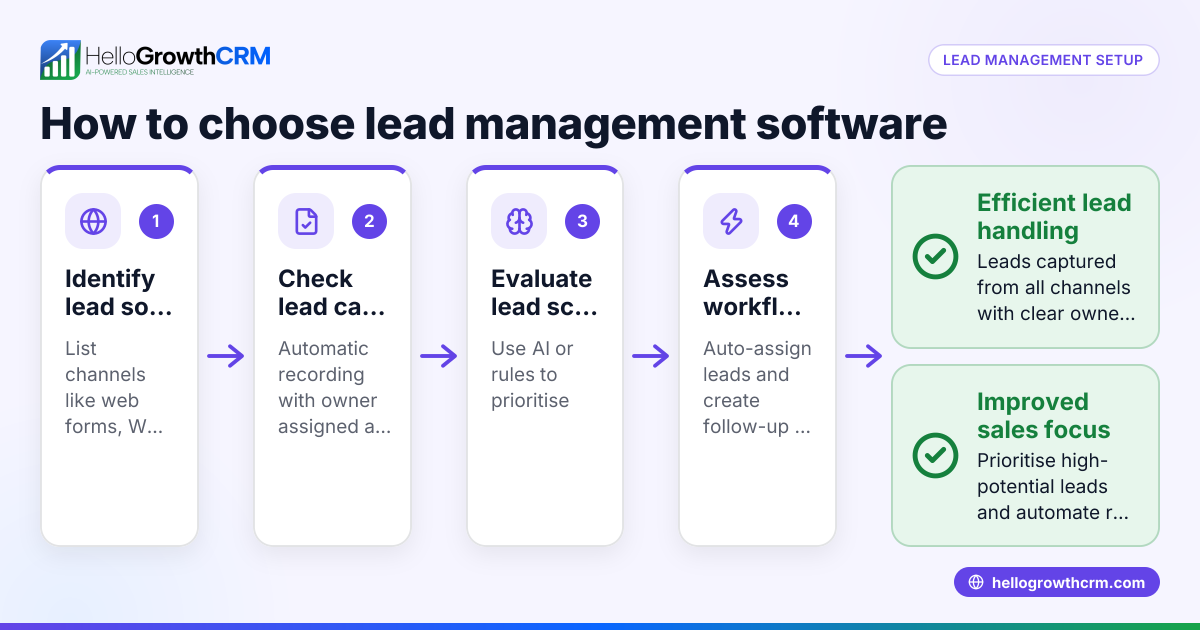
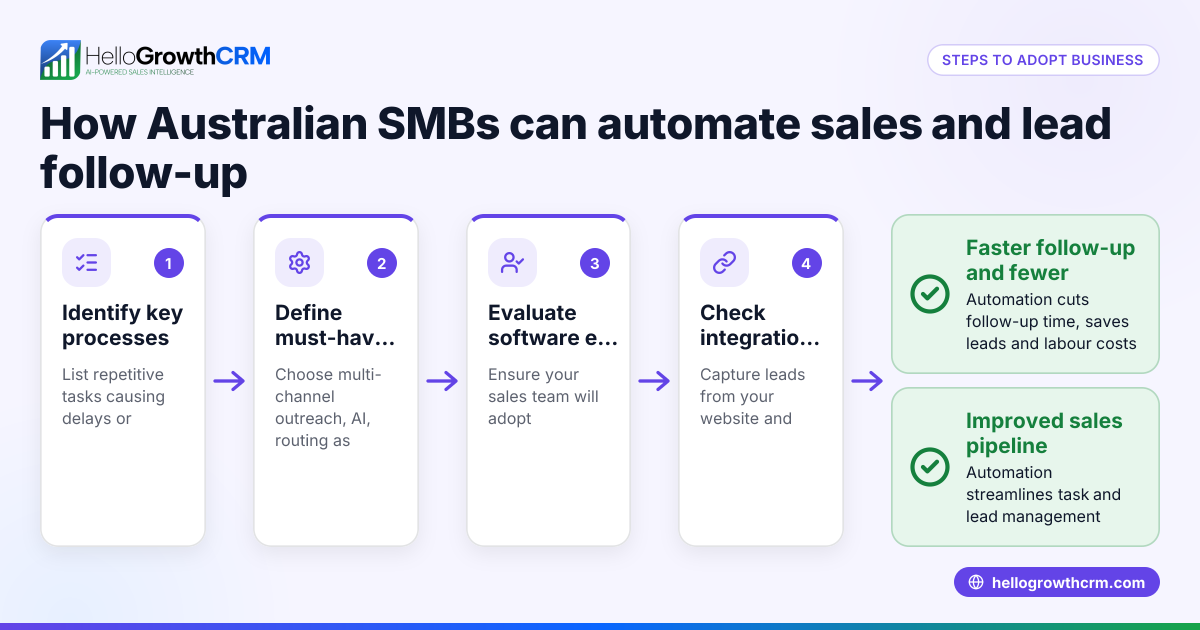
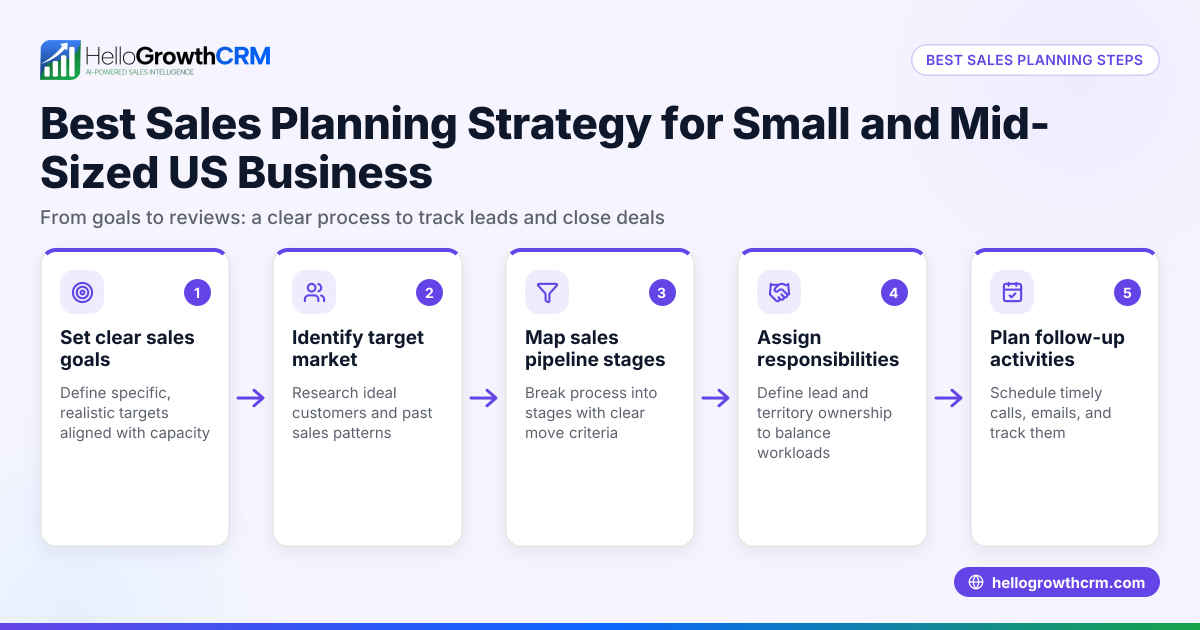
- Identify your sales process needs: Map your current sales stages, communication channels (WhatsApp, email, SMS), and pain points like slow follow-up or lost leads. Understanding your workflow helps select software that matches your process.
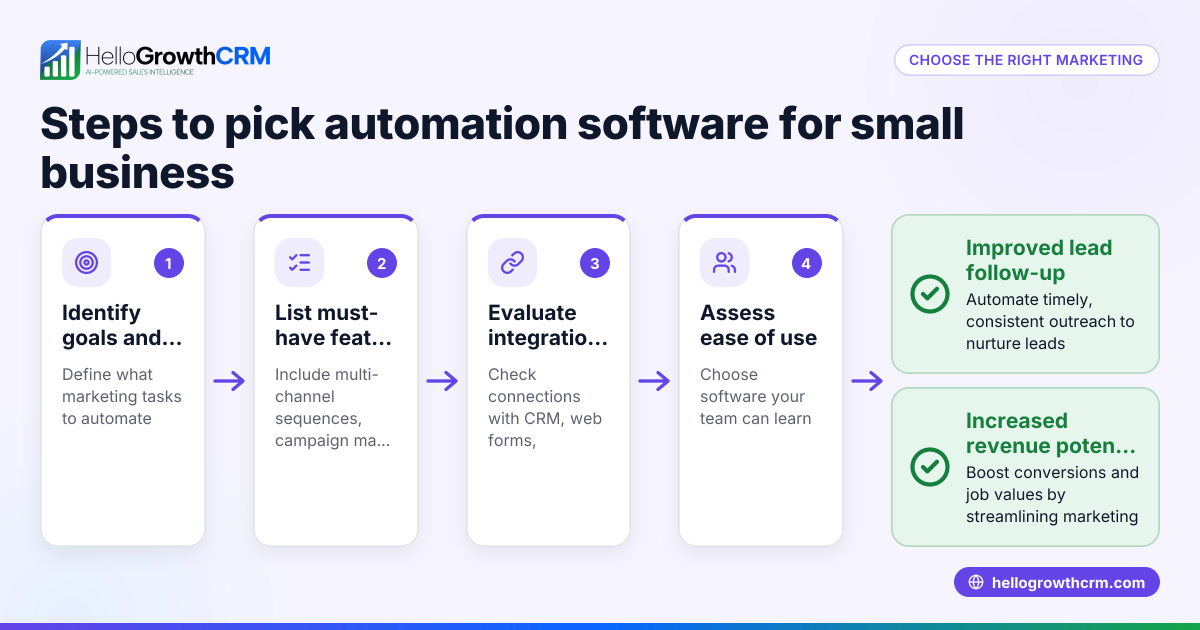
- List essential features: Look for multi-step sequences, automated lead routing, AI assistance, pipeline management, and integration with your existing tools. Prioritise features that solve your biggest bottlenecks.
- Check ease of use and adoption: Choose software with an intuitive interface that your sales team will actually use daily. Poor adoption wastes investment.
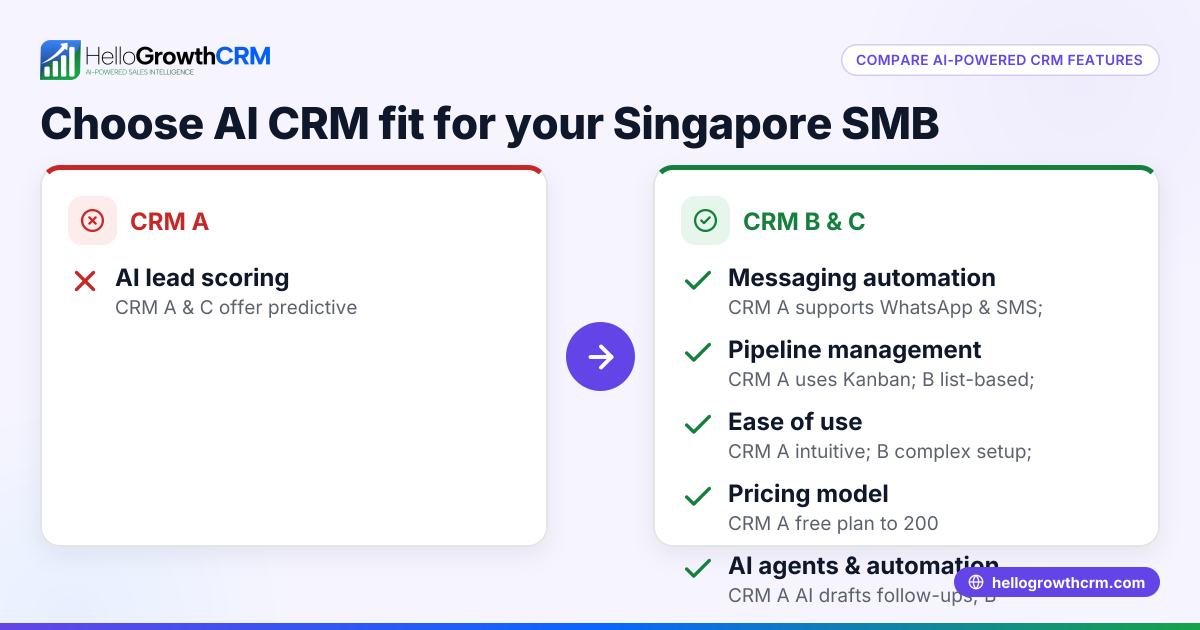
- Evaluate automation capabilities: Confirm if the software supports multi-channel sequences, AI agents to draft follow-ups, and workflows for task creation and lead assignment. Automation should reduce manual work without adding complexity.
- Compare pricing and plans: Understand pricing tiers, feature limitations, and whether the software scales with your business growth. Avoid surprises by checking what features come with each plan.
- Request demos and trials: Test the software with your sales team to see how it fits your workflow. Hands-on experience reveals usability and integration issues.
- Review support and local relevance: Check if the vendor understands Singapore business practices and offers timely support. Local presence can be crucial for fast help and compliance.
For a detailed comparison, see our compare CRMs page.
Example (fictional figures)
A property agency in Novena handles 100 new enquiries monthly. They want to automate follow-ups to avoid losing leads.
- Current manual follow-up rate: 60% leads contacted within 2 days.
- Target: 90% leads contacted automatically within 1 day.
They choose software with a 5-step follow-up sequence over two weeks.
Cost:
Monthly subscription = S$500
Expected increase in closed deals = 10 more per month
Average deal value = S$50,000
Additional revenue = 10 × S$50,000 = S$500,000
Return on investment (ROI) = (Additional revenue - Subscription cost) / Subscription cost
ROI = (S$500,000 - S$500) / S$500 = 999
This shows a strong potential ROI by automating sales follow-up and improving lead engagement.
Common mistakes
- Choosing software with too many unused features: Prevent by listing must-have features first. Avoid paying for complex tools you won’t use.
- Ignoring user adoption: Prevent by involving your sales team in demos and trials. Their buy-in is critical.
- Overlooking local support: Prevent by checking vendor’s Singapore presence and support hours. Quick local help reduces downtime.
- Neglecting integration needs: Prevent by verifying the software connects with your existing tools like WhatsApp and email.
- Not testing automation workflows thoroughly: Prevent by running pilot campaigns before full rollout. This avoids errors and confusion.
- Failing to evaluate pricing tiers carefully: Prevent by understanding which features are included at each price point to avoid surprises.
See more on avoiding pitfalls in our HelloGrowthCRM for Singapore guide.
Doing this in HelloGrowthCRM
HelloGrowthCRM offers sequences and campaigns that automate multi-step outreach over two weeks, stopping immediately when the prospect replies. Its AI agents draft follow-up messages after calls for quick review and sending. Workflows, lead routing, and validation rules automate lead assignment and task creation, such as automatically assigning new enquiries round-robin and creating first-call tasks. Learn more about these features on the AI CRM page.
Frequently asked questions
What is the typical pricing for sales automation software in Singapore? Pricing varies by features and number of users. Some vendors offer tiered plans based on automation capabilities and team size. It’s important to compare what features are included at each price point. See CRM pricing in Singapore for options.
Are there alternatives to sales automation software? Alternatives include manual sales tracking with spreadsheets or using separate tools for email, WhatsApp, and calls. However, these often cause inefficiencies and lost leads. Integrated CRM with automation is usually more effective.
How do I know if sales automation software will improve my sales? Look for features like automated follow-up sequences, AI assistance, and lead routing that reduce manual work and speed up responses. Testing with a trial or pilot can demonstrate impact.
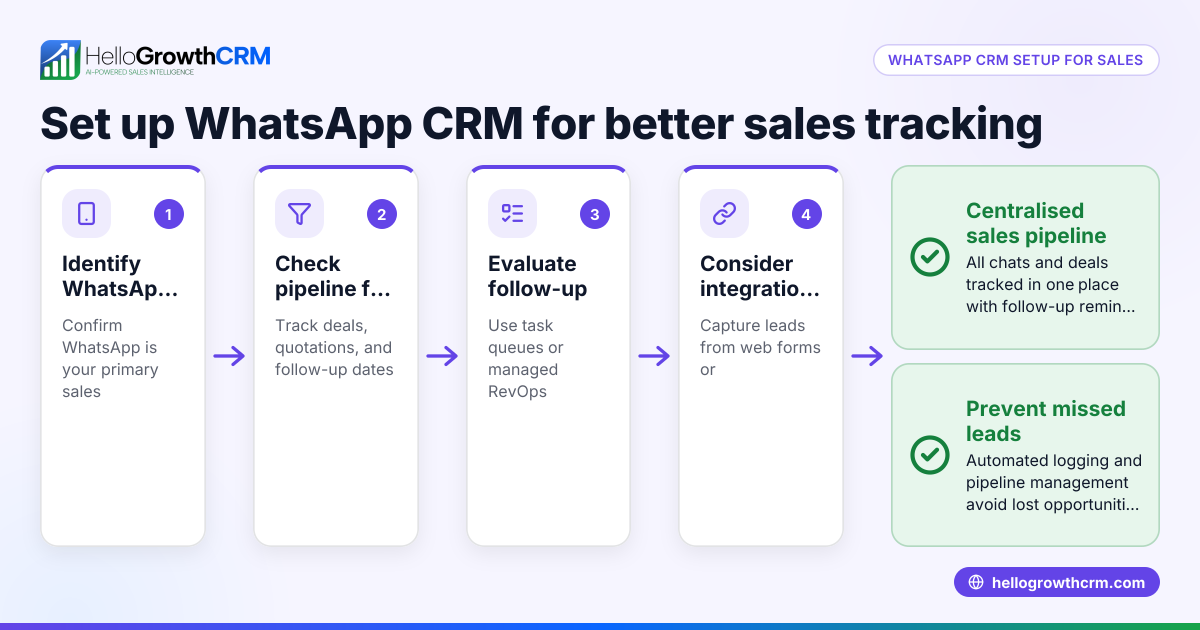
Can sales automation software integrate with WhatsApp? Some CRMs, like HelloGrowthCRM, are WhatsApp-native, enabling direct messaging and sequences. Check integration capabilities before choosing software.
What questions should I ask vendors when choosing sales automation software? Ask about automation features, ease of use, local support, integration options, pricing tiers, and trial availability. These help you find a solution that fits your needs.
Key takeaways
- Define your sales process and automation needs clearly before evaluating software.
- Prioritise features like multi-channel sequences, AI agents, and automated workflows.
- Involve your sales team in testing to ensure adoption.
- Compare pricing against features and scalability.
- Avoid common mistakes by thorough testing and checking local support.
- HelloGrowthCRM offers sequences, AI agents, and workflows tailored for Singapore small businesses.
Choosing the right sales automation software can transform your sales process and increase revenue. For detailed pricing and plans suited to Singapore businesses, See Singapore pricing.
Ready to put this into practice?
Set up your pipeline, WhatsApp follow-ups, and AI lead scoring in minutes — free, no credit card.
Try HelloGrowthCRM freeGet CRM tips in your inbox
Join thousands of sales professionals who get weekly insights on CRM strategy, AI automation, and pipeline optimization.

The HelloGrowthCRM team publishes guides on CRM strategy, AI sales tools, and revenue operations for small business sales teams.