What is different about consulting in New Zealand
Consulting in New Zealand carries no general licensing requirement, but clients still expect a signed engagement letter and, for larger contracts, evidence of professional indemnity cover before work begins, so tracking both in the pipeline avoids assuming a verbal brief is sufficient. New relationships in this small market lean heavily on referral and reputation among a relatively tight network of decision-makers, often more so than in a larger economy where cold outreach can still land.
GST at 15% applies to consulting fees, and invoicing needs a valid GST number to be claimable by a business client. Discretionary advisory budgets more often get committed ahead of the 31 March tax year-end than a mid-year date, so a pipeline should time its EOFY-style push around that instead of June. The Christmas–January break is similarly quiet for new engagements, with most New Zealand organisations effectively closed for decision-making through most of January.
Set up your CRM for New Zealand consulting teams
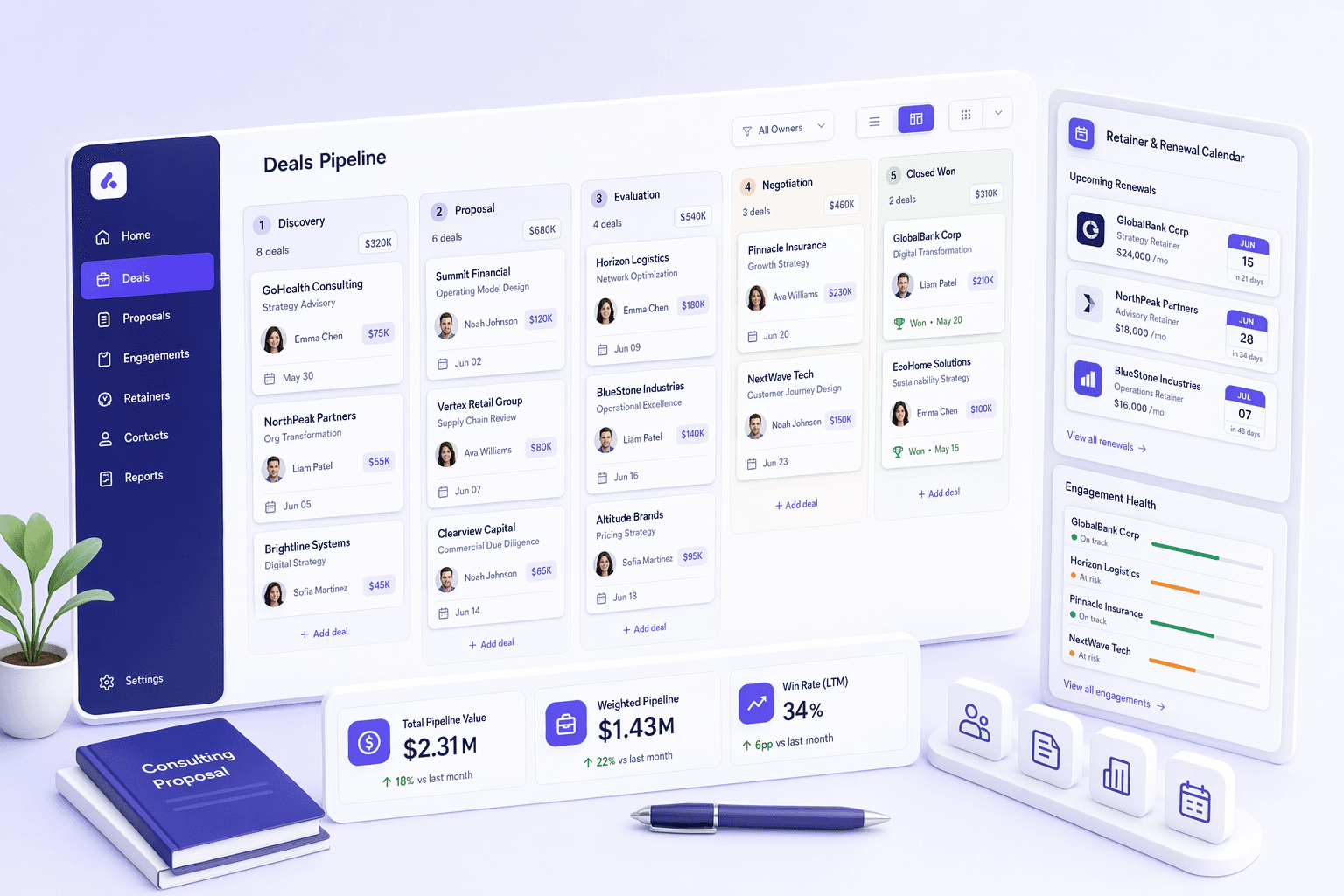
- Track signed engagement letter and professional indemnity evidence as qualifying steps for larger contracts.
- Time the advisory-budget push around the 31 March tax year-end, not a June EOFY date.
- Flag the Christmas–January period as effectively closed for new-engagement decisions in this market.