What is different about logistics & trade in the United Kingdom
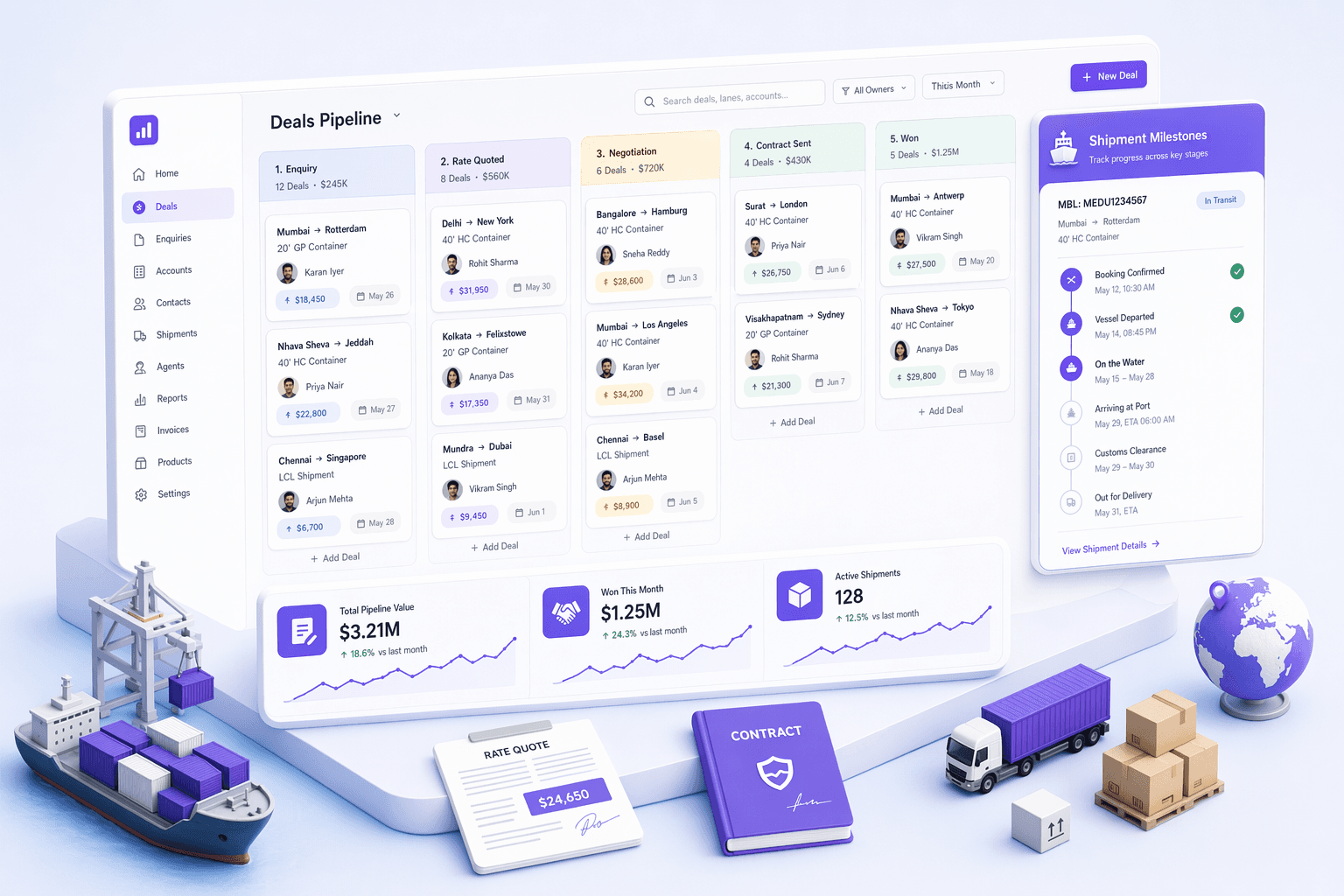
Since Brexit, goods moving between Great Britain and the EU need customs declarations through the Customs Declaration Service, correct commodity codes and, for regular exporters, Authorised Economic Operator status, so a CRM pipeline should hold a customs-documentation-complete field before any shipment quote is confirmed. Freight forwarders and customs brokers usually win business through RFQ tenders and existing importer/exporter relationships rather than cold outreach, making tender-deadline tracking as important as the shipment itself.
Delays at the border, whether from incomplete paperwork or new EU entry checks, ripple through the whole quote-to-invoice cycle, so pipeline stages benefit from a documentation checklist per shipment rather than a single 'in transit' status. Financial-year timing matters less here than customs and VAT deadlines: import VAT postponed accounting entries and commodity-code reviews should be logged against each account, and cross-border trade enquiries often surge ahead of EU regulatory changes that exporters need advance warning of.
Set up your CRM for UK logistics & trade teams
- Add a customs-documentation-complete checkbox (commodity code, CDS declaration) as a gate before shipment quotes finalise.
- Track Authorised Economic Operator status per account, since AEO holders get faster border processing to sell on.
- Log tender and RFQ deadlines separately from general follow-ups, since forwarders mostly win business through tenders.