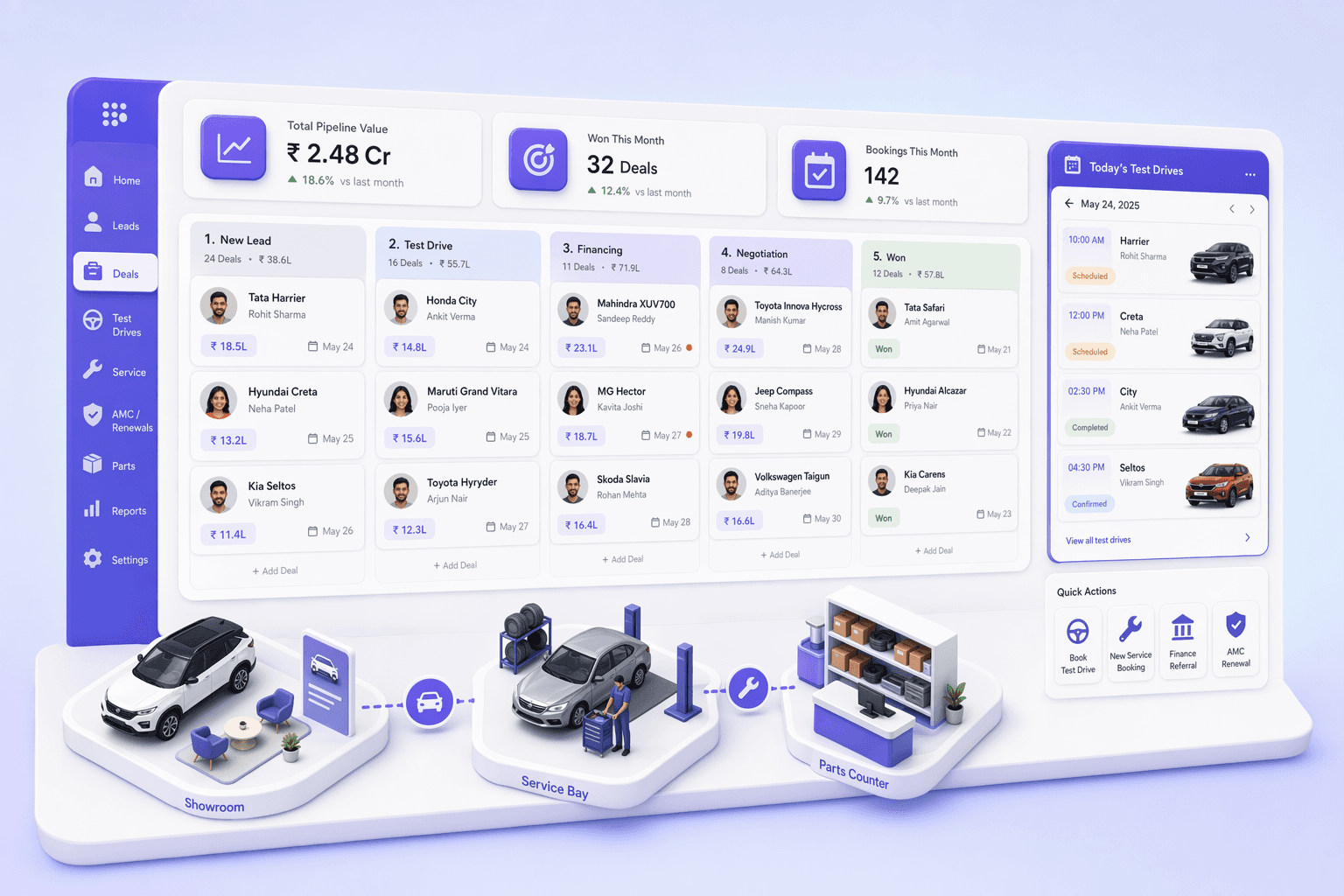
What is different about automotive in the United States
Car dealerships need a state DMV dealer license on file, and buy-here-pay-here dealers must comply with the FTC Safeguards Rule for handling customer financial data collected during financing. Used-car dealers track title transfer status as a distinct step from the sale itself, since a delayed title is a common reason a deal doesn't fully close. Enquiries mostly arrive through marketplace listings like Cars.com and CarGurus and in-lot walk-ins.
Vehicle sales and service carry state sales tax, often with a separate, sometimes lower, rate for trade-in credit that needs its own line item on the invoice. Customer financing and identity data collected during a sale falls under the Gramm-Leach-Bliley Act's safeguarding rules as well as state privacy laws. New-vehicle enquiry volume typically rises around Memorial Day and Labor Day sales events, both of which are major promotional weekends in the US auto retail calendar.
Set up your CRM for USA automotive teams
- Track title transfer status separately from the sale itself, since a delayed title is a common deal-closing blocker.
- Apply the trade-in tax credit as its own invoice line item, since it lowers the taxable sale amount in most states.
- Set campaign pushes around Memorial Day and Labor Day sales weekends, the two major US auto retail promotion dates.