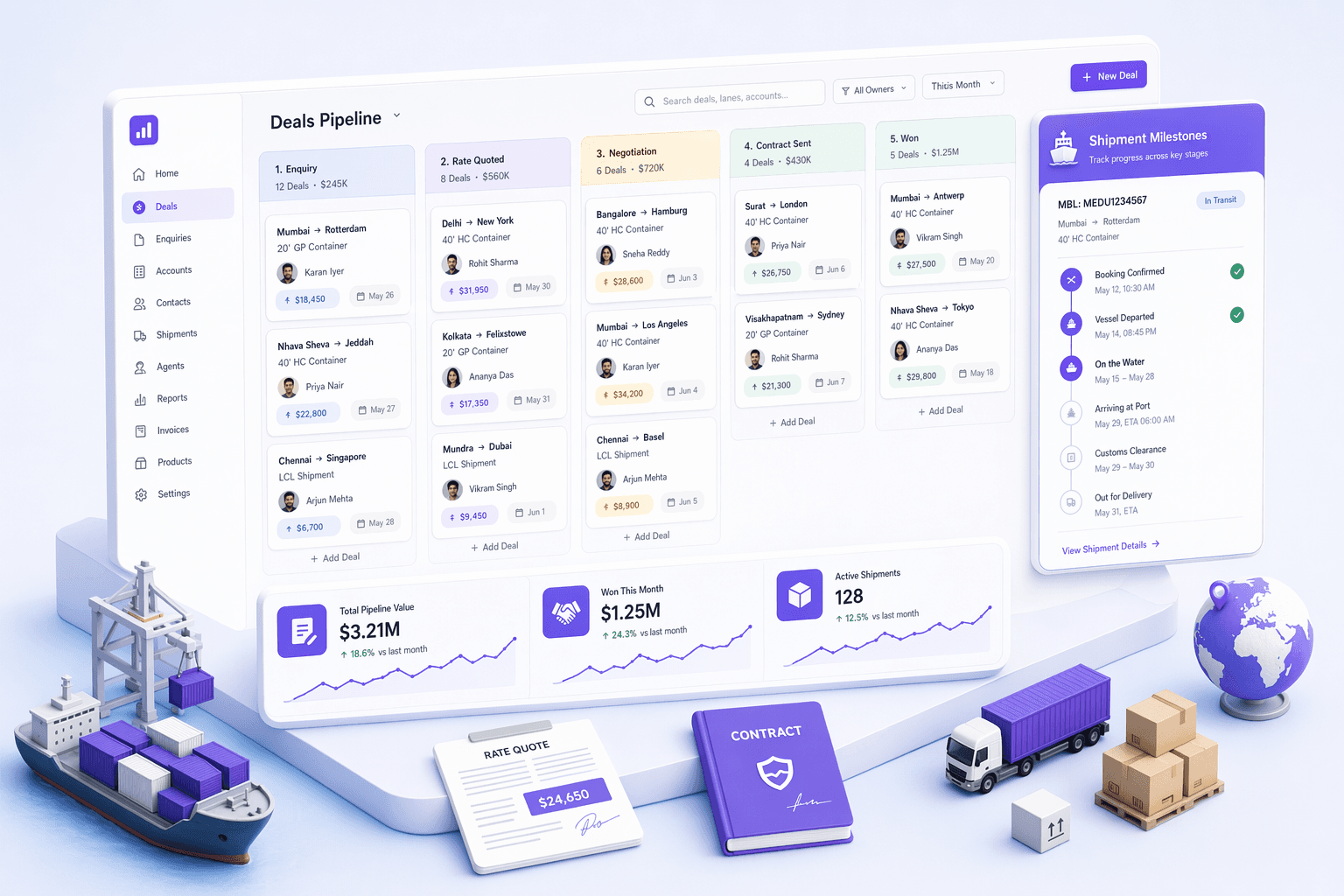
What is different about logistics & trade in Australia
Export and logistics deals in Australia often hinge on documentation the CRM should track directly — customs broker licensing through the Australian Border Force, biosecurity import permits from the Department of Agriculture, and which free trade agreement, if any, reduces tariffs on a given shipment — since these determine whether a quote is even viable before price is discussed. Freight contracts with larger clients frequently run through a tender process rather than a simple quote-and-close cycle.
GST applies to most imported goods at the border, which needs to be reflected separately from freight charges on any invoice, and a deal record benefits from a field noting whether GST was paid on entry or deferred. Shipping volumes spike heavily in the lead-up to Christmas as retailers restock, then slow through the January shutdown when ports and customs brokers reduce staffing, and EOFY on 30 June brings a smaller wave of businesses clearing inventory for tax purposes.
Set up your CRM for Australia logistics & trade teams
- Record customs broker licence status and applicable free trade agreement against each export/import deal.
- Add a field noting whether import GST was paid on entry or deferred for each shipment.
- Flag the pre-Christmas shipping peak and January port/broker slowdown as separate pipeline seasons.