HelloGrowthCRM software
Built for real small-business sales teams
HelloGrowthCRM helps reps qualify faster, follow up on time, and close more deals—with practical automation in one place.
- AI lead scoring and pipeline visibility
- Built-in dialer, WhatsApp, and email automation
- Sales forecasting and RevOps-ready reporting
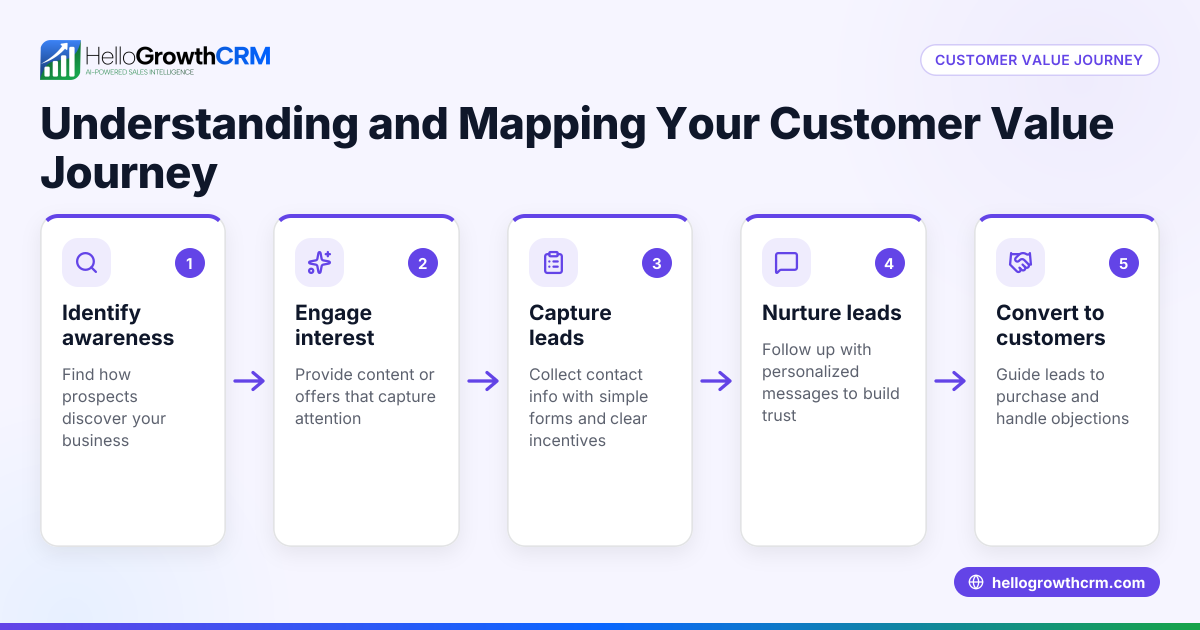
The email marketing customer journey is the process of engaging potential customers through email communications tailored to their stage in the buying cycle. It typically begins with awareness, moves through consideration and decision, and continues post-sale for retention and advocacy. This article covers why understanding this journey is crucial for small businesses, step-by-step guidance to create your journey, a realistic example, common mistakes to avoid, and how HelloGrowthCRM supports this with its email and customer management features.
Why this comes up / what goes wrong
Small-business owners often struggle because they send generic emails without considering where each lead is in their buying process. Leads might get overwhelmed by irrelevant messages or ignored because follow-up is inconsistent. Without a clear journey, sales teams waste time and miss chances to nurture prospects effectively. Many rely on spreadsheets or simple email blasts, which don’t adapt to customer responses or timing. This causes slow follow-up, lost leads, and low conversions.
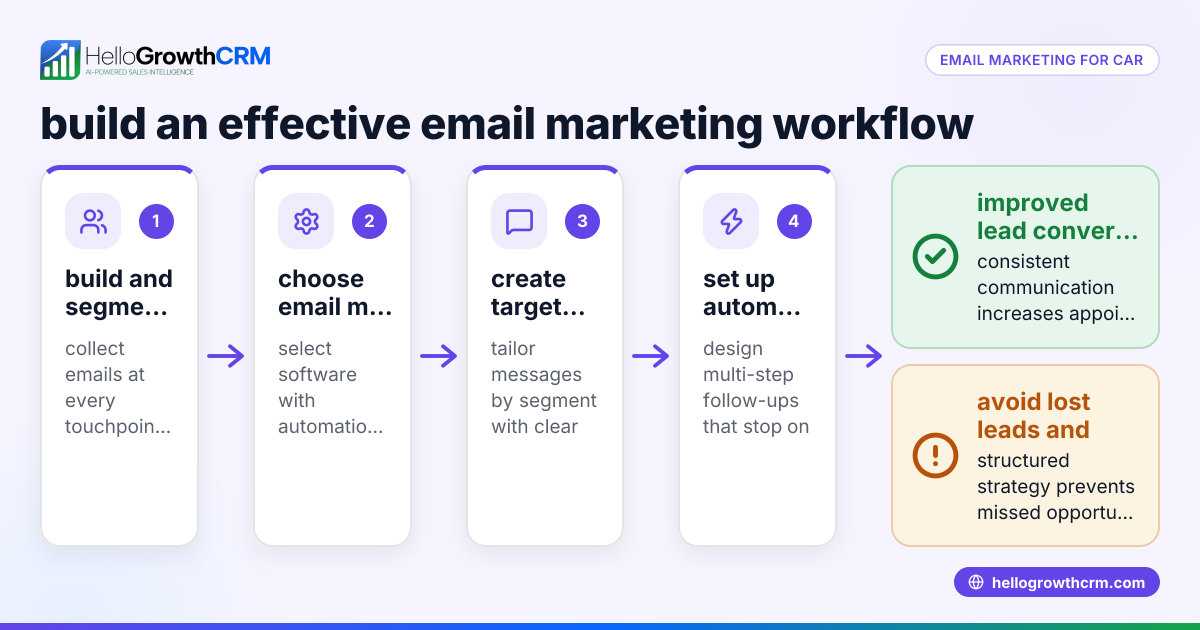
Step-by-step
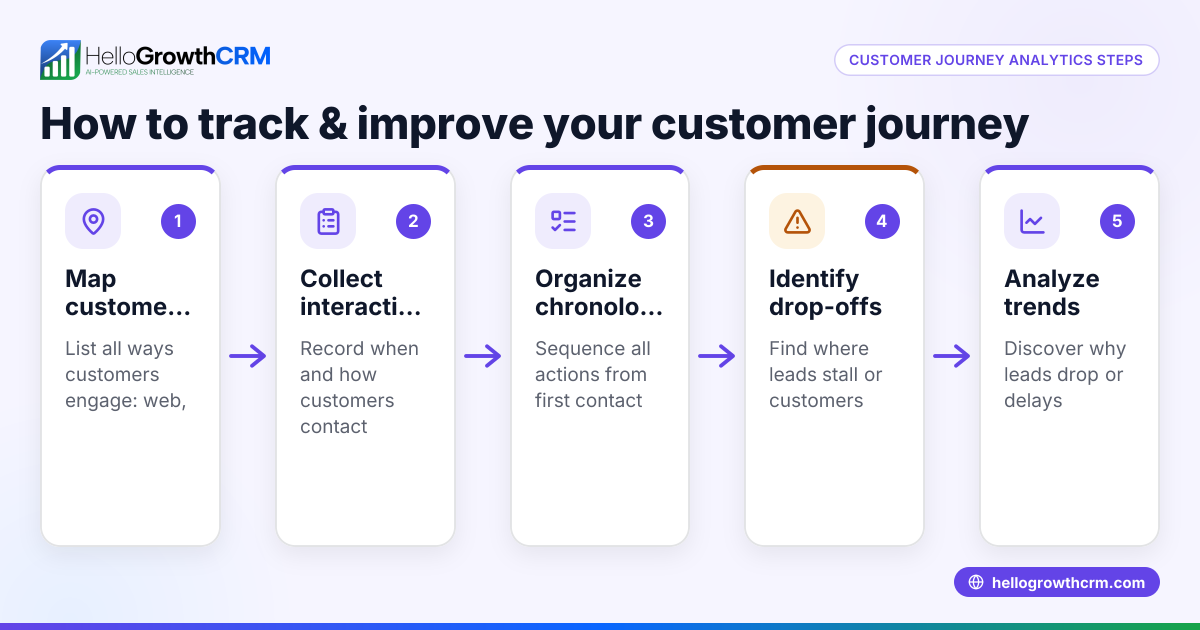
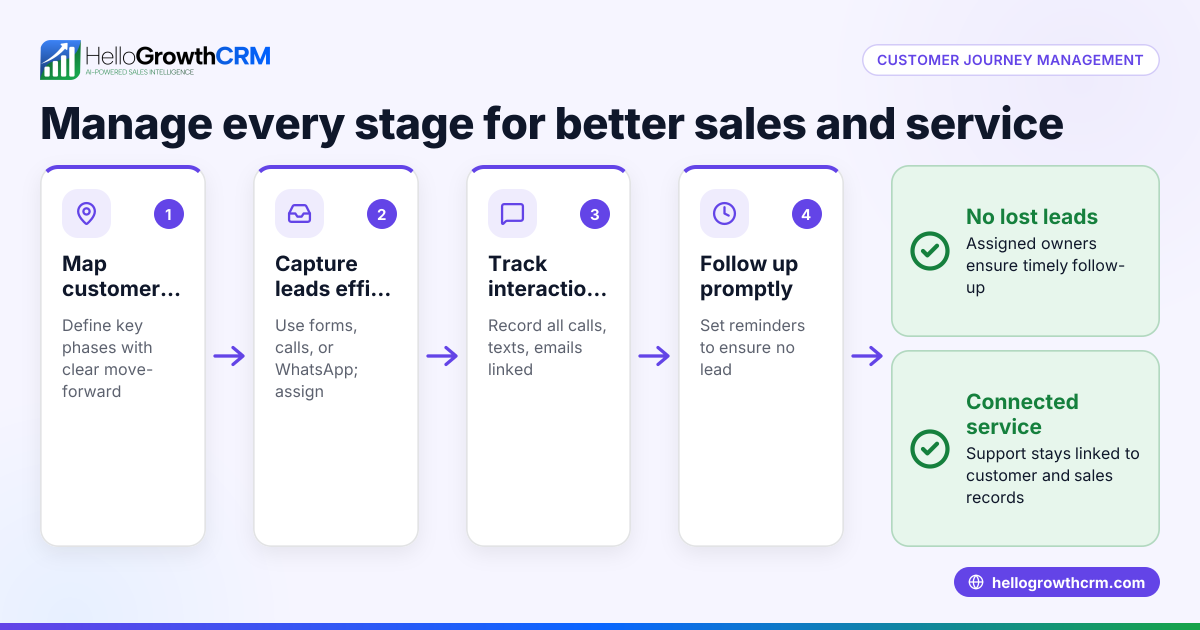
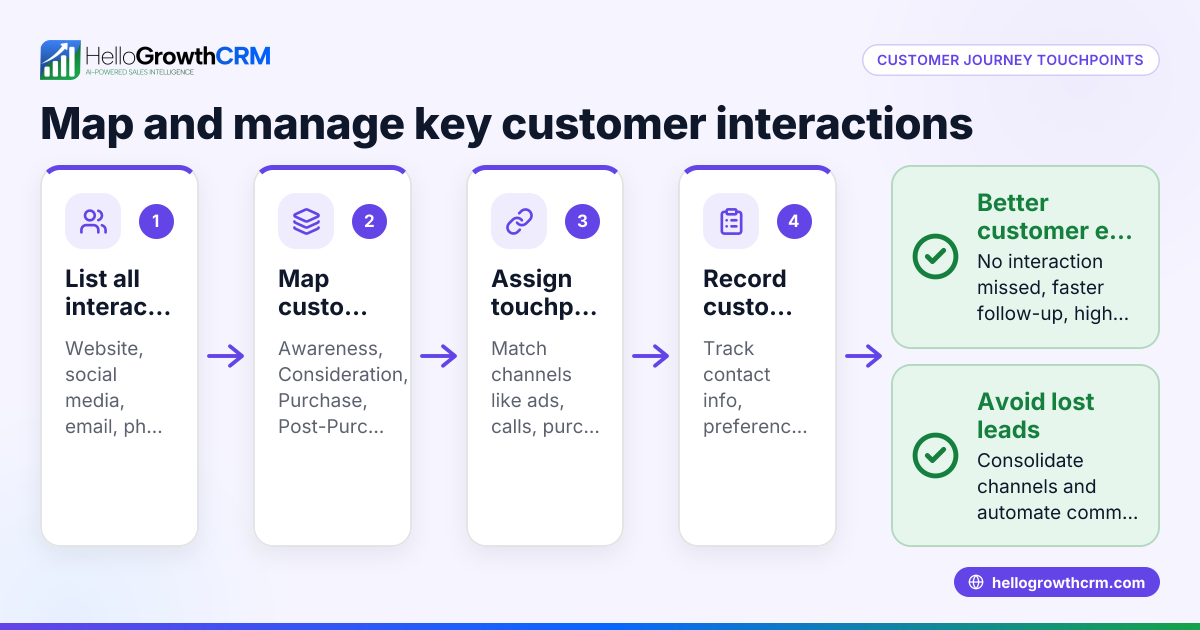
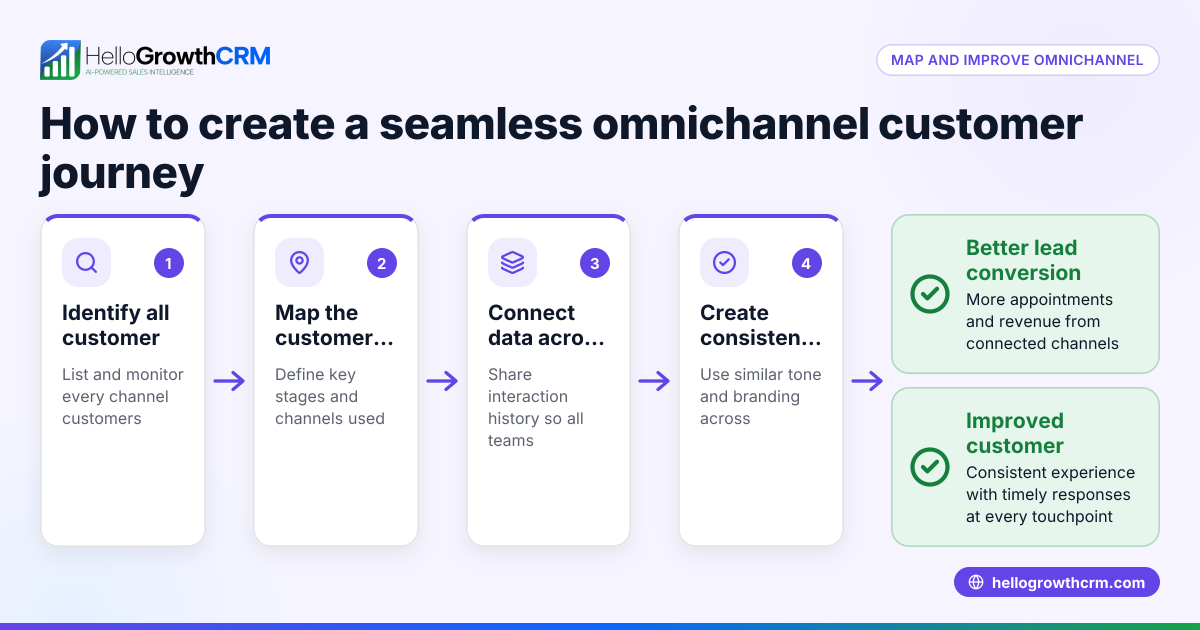
- Define your customer stages: Identify key phases like Awareness, Interest, Evaluation, Purchase, and Post-Purchase. Check that these reflect your typical sales cycle.
- Map email content to stages: Create emails that answer common questions or solve problems at each stage. Ensure content is relevant and builds trust.
- Set timing and triggers: Decide when to send each email and what actions move a lead to the next stage (e.g., clicking a link or replying).
- Automate sequences: Use email automation tools to send your emails on schedule and pause when the lead replies. Check that automation stops correctly to avoid spamming.
- Monitor engagement and adjust: Track opens, clicks, and replies. Refine emails and timing based on what works.
- Integrate with sales follow-up: Ensure your sales team sees replies and can respond quickly, using a shared inbox if possible.
For more on automation, see our guide on email automation and sequences.
Example (fictional figures)
A residential real-estate team in Phoenix, Arizona, wants to nurture leads from their website inquiry form.
- They define stages: Awareness (initial inquiry), Interest (viewing listings), Evaluation (touring homes), Purchase (closing), and Post-Purchase (referrals).
- They create a 5-step email sequence over 14 days:
- Welcome email with team intro (Day 1)
- Local market update (Day 3)
- Featured listings matching preferences (Day 6)
- Tips for home buying (Day 10)
- Invitation to schedule a tour (Day 14)
Assuming 1,000 inquiries monthly, with an average home price of $350,000 and a 3% commission:
- Potential revenue per sale: $350,000 × 3% = $10,500
- If 5% of nurtured leads convert, sales = 1,000 × 5% = 50
- Total commission revenue = 50 × $10,500 = $525,000
This sequence helps move leads through the journey efficiently.
Common mistakes
- Sending the same email to all leads: Prevent by segmenting your list based on stage or behavior.
- Ignoring replies or engagement: Use shared inbox features so the whole team sees responses and can act.
- Overloading leads with too many emails: Set reasonable intervals and monitor unsubscribe rates.
- Not updating content or sequences: Regularly review performance and refresh emails.
- Failing to link email data with sales follow-up: Integrate email tools with CRM to keep all information in one place.
Learn more about avoiding these with customer health score.
Doing this in HelloGrowthCRM
HelloGrowthCRM supports your email marketing customer journey with several features:
- HelloMail shared inbox: Replies to your emails, such as quotations, are visible to the whole sales team on the deal record, preventing missed follow-ups.
- Sequences and campaigns: Automate a multi-step follow-up over two weeks that stops immediately when a prospect replies, ensuring timely and relevant communication without manual tracking.
- Customer portal, referrals, tickets and knowledge base: After closing, service requests and support tickets stay linked to the same customer record as the deal, keeping service and sales aligned.
Explore these features in detail at HelloGrowthCRM for the United States.
Frequently asked questions
What is the difference between an email marketing campaign and a customer journey? An email marketing campaign is usually a one-time or periodic broadcast to a group, while a customer journey is a series of targeted, timed emails tailored to where each lead is in the buying process.
How long should an email marketing customer journey last? The length depends on your sales cycle. It can be days for quick purchases or months for complex decisions. The key is to keep the content relevant and responsive to customer actions.
Can I use email sequences for post-sale communication? Yes. Post-sale sequences can nurture customer loyalty, request referrals, or provide support information. HelloGrowthCRM’s customer portal and ticketing keep this organized on the same customer record.
How do I measure success in my email marketing customer journey? Track metrics like open rates, click-through rates, reply rates, and conversion to sales. Adjust your emails and timing based on these insights.
Is it possible to stop automated emails when a prospect replies? Yes. HelloGrowthCRM’s sequences automatically stop sending once a prospect replies, preventing unnecessary follow-ups.
Key takeaways
- The email marketing customer journey guides leads through stages with tailored emails.
- Define clear stages and map relevant content to each.
- Automate sequences that pause on replies to avoid spamming.
- Use shared inboxes and CRM integration for fast, team-wide follow-up.
- Regularly review and update your emails based on engagement data.
- HelloGrowthCRM offers tools to manage sequences, shared inboxes, and post-sale customer service in one platform.
Start managing your email marketing customer journey effectively today. Start on the Free Forever plan (200 leads, no credit card).
Ready to put this into practice?
Set up your pipeline, WhatsApp follow-ups, and AI lead scoring in minutes — free, no credit card.
Try HelloGrowthCRM freeGet CRM tips in your inbox
Join thousands of sales professionals who get weekly insights on CRM strategy, AI automation, and pipeline optimization.

The HelloGrowthCRM team publishes guides on CRM strategy, AI sales tools, and revenue operations for small business sales teams.