HelloGrowthCRM software
Built for real small-business sales teams
HelloGrowthCRM helps reps qualify faster, follow up on time, and close more deals—with practical automation in one place.
- AI lead scoring and pipeline visibility
- Built-in dialer, WhatsApp, and email automation
- Sales forecasting and RevOps-ready reporting
Secondary sales funnel activities refer to the series of steps and interactions that occur after the first contact with a lead or customer, focusing on nurturing and converting leads further down the sales process. These activities are crucial for small and mid-sized businesses to ensure leads do not slip away due to slow follow-up or poor tracking.
Why this comes up / what goes wrong
For many Indian small-business owners, the challenge is not just generating leads but managing the follow-up and secondary interactions effectively. Often, leads come from platforms like IndiaMART or JustDial, and after sending a quotation, businesses struggle to track the next steps. Without a clear system, follow-ups get delayed or forgotten, distributors' field visits go unrecorded, and sales opportunities are lost. Running sales on WhatsApp and spreadsheets can lead to missed tasks and unclear responsibilities, causing slow responses and lost revenue.
Step-by-step
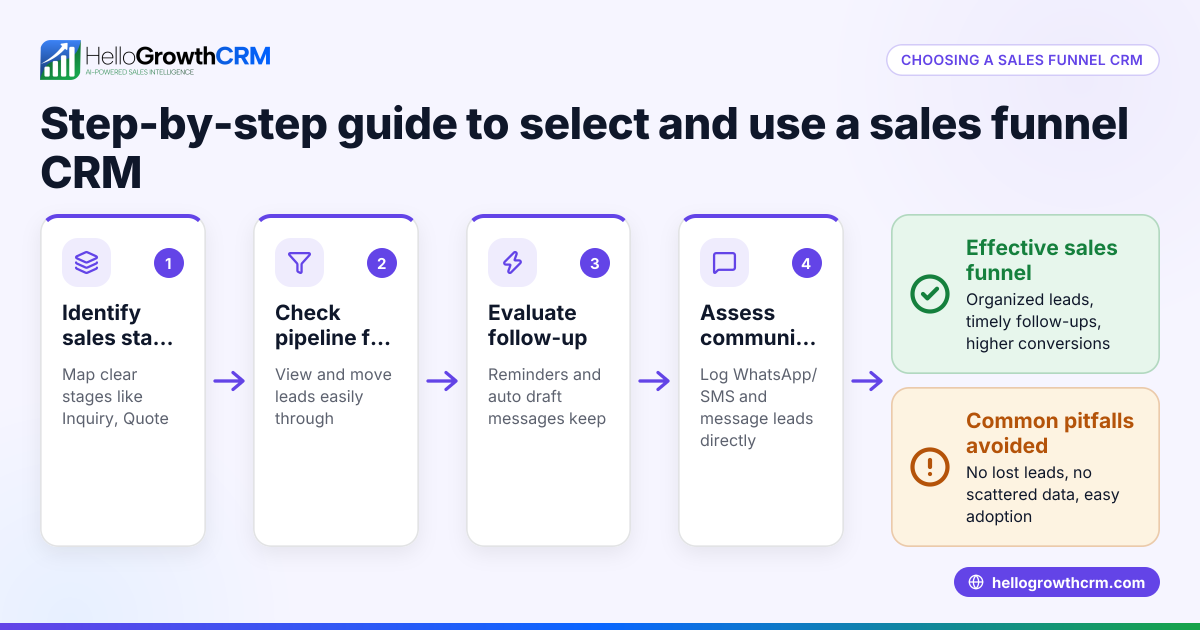
- Capture and Organize Leads: Collect leads from various sources such as IndiaMART, JustDial, or web forms and enter them into a structured system. Check that each lead has complete contact information and source details.
- Send Quotations and Log Deals: After engaging with the lead, send a quotation and log this as a deal at the 'quote sent' stage. Check that the deal entry includes the follow-up date so it can be tracked.
- Schedule Follow-ups as Tasks: Create follow-up tasks with due dates for calls, meetings, or messages. Check daily task boards to see what follow-ups are pending to avoid forgetting any lead.
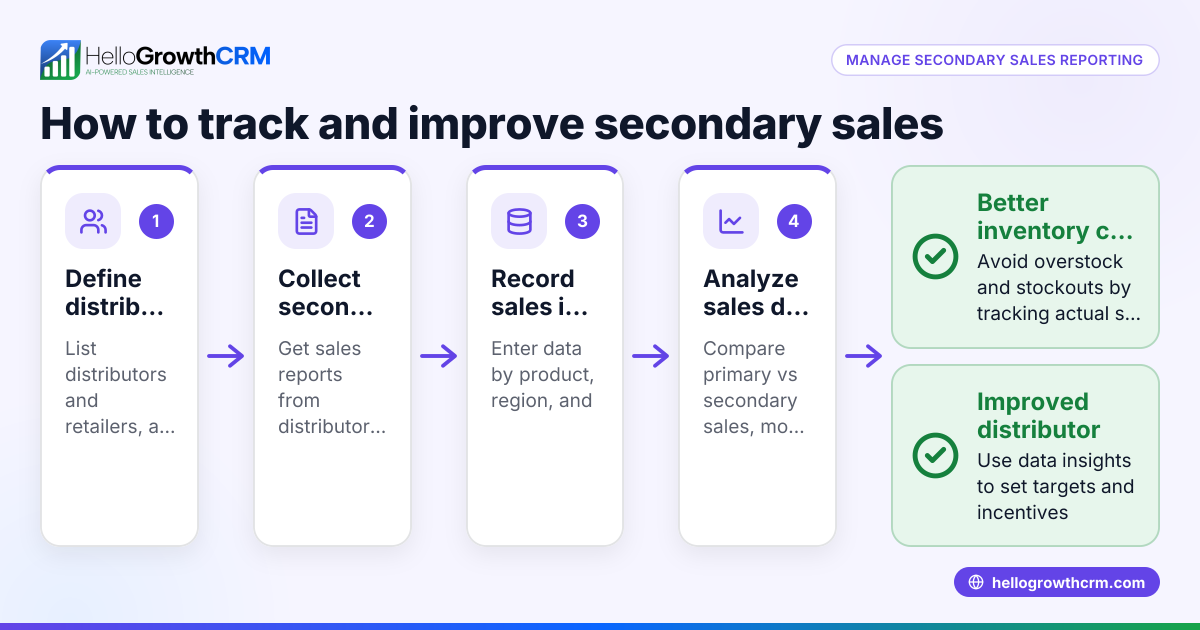
- Engage Distributors and Field Teams: If using distributors or field sales reps, track their visits and interactions. Check that field visits are logged promptly and managers can view the day's activities.
- Nurture Leads with Sequences: Use WhatsApp, SMS, or email sequences to keep leads engaged. Check response rates and adjust messages based on lead engagement.
- Update Deal Stages and Forecast Sales: Move deals through pipeline stages based on interactions and update expected values. Check sales forecasts regularly to plan resources.
Example (fictional figures)
On 10/04/2024, a small electronics distributor sent a quotation to a retailer for ₹1,50,000 worth of stock.
- Quotation value = ₹1,50,000
- Follow-up date set for 17/04/2024
Step 1: Log deal at 'quote sent' stage with follow-up date 17/04/2024.
Step 2: On 17/04/2024, call retailer to confirm order.
Step 3: Retailer agrees to buy ₹1,20,000 worth.
Step 4: Move deal to 'order confirmed' stage with updated value ₹1,20,000.
Step 5: Schedule delivery and payment follow-up tasks.
This process ensures the lead is actively managed and not forgotten after sending the quotation.
Common mistakes
- Forgetting follow-up dates: Without scheduling tasks, leads get ignored. Prevent by using task boards to list daily calls and follow-ups.
- Relying on memory or WhatsApp chats alone: Important details get lost. Prevent by logging all activities and notes in a CRM.
- Not tracking field visits: Distributor visits are unrecorded, leading to poor coverage. Prevent by having field reps log visits via mobile.
- Ignoring pipeline stages: Deals remain stagnant without updates. Prevent by moving deals through stages and updating values.
- No clear responsibility: Without assigned tasks, follow-ups fall through. Prevent by assigning tasks with due dates to specific team members.
- Poor communication sequences: Sending random messages reduces engagement. Prevent by planning sequences and monitoring responses.
Doing this in HelloGrowthCRM
HelloGrowthCRM helps Indian SMBs manage secondary sales funnel activities with these features:
- Deals (pipeline): A quotation sent last week shows up as a deal at the 'quote sent' stage with a follow-up date, so it is not forgotten. Learn more.
- Activities and task boards: Each follow-up becomes a task with a due date; the day's calls are a list, not a memory test. See how.
- Territories, field operations and commissions: A distributor's field reps log visits from the phone and the manager sees the day's beat. Explore features.
These tools help you track leads, schedule follow-ups, and monitor field sales efficiently.
Frequently asked questions
What are secondary sales funnel activities? Secondary sales funnel activities are the follow-up steps after initial lead contact, such as nurturing leads, managing quotations, scheduling calls, and tracking field visits to convert leads into customers.
Why is follow-up important in the secondary sales funnel? Follow-up ensures leads are engaged and not forgotten, increasing the chances of closing deals. Without timely follow-up, leads can go cold or choose competitors.
How can small businesses track distributor visits effectively? Using mobile-enabled tools to log visits in real-time allows managers to monitor field activity and ensures distributors cover their territories properly.
Can WhatsApp be used for secondary sales follow-ups? Yes, WhatsApp sequences can keep leads engaged, but they should be planned and tracked to avoid random messaging and improve response rates.
How does a CRM help with secondary sales activities? A CRM organizes leads, schedules tasks, tracks deals through stages, and logs every interaction, making follow-ups systematic and reducing missed opportunities.
Key takeaways
- Secondary sales funnel activities focus on follow-up and nurturing after initial contact.
- Scheduling follow-ups as tasks prevents leads from being forgotten.
- Logging field visits and managing territories improves distributor effectiveness.
- Using a CRM pipeline ensures deals move forward with clear stages and values.
- Planned WhatsApp and SMS sequences keep leads engaged.
- Assigning tasks with due dates clarifies responsibilities and improves follow-up.
Start managing your secondary sales funnel activities more effectively with HelloGrowthCRM. Start on the Free Forever plan (200 leads, no credit card).
Ready to put this into practice?
Set up your pipeline, WhatsApp follow-ups, and AI lead scoring in minutes — free, no credit card.
Try HelloGrowthCRM freeGet CRM tips in your inbox
Join thousands of sales professionals who get weekly insights on CRM strategy, AI automation, and pipeline optimization.

The HelloGrowthCRM team publishes guides on CRM strategy, AI sales tools, and revenue operations for small business sales teams.