HelloGrowthCRM software
Built for real small-business sales teams
HelloGrowthCRM helps reps qualify faster, follow up on time, and close more deals—with practical automation in one place.
- AI lead scoring and pipeline visibility
- Built-in dialer, WhatsApp, and email automation
- Sales forecasting and RevOps-ready reporting
AI email campaigns use artificial intelligence to automate and optimize email outreach, sending timely, personalized messages to prospects and customers. This article explains how AI email campaigns work, why small businesses use them, step-by-step setup, common mistakes to avoid, and how HelloGrowthCRM supports AI-driven email campaigns.
Why this comes up / what goes wrong
Small business owners often find it challenging to keep up with timely and consistent email follow-up. They may rely on manual outreach methods like writing individual emails or using spreadsheets to track leads, which leads to missed opportunities and slow responses. Sales teams working with text messages, emails, and spreadsheets can easily lose track of who to contact next, causing delays and lost sales.
AI email campaigns come up as a solution because they automate the process of sending follow-up emails based on prospect behavior. This helps small businesses save time, maintain consistent contact, and increase the chances of converting leads into customers. Understanding how AI email campaigns work can help business owners improve their sales process without needing complex technology skills.
Step-by-step
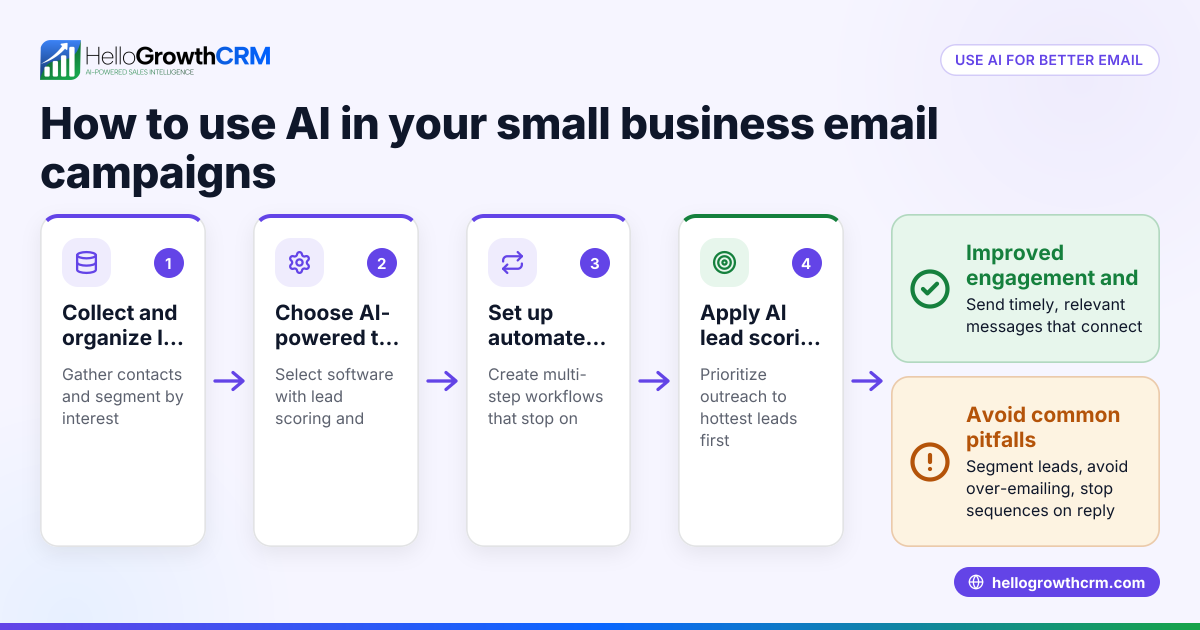
- Define your campaign goal and audience
- Decide what you want your AI email campaign to achieve, such as booking appointments, promoting a new product, or nurturing leads.
- Segment your email list to target the right group of prospects with relevant messages.
- Create your email sequence
- Write a series of 3-5 emails spaced over days or weeks.
- Include personalized content, clear calls to action, and useful information.
- Plan your sequence to stop automatically when a prospect replies to avoid over-emailing.
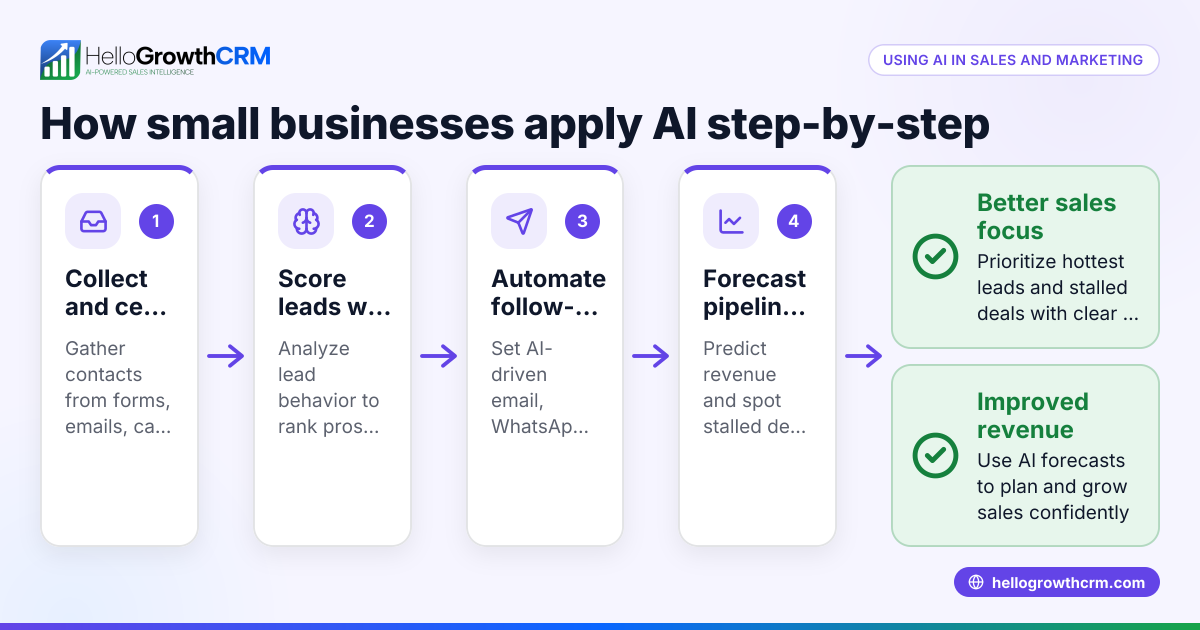
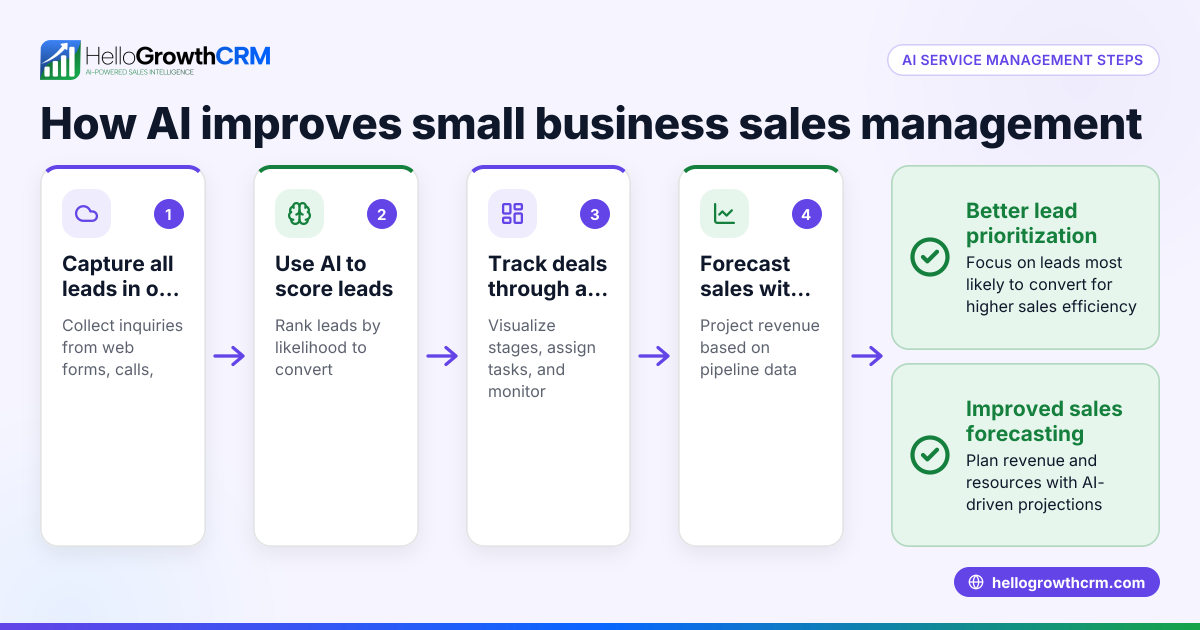
- Implement AI lead scoring
- Use AI to score leads based on their likelihood to convert.
- Prioritize outreach to the highest scoring leads first, focusing your efforts where they matter most.
- Launch the campaign with an AI email tool
- Import your segmented email list into the tool.
- Upload your email sequence and set the schedule.
- Start the campaign and let it run automatically.
- Monitor campaign performance
- Track open rates, reply rates, and conversion metrics.
- Use A/B testing features if available to optimize subject lines and email content.
- Adjust your sequence based on what works best.
- Manage replies efficiently
- Use a shared inbox so your team can see and respond to replies promptly.
- Stop sending follow-up emails to prospects who have replied.
Example (fictional figures)
A two-location dental practice in Columbus, Ohio, wants to increase new patient bookings using AI email campaigns starting 07/01/2026.
- They create a 5-step email sequence over two weeks.
- Their email list contains 500 prospects.
- Assume a 20% open rate and a 10% reply rate for each email.
Calculations:
Emails sent: 500
First email opens: 500 × 20% = 100
Replies from first email: 100 × 10% = 10
Remaining prospects to receive follow-ups: 500 - 10 = 490
Second email opens: 490 × 20% = 98
Replies from second email: 98 × 10% = 9.8 (round to 10)
Remaining prospects: 490 - 10 = 480
Third email opens: 480 × 20% = 96
Replies from third email: 96 × 10% = 9.6 (round to 10)
Remaining prospects: 480 - 10 = 470
Fourth email opens: 470 × 20% = 94
Replies from fourth email: 94 × 10% = 9.4 (round to 9)
Remaining prospects: 470 - 9 = 461
Fifth email opens: 461 × 20% = 92
Replies from fifth email: 92 × 10% = 9.2 (round to 9)
Total replies after all 5 steps: 10 + 10 + 10 + 9 + 9 = 48
This sequence runs automatically and stops sending to any prospect who replies, saving time and improving engagement.
Common mistakes
- Sending too many emails too quickly
- Prevent this by spacing emails over days or weeks to avoid overwhelming or annoying prospects.
- Ignoring recipient responses
- Prevent by setting your campaign to stop sending further emails to anyone who replies.
- Using generic, non-personalized content
- Prevent by tailoring emails to your audience and using personalization fields.
- Not prioritizing leads effectively
- Prevent by using AI lead scoring to focus on the leads most likely to convert first.
- Failing to monitor and optimize the campaign
- Prevent by regularly reviewing open and reply rates and testing different email versions.
- Managing replies in personal inboxes
- Prevent by using a shared inbox so the whole team can see and respond to replies promptly.
Doing this in HelloGrowthCRM
HelloGrowthCRM supports AI email campaigns with Sequences and campaigns, which automate a five-step follow-up over two weeks that stops as soon as the prospect replies. The HelloMail shared inbox lets your team view and manage replies to quotation emails without switching tools. AI lead scoring helps reps prioritize calling leads most likely to convert first. Learn more about these features at email automation and sequences, AI CRM, and HelloGrowthCRM for the United States.
Frequently asked questions
What is an AI email campaign? An AI email campaign automates sending personalized emails based on recipient behavior and uses AI to optimize message timing and lead prioritization. It helps businesses save time and increase engagement.
How does AI improve email campaigns? AI can score leads to identify which prospects are most likely to respond, automate follow-ups that stop when a reply is received, and enable A/B testing to improve email content.
Can small businesses use AI email campaigns without technical skills? Yes, many AI email tools provide user-friendly interfaces and templates to set up sequences without coding. HelloGrowthCRM offers built-in sequences and shared inbox features designed for small teams.
How often should I send follow-up emails in a campaign? Typically, space emails a few days apart over one to two weeks. This avoids overwhelming prospects while maintaining engagement.
What should I do when a prospect replies during an AI email campaign? The campaign should automatically stop further emails to that prospect. Your team should promptly respond to the reply, ideally using a shared inbox for visibility.
Key takeaways
- AI email campaigns automate and personalize follow-up emails to save time and improve engagement.
- Set up multi-step sequences that stop when a prospect replies.
- Use AI lead scoring to prioritize the best leads.
- Avoid common mistakes like spamming, ignoring replies, and not monitoring results.
- HelloGrowthCRM offers sequences, shared inbox, and AI lead scoring to support AI email campaigns.
Start automating your sales outreach with AI email campaigns today. Start on the Free Forever plan (200 leads, no credit card).
Ready to put this into practice?
Set up your pipeline, WhatsApp follow-ups, and AI lead scoring in minutes — free, no credit card.
Try HelloGrowthCRM freeGet CRM tips in your inbox
Join thousands of sales professionals who get weekly insights on CRM strategy, AI automation, and pipeline optimization.

The HelloGrowthCRM team publishes guides on CRM strategy, AI sales tools, and revenue operations for small business sales teams.