HelloGrowthCRM software
Built for real small-business sales teams
HelloGrowthCRM helps reps qualify faster, follow up on time, and close more deals—with practical automation in one place.
- AI lead scoring and pipeline visibility
- Built-in dialer, WhatsApp, and email automation
- Sales forecasting and RevOps-ready reporting
B to b sales involve selling your products or services to other businesses rather than individual consumers. This process usually requires building relationships, managing longer sales cycles, and coordinating with multiple decision-makers. For many UK small businesses, understanding how b to b sales work is crucial to growing revenue and improving sales efficiency.
Why this comes up / what goes wrong
Small-business owners often find b to b sales challenging because these sales differ from selling directly to consumers. The sales process can be slower and more complex, with multiple stakeholders, formal quotations, and follow-ups. Without a clear system, leads can be lost due to slow response, missed follow-ups, or poor tracking. Many small businesses still use WhatsApp, email, and spreadsheets for sales, which can cause disorganisation and lost opportunities.
Step-by-step
- Identify your target business customers: Define the industries, company sizes, and roles within businesses that are most likely to need your product or service. Check that your target fits your capacity.
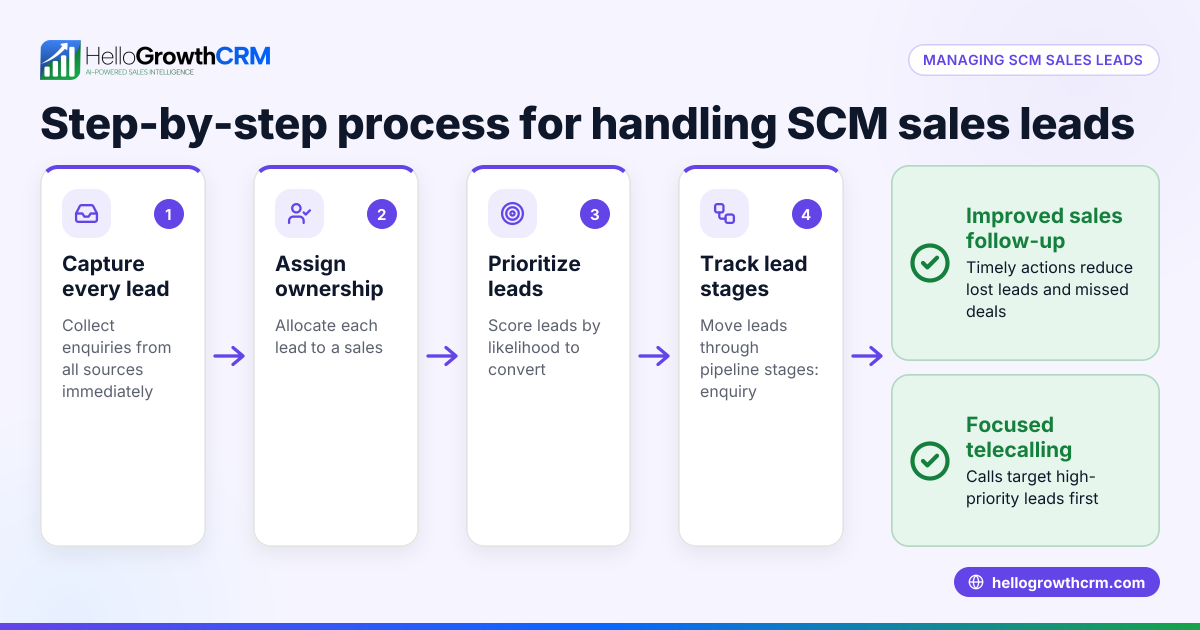
- Capture and qualify leads: Collect leads from web forms, referrals, or events. Check lead details carefully to ensure they match your target profile.
- Engage and build relationships: Contact leads promptly using email, WhatsApp, or phone. Check the best contact method for each lead.
- Send quotations and track deals: Prepare clear quotations and send them on time. Check that each quotation is logged and scheduled for follow-up.
- Follow up consistently: Set reminders to follow up on quotations and meetings. Check that no leads are forgotten or delayed.
- Close the sale and manage post-sale tasks: Confirm orders, arrange delivery or service, and maintain contact. Check customer satisfaction and gather feedback.
- Review and analyse your sales pipeline: Regularly assess your pipeline stages, deal probabilities, and expected values. Check for bottlenecks or stalled deals.
Example (fictional figures)
A Birmingham-based accountancy practice targets local small businesses needing payroll services.
- On 01/05/2024, they capture a lead from a web form: a company with 50 employees.
- They contact the lead on 02/05/2024 and schedule a meeting.
- On 05/05/2024, they send a quotation for £12,000 annual payroll service.
- The quotation is logged as a deal at the 'quote sent' stage with a follow-up date of 12/05/2024.
- On 12/05/2024, they follow up, and the client agrees to proceed.
- The deal is moved to 'closed won' with an expected revenue of £12,000.
Calculation for expected revenue:
£12,000 × 100% = £12,000
This example shows how logging deals and scheduling follow-ups prevent leads from being forgotten and help forecast revenue.
Common mistakes
- Slow follow-up: Leads lose interest if not contacted quickly. Prevent this by setting automatic reminders and monitoring the follow-up queue.
- Using uncoordinated tools: Managing sales across WhatsApp, email, and spreadsheets causes errors and lost data. Prevent this by using a CRM that integrates communication and tracking.
- Ignoring pipeline stages: Without clear stages, it is hard to know deal status. Prevent this by defining and using a sales pipeline with stage movement and probabilities.
- No accountability for follow-up: Without assigned owners, leads slip through the cracks. Prevent this by assigning responsibility and reviewing the follow-up queue weekly.
- Failing to track field visits: For businesses with field reps, missing visit logs leads to poor territory management. Prevent this by using mobile tools to log visits and routes.
Doing this in HelloGrowthCRM
HelloGrowthCRM helps you manage b to b sales with Deals (pipeline), where quotations sent last week show up as deals at the 'quote sent' stage with a follow-up date, so no lead is forgotten. For businesses with field reps, Territories, field operations and commissions allow reps to log visits from their phones, and managers can see the day's activity. If you lack a sales manager, Managed RevOps provides weekly follow-up execution and pipeline hygiene support. Learn more about HelloGrowthCRM for the United Kingdom and its WhatsApp and SMS CRM and built-in CRM dialer features.
Frequently asked questions
What is the difference between b to b sales and b to c sales? B to b sales involve selling products or services to other businesses, often requiring longer sales cycles and multiple decision-makers. B to c sales target individual consumers and usually have quicker transactions.
How can small businesses improve their b to b sales process? They can improve by quickly following up leads, using a structured sales pipeline, tracking communications in one place, and regularly reviewing their sales progress.
Why is follow-up important in b to b sales? Because b to b sales cycles are longer and more complex, prompt and consistent follow-up helps keep prospects engaged and moves deals forward.
Can I manage b to b sales using WhatsApp and email alone? While possible, using separate tools risks losing track of leads and delays. A CRM that integrates WhatsApp, email, and pipeline management improves organisation and efficiency.
What role does sales forecasting play in b to b sales? Sales forecasting helps predict future revenue by assessing deal stages and probabilities, allowing better planning and resource allocation.
Key takeaways
- B to b sales means selling from one business to another, involving longer, more complex processes.
- Effective b to b sales require quick lead capture, consistent follow-up, and clear pipeline management.
- Common mistakes include slow follow-up, scattered tools, and lack of accountability.
- Using a CRM like HelloGrowthCRM helps track deals, manage territories, and support follow-up.
- Regular pipeline review and sales forecasting improve business planning.
Start managing your b to b sales more effectively today. Start on the Free Forever plan (200 leads, no credit card) to try HelloGrowthCRM and organise your sales pipeline.
Ready to put this into practice?
Set up your pipeline, WhatsApp follow-ups, and AI lead scoring in minutes — free, no credit card.
Try HelloGrowthCRM freeGet CRM tips in your inbox
Join thousands of sales professionals who get weekly insights on CRM strategy, AI automation, and pipeline optimization.

The HelloGrowthCRM team publishes guides on CRM strategy, AI sales tools, and revenue operations for small business sales teams.