HelloGrowthCRM software
Built for real small-business sales teams
HelloGrowthCRM helps reps qualify faster, follow up on time, and close more deals—with practical automation in one place.
- AI lead scoring and pipeline visibility
- Built-in dialer, WhatsApp, and email automation
- Sales forecasting and RevOps-ready reporting
The best CRM for a small B2B sales pipeline is one that helps you track leads from first contact to deal closure, manage follow-ups efficiently, and keep your sales process organised without complex setup or high costs. It should also integrate communication channels like WhatsApp and SMS to keep all conversations in one place.
Why this comes up / what goes wrong
Many small Indian B2B businesses rely on WhatsApp chats, Excel sheets, or manual reminders to manage sales leads. This often leads to lost or delayed follow-ups, missed deals, and no clear view of the sales pipeline. Founders and sales teams struggle to keep track of quotations sent, follow-up dates, and priority leads. Without a dedicated CRM suited to small teams, sales progress stalls and revenue growth slows.
Small teams often start with informal tools but soon find they cannot keep up with multiple leads at different stages. The lack of pipeline visibility means they cannot prioritise deals effectively. Salespeople forget to follow up on quotations or calls, and important conversations scattered across WhatsApp or SMS get missed. This wastes time and revenue opportunities.
Step-by-step
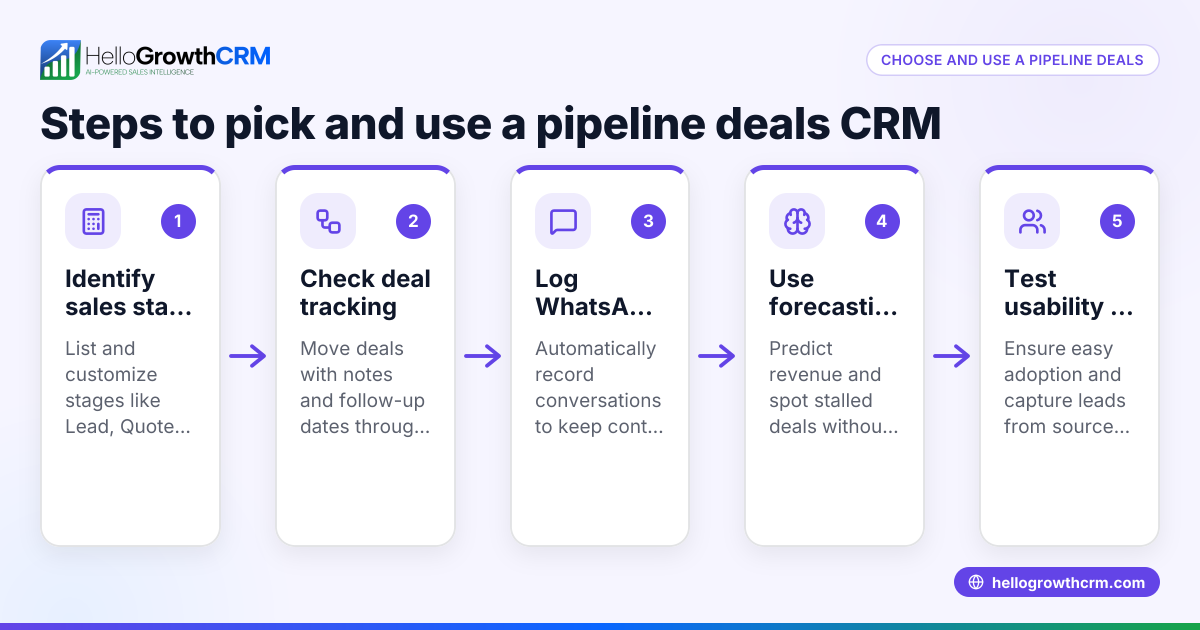
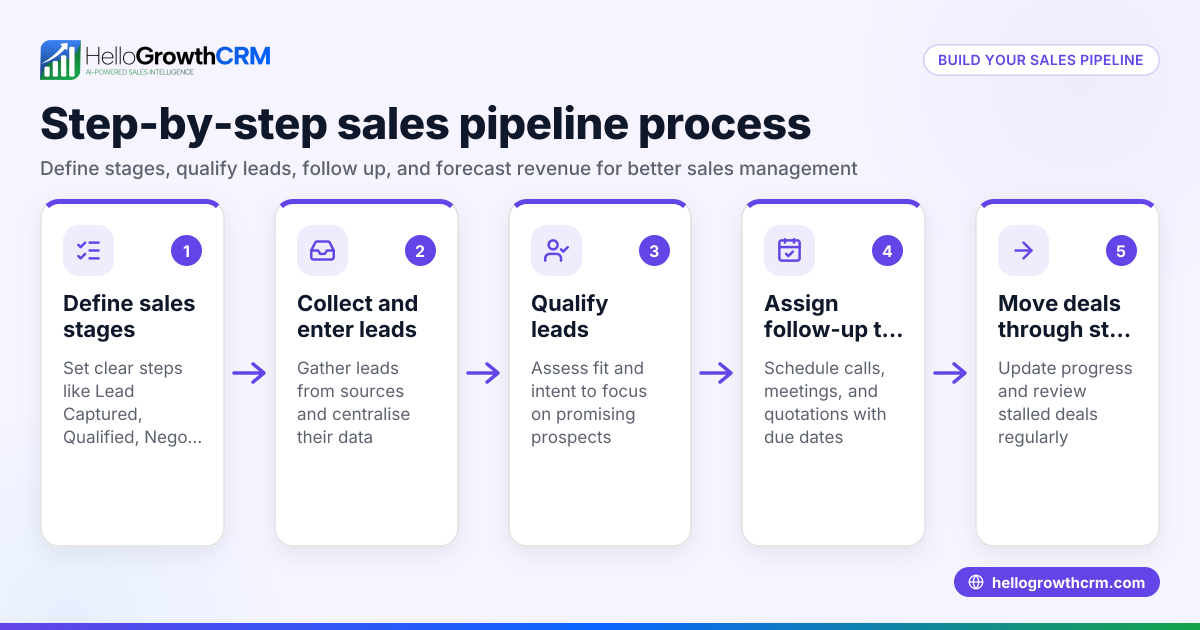
- Identify your sales process stages: Write down the key stages your sales cycle goes through, such as lead captured, contacted, quotation sent, negotiation, and closed. This helps you find a CRM that supports your specific pipeline.
- Check for pipeline visibility: Look for a CRM that offers a visual pipeline or deals board showing each lead’s current stage and next action clearly. This makes it easier to prioritise and manage deals.
- Look for follow-up reminders: The CRM should allow you to set follow-up dates and tasks so no quotation or lead is forgotten. Automated reminders help keep your team on track.
- Assess communication integration: Choose a CRM that logs WhatsApp and SMS conversations on lead records. This saves time by keeping all communication in one place and avoids switching apps.
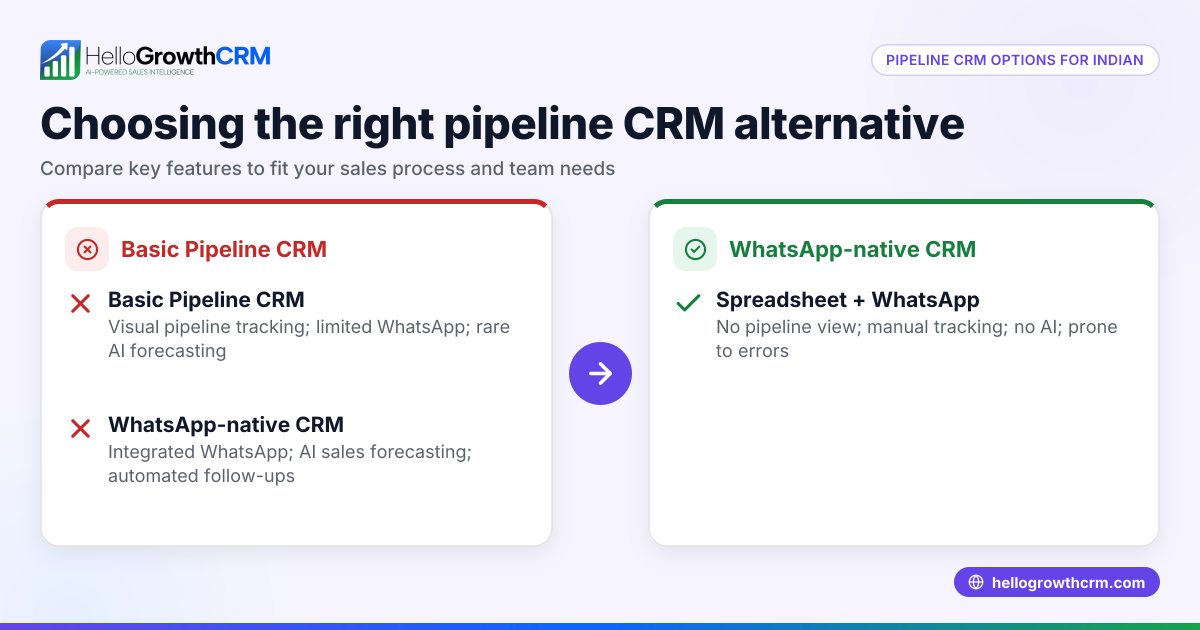
- Consider automation and lead scoring: Some CRMs offer AI-based lead scoring or automated sequences to prioritise and nurture leads. This can improve efficiency but check if it fits your budget and team skills.
- Evaluate ease of use and adoption: The CRM should be simple enough for your sales team to use daily without needing extensive training. A complicated system can reduce usage and hurt results.
- Check pricing and scalability: Pick a CRM that fits your budget and can grow with your team. Avoid paying for features you don’t need.
Example (fictional figures)
Rajesh runs a small B2B industrial supplies company in Pune with 10 salespeople. Last month, he sent 50 quotations worth ₹1,00,00,000 total.
- Expected close rate is 20%, so expected revenue from quotations = ₹1,00,00,000 × 20% = ₹20,00,000
- Average sales cycle is 30 days; follow-ups are scheduled every 7 days.
- Using a CRM, Rajesh sets follow-up dates on each quotation stage to ensure no lead is forgotten.
- Weekly pipeline review helps Rajesh identify stalled deals worth ₹15,00,000 and re-engage those leads.
This structured approach helps Rajesh increase his closure rate by focusing on high-probability deals and avoids missing opportunities due to poor follow-up.
Common mistakes
- Not tracking follow-ups properly: Leads fall through the cracks without follow-up reminders. Prevent this by choosing a CRM with task and reminder features.
- Using multiple disconnected tools: Managing sales on WhatsApp plus Excel leads to data loss. Use a CRM that logs WhatsApp messages directly on the lead record.
- Ignoring pipeline visibility: Without a visual pipeline, it’s hard to prioritise deals. Pick a CRM with a clear deals board.
- Overcomplicating CRM setup: Complex CRMs discourage team use. Select one designed for small teams with simple workflows.
- Not assigning ownership: Leads without a responsible salesperson get neglected. Ensure your CRM allows clear lead assignment and accountability.
- Skipping regular pipeline reviews: Without weekly checks, stalled deals remain unnoticed. Implement scheduled pipeline hygiene.
Doing this in HelloGrowthCRM
HelloGrowthCRM offers a pipeline management layer where quotations appear as deals in the 'quote sent' stage with follow-up dates, ensuring no lead is forgotten. Founders without dedicated sales managers can benefit from Managed RevOps, where a revenue specialist handles weekly follow-up queues. WhatsApp and SMS conversations with leads are logged on their records, allowing easy follow-ups from the CRM itself. Learn more about these features in the AI CRM and WhatsApp and SMS sections. For Indian SMBs, HelloGrowthCRM provides a tailored experience detailed at HelloGrowthCRM for India.
Frequently asked questions
What features should a CRM have for small B2B sales? A good CRM should have pipeline visibility, follow-up reminders, communication logging (especially WhatsApp), lead assignment, and basic automation to support your sales process. These features help keep your sales organised and improve closure rates.
Can I use WhatsApp for B2B sales follow-ups in a CRM? Yes, CRMs like HelloGrowthCRM integrate WhatsApp messaging directly, logging conversations on lead records and enabling follow-ups without switching apps. This keeps communication seamless and easy to track.
Is a complex CRM necessary for small teams? No, complex CRMs can reduce adoption. Small teams benefit from simple, easy-to-use CRMs with essential features tailored to their sales process. This encourages daily use and better sales management.
How often should I review my sales pipeline? Weekly pipeline reviews help identify stalled deals and prioritise follow-ups, improving closure rates. Regular reviews keep your sales process healthy and focused.
What is Managed RevOps and do I need it? Managed RevOps is done-for-you revenue operations support that handles follow-up queues, pipeline hygiene, and reporting. It’s useful if you don’t have a dedicated sales manager to keep your pipeline active and clean.
Key takeaways
- Choose a CRM with clear pipeline stages and follow-up reminders.
- Integrate WhatsApp and SMS messaging within your CRM for seamless communication.
- Keep CRM setup simple to encourage team adoption.
- Assign lead ownership and conduct weekly pipeline reviews.
- Consider Managed RevOps if you lack a sales manager.
- HelloGrowthCRM offers these essential features tailored for Indian SMBs.
To explore pricing options, See India pricing.
Ready to put this into practice?
Set up your pipeline, WhatsApp follow-ups, and AI lead scoring in minutes — free, no credit card.
Try HelloGrowthCRM freeGet CRM tips in your inbox
Join thousands of sales professionals who get weekly insights on CRM strategy, AI automation, and pipeline optimization.

The HelloGrowthCRM team publishes guides on CRM strategy, AI sales tools, and revenue operations for small business sales teams.