HelloGrowthCRM software
Built for real small-business sales teams
HelloGrowthCRM helps reps qualify faster, follow up on time, and close more deals—with practical automation in one place.
- AI lead scoring and pipeline visibility
- Built-in dialer, WhatsApp, and email automation
- Sales forecasting and RevOps-ready reporting
In Singapore, the best CRM with AI lead scoring and automation is the one that matches how Singapore leads arrive, how your team follows up, and what the PDPA, IRAS and local payment habits require in daily work.
That matters because a tidy demo can hide the real operational question: will the system help your team qualify a WhatsApp enquiry from Tampines, a Google Business Profile lead for your Orchard clinic, and a referral that pays by PayNow without turning the record into a mess? If it cannot, the scoring model may look clever while your staff still chase the wrong people, miss consent issues, and lose track of deposits.
For a Singapore business, AI lead scoring should not be treated as magic. It is a prioritisation layer sitting on top of lead capture, follow-up discipline, and clean records. Automation should reduce admin and speed up response times, but it also has to respect local messaging rules, local payment rails, and the practical rhythm of business in a single time zone with multilingual customers and moving public holidays.
Lead scoring only helps if it reflects where Singapore leads really come from
Singapore businesses often draw leads from a narrower and more locally distinct mix than generic CRM advice assumes. Consumer-facing firms may rely heavily on Google Business Profile, WhatsApp, Instagram, Facebook and referrals. A tuition centre may see parents enquire after office hours; an air-conditioning service firm in Jurong may get urgent requests during hot spells; a B2B logistics broker near Changi may rely more on LinkedIn, referrals and tender-related work such as GeBIZ opportunities.
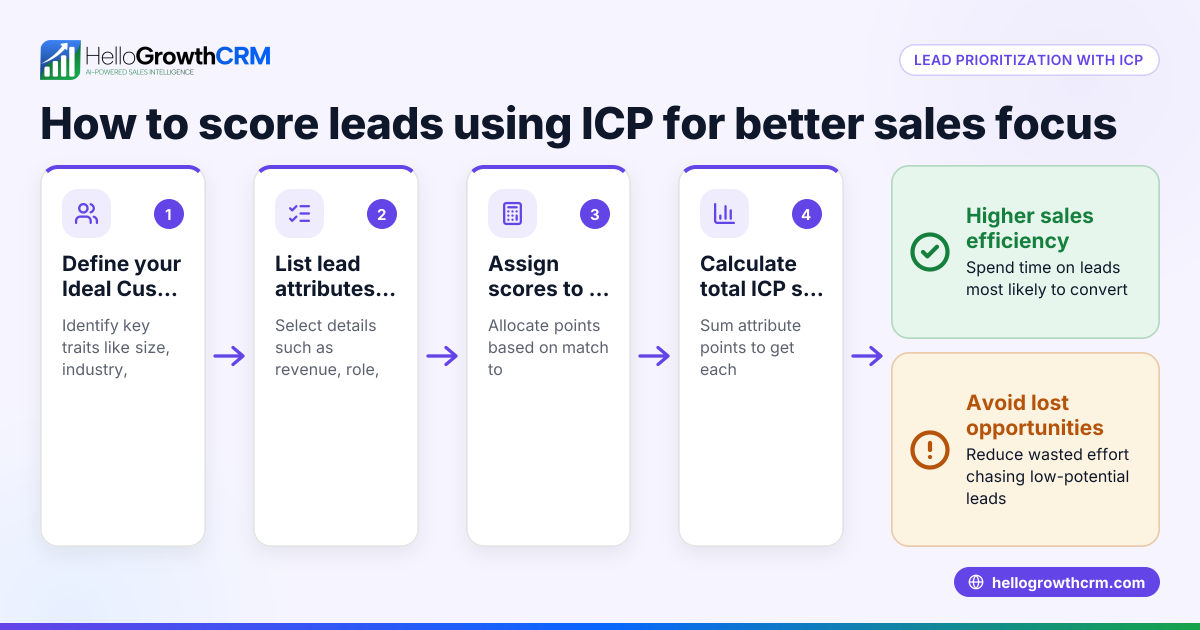
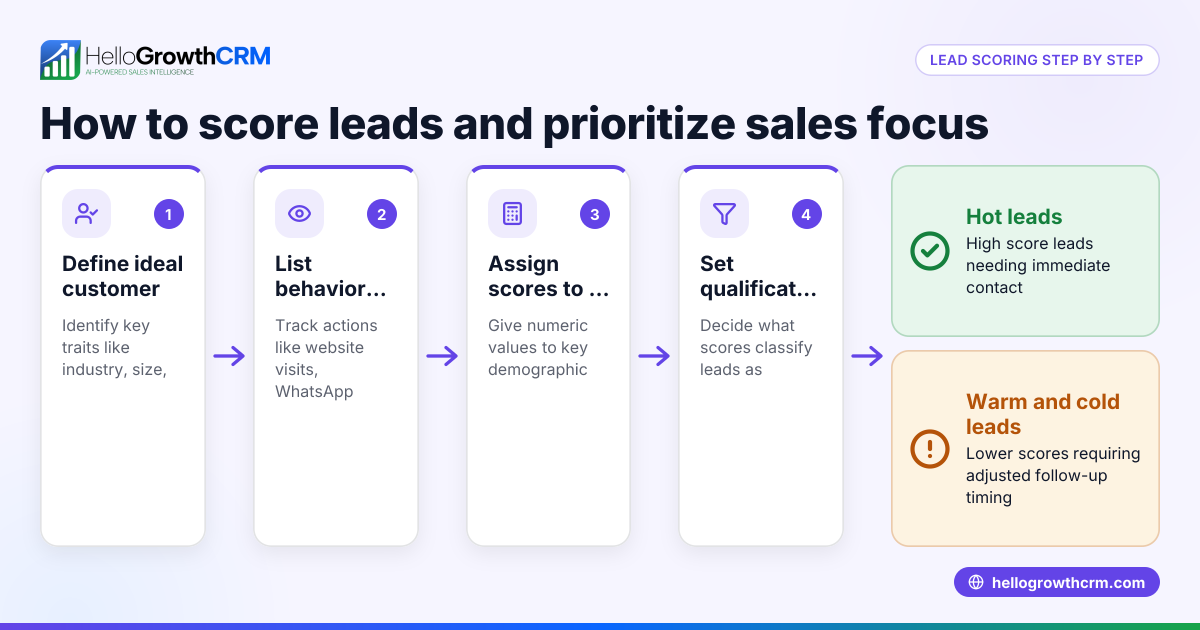
A useful scoring model therefore starts with source quality in your own market, not with abstract intent signals. A lead who clicked an ad is not automatically stronger than one who called after reading reviews on Google Business Profile. In some Singapore sectors, a WhatsApp message with a clear service window and postcode is worth more than a longer form fill. In others, a LinkedIn enquiry from a company email domain may outrank social traffic.
This is why you should test whether the CRM can keep source, channel, location, service type and urgency visible at first touch. If your team cannot tell the difference between a condo maintenance request in the CBD and a price-check message from outside your service area, AI scoring will be trained on weak inputs and produce polished nonsense.
HelloGrowthCRM’s AI lead scoring and lead-capture tools are relevant here because they keep new enquiries organised from entry into pipeline, rather than forcing teams to score leads in a spreadsheet after the fact.
PDPA and Do Not Call rules shape your automation design
In Singapore, marketing automation is not just a sales choice. It sits inside the Personal Data Protection Act and the PDPA Do Not Call provisions, overseen by the Personal Data Protection Commission. If you send specified marketing messages to Singapore numbers, the sender has duties around the Do Not Call Registry. That duty sits with the business sending the message, not with the software vendor.
For CRM selection, this changes what “automation” should mean. The right question is not whether the system can blast messages quickly. The right question is whether it helps your team separate transactional communication from marketing, record consent clearly, and avoid sending the wrong sequence to the wrong contact.
PDPC guidance also matters at form design level. Many Singapore businesses still ask for NRIC by habit on enquiry or booking forms. That is usually hard to justify and creates risk with little operational benefit. A CRM that lets you capture only what you need is safer than one that encourages bloated forms just to feed a scoring model.
If you use messaging heavily, especially for service businesses and clinics, check how the CRM handles channel-specific outreach and record history. HelloGrowthCRM includes WhatsApp and SMS workflows and a shared outreach layer through sequences and campaigns, but your team still needs a Singapore-specific consent policy before automating anything promotional.
PayNow, FAST and bank transfers expose whether your pipeline is real
Singapore payment behaviour often reveals CRM weakness faster than a sales demo. Many small and mid-sized businesses collect money through PayNow, FAST, GIRO, NETS, credit card and ordinary bank transfer. The practical issue is that PayNow and bank transfers may sit outside a card processor’s dashboard. If staff do not record those receipts against the right contact, deal or invoice, the CRM will show false pipeline health.
This matters to lead scoring because a good model should learn from actual buying signals, not from partial ones. If only card payments are reflected in your records, the system may undervalue lead sources that tend to pay by transfer. A home services firm serving heartland estates may see that distortion more than a company selling online subscriptions. A dental practice may collect booking deposits one way and treatment balances another. Unless payment reconciliation is tied back to the CRM record, your highest-intent leads can look inactive.
There is also a tax angle. For GST, IRAS publishes the current rules for registration, invoicing and output tax obligations. Where a payment is received for a taxable supply, the tax point can arise at the earlier of invoice or payment, so a deposit can matter on the day it arrives. Check the current position in IRAS guidance for your facts and get advice where needed. A CRM does not replace that judgment, but it should make the date and amount of receipt easy to see.
If you quote before collecting money, it helps when commercial documents and receipts live with the deal record rather than in separate inboxes and chat threads. That is one of the practical reasons some teams look for a CRM that can connect quoting, invoicing and payments received to pipeline activity.
Singapore scheduling is about lunch peaks, public holidays and channel speed
Singapore has one time zone, which simplifies some automation, but local scheduling is still more specific than many buyers expect. Lunch-hour and post-work slots often carry demand that mid-morning does not. Public holidays span different communities, and some holiday dates move from year to year because they follow lunar or Islamic calendars. If you run reminders, appointment links or timed sequences, those patterns matter more than flashy automation logic.
A tuition centre in Tampines may get parent responses after school and after dinner. An aesthetic clinic in Orchard may want consultations concentrated around lunch breaks and early evenings. A B2B seller serving ASEAN accounts from Singapore still needs to account for neighbouring time offsets even though the home office does not deal with daylight saving.
So when you assess a CRM, look at whether scheduling and automation can reflect actual response windows. A lead scored highly but contacted at the wrong time is still a missed opportunity. Likewise, a booking page that ignores staff capacity around public holidays creates no-show risk and frustrated front-desk work.
HelloGrowthCRM includes scheduling and booking plus workflow tools that can move leads into the next action instead of leaving them idle after first contact.
English may be your working language, but your highest-converting copy may not be
Many Singapore businesses operate internally in English while winning business through customer-facing copy in Mandarin or Malay for particular segments. That does not mean every team needs full multilingual campaigns. It does mean your scoring and automation setup should not assume all strong leads behave the same way in the same language.
In practice, this affects form fields, templates, and follow-up scripts. A prospect may browse an English site, reply in Mandarin on WhatsApp, then expect a short confirmation message rather than a long email. Another may respond well to a clean English quote but ignore a generic promotional sequence. If your CRM stores channel history clearly, the handoff from marketing to sales or front desk becomes more consistent.
This is especially important in sectors where trust is built through concise, respectful communication rather than aggressive cadence. The “best” AI score is less useful than a usable record showing which language, channel and service category produced engagement. That is often what determines whether automation feels relevant or intrusive.
Regulated sectors in Singapore need narrower automations, not louder ones
Some Singapore buyers should evaluate CRM automation through sector rules before anything else. Licensed medical, dental and aesthetic practices, for example, have to consider advertising and communication rules from the Ministry of Health and relevant professional boards. A broad promotional sequence that might be acceptable in another sector can become a compliance headache here.
The same principle applies to businesses handling sensitive personal data. The PDPA question is not only where data is stored, but why it is collected, who can access it, and whether outreach is appropriate for the original purpose. A CRM with detailed activity history and permissions support is more useful than one that simply promises more messages and more AI.
If you operate in a regulated setting, ask your compliance adviser to review the intended workflow before rollout. Keep the automation narrow: confirmations, booking reminders, follow-up tasks, internal alerts and carefully reviewed templates usually produce more value than broad nurture campaigns. The software should make the human review easier, not remove it where it is still needed.
A short Singapore test is better than a feature checklist
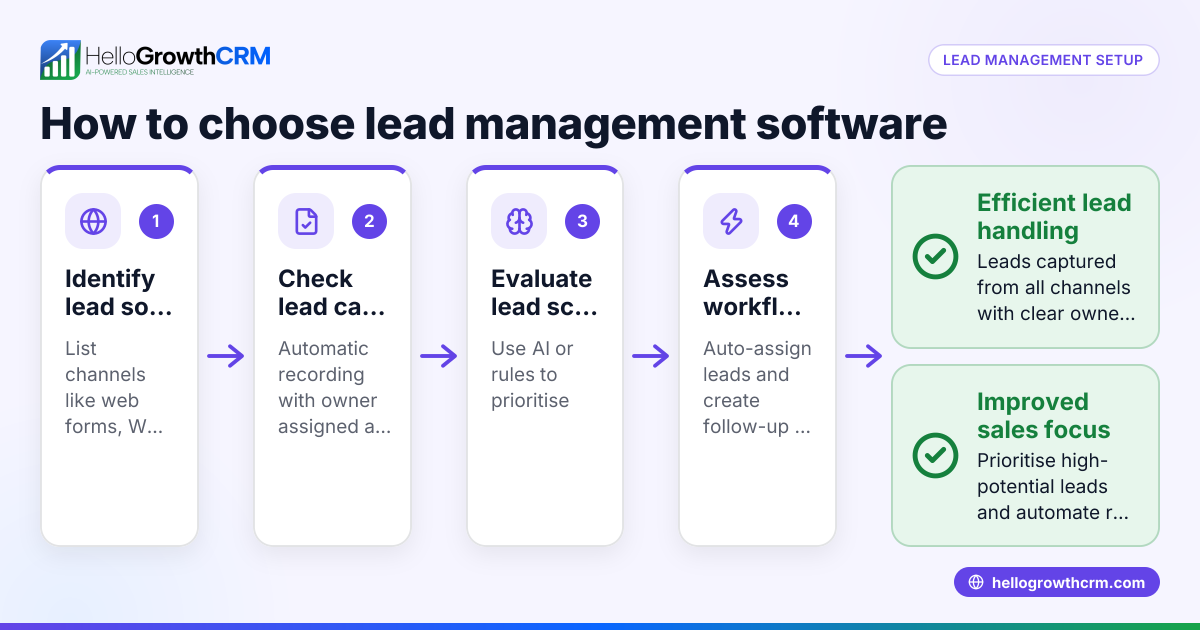
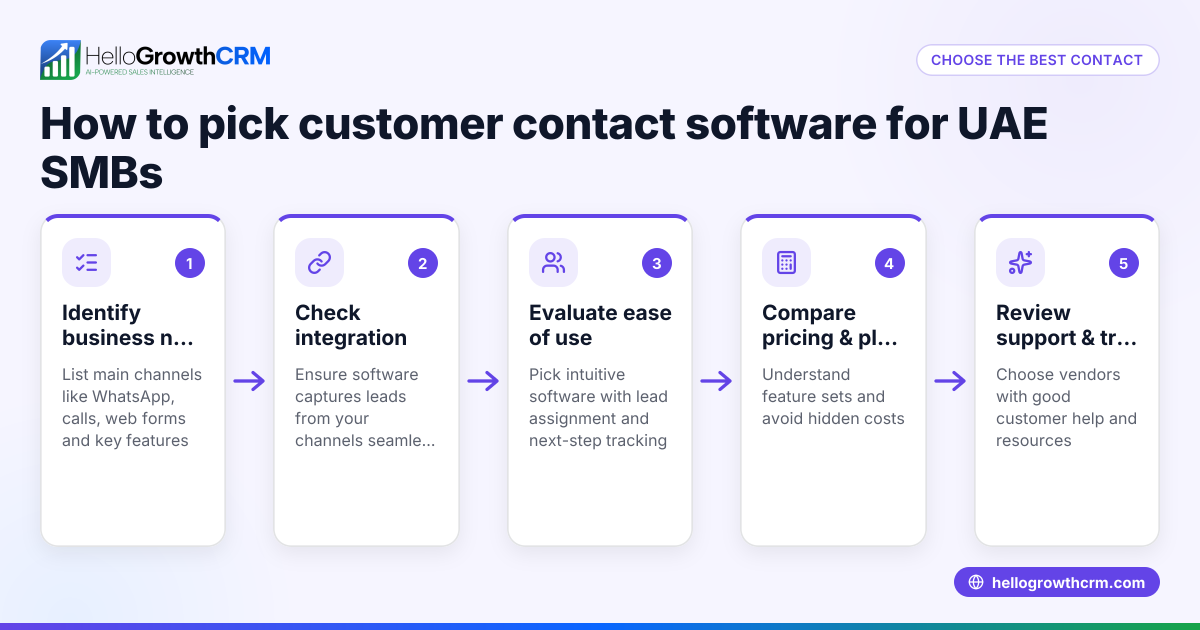
Before you commit, run one realistic test using your own lead mix. Do not ask whether the CRM has AI, automation and pipelines. Most products can tick those boxes. Ask whether your staff can process a real Singapore enquiry from first touch to payment and follow-up without resorting to side notes and chat messages.
- Can it capture a lead from Google Business Profile, WhatsApp or a referral and show the source clearly?
- Can you record consent status and keep marketing outreach separate from transactional updates?
- Can staff log a PayNow or bank-transfer receipt against the correct record without creating duplicates?
- Can it route an Orchard enquiry differently from a Jurong field-service job or a Changi-area B2B account?
- Can booking and reminder workflows avoid poor send times around lunch peaks, evenings and moving public holidays?
- Can your team see a full interaction history without switching between inboxes, spreadsheets and phones?
This kind of test quickly reveals whether the product suits Singapore operations or merely demos well. If you need to compare setup depth, workflow flexibility and operating fit, it is worth reviewing the broader CRM capabilities and, for implementation support, whether managed RevOps help is justified.
The arithmetic should include admin saved, deposits captured and bad-fit follow-up avoided
The arithmetic below is illustrative; the figures are made up to show the shape of the decision.
Imagine an air-conditioning service firm in Jurong handling about S$18,000 a month in new booked work from inbound leads. Staff spend time copying WhatsApp enquiries into a spreadsheet, chasing technicians for visit notes, and matching PayNow receipts to jobs. Suppose a better CRM setup saves enough admin time to avoid S$1,200 a month of wasted labour and helps the team convert one additional well-qualified maintenance contract worth S$2,400 in a month. Now assume cleaner records also stop the team from spending effort on poor-fit leads that used to absorb about S$600 of staff time and transport planning. Against that, the business incurs S$900 a month in software and setup-related operating cost.
On those invented figures, the improvement is not just “more leads converted”. It is S$1,200 of admin saved, plus S$2,400 of added booked work, plus S$600 of wasted effort avoided, less S$900 of cost. The apparent monthly gain is S$3,300.
What this leaves out: staff training time, the quality of technician availability data, seasonality, refund risk, GST treatment, and whether the extra contract is actually profitable after parts and travel. That is why the right buying question is not “will AI increase revenue?” but “which parts of our current process are expensive, slow or error-prone in Singapore, and can this CRM fix those specific points?”
Where HelloGrowthCRM fits for a Singapore buyer
If your team wants one system to keep enquiries organised, move qualified leads into pipeline, automate follow-up tasks, support calling and messaging, and maintain a readable history on each account, HelloGrowthCRM is a plausible fit. Its lead capture and AI scoring are the obvious starting point, but the more relevant test for Singapore businesses is how those tools work with pipeline management, task boards, messaging, scheduling and revenue forecasting in the same workflow.
For smaller teams, the free plan can be a low-risk way to test whether your lead sources and handoffs stay cleaner in one place. For more complex operations, especially if records are already scattered across forms, phones and spreadsheets, the question is less about headline features than about whether your process can be made disciplined enough for scoring and automation to be useful.
In Singapore, that is what separates a CRM that merely has AI from one that is genuinely worth buying.
Ready to put this into practice?
Set up your pipeline, WhatsApp follow-ups, and AI lead scoring in minutes — free, no credit card.
Try HelloGrowthCRM freeGet CRM tips in your inbox
Join thousands of sales professionals who get weekly insights on CRM strategy, AI automation, and pipeline optimization.

The HelloGrowthCRM team publishes guides on CRM strategy, AI sales tools, and revenue operations for small business sales teams.