HelloGrowthCRM software
Built for real small-business sales teams
HelloGrowthCRM helps reps qualify faster, follow up on time, and close more deals—with practical automation in one place.
- AI lead scoring and pipeline visibility
- Built-in dialer, WhatsApp, and email automation
- Sales forecasting and RevOps-ready reporting
In Canada, the best CRM with AI sales automation is the one that can score and route leads quickly without breaking CASL rules, losing Interac payments, mis-timing bookings across provinces, or leaving Quebec communications as an afterthought.
That sounds narrower than a normal software shortlist, but it is the real buying lens for a business here. A clinic in Ontario, a contractor in Alberta and a staffing firm in Quebec can all use AI to prioritize inbound demand, draft follow-ups and keep a pipeline moving. What separates a useful system from a costly one is whether the automation reflects Canadian operating conditions: bilingual communication, province-specific tax handling, bank-based payment rails, and consent records that stand up if someone questions a message you sent.
If you are evaluating options, start from your operating risk rather than a feature grid. AI scoring matters. Automated outreach matters. But in Canada, the CRM also has to preserve evidence: where a lead came from, what consent you had, which province a sale belongs to, what payment rail the customer used, and what local time a reminder should send. Those details decide whether automation saves admin or creates cleanup.
CASL turns “automated follow-up” into a record-keeping problem
Canada’s anti-spam regime is not just a legal note for your footer. CASL governs commercial electronic messages, and the practical consequence for CRM selection is simple: your system needs a durable consent record tied to the contact, not a vague status field and a hope that staff remember the backstory.
The CRTC enforces CASL, and the law requires more than a message body. You need sender identification and a working unsubscribe mechanism, and you need to know whether your basis for contacting someone is express consent or implied consent. Implied consent does not last forever, so a CRM that automates outreach but cannot show date, source and type of consent creates avoidable exposure.
This matters most when AI is drafting or scheduling messages. A helpful reminder can become a commercial electronic message once a promotional line gets added. That is why the best setup keeps transactional templates separate from marketing and stores the reason each automation is allowed to fire. If your lead sources include Google Business Profile, Kijiji, Facebook, LinkedIn, HomeStars or referral forms, ask how the CRM records origin and consent evidence from each source rather than dropping all inquiries into one bucket.
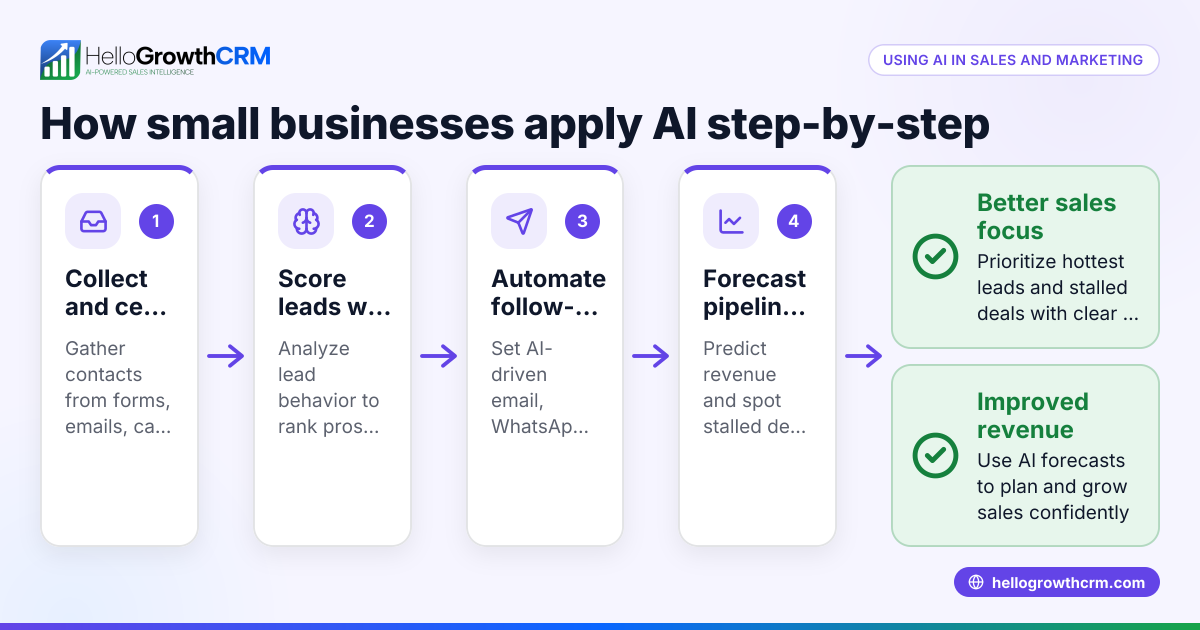
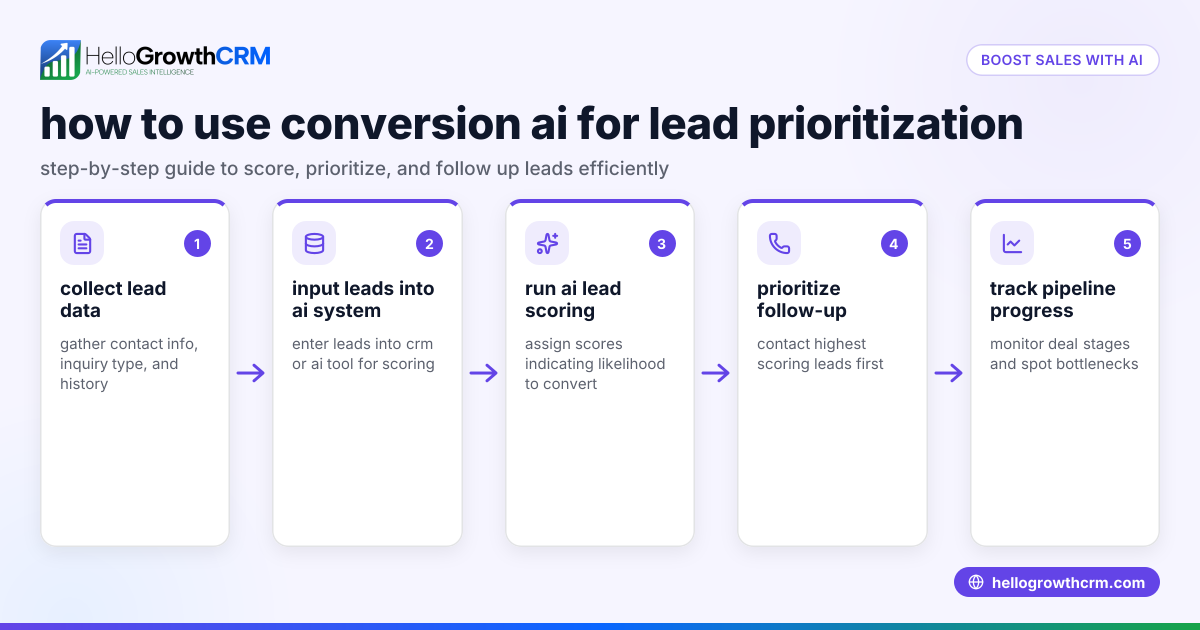
For many Canadian teams, the most useful AI is not the flashiest generator. It is the AI that helps rank new inquiries while your workflows enforce channel discipline. HelloGrowthCRM’s AI lead scoring and pipeline tools can help prioritize inbound leads, but the buying question is whether your process captures the consent facts that a score alone cannot supply.
Quebec changes the shortlist because language and privacy are operational issues
If you sell in Quebec, “supports French” is too weak a requirement. Customer-facing communication often needs to be available in French, and Quebec’s Law 25 adds privacy obligations around consent, transparency and confidentiality incidents. That means your CRM choice affects sales operations, not just compliance paperwork.
A booking page, confirmation email and reminder sequence that exist only in English will create friction before a rep even speaks to the prospect. The same is true of form fields, unsubscribe text and self-serve messages. In practice, bilingual service expectations shape staffing, templates and routing rules inside the CRM.
Privacy governance is also different in kind, not just degree. PIPEDA applies federally in many contexts, with the Office of the Privacy Commissioner of Canada as regulator, while Quebec’s Commission d’accès à l’information oversees Law 25. If your sales team works from a shared inbox, text channel and pipeline, the CRM should make it straightforward to limit who sees what, document contact preferences and retrieve the history tied to a contact when a customer asks what you hold.
This is where a generic “best for small business” ranking often fails Canadian buyers. A system can look strong in demos yet still force your Quebec branch to maintain separate spreadsheets for French templates, privacy requests or local intake notes. That is not automation; it is fragmentation.
Interac, cheques and PAD mean your CRM must reflect Canadian payment reality
Many Canadian businesses do not get paid through card rails alone. Interac e-Transfer is common, especially for deposits, smaller invoices and service businesses. Pre-authorised debit is still routine in some recurring arrangements. Cheques and wire transfers remain part of the mix in B2B work. If your CRM assumes every payment lands through a card processor, it will understate collections and distort pipeline reporting.
This becomes a sales automation issue when closed-won deals trigger invoicing, reminders or handoffs. The best CRM for Canada should let your team reconcile what was actually received against the invoice and deal record, even when the money arrived through the bank rather than through card settlement. Otherwise staff end up marking deals as unpaid while the bank account says the opposite.
For tax handling, the paperwork also depends on where the supply takes place. In Canada, indirect tax can involve GST, HST, provincial sales tax and, in Quebec, QST. The Canada Revenue Agency publishes GST and HST guidance, and Revenu Québec publishes QST guidance. A multi-province business therefore needs the province of supply recorded per transaction, not just a total amount. Deposits and forfeited amounts have their own treatment, and the CRA publishes guidance on both the timing of the tax obligation and how deposits are handled; those are not identical issues.
If a CRM can generate quotes, proposals or invoices, that is useful only if your team still captures province and payment method consistently. For Canadian operators, a missing province field is not a small omission.
Time zones and provincial holidays decide whether your automations feel competent
Canada’s geography makes scheduling logic more important than it first appears. There are multiple time zones across the country, including one with a half-hour offset, and daylight saving time is not observed uniformly. Saskatchewan is the classic trap. A booking made months ahead can drift if the system stores the wrong time basis or if reminders are triggered from a user’s local clock instead of the customer’s.
This affects more than calendar neatness. If you run appointment-heavy sales, such as a clinic consultation, field visit or discovery call, AI automation loses value the moment a reminder arrives at the wrong local hour. A rep then spends time apologizing instead of selling.
Provincial holiday differences create a second layer. Some statutory holidays are not observed across the country in the same way. If your sequences or reminder workflows send on a day when your local office is closed or your customer is unavailable, the automation can make your business look inattentive. For field teams, travel and territory planning add another operational wrinkle.
So when you evaluate AI sales automation, test the ordinary scenarios: a lead in Calgary booking with a rep in Toronto, a Quebec reminder in French, a March appointment created in October, and a follow-up sequence that should skip a provincial holiday. The scheduling engine matters as much as the scoring model. If booking is central to your funnel, review the CRM’s scheduling and booking capability with these cases in mind rather than just checking whether it has a calendar link.
Your lead sources should shape the scoring model, not the other way around
AI lead scoring is only useful when it reflects how Canadian prospects actually arrive and what “qualified” means in your business. Local lead mix varies sharply by sector. Home service firms may rely on Google Business Profile, HomeStars, referrals and Facebook. A staffing agency may care more about LinkedIn and inbound forms. Some local businesses still receive meaningful inquiries from Kijiji or Yellow Pages. A dental office may see web leads and phone calls that need different handling from the first minute.
The CRM should therefore let you preserve source data cleanly, route by territory or office, and distinguish a browsing inquiry from a high-intent request. If your best leads usually call, a score trained mainly on email behaviour will not tell the full story. If your strongest source is Google Business Profile, response speed and booking conversion may matter more than long nurture sequences.
This is also where AI should be supervised by your own qualification rules. For an HVAC contractor in Calgary, postal area, service type and urgency may matter more than company size. For a Montreal staffing agency, bilingual requirements and hiring timeline may matter more than raw inquiry volume. The CRM’s job is to combine those rules with activity history so the next action is obvious.
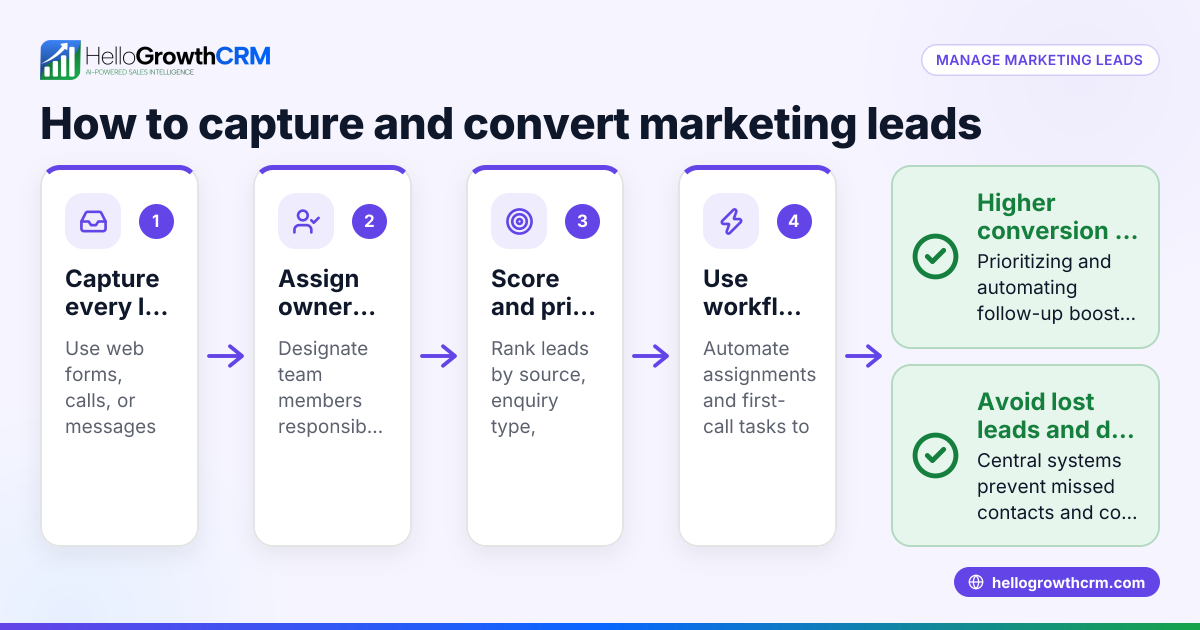
In HelloGrowthCRM, the useful combination for this problem is usually pipeline management and workflow automation plus AI lead scoring, so new inquiries can enter the pipeline, be routed, and trigger the right next task without waiting for manual triage. That matters more in Canada than a large feature count because lead source quality is uneven and response windows are often short.
A short buying check for Canada beats a long feature comparison
Use this short check in demos and trials:
- Can it store consent type, source and date for each contact, and can automations use that record before sending a commercial message under CASL?
- Can customer-facing pages and templates run properly in English and French where needed, especially for Quebec?
- Can each deal or invoice carry province-of-supply information so your team can apply CRA and Revenu Québec guidance correctly?
- Can staff reconcile payments received when the customer used Interac e-Transfer, pre-authorised debit, cheque or wire rather than a card rail?
- Can reminders and sequences send in the customer’s local time across Canadian time zones without daylight saving surprises?
- Can source and routing rules reflect the channels that actually feed your business, such as Google Business Profile, LinkedIn, HomeStars or referrals?
If a vendor answers these with workarounds, you are likely buying admin debt.
One illustrative pipeline shows where AI automation actually pays off
The arithmetic below is illustrative; the figures are made up to show the shape of the decision. It leaves out payroll, ad spend, software costs and the exact indirect tax treatment, which depends on the facts and the official guidance from the CRA and, in Quebec, Revenu Québec.
Illustrative example: a physiotherapy clinic in Mississauga receives an illustrative batch of C$18,500 in prospective treatment plans from mixed sources during one illustrative week. An illustrative C$6,200 comes from Google Business Profile form fills, an illustrative C$4,800 from phone inquiries, an illustrative C$3,900 from referrals and an illustrative C$3,600 from Facebook leads. Staff can only call back the strongest prospects promptly if the system separates urgent pain-related requests from general inquiries and books assessments fast.
With a weak setup, all inquiries land in one inbox. The receptionist sends the same reply to everyone, a few phone leads are logged late, and one reminder goes out at the wrong local time to an out-of-province prospect. An Interac deposit is received for an illustrative C$250 but not tied back to the record until later, so the deal view is inaccurate.
With a better setup, AI scoring pushes the highest-intent requests to the top, workflows create follow-up tasks immediately, and booking links offer the right location and language. The clinic can then see which illustrative C$18,500 is truly active, which prospects need a call rather than an email, and which deposits have arrived. The gain is not abstract “efficiency.” It is fewer lost high-intent inquiries and cleaner handoff from lead to booked patient.
Where HelloGrowthCRM fits for a Canada-based sales process
If your team wants one system for organized intake and follow-up, HelloGrowthCRM is worth evaluating because it combines lead capture, AI scoring, pipeline tracking, task management, messaging, calling and booking in one place. That is useful for Canadian businesses that need every inquiry tied to a clear next action and a complete interaction history.
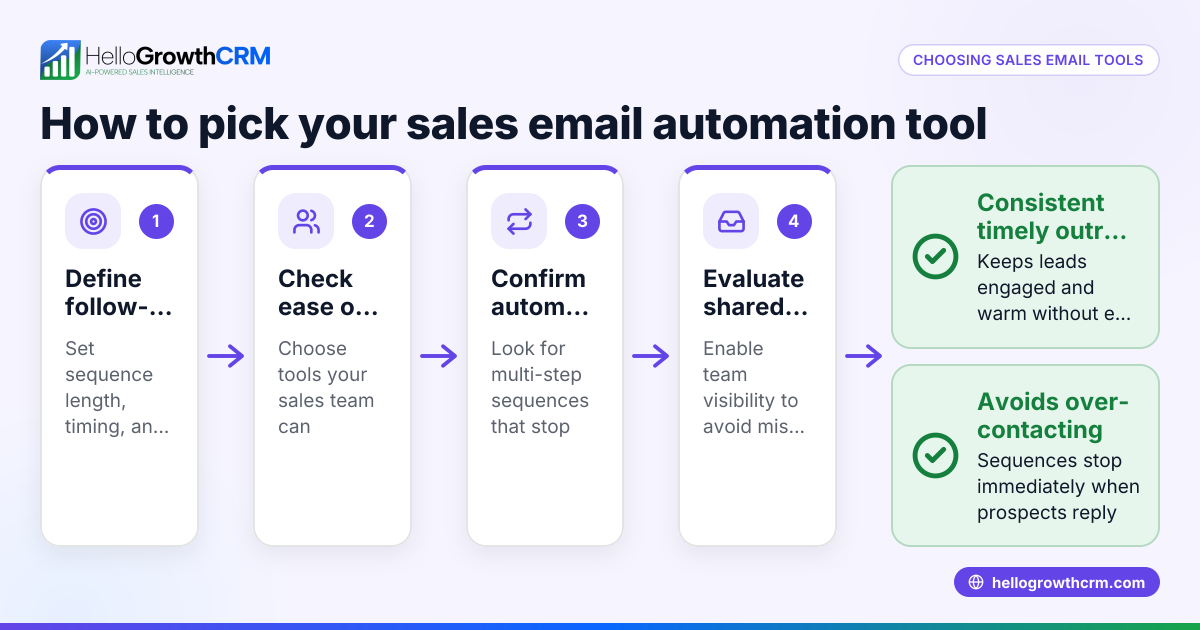
You can review the free CRM if you want to trial pipeline, tasks and scheduling before a larger rollout. If outbound and follow-up discipline are central, the built-in sequences and shared inbox tools can help teams manage responses and timed outreach, while task boards keep handoffs visible. The point is not that software replaces judgment. It is that a CRM should make Canadian realities easier to manage inside the workflow rather than in side notes and separate files.
The best choice for Canada is the CRM that helps your team move faster while still preserving consent evidence, province data, payment reality and local scheduling logic. If a platform cannot do that, its AI will not rescue the decision.
Ready to put this into practice?
Set up your pipeline, WhatsApp follow-ups, and AI lead scoring in minutes — free, no credit card.
Try HelloGrowthCRM freeGet CRM tips in your inbox
Join thousands of sales professionals who get weekly insights on CRM strategy, AI automation, and pipeline optimization.

The HelloGrowthCRM team publishes guides on CRM strategy, AI sales tools, and revenue operations for small business sales teams.