HelloGrowthCRM software
Built for real small-business sales teams
HelloGrowthCRM helps reps qualify faster, follow up on time, and close more deals—with practical automation in one place.
- AI lead scoring and pipeline visibility
- Built-in dialer, WhatsApp, and email automation
- Sales forecasting and RevOps-ready reporting
A cold calling business involves reaching out by phone to prospects who have not previously engaged with your company, with the goal of creating new sales opportunities. This method is often used by small businesses and sales teams to grow their customer base when inbound leads are limited.
Why this comes up / what goes wrong
Small business owners often consider cold calling when they notice slow lead flow or when their sales rely heavily on inbound inquiries and referrals. Without a structured approach, cold calling can feel inefficient and frustrating. Common challenges include messy contact lists, inconsistent follow-up, and difficulty tracking call outcomes, all of which reduce the chances of converting cold leads into customers.
Step-by-step
- Define your target audience: Identify the ideal customer profile using criteria like industry, location, company size, or role. Check that your list matches this profile to avoid wasted calls.
- Build or acquire a clean contact list: Gather accurate phone numbers and basic information. Verify contacts to reduce wrong numbers or disconnected lines.
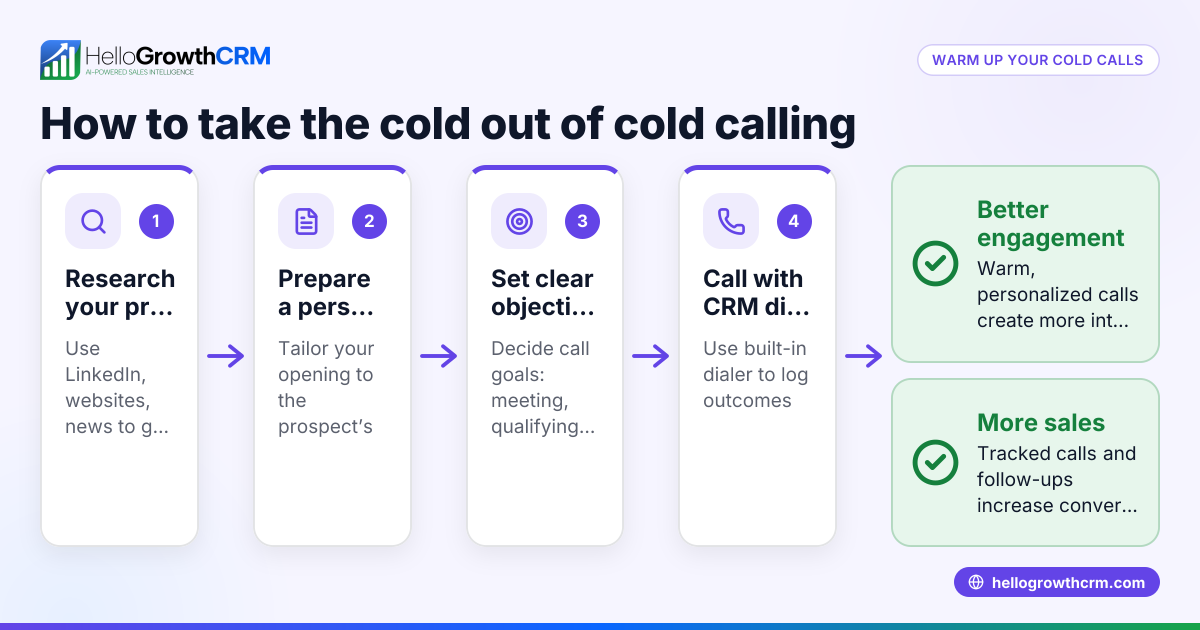
- Prepare a call script and value proposition: Outline key points to communicate clearly and quickly. Ensure your script addresses potential objections and highlights benefits.
- Train your callers: Practice tone, pacing, and handling common questions. Review call goals and how to log outcomes.
- Schedule calling sessions: Plan specific times for calling when prospects are most likely to answer. Avoid calling too early or late.
- Make calls and log results: Use tools to dial directly and record each call’s outcome, such as interested, no answer, or follow-up needed. Check that every call is logged accurately.
- Follow up consistently: For interested prospects, schedule timely follow-ups by phone, email, or text. Track these tasks to avoid missed opportunities.
- Review and refine your approach: Analyze call outcomes regularly to identify what works and where to improve. Adjust scripts, lists, or calling times as needed.
Example (fictional figures)
A landscaping contractor in Charlotte, North Carolina, decides to start cold calling local businesses for commercial lawn care contracts.
- They identify 500 potential businesses fitting their target profile.
- They verify contacts and clean the list, reducing it to 450 valid numbers.
- They prepare a call script emphasizing quality and reliability.
- Each caller plans to make 50 calls per day over 9 days.
Calculations:
Calls planned = 50 calls/day × 9 days = 450 calls
Assuming a 10% positive response rate:
Positive leads = 450 calls × 10% = 45 leads
If 20% of leads convert to contracts:
Contracts = 45 leads × 20% = 9 contracts
Average contract value = $5,000
Expected revenue = 9 contracts × $5,000 = $45,000
This example shows how cold calling can generate meaningful sales when planned and executed well.
Common mistakes
- Using outdated or unverified contact lists: Prevent by regularly cleaning and verifying your data.
- Skipping call outcome logging: Prevent by using a system that automatically records call results, so no lead is lost.
- Ignoring follow-ups: Prevent by scheduling and tracking follow-up tasks diligently.
- Reading scripts robotically: Prevent by training callers to sound natural and adapt to conversations.
- Calling at inappropriate times: Prevent by researching best calling hours for your target audience.
- Not reviewing performance: Prevent by analyzing call data weekly and adjusting tactics.
Doing this in HelloGrowthCRM
HelloGrowthCRM offers a built-in dialer that lets your reps work through contact lists directly inside the CRM. Each call’s outcome is logged automatically on the lead’s record, keeping the full call history tied to contacts and deals. This helps your team track progress, avoid missed follow-ups, and keep sales organized. Learn more about the built-in CRM dialer and how HelloGrowthCRM supports WhatsApp and SMS CRM for multi-channel outreach. For US businesses, explore how HelloGrowthCRM fits your needs at HelloGrowthCRM for the United States.
Frequently asked questions
What is cold calling in sales? Cold calling is contacting potential customers by phone without prior interaction to introduce products or services and generate interest. It is a proactive sales method used to expand customer bases.
Is cold calling still effective? Cold calling can be effective if done with a clear strategy, targeted lists, and proper follow-up. Using CRM tools to track calls and outcomes improves results compared to random or unorganized calling.
How do I prepare for cold calling? Define your target audience, create a concise script, train your callers, and have a system to log calls and schedule follow-ups. Preparation boosts confidence and conversion rates.
What are the legal considerations for cold calling in the US? You must comply with laws like the Telephone Consumer Protection Act (TCPA), which restrict calling times and require honoring Do Not Call lists. (fcc.gov) Consult legal counsel for guidance.
How can CRM software improve cold calling? CRM software organizes contacts, automates dialing, logs call outcomes, and schedules follow-ups. This reduces manual work and helps sales teams stay on top of leads.
Key takeaways
- Cold calling involves reaching out to prospects without prior contact to generate sales leads.
- Success depends on targeted lists, clear scripts, consistent follow-up, and call tracking.
- Common mistakes include poor list quality, failing to log calls, and ignoring follow-ups.
- Using a CRM with a built-in dialer helps organize calls, log outcomes, and manage leads efficiently.
- Reviewing call data regularly allows continuous improvement of your cold calling strategy.
Start your cold calling business with a clear plan and the right tools. To try a CRM that supports your calling efforts, Start on the Free Forever plan (200 leads, no credit card).
Ready to put this into practice?
Set up your pipeline, WhatsApp follow-ups, and AI lead scoring in minutes — free, no credit card.
Try HelloGrowthCRM freeGet CRM tips in your inbox
Join thousands of sales professionals who get weekly insights on CRM strategy, AI automation, and pipeline optimization.

The HelloGrowthCRM team publishes guides on CRM strategy, AI sales tools, and revenue operations for small business sales teams.