HelloGrowthCRM software
Built for real small-business sales teams
HelloGrowthCRM helps reps qualify faster, follow up on time, and close more deals—with practical automation in one place.
- AI lead scoring and pipeline visibility
- Built-in dialer, WhatsApp, and email automation
- Sales forecasting and RevOps-ready reporting
A content marketing pipeline is a system that organizes every stage of your content marketing efforts—from brainstorming topics, creating drafts, editing, publishing, to promoting content and tracking results. It helps keep your marketing consistent and ensures leads generated from content are followed up promptly.
Why this comes up / what goes wrong
Small business owners often face challenges with content marketing because they lack a structured process. Without a content marketing pipeline, ideas get lost, deadlines are missed, and leads generated by content slip away due to slow or no follow-up. Many rely on spreadsheets or scattered notes, which makes tracking progress and measuring which content drives sales difficult. This leads to wasted time, inconsistent marketing, and lost revenue opportunities.
Step-by-step
- Define your content goals and audience. Decide what you want your content to achieve (such as lead generation or brand awareness) and who your target audience is. Check that these goals are specific, measurable, and aligned with your business objectives.
- Brainstorm and list content ideas. Gather topics relevant to your audience and business. Check for variety to cover different buyer needs and stages.
- Create a content calendar. Schedule when each piece of content will be created, reviewed, published, and promoted. Check that deadlines are realistic and evenly spaced to maintain consistency.
- Assign responsibilities. Determine who will write, edit, design, and publish each piece. Check that everyone understands their tasks and deadlines.
- Produce content. Develop drafts, review, and finalize them. Check that the content quality is high and consistent with your brand voice.
- Publish and promote content. Share your content on your website, social media, email, or other channels. Check that your promotion matches your audience’s preferred platforms.
- Track performance and follow-up leads. Monitor metrics like views, shares, and lead conversions. Check that leads generated are captured and contacted promptly to maximize sales potential.
Using a CRM to track leads generated from your content marketing helps ensure no opportunity is forgotten. You can see which content pieces generate deals and where prospects stall in the sales process.
Example (fictional figures)
A two-location dental practice in Columbus, Ohio, plans a content marketing pipeline for Q3 2026.
- Goal: Generate 50 new patient leads from blog posts and social media.
- Content calendar: 8 blog posts and 12 social media posts scheduled between 07/01/2026 and 09/30/2026.
- Assignments: Dr. Smith writes blogs; the office manager handles social media.
- Promotion budget: $1,000 for boosted posts.
Results after Q3:
- 45 new leads generated.
- 30 leads converted to appointments.
- Average revenue per new patient: $500.
Revenue calculation: 30 patients × $500 = $15,000
The practice tracks leads in their CRM from first contact through appointment booking, ensuring timely follow-up and no lost opportunities.
Common mistakes
- No clear process or calendar. Prevent this by setting up a detailed content calendar and pipeline.
- Unassigned responsibilities. Prevent by clearly defining roles for each content stage.
- Ignoring lead follow-up. Prevent by using a CRM to track leads generated from content and set follow-up reminders.
- Publishing without promotion. Prevent by planning promotion steps alongside content creation.
- Not measuring results. Prevent by tracking key metrics and adjusting the pipeline accordingly.
Using tools like HelloGrowthCRM helps avoid these mistakes by managing deals in a pipeline and providing AI insights on stalled opportunities. Learn more about its Deals (pipeline) feature and pipeline forecast and AI insights.
Doing this in HelloGrowthCRM
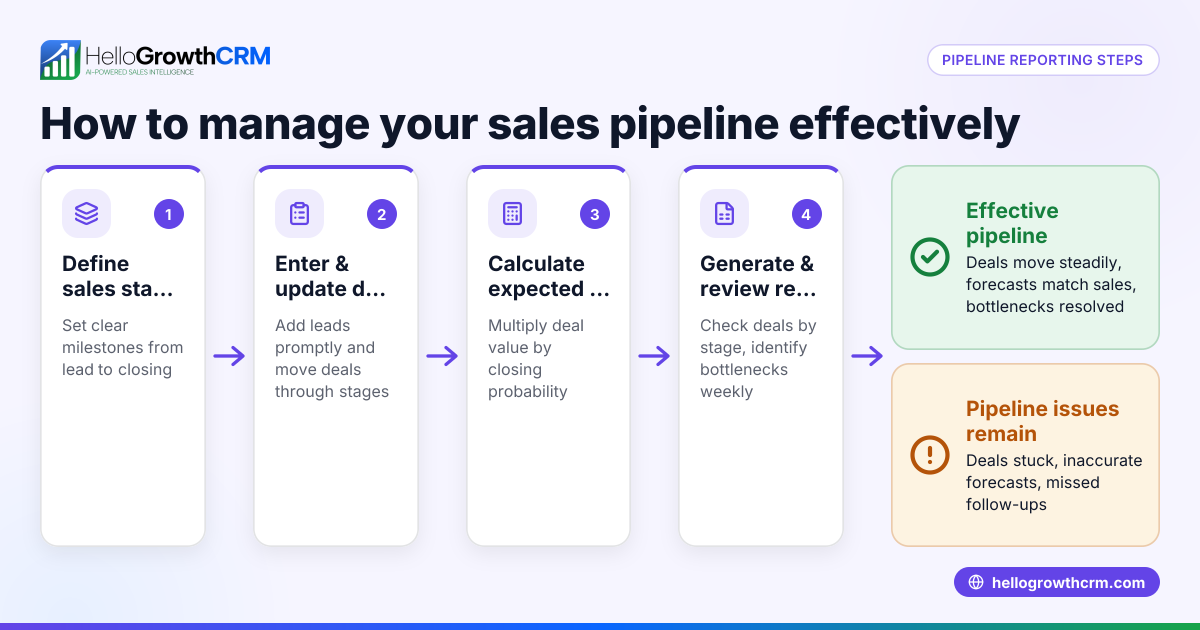
HelloGrowthCRM supports managing your sales pipeline with its Deals feature, where a quotation sent last week appears as a deal at the 'quote sent' stage with a follow-up date, so no lead is forgotten. Its pipeline forecast and AI insights show which stage deals are stalling without needing to build spreadsheets. This helps owners focus on leads needing attention and improves closing rates. See how HelloGrowthCRM fits for the United States.
Frequently asked questions
What is the difference between a content marketing pipeline and a content calendar? A content calendar schedules when content is published and promoted. A content marketing pipeline covers the entire process, including idea generation, creation, review, publishing, promotion, and lead follow-up.
How can I track leads generated by content marketing? Use a CRM to capture leads from web forms or interactions, then track their progress through your sales pipeline. This ensures timely follow-up and better conversion.
How often should I update my content marketing pipeline? Review and update your pipeline regularly, at least monthly, to adjust for new ideas, performance data, and business priorities.
Can small teams manage a content marketing pipeline effectively? Yes, with clear roles, a simple process, and tools like HelloGrowthCRM to automate follow-ups and pipeline tracking, even small teams can maintain an effective pipeline.
What metrics should I track in my content marketing pipeline? Track content production milestones, engagement metrics (views, shares), lead generation numbers, and conversion rates to appointments or sales.
Key takeaways
- A content marketing pipeline organizes all steps from idea generation to lead follow-up.
- Clear goals, a content calendar, and assigned roles keep the process on track.
- Tracking leads and follow-up prevents lost sales opportunities.
- Avoid common mistakes like missing deadlines or ignoring promotion.
- HelloGrowthCRM helps manage sales pipelines with deals tracking and AI insights.
Start organizing your content marketing pipeline today to generate more consistent leads and sales. To get started managing your sales pipeline with lead follow-up and AI insights, Start on the Free Forever plan (200 leads, no credit card).
Ready to put this into practice?
Set up your pipeline, WhatsApp follow-ups, and AI lead scoring in minutes — free, no credit card.
Try HelloGrowthCRM freeGet CRM tips in your inbox
Join thousands of sales professionals who get weekly insights on CRM strategy, AI automation, and pipeline optimization.

The HelloGrowthCRM team publishes guides on CRM strategy, AI sales tools, and revenue operations for small business sales teams.