HelloGrowthCRM software
Built for real small-business sales teams
HelloGrowthCRM helps reps qualify faster, follow up on time, and close more deals—with practical automation in one place.
- AI lead scoring and pipeline visibility
- Built-in dialer, WhatsApp, and email automation
- Sales forecasting and RevOps-ready reporting
A courtesy email is a polite, professional message sent to acknowledge something, provide updates, or keep communication open without demanding an immediate reply. Small businesses use courtesy emails to maintain good relationships with customers, suppliers, or partners by showing attentiveness and respect. This article covers why courtesy emails are important, how to write them effectively, common mistakes to avoid, and a worked example tailored for Australian small businesses.
Why this comes up / what goes wrong
Small business owners in Australia often face communication challenges such as delayed responses, unclear follow-ups, or missed opportunities to reassure clients. For example, after sending a quotation or receiving an enquiry, customers expect some acknowledgment even if the final details are still pending. Without a courtesy email, clients may feel ignored or uncertain, which can harm trust and sales chances. Additionally, managing multiple leads and conversations via text, email, or spreadsheets can cause messages to slip through the cracks, leading to lost business and frustrated customers.
Step-by-step
- Identify the purpose of your courtesy email. Decide if you are acknowledging receipt, providing a status update, or simply keeping in touch. Check that the message matches the situation and the recipient’s expectations.
- Write a clear, polite opening. Use greetings like "Thank you for your enquiry" or "Just a quick note to let you know" to set a courteous tone and show appreciation.
- State the main message briefly. For example, confirm you received a document, update on progress, or inform about next steps without asking for immediate action.
- Include any relevant details or timelines. If you expect to follow up later, mention when the recipient can expect more information or a decision.
- Close with a friendly sign-off. Use phrases like "Please let me know if you have any questions" or "Looking forward to assisting you further" to keep the door open for communication.
- Check for spelling, grammar, and clarity. A professional email reflects well on your business and builds trust.
- Send and track your email. Use tools or CRM features to ensure the message is delivered and follow up if needed.
For managing follow-ups efficiently, consider email automation and sequences to keep your outreach organised and timely without manual effort.
Example (fictional figures)
GreenScape Landscaping, a small business in Newcastle, NSW, sends a courtesy email after receiving a client’s request for a garden redesign quotation.
- Date: 15/04/2026
- Client: Mrs Smith
Email content: "Dear Mrs Smith, thank you for your enquiry about our garden redesign services. We have received your details and will prepare a quotation by 22/04/2026. We appreciate your interest and will be in touch soon."
This message confirms receipt and sets expectations without requiring Mrs Smith to respond immediately.
Worked example calculations:
- Quotation preparation cost estimate: A$1,200
- Expected profit margin: 25%
Calculate profit: A$1,200 × 25% = A$300
Calculate total quotation price: A$1,200 + A$300 = A$1,500
The courtesy email sets a follow-up date (22/04/2026) for sending the detailed quotation of A$1,500, keeping the client informed and engaged.
Common mistakes
- Not sending a courtesy email at all. Prevent by setting reminders or using CRM sequences to automate acknowledgments.
- Being vague or unclear. Prevent by stating the purpose and next steps clearly so the recipient knows what to expect.
- Making the email too long or formal. Prevent by keeping it concise, friendly, and professional to maintain engagement.
- Failing to follow up after the courtesy email. Prevent by scheduling follow-ups or using sequences and campaigns to automate this process.
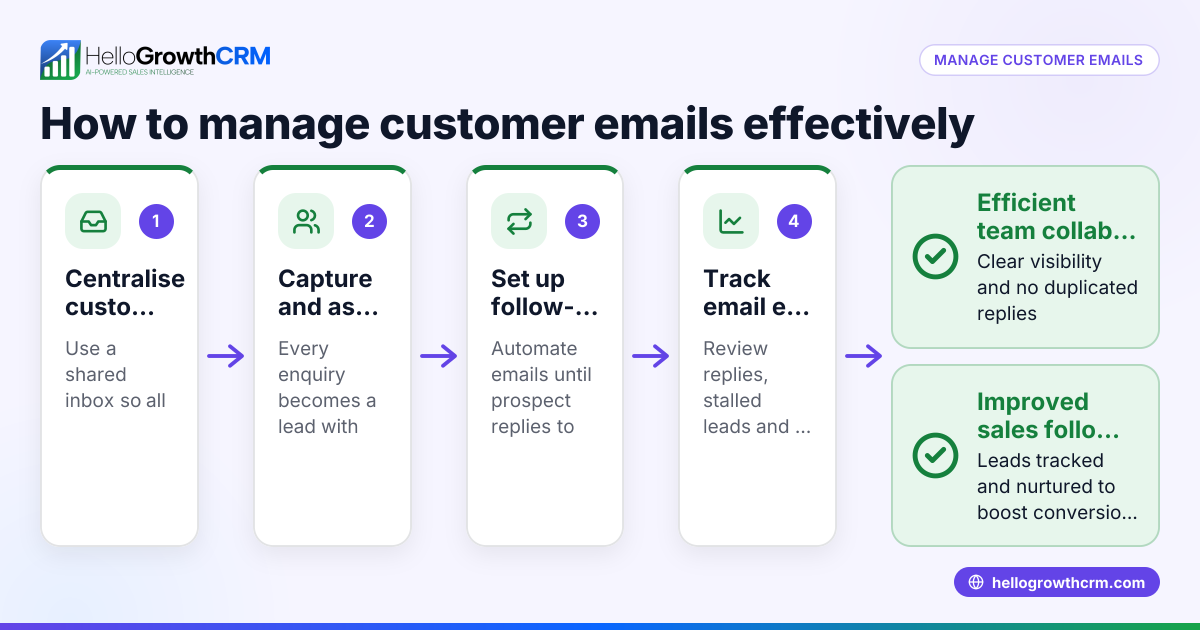
- Ignoring replies or not sharing email responses with the team. Prevent by using a shared inbox like HelloMail so the whole team sees replies and can act accordingly.
- Not personalising the email. Prevent by using the recipient’s name and referencing their specific enquiry to show attentiveness.
Doing this in HelloGrowthCRM
HelloGrowthCRM offers HelloMail, a shared inbox inside the CRM where replies to quotation emails are visible to your whole team on the deal, ensuring no message is missed. You can also set up sequences and campaigns that automate a five-step follow-up over two weeks, which stops immediately when the prospect replies. This helps small businesses manage courteous communication efficiently and professionally. Learn more about HelloGrowthCRM for Australia and its email features.
Frequently asked questions
What is the main purpose of a courtesy email? A courtesy email is mainly to acknowledge receipt of information or keep communication open politely without demanding immediate action. It reassures recipients that their message or enquiry has been received and is being handled.
When should I send a courtesy email? Send a courtesy email soon after receiving enquiries, documents, or requests that require processing time. It’s also useful after meetings or significant interactions to maintain a positive relationship.
How formal should a courtesy email be? It should be polite and professional but concise and friendly. Avoid overly formal language that can seem distant or lengthy emails that may lose the reader’s attention.
Can I automate courtesy emails? Yes, automating courtesy emails using tools like email automation and sequences helps ensure timely, consistent communication without manual effort.
What if the recipient replies to my courtesy email? Be ready to respond promptly. Using a shared inbox like HelloMail lets your team see replies and coordinate responses smoothly.
How can I keep track of all courtesy emails and replies? Using a CRM with a shared inbox like HelloMail helps your team manage inbound emails without switching clients. This keeps the communication transparent and organised.
Key takeaways
- A courtesy email politely acknowledges or updates without asking for immediate response.
- It builds trust and keeps communication clear with customers and partners.
- Keep the message clear, brief, and professional.
- Avoid common mistakes like ignoring replies or failing to follow up.
- Use CRM tools like HelloMail and sequences to manage courteous communication efficiently.
Start improving your customer communication today. Start on the Free Forever plan (200 leads, no credit card) and see how HelloGrowthCRM can help you send timely courtesy emails and follow-ups.
Ready to put this into practice?
Set up your pipeline, WhatsApp follow-ups, and AI lead scoring in minutes — free, no credit card.
Try HelloGrowthCRM freeGet CRM tips in your inbox
Join thousands of sales professionals who get weekly insights on CRM strategy, AI automation, and pipeline optimization.

The HelloGrowthCRM team publishes guides on CRM strategy, AI sales tools, and revenue operations for small business sales teams.