HelloGrowthCRM software
Built for real small-business sales teams
HelloGrowthCRM helps reps qualify faster, follow up on time, and close more deals—with practical automation in one place.
- AI lead scoring and pipeline visibility
- Built-in dialer, WhatsApp, and email automation
- Sales forecasting and RevOps-ready reporting
Customer centricity means putting your customers’ needs, preferences, and experiences at the core of your business decisions and operations. It involves understanding your customers deeply and designing your products, services, and interactions around their satisfaction and success. This article explains why customer centricity matters for small businesses, outlines practical steps to implement it, highlights common mistakes, and shows how HelloGrowthCRM can help you stay customer-focused after the sale.
Why this comes up / what goes wrong
Small business owners often face challenges like losing leads due to slow follow-up, managing sales through scattered text messages, emails, and spreadsheets, and struggling to keep customer information organized. Without a clear focus on the customer, businesses risk misaligning their products or services with customer needs, leading to lost sales and poor retention. Customer centricity arises as a solution by encouraging businesses to shift their mindset and processes to revolve around the customer journey, ensuring every interaction adds value and builds loyalty.
Step-by-step
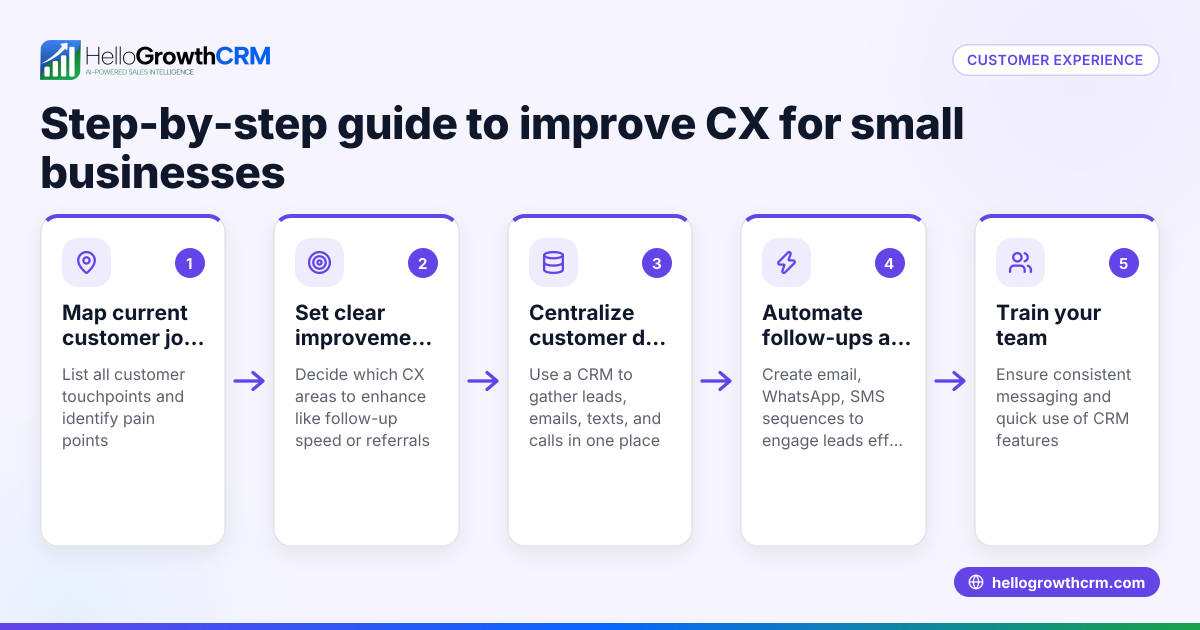
- Identify Your Customers’ Needs and Preferences
- Collect feedback through surveys, direct conversations, or social media.
- Check if your current offerings meet these needs or if adjustments are needed.
- Map the Customer Journey
- Outline every touchpoint from discovery to post-sale support.
- Check for any friction points where customers might drop off or get frustrated.
- Align Your Team Around Customer Goals
- Share customer insights with sales, marketing, and support teams.
- Check that everyone understands their role in enhancing the customer experience.
- Use Technology to Centralize Customer Data
- Store all customer interactions, preferences, and history in one place.
- Check for data gaps or inconsistencies that could harm personalized service.
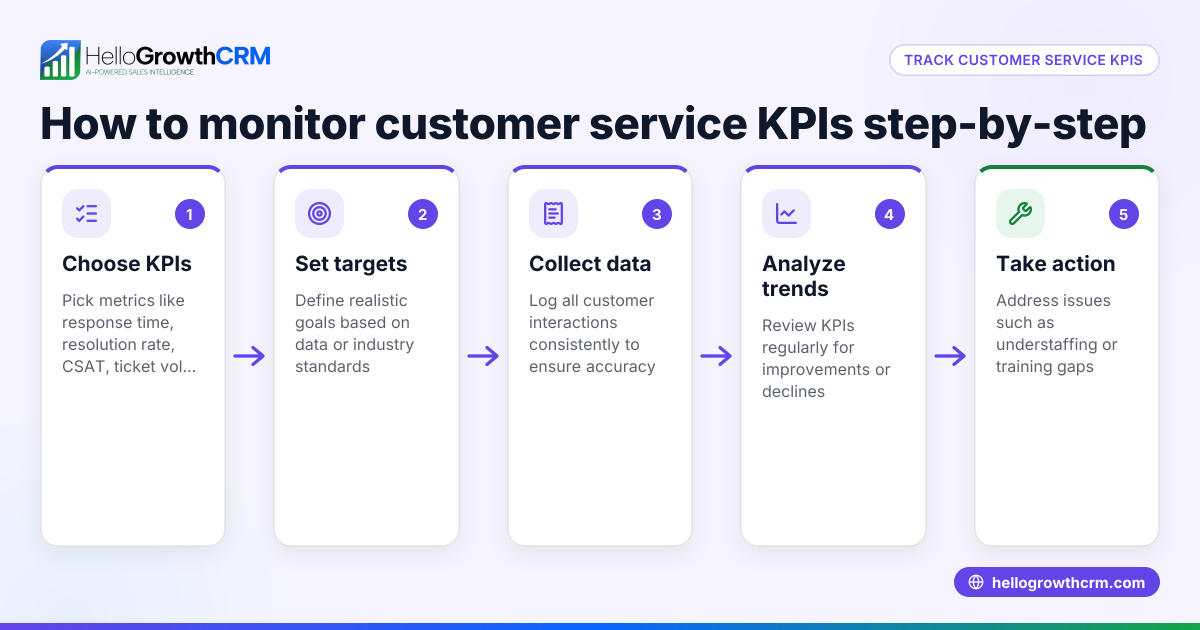
- Measure Customer Health and Satisfaction
- Track repeat purchases, referral rates, and support ticket resolution times.
- Check these metrics regularly to spot trends and areas for improvement.
- Continuously Improve Based on Customer Feedback
- Update products, services, and processes based on what customers say.
- Check if changes lead to better customer retention and sales growth.
Example (fictional figures)
Imagine a plumbing company in Austin, Texas, called Lone Star Plumbing. They want to improve customer centricity by focusing on faster service and better communication.
- Current average job completion time: 5 days
- Customer complaints about delays: 15 per month
- Goal: Reduce job completion time to 3 days and complaints to 5 per month by 12/31/2026
Steps Lone Star Plumbing takes:
- They survey customers and find communication is the biggest pain point.
- They map the customer journey and identify delays in scheduling and follow-up.
- They train their team to update customers proactively.
- They centralize customer info using a CRM for tracking jobs and communication.
Results by 12/31/2026:
- Job completion time drops from 5 days to 3 days
- Complaints drop from 15 to 4 per month
Calculations:
5 days - 3 days = 2 days improvement 15 complaints - 4 complaints = 11 fewer complaints
This shows how focusing on customer needs and communication improved their service and customer satisfaction.
Common mistakes
- Ignoring Customer Feedback
- Prevent by actively seeking and acting on feedback regularly.
- Siloed Customer Information
- Prevent by centralizing data so all teams access the same customer records.
- Focusing Only on Sales, Not Service
- Prevent by tracking service requests and support tickets as part of the customer record.
- Overcomplicating Processes
- Prevent by simplifying customer interactions and making it easy for customers to get help.
- Failing to Train the Team on Customer Focus
- Prevent by sharing customer insights and aligning team goals with customer success.
- Neglecting Post-Sale Customer Care
- Prevent by managing referrals, tickets, and knowledge bases to support ongoing customer needs.
Doing this in HelloGrowthCRM
HelloGrowthCRM supports customer centricity by keeping service requests, referrals, and support tickets linked directly to the same customer record as the deal. This means after the sale, you can track all customer interactions in one place, including access to a branded self-service customer portal and a knowledge base. This helps your team respond faster and keeps the customer experience consistent. Learn more about these features in the customer health score section.
Frequently asked questions
What is the difference between customer centricity and customer service? Customer centricity is a business philosophy focusing on aligning all aspects of your company around customer needs and satisfaction. Customer service is one part of this, involving direct support and assistance. Centricity is broader, covering product design, marketing, sales, and support.
How can small businesses measure customer centricity? You can measure it by tracking customer satisfaction scores, repeat purchase rates, referral numbers, and resolution times for support tickets. Using a CRM helps centralize these metrics and see trends over time, as explained in our customer health score feature.
Why is centralizing customer data important for customer centricity? Centralized data prevents information silos, ensuring every team member has access to the same customer history and preferences. This leads to personalized interactions and faster problem-solving, which improves customer satisfaction.
Can customer centricity help increase referrals? Yes. When customers have positive experiences and feel valued, they are more likely to recommend your business. HelloGrowthCRM tracks referrals alongside customer records, making it easier to manage and reward them, supporting growth.
How does HelloGrowthCRM support communication channels? HelloGrowthCRM integrates WhatsApp, SMS, and email sequences into one platform, helping your team maintain consistent, timely communication with customers. This supports the customer journey from lead capture to after-sale service, as detailed in our WhatsApp and SMS CRM overview.
Key takeaways
- Customer centricity means putting customers’ needs and experiences at the core of your business.
- Start by understanding customer needs, mapping their journey, and aligning your team.
- Centralize customer data to improve communication, service, and satisfaction.
- Track metrics like customer health, referrals, and support tickets to measure success.
- Avoid common mistakes like ignoring feedback or siloing information.
- HelloGrowthCRM helps keep service requests, referrals, and tickets linked to customer records for seamless post-sale care.
Start improving your customer centricity today. Start on the Free Forever plan (200 leads, no credit card) to organize your customer data and support your sales and service teams.
Ready to put this into practice?
Set up your pipeline, WhatsApp follow-ups, and AI lead scoring in minutes — free, no credit card.
Try HelloGrowthCRM freeGet CRM tips in your inbox
Join thousands of sales professionals who get weekly insights on CRM strategy, AI automation, and pipeline optimization.

The HelloGrowthCRM team publishes guides on CRM strategy, AI sales tools, and revenue operations for small business sales teams.