HelloGrowthCRM software
Built for real small-business sales teams
HelloGrowthCRM helps reps qualify faster, follow up on time, and close more deals—with practical automation in one place.
- AI lead scoring and pipeline visibility
- Built-in dialer, WhatsApp, and email automation
- Sales forecasting and RevOps-ready reporting
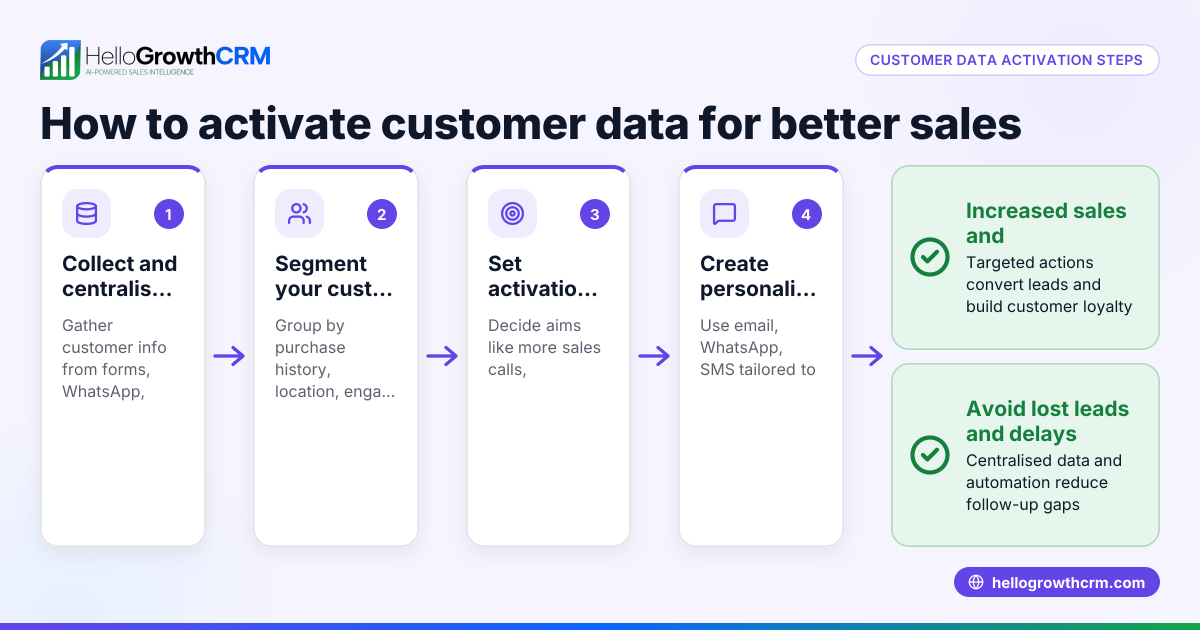
A customer data strategy is a plan for collecting, managing, and using customer information to improve sales, service, and growth. It ensures your business handles data securely, keeps it organised, and uses it to understand and engage customers better. This article explains why a customer data strategy matters, how to create one step-by-step, common pitfalls to avoid, and how HelloGrowthCRM supports data management.
Why this comes up / what goes wrong
Small UK businesses often juggle customer information across WhatsApp, email, spreadsheets, and notes. This scattered data leads to slow lead follow-up, lost sales opportunities, and poor customer service. Without a clear data strategy, teams struggle to track interactions, measure sales progress, or deliver consistent experiences. Data security and compliance can also be overlooked, risking breaches or fines. A customer data strategy helps organise all customer details in one place, making it easier to act quickly, personalise communications, and keep data safe.
Step-by-step
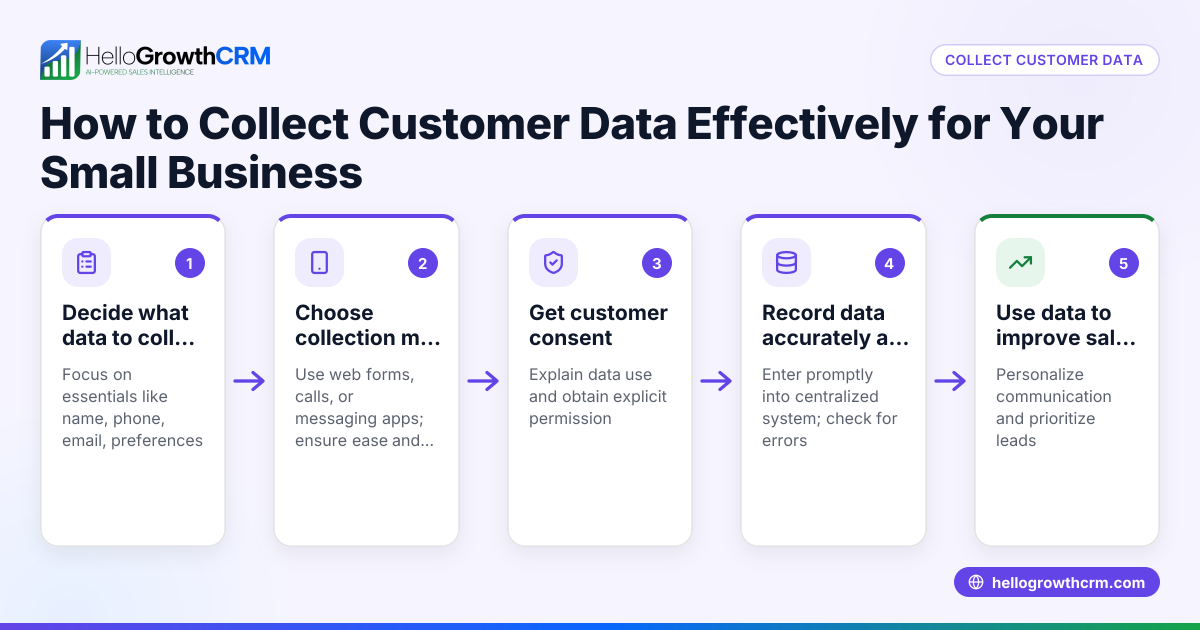
- Identify your customer data sources: List where customer data currently comes from—website forms, WhatsApp chats, email enquiries, phone calls, social media, and in-person visits. Check the formats and storage methods for each.
- Decide what data to collect: Choose essential fields like name, contact details, company, purchase history, and communication preferences. Avoid collecting unnecessary personal data to reduce compliance risks.
- Choose a system to store data centrally: Use a CRM or database where all team members can access and update customer records. This avoids duplication and lost information.
- Set data security and compliance rules: Ensure your system supports data protection laws relevant in the UK, such as GDPR. This includes controlling who can access data and how long it is retained.
- Define processes for data entry and updates: Train your team on how and when to add or update customer info. Consistency keeps your data accurate and reliable.
- Integrate communication channels: Link WhatsApp, email, and phone into your CRM so all interactions are logged automatically. This helps track customer engagement and follow-ups.
- Use data to score and prioritise leads: Apply simple rules or AI to highlight promising leads. This focuses sales effort where it matters most.
- Monitor and report regularly: Review your data quality, sales pipeline, and customer feedback to spot issues and opportunities.
- Plan for ongoing maintenance: Schedule regular data clean-ups and updates to keep your database current.
- Review and improve your strategy periodically: Adapt your approach as your business grows or customer behaviour changes.
For more on tracking customer engagement and health, see our customer health score guide.
Example (fictional figures)
A letting agency in Manchester wants to improve lead follow-up and customer service. They currently store enquiries in Excel and WhatsApp messages.
- They list their data sources: website form, WhatsApp chats, phone calls.
- They decide to collect: name, phone, email, property interest, contact date.
- They choose a CRM to centralise data.
- They set GDPR-compliant access controls.
- They train staff to enter all new enquiries immediately.
- They integrate WhatsApp and phone calls into the CRM.
- They create a lead scoring rule: enquiries within last 7 days get higher priority.
- They schedule weekly review meetings.
On 01/05/2026, they receive 50 new enquiries.
Lead scoring example:
50 enquiries × 20% are from highly interested renters = 10 high-priority leads
By focusing on these, they increase viewings booked from 15 to 25 in a month.
Common mistakes
- Not centralising data: Leads scattered across apps cause lost opportunities. Prevent by using a single CRM.
- Collecting too much irrelevant data: This complicates compliance and slows processes. Collect only what you need.
- Ignoring data security: Failing to protect data risks legal penalties. Set clear access controls and follow GDPR.
- Lack of team training: Inconsistent data entry reduces quality. Train staff and monitor compliance.
- Not integrating communication channels: Manual logging causes errors and delays. Use tools that connect WhatsApp, email, and calls.
- Neglecting regular data review: Old or duplicate data skews reports. Schedule clean-ups and updates.
For tips on integrating WhatsApp and SMS with your CRM, see WhatsApp and SMS CRM.
Doing this in HelloGrowthCRM
HelloGrowthCRM helps UK businesses keep customer data secure and organised. HelloGrowthCRM has completed a SOC 2 Type II examination and is GDPR aligned as a data processor. After sales, service requests like tickets stay linked on the same customer record as the deal, ensuring a complete view of customer interactions. This centralised approach reduces lost information and improves follow-up efficiency. Learn more about HelloGrowthCRM for the United Kingdom at hellogrowthcrm.com/uk.
Frequently asked questions
What is a customer data strategy? It is a plan for collecting, storing, securing, and using customer information to improve business outcomes. It helps businesses organise data from multiple sources and use it to engage customers effectively.
Why do small businesses need a customer data strategy? Without a strategy, data gets scattered and outdated, causing missed sales and poor customer service. A strategy ensures data is accurate, accessible, and secure, helping your team follow up leads quickly and personalise communications.
How do I start building a customer data strategy? Begin by listing all data sources and deciding what information to collect. Then choose a central system like a CRM, set security rules, and train your team on consistent data entry and updates.
How can I keep customer data secure and compliant? Limit access to data, keep it only as long as needed, and follow laws like GDPR. Using a CRM with built-in security features and data residency options helps meet compliance.
Can I integrate WhatsApp and email with my customer data system? Yes, integrating communication channels into your CRM means all customer interactions are logged automatically, improving tracking and follow-up. HelloGrowthCRM supports this integration.
What is the benefit of scoring leads in my data strategy? Lead scoring prioritises your sales efforts by highlighting the most promising prospects, helping your team focus on closing deals faster and increasing conversion rates.
Key takeaways
- A customer data strategy organises how your business collects, stores, and uses customer information.
- Centralising data in a CRM prevents lost leads and improves follow-up speed.
- Data security and compliance are essential to protect customers and your business.
- Integrating communication channels like WhatsApp and email keeps all interactions in one place.
- Regularly review and update your data and strategy to maintain accuracy and effectiveness.
- Lead scoring helps prioritise sales efforts for better results.
Start your customer data strategy today by choosing a CRM that fits your needs. To get started, try HelloGrowthCRM’s Free Forever plan with 200 leads and no credit card required.
Ready to put this into practice?
Set up your pipeline, WhatsApp follow-ups, and AI lead scoring in minutes — free, no credit card.
Try HelloGrowthCRM freeGet CRM tips in your inbox
Join thousands of sales professionals who get weekly insights on CRM strategy, AI automation, and pipeline optimization.

The HelloGrowthCRM team publishes guides on CRM strategy, AI sales tools, and revenue operations for small business sales teams.