HelloGrowthCRM software
Built for real small-business sales teams
HelloGrowthCRM helps reps qualify faster, follow up on time, and close more deals—with practical automation in one place.
- AI lead scoring and pipeline visibility
- Built-in dialer, WhatsApp, and email automation
- Sales forecasting and RevOps-ready reporting
Customer loyalty analytics is the process of collecting and analyzing data about your customers’ repeat business, satisfaction, and referral behavior. This helps you understand which customers are loyal, why they stay, and how to improve your retention efforts. It focuses on metrics like repeat purchase rate, customer lifetime value, referrals, and customer service interactions.
Why this comes up / what goes wrong
Small-business owners often notice sales dropping or customers stopping purchases but don’t have clear data on who is loyal or at risk of leaving. They might run loyalty programs or referral incentives without knowing if these efforts work. Without customer loyalty analytics, they guess what to focus on, which can waste time and money. They also miss early signs of unhappy customers, leading to higher churn and more costly new customer acquisition.
Step-by-step
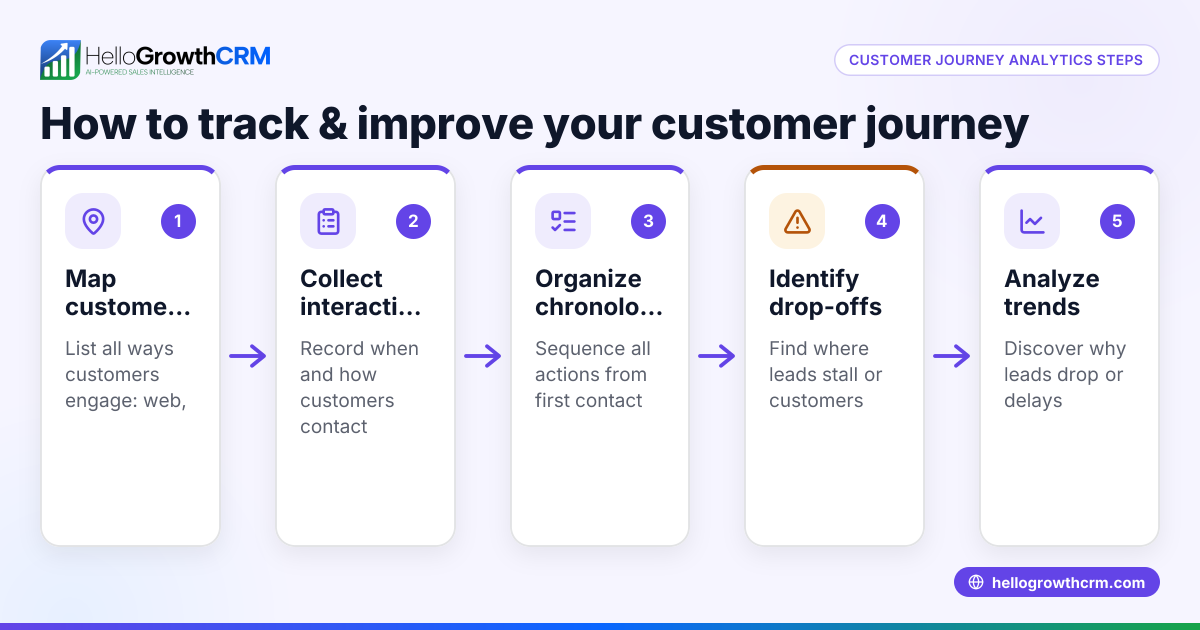
- Collect customer interaction data: Gather information on purchases, service requests, referrals, and communications. Check sales records, support tickets, and referral program data.
- Calculate repeat purchase rate: Determine the percentage of customers who buy more than once in a given period (for example, the last 6 months). Check if this rate is stable, improving, or declining.
- Estimate customer lifetime value (CLV): Calculate the total revenue a typical customer brings over their relationship with your business. Monitor changes as you adjust loyalty programs.
- Track referral activity: Measure how many new leads come from existing customers through referral programs or word-of-mouth.
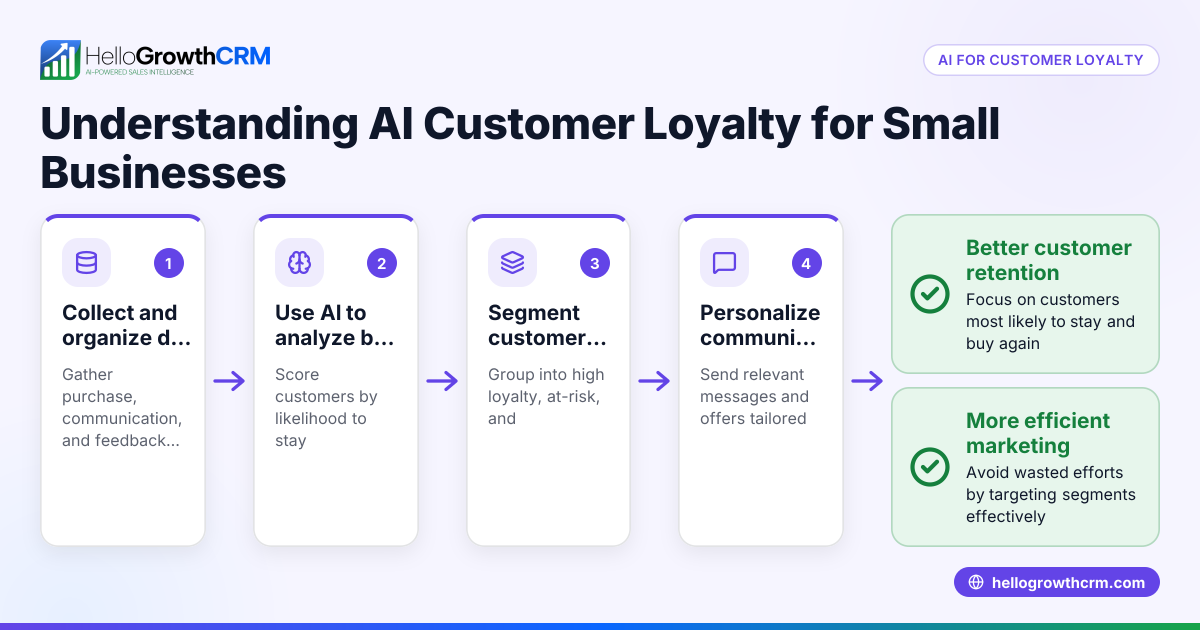
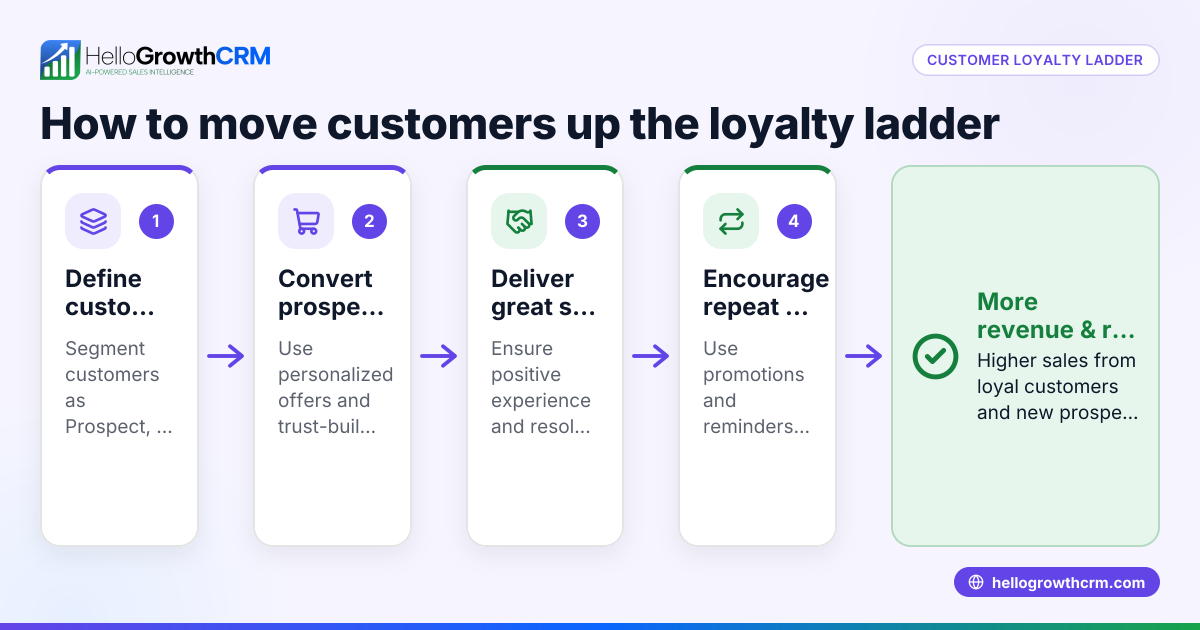
- Segment customers by loyalty level: Group customers into categories such as new, active, at-risk, or loyal based on purchase frequency and engagement.
- Analyze customer feedback and service data: Use surveys, support tickets, and feedback to understand why customers stay loyal or leave.
- Monitor sales pipeline and service stages: Watch for stalled deals or unresolved support tickets that could indicate loyalty risks.
- Review loyalty and referral program effectiveness regularly: Check if incentives and rewards are driving the expected results.
- Use a CRM to centralize data and automate insights: Avoid manual spreadsheets by using tools that combine sales, service, and referral information.
Example (fictional figures)
A B2B software reseller in Denver, Colorado, tracks customer loyalty over 12 months ending 12/31/2025.
- Total customers at start: 1,000
- Customers who made repeat purchases: 400
- Total revenue from repeat customers: $1,200,000
- Referral program generated 100 new leads
Calculations:
Repeat purchase rate = (400 ÷ 1,000) × 100 = 40%
Average revenue per repeat customer = $1,200,000 ÷ 400 = $3,000
Referral conversion count = 100 new leads from referrals
This data shows the business how many customers return and the revenue generated from those repeat buyers. The owner uses this information to focus on rewarding repeat buyers and growing referrals.
Common mistakes
- Ignoring customer service data: Loyalty is not just sales. Track support tickets and feedback to spot problems early. Prevent this by integrating service data into your loyalty analytics.
- Measuring only sales volume: High sales don’t always mean loyal customers. Prevent by also tracking repeat purchases and referrals.
- Not segmenting customers: Treating all customers the same hides at-risk groups. Prevent by grouping customers by loyalty levels.
- Collecting data without acting: Gathering loyalty data but not adjusting your approach wastes effort. Prevent by setting goals and changing programs based on analytics.
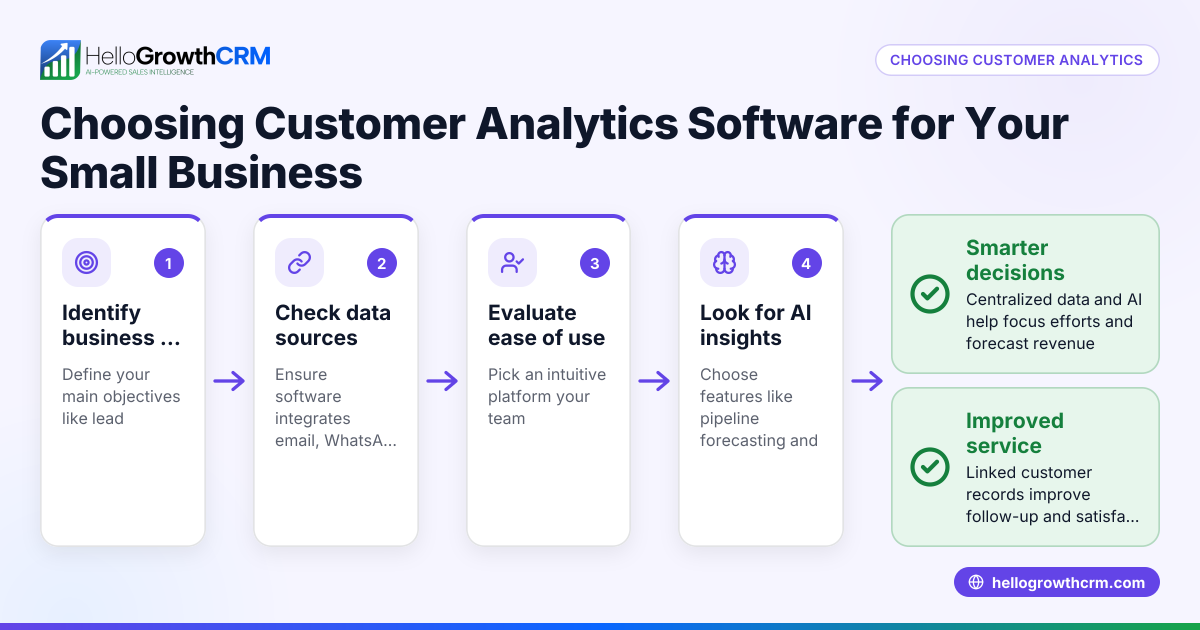
- Using spreadsheets alone: Manual tracking is slow and error-prone. Prevent by using a CRM that centralizes loyalty data and provides AI insights, such as pipeline forecast and customer service tracking.
- Overlooking referral tracking: Referrals are a key loyalty indicator. Prevent by monitoring referral participation and reward effectiveness.
Doing this in HelloGrowthCRM
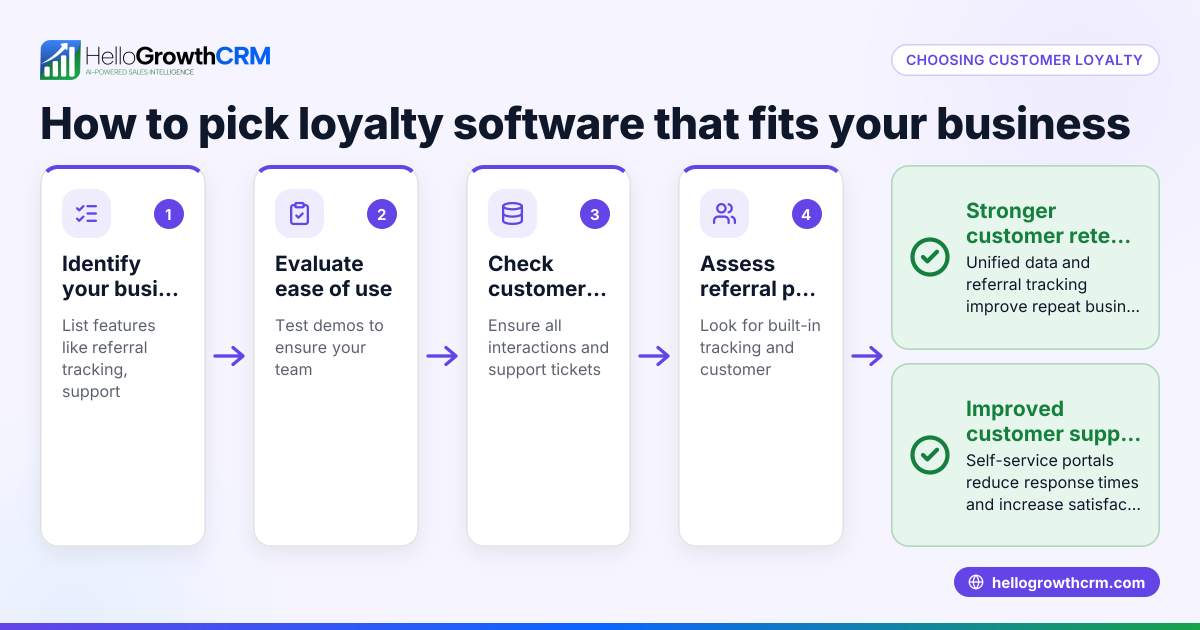
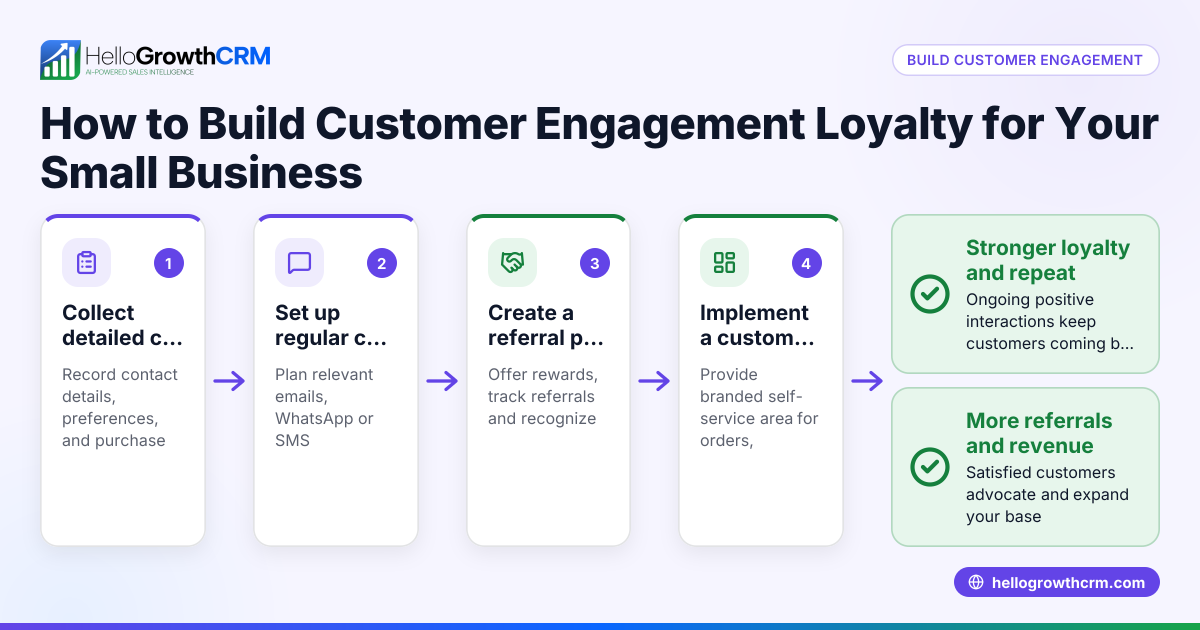
HelloGrowthCRM helps small businesses track customer loyalty through its pipeline forecast and AI insights, showing where deals stall without building spreadsheets. After sales, customer service requests, referrals, and support tickets stay linked to the same customer record, making it easy to see overall customer health and loyalty. This unified view helps owners act quickly to retain customers and grow referrals. Learn more about pipeline forecast and AI insights and the customer portal and referrals.
Frequently asked questions
What is customer loyalty analytics? Customer loyalty analytics measures how often customers return, their satisfaction, and likelihood to recommend your business. It uses sales, service, and referral data to identify loyal customers and improve retention.
How do I measure customer loyalty for a small business? Track repeat purchase rate, customer lifetime value, referral program participation, and customer feedback. Use these metrics to segment customers and identify at-risk groups. Using a CRM like HelloGrowthCRM can simplify this process by centralizing data and providing AI insights.
Why is customer loyalty analytics important? It helps you focus retention efforts on customers who drive revenue, reduces churn, and lowers the cost of acquiring new customers by leveraging referrals.
Can I track customer loyalty with a CRM? Yes, a CRM like HelloGrowthCRM centralizes sales, service, and referral data, provides AI insights on pipeline health, and keeps service tickets linked to customer records, making loyalty tracking easier. See how HelloGrowthCRM supports WhatsApp and SMS CRM for better customer communication.
What common mistakes should I avoid with loyalty analytics? Avoid ignoring service data, relying only on sales volume, not segmenting customers, failing to act on insights, and using error-prone spreadsheets instead of a CRM.
Key takeaways
- Customer loyalty analytics measures repeat business, referrals, and satisfaction to guide retention.
- Step-by-step tracking includes repeat purchase rate, CLV, referrals, segmentation, and service data.
- Common mistakes include ignoring service data and relying solely on sales volume.
- HelloGrowthCRM offers pipeline forecast, AI insights, and customer service tracking to simplify loyalty analytics.
- Acting on loyalty insights helps reduce churn and grow profitable customer relationships.
Start tracking your customer loyalty today with HelloGrowthCRM. Start on the Free Forever plan (200 leads, no credit card).
Ready to put this into practice?
Set up your pipeline, WhatsApp follow-ups, and AI lead scoring in minutes — free, no credit card.
Try HelloGrowthCRM freeGet CRM tips in your inbox
Join thousands of sales professionals who get weekly insights on CRM strategy, AI automation, and pipeline optimization.

The HelloGrowthCRM team publishes guides on CRM strategy, AI sales tools, and revenue operations for small business sales teams.