HelloGrowthCRM software
Built for real small-business sales teams
HelloGrowthCRM helps reps qualify faster, follow up on time, and close more deals—with practical automation in one place.
- AI lead scoring and pipeline visibility
- Built-in dialer, WhatsApp, and email automation
- Sales forecasting and RevOps-ready reporting
Customer service in manufacturing means providing timely, clear communication and support for orders, product issues, and technical questions to your business clients. This article covers why good service matters in manufacturing, step-by-step actions to improve it, a realistic example, common mistakes to avoid, and how HelloGrowthCRM features can help manage customer service efficiently.
Why this comes up / what goes wrong
Manufacturing business owners and accountants often face challenges in customer service because their clients rely on precise delivery schedules, product quality, and technical support. Delays or miscommunication can cause lost sales, strained relationships, and costly production disruptions. Many manufacturers handle sales and service requests by phone, email, or spreadsheets, which risks slow follow-up and lost information. Without a system that tracks customer interactions and service tickets linked to each order, important details get overlooked, and accountability suffers.
Step-by-step
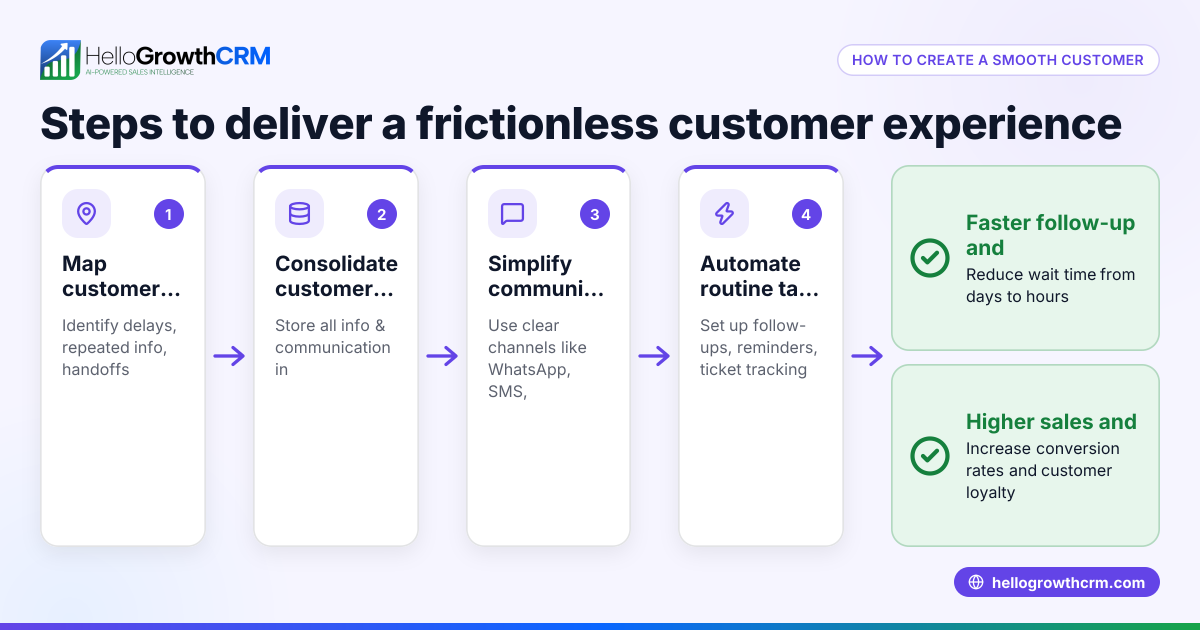
- Centralize customer information and communication
- Collect all customer contacts, order details, and previous interactions in one place.
- Check that all team members can access this information easily to avoid duplicated or missed responses.
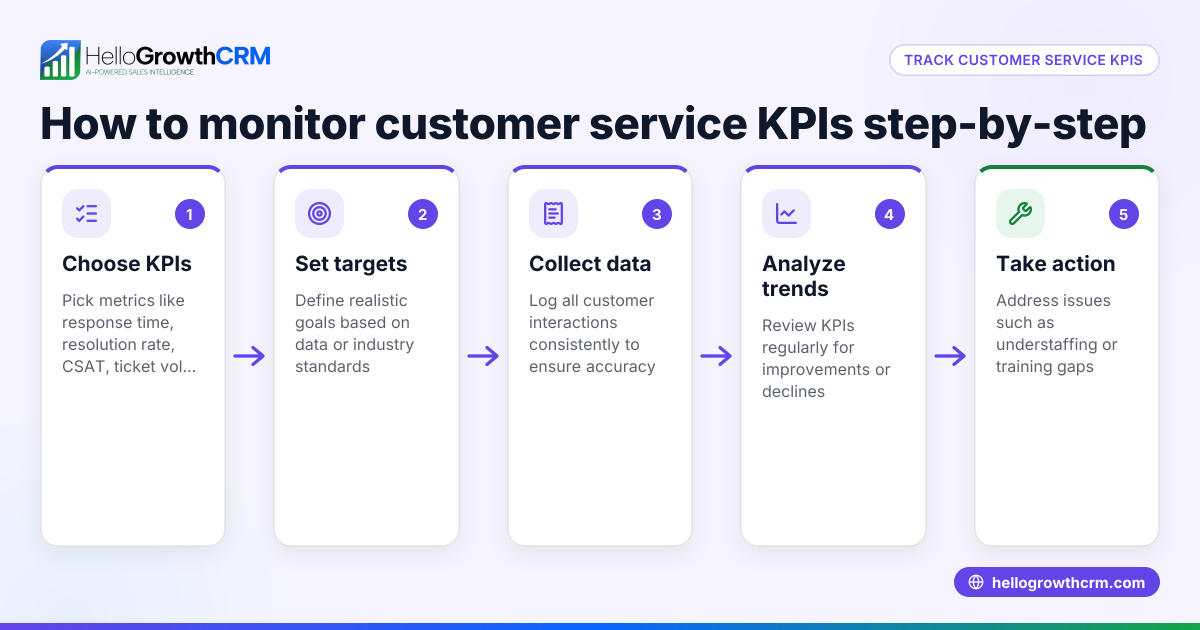
- Set clear response time targets
- Define how quickly you will respond to inquiries or complaints (e.g., within 24 hours).
- Monitor adherence and adjust resources if needed.
- Use a ticketing system for service requests
- Log each issue as a ticket linked to the customer and order.
- Track status, assign responsibility, and ensure timely resolution.
- Train your team on product knowledge and communication skills
- Regularly update staff on product specs, common issues, and troubleshooting.
- Encourage clear, courteous communication.
- Follow up proactively after delivery
- Contact customers to confirm satisfaction and address any problems early.
- Use feedback to improve processes.
- Leverage technology to automate and track tasks
- Use CRM tools to schedule follow-ups, send reminders, and log all interactions.
- Check that all communication channels (phone, email, WhatsApp) are integrated.
- Measure customer health and satisfaction
- Track repeat orders, complaint rates, and referral activity.
- Identify at-risk customers and intervene promptly.
See more on Manufacturing and how to track customer health with customer health score.
Example (fictional figures)
A mid-sized manufacturer in Cleveland, Ohio, named "SteelPro Components," serves industrial clients. They want to improve customer service to reduce late responses and lost tickets.
- Total annual revenue: $5,000,000
- Average monthly service requests: 50
- Current average response time: 48 hours
- Target response time: 24 hours
Steps:
- Centralize data by implementing a CRM system.
- Set a 24-hour response SLA.
- Assign a dedicated service rep to log and manage tickets.
Calculations:
- Monthly service requests = 50
- Required daily responses = 50 ÷ 22 working days = approximately 2.27 tickets per day
- To meet 24-hour SLA, rep must handle at least 3 tickets daily.
By reallocating staff time, SteelPro assigns one rep full-time to service tickets, reducing response time to 20 hours on average, improving client satisfaction and repeat orders.
Common mistakes
- Ignoring centralized records: Prevent by using a CRM where all customer data and service requests stay linked to deals.
- No clear response targets: Prevent by defining and communicating SLA times.
- Overloading staff: Prevent by assigning clear responsibilities and monitoring workload.
- Lack of follow-up: Prevent by scheduling proactive check-ins.
- Using disconnected tools: Prevent by integrating communication channels in one system, avoiding lost messages.
- Not tracking customer health: Prevent by measuring satisfaction and referral activity to spot issues early. See customer health score for more.
Doing this in HelloGrowthCRM
HelloGrowthCRM supports manufacturing customer service with a built-in dialer that lets your telecaller work a list of leads or customers inside the CRM, logging every call outcome directly on the lead record. After the sale, service requests stay on the same customer record as the deal through the customer portal, tickets, and knowledge base features. This keeps all communications and support history in one place, helping your team respond faster and track issues better. Learn more about HelloGrowthCRM for the United States at hellogrowthcrm.com/usa.
Frequently asked questions
What makes customer service in manufacturing different from other industries? Manufacturing customer service often deals with B2B clients who require precise delivery schedules, technical product support, and quick issue resolution. The complexity of products and order processes means communication must be clear and well-documented.
How can I measure the effectiveness of my manufacturing customer service? Track metrics like average response time, ticket resolution time, repeat orders, and customer referrals. Using a customer health score can help identify satisfied and at-risk clients.
What communication channels should I use for customer service? Phone, email, SMS, and WhatsApp are commonly used. Integrating these channels within a CRM ensures no message is lost and follow-ups are timely.
How do I handle technical support requests efficiently? Use a ticketing system linked to customer and order records to track issues from report to resolution. Train your team regularly on product knowledge and troubleshooting.
Can I manage customer service and sales in the same system? Yes, combining sales and service workflows in one CRM improves visibility and customer experience by keeping all interactions on one record.
Key takeaways
- Centralize customer data and communication to avoid missed requests.
- Set and monitor clear response time targets for service inquiries.
- Use a ticketing system linked to orders for efficient issue tracking.
- Train staff on product knowledge and communication skills.
- Follow up proactively to catch issues early and improve satisfaction.
- Integrate communication channels and track customer health with CRM tools.
Start improving your manufacturing customer service today. Start on the Free Forever plan (200 leads, no credit card).
Ready to put this into practice?
Set up your pipeline, WhatsApp follow-ups, and AI lead scoring in minutes — free, no credit card.
Try HelloGrowthCRM freeGet CRM tips in your inbox
Join thousands of sales professionals who get weekly insights on CRM strategy, AI automation, and pipeline optimization.

The HelloGrowthCRM team publishes guides on CRM strategy, AI sales tools, and revenue operations for small business sales teams.