HelloGrowthCRM software
Built for real small-business sales teams
HelloGrowthCRM helps reps qualify faster, follow up on time, and close more deals—with practical automation in one place.
- AI lead scoring and pipeline visibility
- Built-in dialer, WhatsApp, and email automation
- Sales forecasting and RevOps-ready reporting
A frictionless customer experience means making every interaction with your business easy, smooth, and hassle-free for your customers. It removes obstacles that slow down or complicate buying, support, or communication. This article explains why frictionless experiences matter, provides step-by-step guidance to create them, highlights common mistakes to avoid, and shows how HelloGrowthCRM can help maintain seamless service after the sale.
Why this comes up / what goes wrong
Small business owners often struggle with customer friction because their sales and support processes use multiple disconnected tools like text messages, emails, and spreadsheets. This fragmentation causes customers to repeat information, wait long periods for responses, or get lost in communication handoffs. For example, a customer who called sales may have to explain their issue again to support because the teams don’t share data. Slow follow-up and unclear communication channels frustrate customers and lead to lost sales and poor reviews. Without a unified system to track leads, deals, and service requests, your team may miss important tasks or fail to resolve problems quickly, hurting your reputation and repeat business.
Step-by-step
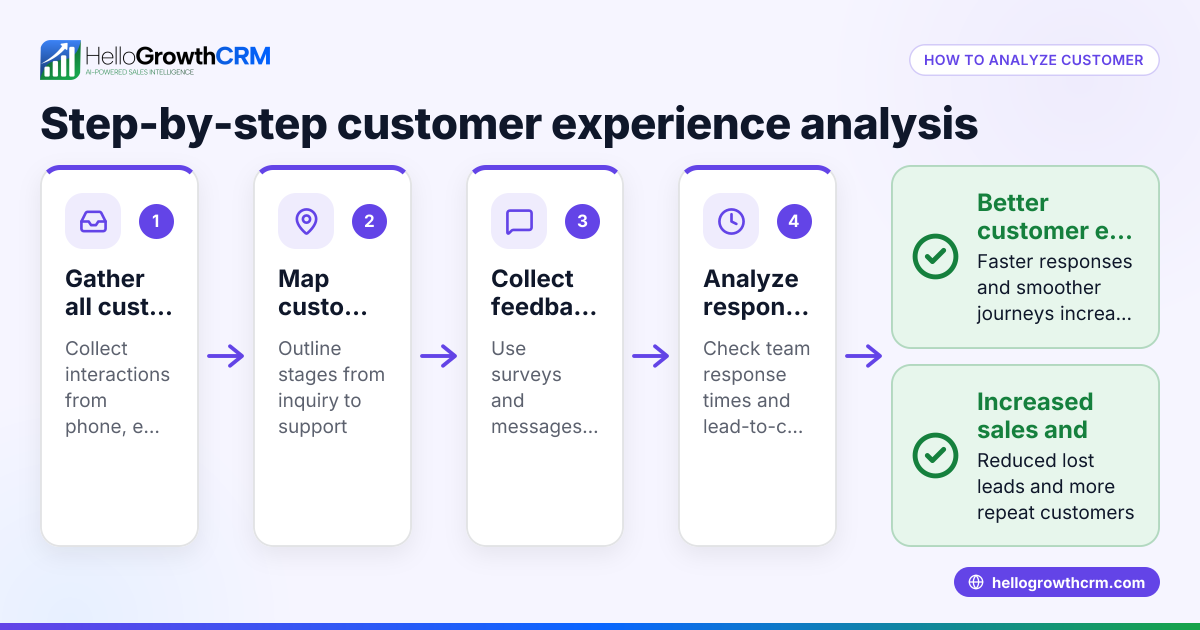
- Map the customer journey. Write down every step a customer takes from first contact to post-sale support. Look for delays, repeated questions, or confusing handoffs between teams.
- Consolidate customer information. Use a single system to store all customer data, communication history, and support tickets. This prevents customers from repeating themselves and helps your team respond faster.
- Simplify communication channels. Offer customers clear, easy ways to reach you, such as WhatsApp, SMS, or email. Make sure your team manages these channels efficiently to avoid missed messages. Consider a WhatsApp and SMS CRM to centralize messaging.
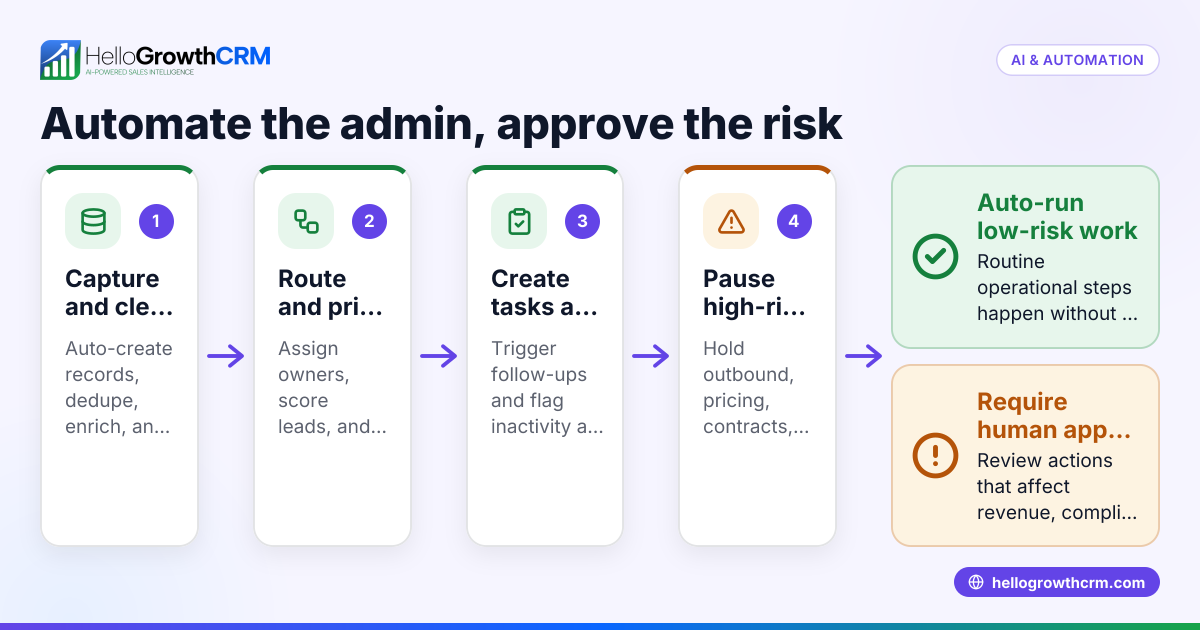
- Automate routine tasks. Set up automatic follow-ups, reminders, and ticket tracking to reduce human error and speed up responses.
- Empower customers with self-service. Provide a branded customer portal where customers can find answers, submit support tickets, and track their requests anytime.
- Train your team on the system. Ensure everyone knows how to use your CRM and support tools so customers receive consistent, timely service.
- Monitor and improve. Regularly review customer feedback and support metrics like response times and ticket resolution to identify friction points and fix them. Use tools like a customer health score to track overall satisfaction.
Example (fictional figures)
A residential real-estate team in Phoenix, Arizona, wants to improve their customer experience. Currently, they track leads and support requests in spreadsheets, causing delays.
- They map their customer journey and find customers wait 2 days on average for follow-up.
- They switch to a CRM that consolidates all customer data and communication.
- They add a customer portal for self-service support.
- After 3 months, follow-up time drops to 4 hours.
Financial impact:
Assuming they handle 100 leads a month, and 20% convert to sales at $300,000 each:
100 leads × 20% = 20 sales 20 sales × $300,000 = $6,000,000 in sales
By reducing follow-up time, they increase conversions by 5% (from 20% to 21%):
100 leads × 21% = 21 sales 21 sales × $300,000 = $6,300,000 in sales
Additional revenue:
$6,300,000 - $6,000,000 = $300,000
This example shows how a frictionless customer experience can boost revenue by speeding up response and improving customer satisfaction.
Common mistakes
- Ignoring customer feedback. Prevent this by regularly asking for and reviewing feedback to spot friction points.
- Using multiple disconnected systems. Prevent by consolidating customer data and communication in one CRM.
- Overcomplicating processes. Prevent by simplifying steps and automating routine tasks.
- Not training staff properly. Prevent by providing thorough training and support resources.
- Failing to provide self-service options. Prevent by offering a customer portal with FAQs and ticket submission.
- Neglecting to monitor performance. Prevent by tracking response times, customer health scores, and ticket resolution rates to find and fix issues early.
Doing this in HelloGrowthCRM
HelloGrowthCRM helps create a frictionless customer experience by keeping service requests on the same customer record as the deal. Its branded customer portal lets customers submit tickets and access a knowledge base anytime. Referral program tracking helps grow your business through satisfied customers. This centralization ensures your team has full context for every customer interaction, reducing delays and confusion. Learn more about HelloGrowthCRM for the United States and its WhatsApp and SMS CRM features to streamline your communications and support. You can also track customer health scores to measure satisfaction and spot friction early.
Frequently asked questions
What is a frictionless customer experience? It is an interaction with your business that is easy and free of obstacles. Customers get what they need quickly without repeating themselves or waiting unnecessarily.
Why is frictionless experience important for small businesses? Small businesses rely on repeat customers and referrals. Friction causes frustration, lost sales, and bad reviews. Smooth experiences build trust and loyalty.
How can technology help create frictionless experiences? Technology like CRM systems centralizes customer data, automates tasks, and provides self-service portals. This speeds up communication and reduces errors.
What role does self-service play in frictionless experience? Self-service lets customers find answers and submit requests anytime without waiting on staff, reducing delays and improving satisfaction.
How do I measure if my customer experience is frictionless? Track metrics like response time, repeat contacts, customer satisfaction scores, and support ticket resolution times. Improvements in these show less friction. Tools like a customer health score help monitor overall customer well-being.
Key takeaways
- Frictionless customer experience removes obstacles and delays in customer interactions.
- Map your customer journey and consolidate all data in one system.
- Simplify communication channels and automate follow-ups.
- Provide a branded customer portal for self-service support.
- Train your team and regularly review feedback to improve.
- Monitor performance with customer health scores and support metrics.
- HelloGrowthCRM supports frictionless service by keeping tickets and deals together on one record.
Start creating a frictionless customer experience today. Start on the Free Forever plan (200 leads, no credit card) to organize your customer data and support in one place.
Ready to put this into practice?
Set up your pipeline, WhatsApp follow-ups, and AI lead scoring in minutes — free, no credit card.
Try HelloGrowthCRM freeGet CRM tips in your inbox
Join thousands of sales professionals who get weekly insights on CRM strategy, AI automation, and pipeline optimization.

The HelloGrowthCRM team publishes guides on CRM strategy, AI sales tools, and revenue operations for small business sales teams.