HelloGrowthCRM software
Built for real small-business sales teams
HelloGrowthCRM helps reps qualify faster, follow up on time, and close more deals—with practical automation in one place.
- AI lead scoring and pipeline visibility
- Built-in dialer, WhatsApp, and email automation
- Sales forecasting and RevOps-ready reporting
Customer success ROI measures the financial return your business gains from investing in customer success activities such as onboarding, support, and retention. It shows whether these efforts increase revenue, reduce churn, and boost customer lifetime value. This article explains why customer success ROI matters, how to calculate it step-by-step, common mistakes to avoid, and how HelloGrowthCRM can help you track and improve it.
Why this comes up / what goes wrong
Small and mid-sized business owners often invest in customer success without clear visibility into the return on that investment. They may spend money on onboarding new customers, support teams, or retention programs but struggle to link those costs directly to revenue gains or cost savings. Without measuring customer success ROI, businesses risk overspending on ineffective programs or missing opportunities to grow revenue from existing customers. This can lead to lost deals, higher churn rates, and inefficient use of resources. Many businesses also fail to coordinate customer success data with sales metrics, which creates gaps in understanding true impact.
Step-by-step
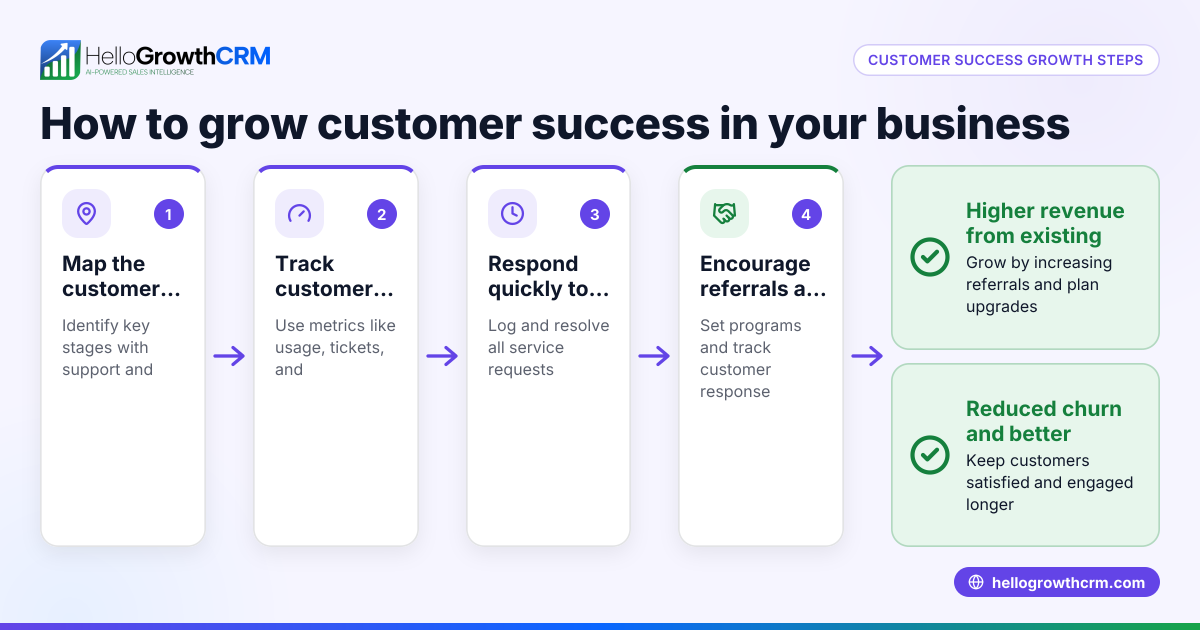
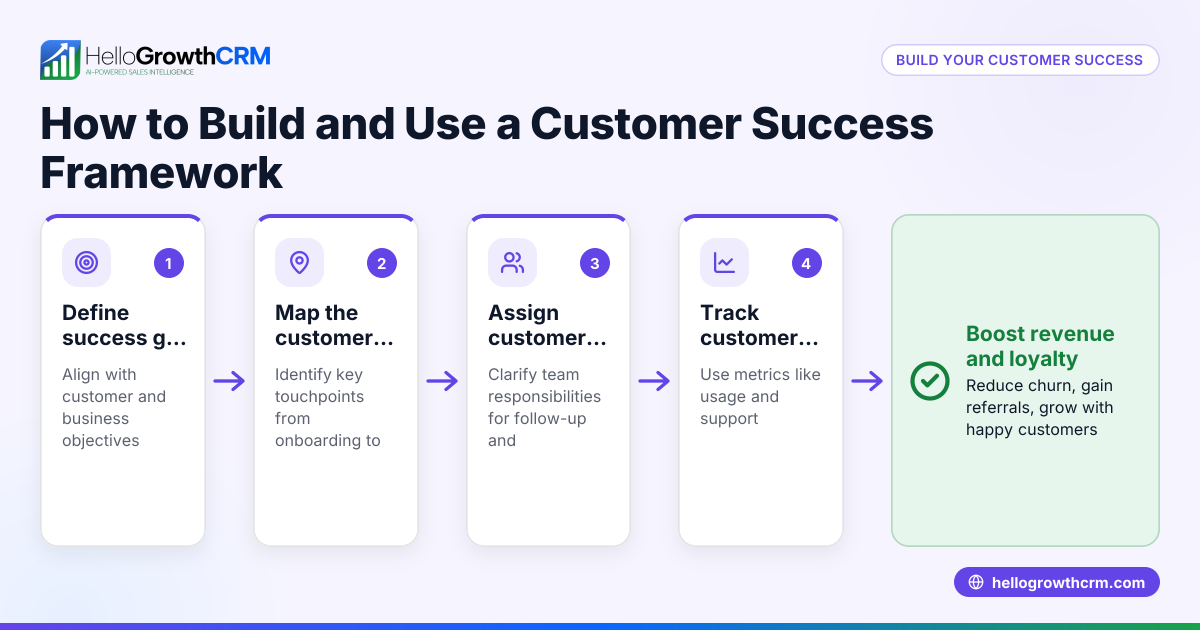
- Define customer success goals: Identify the specific outcomes you want to achieve, such as reducing customer churn, increasing upsell revenue, or improving customer satisfaction scores.
- Calculate total investment in customer success: Add all costs related to customer success efforts, including salaries of support staff, software subscriptions, training, and any other resources.
- Measure revenue impact: Track revenue increases that come from renewals, upsells, and cross-sells directly tied to customer success activities.
- Estimate cost savings: Calculate savings from reduced churn, fewer support tickets, or decreased spending on acquiring new customers.
- Calculate ROI using this formula:
Customer success ROI can be estimated by considering the revenue impact, cost savings, and investment involved, using a suitable formula to calculate the return on investment.
- Analyze results and adjust strategy: Review which customer success programs deliver the best ROI and adjust your approach accordingly.
- Use free tools and templates: Download follow-up cadence or pipeline templates from HelloGrowthCRM's free sales tools to organize your customer success activities and track ROI without needing an account.
Example (fictional figures)
A residential real-estate team in Phoenix, Arizona, decided to invest in customer success by hiring a support specialist and improving their onboarding process.
- Investment in customer success (salary + software): $60,000 + $5,000 = $65,000
- Additional revenue from upsells and renewals: $120,000
- Cost savings from reduced churn and fewer new client acquisitions: $30,000
Calculate net benefit:
$120,000 + $30,000 - $65,000 = $85,000
Calculate ROI:
ROI = ($85,000 / $65,000) × 100% = 130.77%
This means for every dollar spent on customer success, the team earned approximately $1.31 back in net benefits.
Common mistakes
- Not tracking all costs: Missing software fees or training expenses can skew ROI calculations. Prevent this by documenting every investment related to customer success.
- Ignoring cost savings: Counting only revenue gains misses significant value from churn reduction. Include both revenue impact and cost savings for an accurate picture.
- Attributing revenue incorrectly: Be clear about what revenue is directly linked to customer success efforts to avoid inflated ROI figures.
- Failing to update ROI regularly: Customer success impact changes over time. Schedule quarterly or biannual reviews to keep data current.
- Lack of alignment with sales data: Disconnected sales and customer success metrics create gaps. Use integrated tools to align data, such as HelloGrowthCRM's customer health score.
- Overlooking customer feedback: Ignoring satisfaction or net promoter scores can miss signals about program effectiveness. Incorporate these metrics in your analysis.
Doing this in HelloGrowthCRM
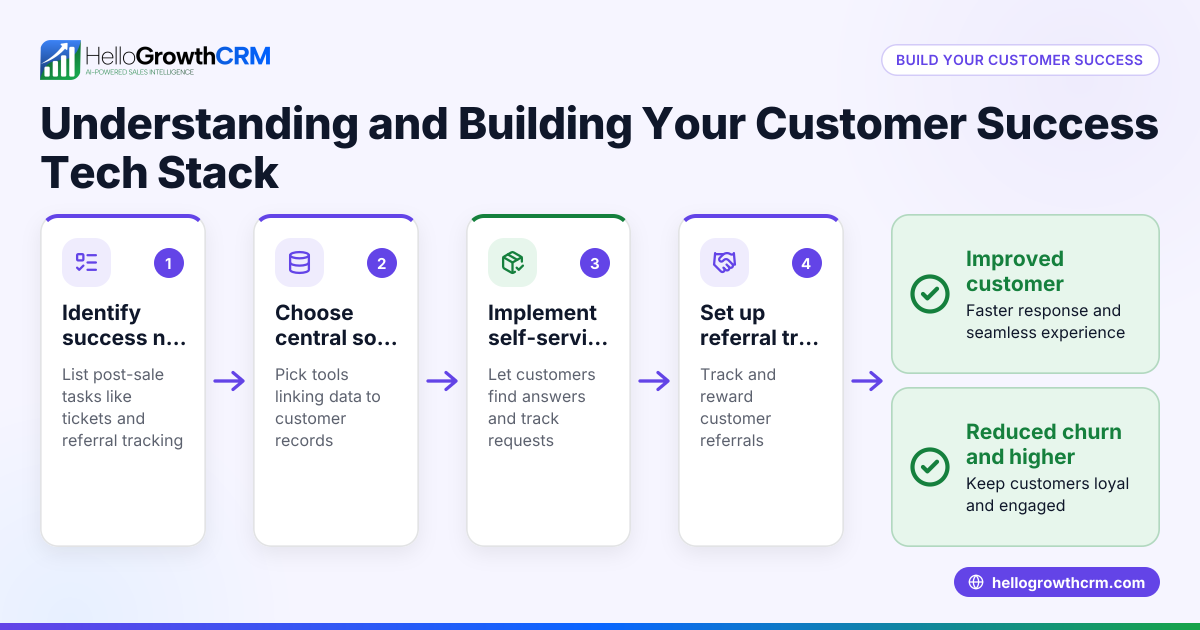
HelloGrowthCRM provides free sales tools, templates, and calculators you can use without signing up, including follow-up cadence and sales pipeline templates to organize customer success activities efficiently. After the sale, service requests, referrals, and support tickets stay linked on the same customer record as the deal, helping you track ongoing value in one place. This integration supports better ROI tracking by keeping customer service and sales data connected. Learn more about these features on the HelloGrowthCRM for the United States page.
Frequently asked questions
What is a good customer success ROI? A good ROI varies by industry and business goals, but generally, a positive ROI indicates your investment is paying off. Regular tracking helps you identify trends and improve your programs.
How often should I calculate customer success ROI? Calculate ROI quarterly or biannually to capture changes in revenue impact and costs. Frequent updates allow you to adjust strategies promptly and stay aligned with business goals.
Can I measure customer success ROI without software? Yes, you can use spreadsheets to track investments, revenue, and savings manually. However, CRM tools like HelloGrowthCRM offer free templates and automation that simplify data collection and analysis, saving time and reducing errors.
How does customer success ROI differ from sales ROI? Sales ROI focuses on returns from acquiring new customers, while customer success ROI measures returns from existing customers through retention, upselling, and reduced churn.
What metrics help improve customer success ROI? Metrics such as churn rate, customer lifetime value, net promoter score, and customer health score provide insights into how well your customer success programs work and where improvements are needed.
Key takeaways
- Customer success ROI measures the financial return from investing in customer retention, onboarding, and support.
- Calculate ROI by comparing revenue impact and cost savings against your total investment.
- Avoid common mistakes like missing costs, ignoring savings, or misattributing revenue.
- Use free sales tools and templates to track customer success activities and ROI efficiently.
- Align customer success data with sales metrics using tools like HelloGrowthCRM's customer health score.
- HelloGrowthCRM helps keep customer service requests and sales data linked for better ROI tracking.
Start tracking your customer success ROI today to make smarter investments and grow your business. Start on the Free Forever plan (200 leads, no credit card).
Ready to put this into practice?
Set up your pipeline, WhatsApp follow-ups, and AI lead scoring in minutes — free, no credit card.
Try HelloGrowthCRM freeGet CRM tips in your inbox
Join thousands of sales professionals who get weekly insights on CRM strategy, AI automation, and pipeline optimization.

The HelloGrowthCRM team publishes guides on CRM strategy, AI sales tools, and revenue operations for small business sales teams.