HelloGrowthCRM software
Built for real small-business sales teams
HelloGrowthCRM helps reps qualify faster, follow up on time, and close more deals—with practical automation in one place.
- AI lead scoring and pipeline visibility
- Built-in dialer, WhatsApp, and email automation
- Sales forecasting and RevOps-ready reporting
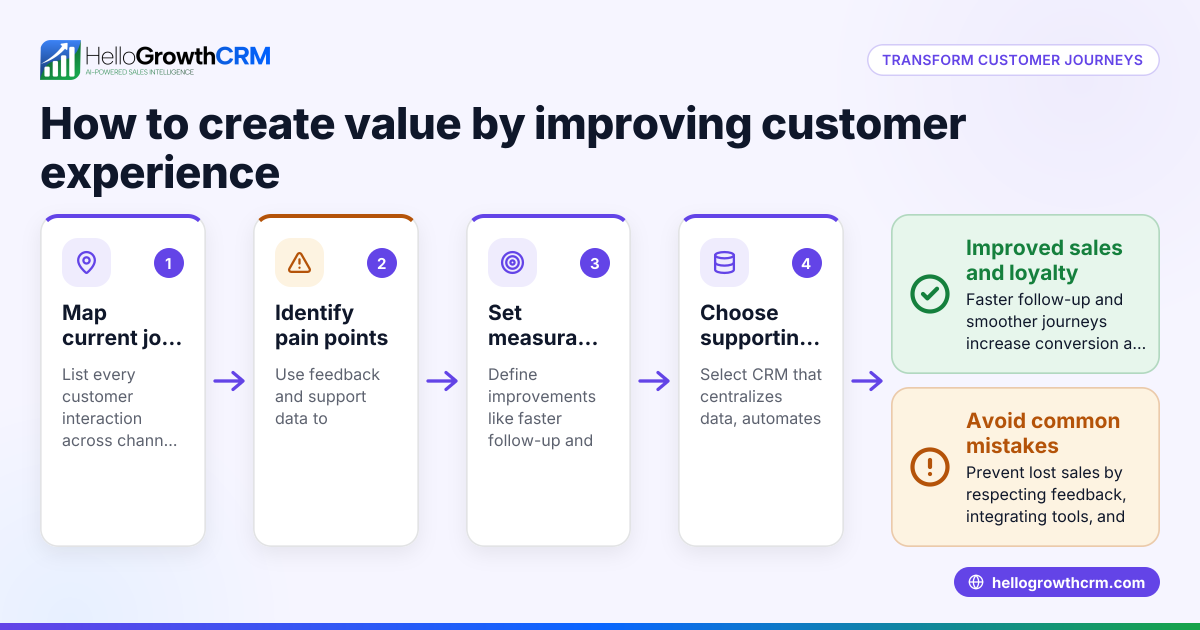
The customer value chain describes every stage where your business creates value for a customer, starting from initial awareness, through purchase, and continuing to after-sales service. Understanding this chain helps small businesses improve customer experience, increase loyalty and sales, and reduce lost leads.
Why this comes up / what goes wrong
Small business owners in Australia often lose sales because they don’t see the full journey customers take. They might focus only on making the sale but miss opportunities to add value before or after. For example, leads may be slow to follow up, or service requests get lost because they aren’t tracked alongside sales. Without a clear customer value chain, businesses can’t pinpoint where customers drop off or where value is lacking.
Step-by-step
- Identify all customer touchpoints: List every interaction a customer has with your business—from website visits, phone calls, WhatsApp chats, to after-sales support. Check if any touchpoints are missing or untracked.
- Map the customer journey stages: Break down the chain into stages like Awareness, Consideration, Purchase, Delivery, and After-Sales Service. Confirm each stage adds value and meets customer expectations.
- Evaluate value created at each stage: Ask what your business offers at every step that benefits the customer. This might be helpful information, fast response times, easy payment options, or ongoing support.
- Check for gaps or delays: Look for stages where customers wait too long or where communication breaks down. Ensure follow-ups happen promptly to avoid losing leads.
- Integrate sales and service data: Keep all customer interactions and service requests linked to the same record. This helps your team see the full picture and respond better.
- Use customer feedback: Collect and review feedback regularly to understand if your value chain meets customer needs.
- Refine and repeat: Regularly update your value chain map as your business or customer expectations change.
Example (fictional figures)
A solar panel installer in Brisbane wants to improve their customer value chain.
- Awareness: Website visits generate 500 leads per month.
- Consideration: 200 leads ask for quotes.
- Purchase: 50 customers sign contracts at an average price of A$12,000.
- Delivery: Installation completed within 30 days.
- After-Sales Service: 10 service tickets monthly.
Calculations:
Leads to quote conversion = 200 ÷ 500 = 0.4 (40%)
Quote to sale conversion = 50 ÷ 200 = 0.25 (25%)
Monthly revenue = 50 × A$12,000 = A$600,000
The installer notices slow follow-up after quotes and missed service requests.
By mapping this chain, they:
- Improve follow-up speed to increase quote-to-sale conversion.
- Use a system to track service tickets linked to sales.
Common mistakes
- Ignoring post-sale service: Many focus only on sales, missing value in after-sales support. Prevent this by tracking service requests on the same customer record.
- Using separate tools for sales and service: Leads and tickets scattered across email or spreadsheets cause lost information. Use a CRM that unifies these.
- Slow lead follow-up: Delays cause lost sales. Set reminders and automate follow-ups.
- Not mapping the full journey: Overlooking early or late stages means missed opportunities. Regularly review all touchpoints.
- Not using customer feedback: Without feedback, you can’t improve value. Collect and act on it.
- Failing to score leads: Not prioritising leads wastes effort. Use AI lead scoring to focus on high-value prospects (/product/customer-health-score).
Doing this in HelloGrowthCRM
HelloGrowthCRM helps you manage the customer value chain by keeping all service requests, referrals, and support tickets linked to the same customer record as the deal. Its branded customer portal lets customers self-serve, reducing delays and improving satisfaction. You can track referrals and maintain a knowledge base to support customers after the sale, all within one platform. Learn more about HelloGrowthCRM for Australia (/au).
Frequently asked questions
What is the difference between a customer value chain and a sales funnel? The customer value chain covers the entire customer experience from first contact to post-sale service, while a sales funnel typically focuses on converting leads to customers. The value chain includes after-sales support, which funnels often omit.
How can I improve my customer value chain? Map all customer touchpoints, identify gaps, speed up follow-ups, and integrate sales and service data. Use customer feedback and tools like AI lead scoring to prioritise efforts (/product/customer-health-score).
Why is after-sales service important in the customer value chain? After-sales service builds loyalty, encourages referrals, and can generate repeat business. Ignoring it risks losing customers and damaging your reputation.
Can HelloGrowthCRM track customer interactions across channels? Yes, HelloGrowthCRM integrates WhatsApp, SMS, email, and phone calls, keeping all customer interactions and service requests on one record (/product/whatsapp-sms-crm).
What is a customer portal and how does it help? A customer portal is a branded self-service platform where customers can check orders, raise tickets, or access support resources. It improves communication and reduces delays in service.
Key takeaways
- The customer value chain maps every stage where your business creates value for customers.
- Mapping it helps identify gaps, speed up follow-ups, and improve customer experience.
- Track sales and after-sales service on the same customer record to avoid lost information.
- Use customer feedback and AI lead scoring to prioritise and refine your value chain.
- HelloGrowthCRM supports managing the customer value chain with customer portals, referrals, and ticket tracking.
Start improving your customer value chain today. Start on the Free Forever plan (200 leads, no credit card).
Ready to put this into practice?
Set up your pipeline, WhatsApp follow-ups, and AI lead scoring in minutes — free, no credit card.
Try HelloGrowthCRM freeGet CRM tips in your inbox
Join thousands of sales professionals who get weekly insights on CRM strategy, AI automation, and pipeline optimization.

The HelloGrowthCRM team publishes guides on CRM strategy, AI sales tools, and revenue operations for small business sales teams.