HelloGrowthCRM software
Built for real small-business sales teams
HelloGrowthCRM helps reps qualify faster, follow up on time, and close more deals—with practical automation in one place.
- AI lead scoring and pipeline visibility
- Built-in dialer, WhatsApp, and email automation
- Sales forecasting and RevOps-ready reporting
Email marketing ecommerce means sending promotional and transactional emails tailored to your online store’s customers. It helps drive sales, recover abandoned carts, announce new products, and build customer loyalty cost-effectively. US ecommerce businesses benefit most when emails are targeted, automated, and measurable.
Why this comes up / what goes wrong
Many US ecommerce owners or accountants start email marketing without a clear plan or the right tools. They often send the same email to everyone, manage campaigns manually, or use spreadsheets and basic email clients. This causes low engagement, missed sales, and wasted time. Without integrating email data into their sales process, they struggle to track ROI and understand which campaigns work. Ecommerce owners need a clear, practical approach to build effective email marketing campaigns suitable for their business size and resources.
Common issues include poor list segmentation, lack of automation, and not testing emails. These problems lead to customers ignoring messages or unsubscribing. Furthermore, compliance with US email laws like CAN-SPAM is often overlooked, risking penalties and damaging reputation.
Step-by-step
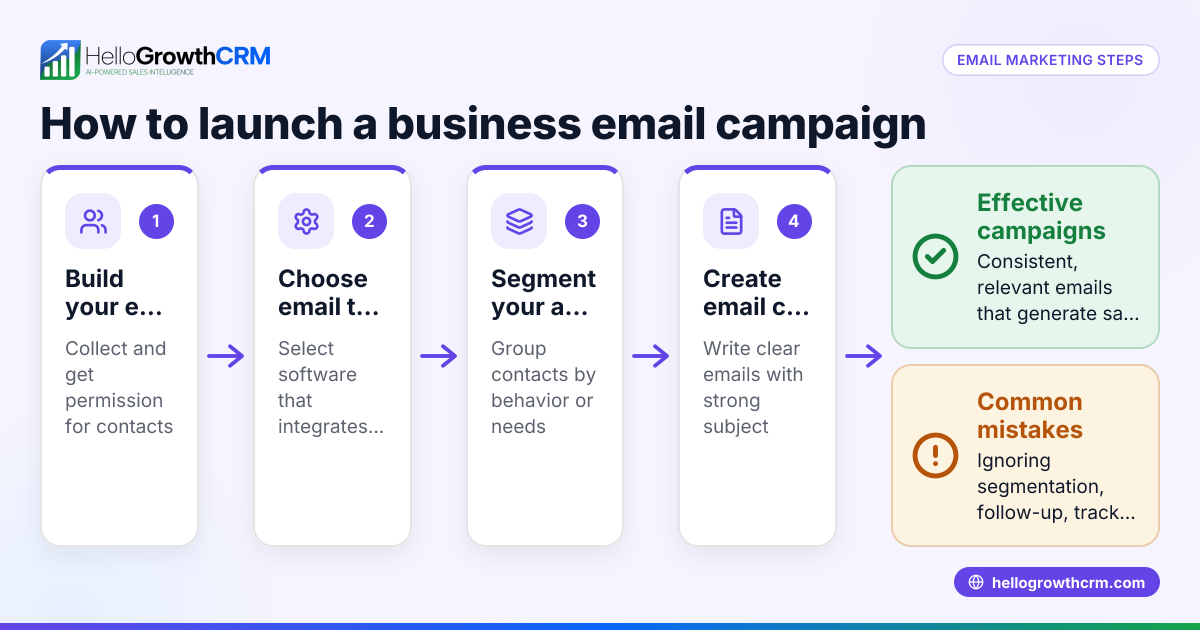
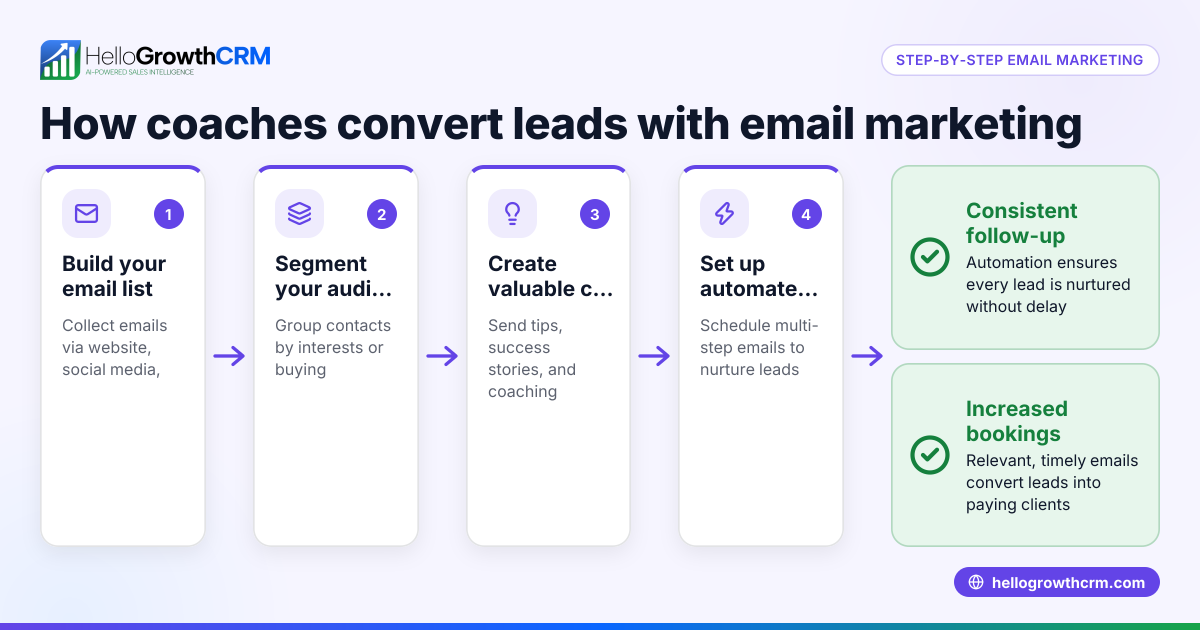
- Build and segment your email list: Collect emails at checkout, website sign-ups, or promotions. Segment by purchase history, browsing habits, or demographics to send relevant offers that resonate with each group.
- Choose an email marketing tool with ecommerce features: Select software that supports automation, segmentation, and analytics. Verify it integrates well with your sales tools and CRM to streamline workflows.
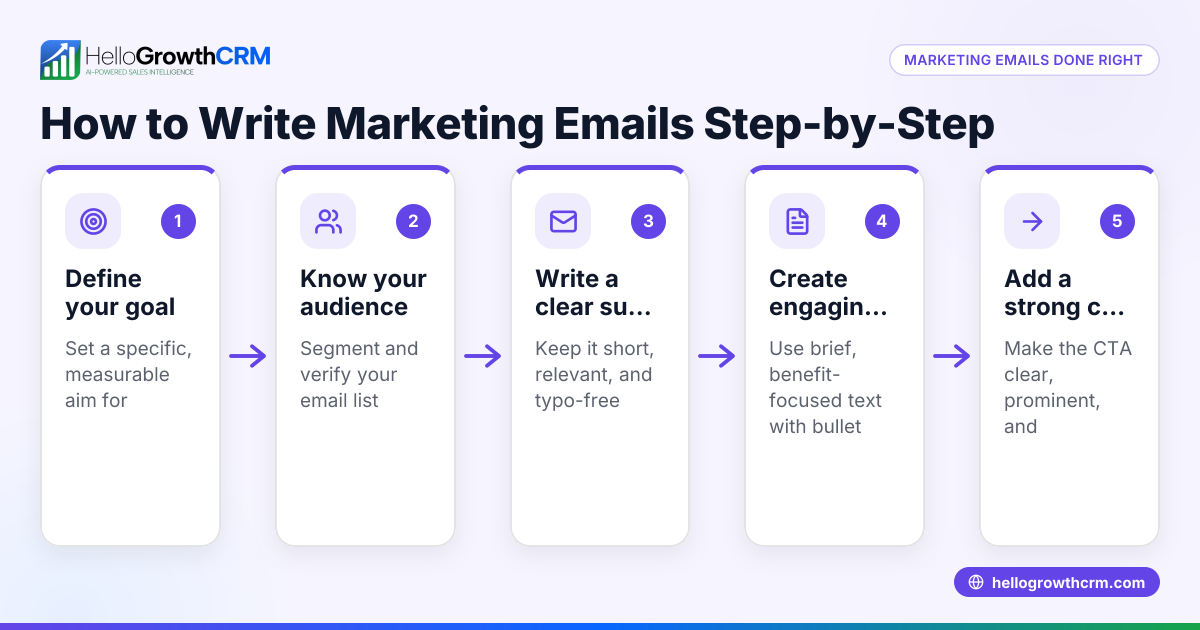
- Create targeted email content: Write clear subject lines, personalized messages, and strong calls to action. Include product images and direct store links to maximize engagement.
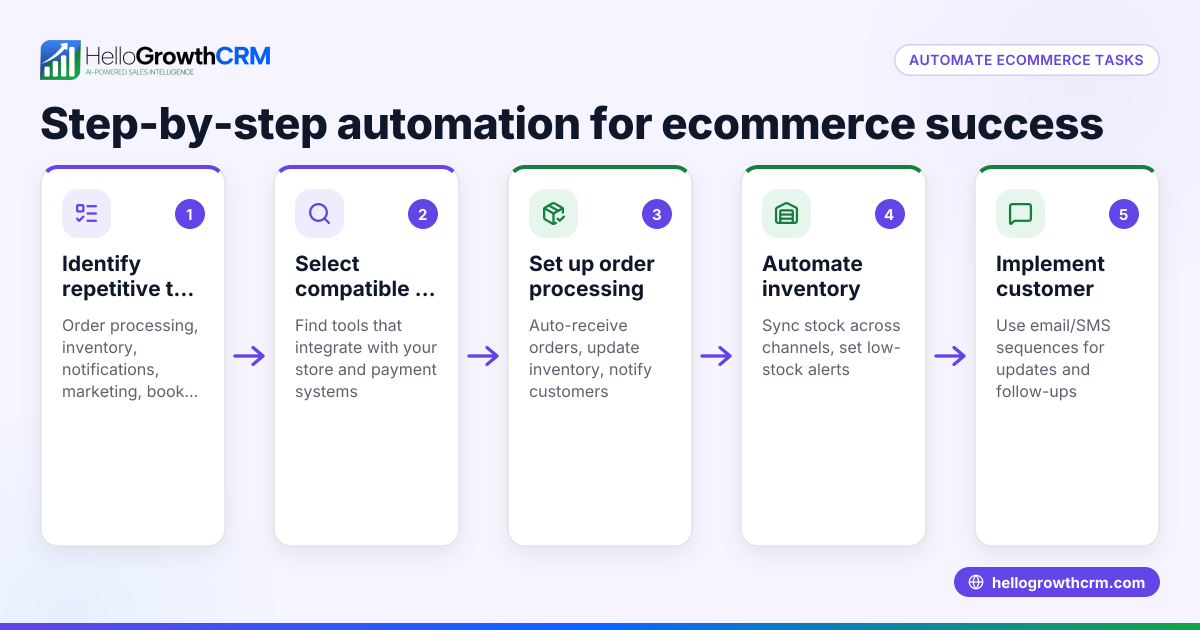
- Set up automated sequences: Design workflows for welcome emails, cart abandonment reminders, post-purchase follow-ups, and promotions to run automatically. Automation saves time and ensures timely communication.
- Test and optimize campaigns: Use A/B testing on subject lines and content to improve open rates, click-through rates, and conversions. Regularly analyze results to refine your strategy.
- Ensure compliance with US email laws: Include unsubscribe options and accurate sender information to comply with regulations like CAN-SPAM and maintain trust.
- Analyze and adjust your approach continuously: Review campaign reports regularly, refine segments, messages, and timing based on data and customer feedback.
For more on automation and workflows, see email automation and sequences.
Example (fictional figures)
Sunrise Apparel, an ecommerce clothing store in Phoenix, Arizona, runs a summer sale email campaign targeting 12,000 subscribers.
- Email subscribers: 12,000
- Average order value: $85
- Initial conversion rate: 2.5%
Calculations:
Orders from campaign = 12,000 × 2.5% = 300 orders Total revenue = 300 × $85 = $25,500
After improving segmentation and automating follow-ups, conversion rises to 3.5%:
New orders = 12,000 × 3.5% = 420 orders New revenue = 420 × $85 = $35,700
Revenue increase = $35,700 − $25,500 = $10,200
This example shows how targeted email marketing and automation can boost sales significantly by reaching the right customers with timely messages.
Common mistakes
- Sending the same email to all subscribers: Prevent this by segmenting your list based on customer behavior and preferences to increase relevance.
- Ignoring automation: Manual sending wastes time and misses timely follow-ups. Use automated sequences to stay consistent and efficient.
- Not testing emails: Run A/B tests on subject lines and content to improve open and click rates and overall campaign effectiveness.
- Overlooking legal compliance: Always include unsubscribe links and correct sender info to comply with US laws like CAN-SPAM.
- Neglecting mobile optimization: Many users open emails on phones, so test for mobile-friendly design to avoid losing engagement.
- Over-emailing customers: Balance frequency to avoid unsubscribes and complaints; monitor engagement and adjust accordingly.
Learn more about avoiding these issues in ecommerce at E-commerce and online sellers.
Doing this in HelloGrowthCRM
HelloGrowthCRM supports ecommerce email marketing with features like the HelloMail shared inbox, which lets your team manage inbound emails from leads and customers without switching apps. Replies to quotation emails are visible to the whole team on the deal, improving coordination. The sequences and campaigns feature lets you create automated five-step follow-ups over two weeks that stop immediately when a prospect replies, saving time and improving engagement. For details, see email automation and sequences.
Frequently asked questions
What types of emails should ecommerce businesses send? Ecommerce businesses should send welcome emails, promotional offers, abandoned cart reminders, and post-purchase follow-ups. Personalizing these messages helps increase engagement and loyalty.
How often should I email my ecommerce list? The best frequency depends on your audience and content quality. Generally, 1-2 emails per week keep your brand visible without overwhelming subscribers.
How do I measure email marketing success for ecommerce? Track open rates, click-through rates, conversion rates, and revenue from email campaigns to evaluate and improve performance.
Can I integrate email marketing with my sales CRM? Yes. Integration helps synchronize customer data and track leads through the sales funnel. HelloGrowthCRM offers this for ecommerce businesses.
Is email automation difficult for small ecommerce teams? No. Tools like HelloGrowthCRM simplify automated sequences setup without coding, saving time and reducing errors.
Learn more about HelloGrowthCRM for US businesses at HelloGrowthCRM for the United States.
Key takeaways
- Build and segment your email list to send targeted messages.
- Use automated sequences to save time and ensure timely follow-ups.
- Test subject lines and content regularly to optimize performance.
- Comply with US email laws by including unsubscribe links and accurate sender info.
- Integrate email marketing with your sales pipeline for better tracking.
- Avoid common mistakes like spamming, ignoring mobile users, and neglecting automation.
Start improving your ecommerce email marketing today. Start on the Free Forever plan (200 leads, no credit card).
Ready to put this into practice?
Set up your pipeline, WhatsApp follow-ups, and AI lead scoring in minutes — free, no credit card.
Try HelloGrowthCRM freeGet CRM tips in your inbox
Join thousands of sales professionals who get weekly insights on CRM strategy, AI automation, and pipeline optimization.

The HelloGrowthCRM team publishes guides on CRM strategy, AI sales tools, and revenue operations for small business sales teams.