HelloGrowthCRM software
Built for real small-business sales teams
HelloGrowthCRM helps reps qualify faster, follow up on time, and close more deals—with practical automation in one place.
- AI lead scoring and pipeline visibility
- Built-in dialer, WhatsApp, and email automation
- Sales forecasting and RevOps-ready reporting
Starting a cleaning business in the United States involves clear, practical steps you can complete today. Begin by deciding your cleaning niche—residential, commercial, or specialized cleaning. Then legally register your business, obtain required licenses and insurance, set competitive pricing, buy the right equipment, and promote your services effectively. This article guides you through each step, includes a detailed example with numbers, highlights common pitfalls, and answers typical questions.
Why this comes up / what goes wrong
Many aspiring cleaning business owners or accountants face uncertainty about the exact steps to launch a cleaning service. Without clear guidance, they risk missing essential legal registrations, underpricing services, or lacking proper insurance, which can lead to lost customers or financial risk. Managing leads and customer follow-up can also be challenging without a system, causing missed opportunities. This guide helps you avoid these issues by providing a focused, step-by-step approach tailored for local service businesses.
Step-by-step
- Choose your cleaning niche and services: Decide if you want to focus on residential cleaning, commercial offices, specialized services like carpet or window cleaning, or a mix. Check local demand and competition.
- Register your business: Choose a business structure (sole proprietorship, LLC, etc.) and register your business name with your state. Obtain an Employer Identification Number (EIN) from the IRS if you plan to hire employees or open a business bank account. (irs.gov)
- Obtain necessary licenses and permits: Check with your city and state government offices for required business licenses and permits specific to cleaning services.
- Get insurance: Purchase general liability insurance to protect against property damage or injury claims. If hiring employees, workers’ compensation insurance is usually required.
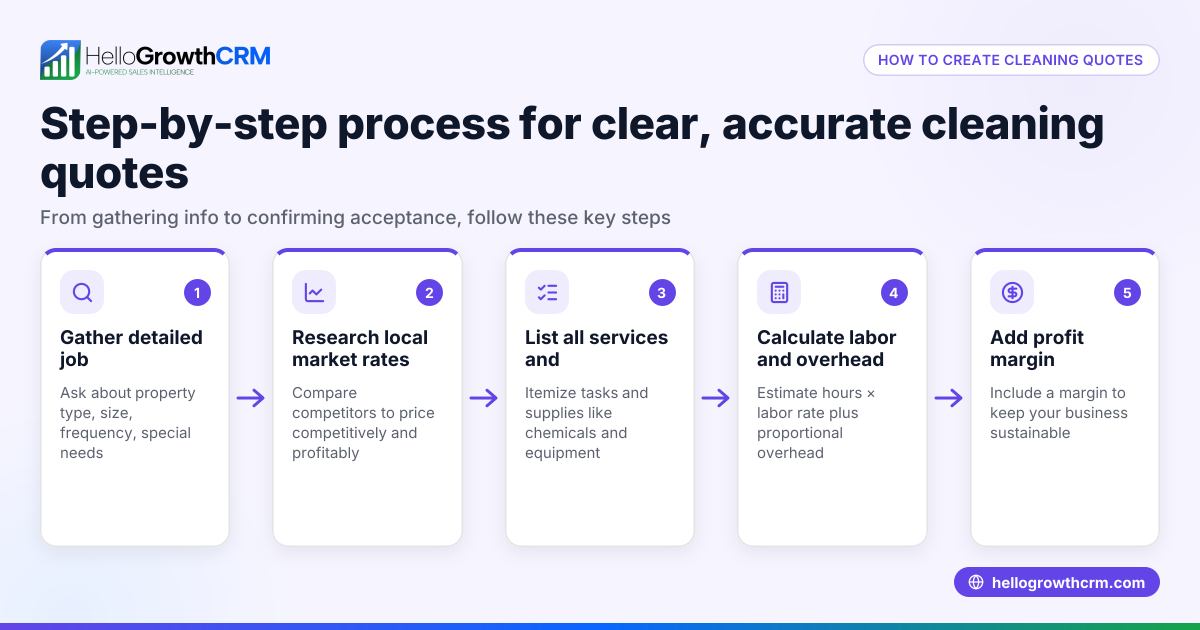
- Set your pricing: Research competitors’ rates and calculate your costs including labor, supplies, transportation, and overhead. Decide if you will charge hourly or per job.
- Buy equipment and supplies: Purchase reliable cleaning tools and eco-friendly supplies if that fits your brand.
- Open a business bank account: Keep your business finances separate from personal accounts.
- Create marketing materials and a website: Use flyers, local ads, and social media to reach customers. Consider online booking or inquiry forms.
- Organize lead capture and follow-up: Use tools to track inquiries and schedule jobs efficiently. Managing leads well prevents lost business.
- Hire and train staff if needed: Recruit trustworthy employees and provide training on cleaning standards and customer service.
For more on managing local service businesses, see Local service businesses.
Example (fictional figures)
Consider "Sparkle Cleaners," a two-location residential cleaning business in Columbus, Ohio, starting 04/15/2026.
- Initial equipment and supplies: $5,000
- Licensing and permits: $500
- Insurance (annual premium): $1,200
- Marketing (website, flyers, ads): $2,000
- Miscellaneous startup costs: $800
Total startup costs: $5,000 + $500 + $1,200 + $2,000 + $800 = $9,500
Sparkle Cleaners charges $120 per standard 3-hour cleaning job.
If they complete 15 jobs per week: $120 × 15 = $1,800 weekly revenue
Monthly revenue (4 weeks): $1,800 × 4 = $7,200
Assuming monthly operating costs (labor, supplies, rent, transport) of $4,000:
Monthly profit before tax: $7,200 - $4,000 = $3,200
This example shows how startup costs and pricing relate to ongoing profitability.
Common mistakes
- Skipping legal registration or licenses: Always register your business and get necessary permits to avoid fines or shutdowns.
- Underpricing services: Calculate all costs carefully and research local rates to set sustainable prices.
- Neglecting insurance: Without liability and workers’ comp insurance, you risk major financial loss.
- Poor lead management: Use a system to track and follow up on customer inquiries to avoid losing sales.
- Inadequate marketing: Don’t rely only on word-of-mouth; use local advertising and online presence.
- Hiring without training: Train employees thoroughly on cleaning and customer service standards.
Learn more about managing leads and customer communication with WhatsApp and SMS CRM.
Frequently asked questions
Do I need a special license to start a cleaning business? Requirements vary by state and city. Typically, you need a general business license; some places may require additional permits for waste disposal or use of certain chemicals. Check your local government website for specifics.
How much should I charge for cleaning services? Pricing depends on your niche, location, competition, and costs. Residential cleaning often charges $25 to $50 per hour or a flat rate per job. Research local rates and calculate your costs to set prices that cover expenses and generate profit.
Is insurance necessary for a cleaning business? Yes. General liability insurance protects you if you damage a client’s property or cause injury. Workers’ compensation insurance is usually required if you hire employees.
Can I start a cleaning business alone? Yes, many start as sole proprietors. As you grow, you might hire staff. Managing leads and scheduling efficiently is key to handling growth.
What tools help manage a cleaning business? Scheduling, invoicing, and customer communication tools help keep your business organized. For local service businesses, CRM systems that integrate with WhatsApp and SMS can improve lead follow-up and customer engagement.
For more on local service business management, visit HelloGrowthCRM for the United States.
Key takeaways
- Choose your cleaning niche and register your business properly.
- Obtain all required licenses and insurance before starting.
- Set pricing based on costs and local market research.
- Use a system to track leads and follow up promptly.
- Avoid common mistakes like underpricing and poor marketing.
- Plan startup costs and ongoing expenses carefully.
Starting a cleaning business is manageable with clear steps and preparation. To organize your leads and customer communications efficiently, consider tools tailored for local service businesses.
Start your cleaning business journey today and manage leads easily by starting on the Free Forever plan (200 leads, no credit card) at HelloGrowthCRM.
Ready to put this into practice?
Set up your pipeline, WhatsApp follow-ups, and AI lead scoring in minutes — free, no credit card.
Try HelloGrowthCRM freeGet CRM tips in your inbox
Join thousands of sales professionals who get weekly insights on CRM strategy, AI automation, and pipeline optimization.

The HelloGrowthCRM team publishes guides on CRM strategy, AI sales tools, and revenue operations for small business sales teams.