HelloGrowthCRM software
Built for real small-business sales teams
HelloGrowthCRM helps reps qualify faster, follow up on time, and close more deals—with practical automation in one place.
- AI lead scoring and pipeline visibility
- Built-in dialer, WhatsApp, and email automation
- Sales forecasting and RevOps-ready reporting
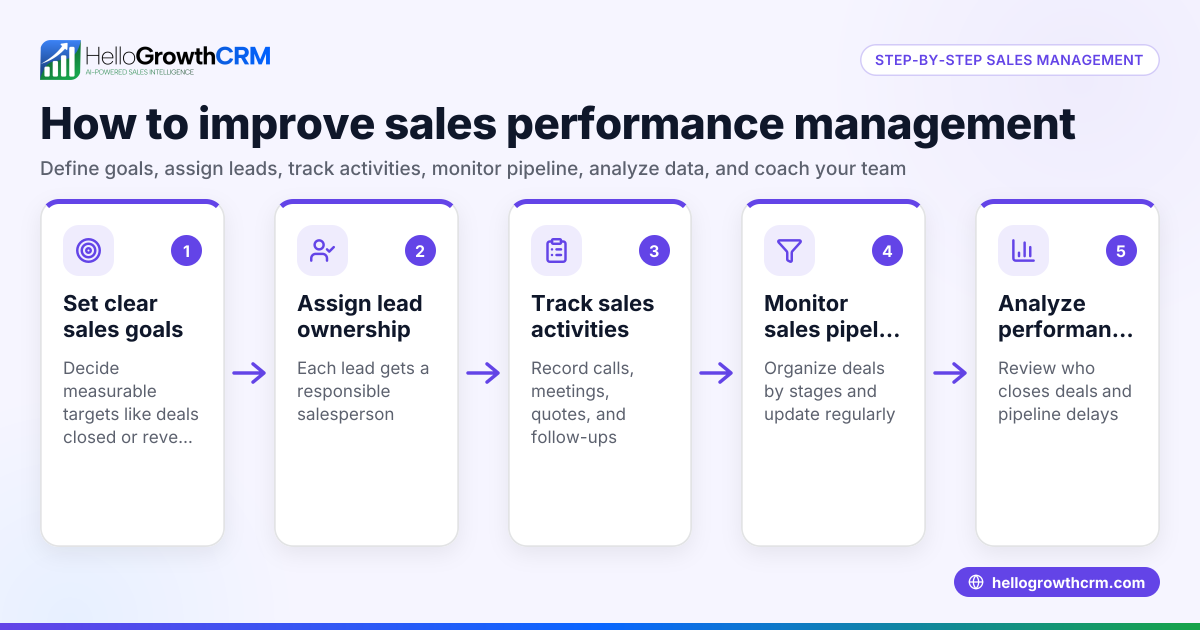
Sales management is the process of planning, directing, and controlling sales activities to meet business goals. It ensures that every lead is captured, qualified, and followed up on promptly, which directly impacts revenue. For small businesses, effective sales management prevents leads from being lost or forgotten and keeps the sales pipeline organized and active.
Why this comes up / what goes wrong
Small-business owners often rely on informal sales methods like notebooks, text messages, or spreadsheets. These scattered tools cause missed follow-ups, lost leads, forgotten quotations, and unclear responsibilities. Without a structured sales management system, your team can lose track of potential customers, resulting in missed revenue and frustration. Slow or inconsistent follow-up is a common cause of lost sales, especially when multiple salespeople handle leads without clear ownership.
Step-by-step
- Capture all leads in one place: Collect every inquiry from web forms, phone calls, or WhatsApp messages into a central system. Check that each lead has an assigned owner responsible for follow-up to avoid leads slipping through the cracks.
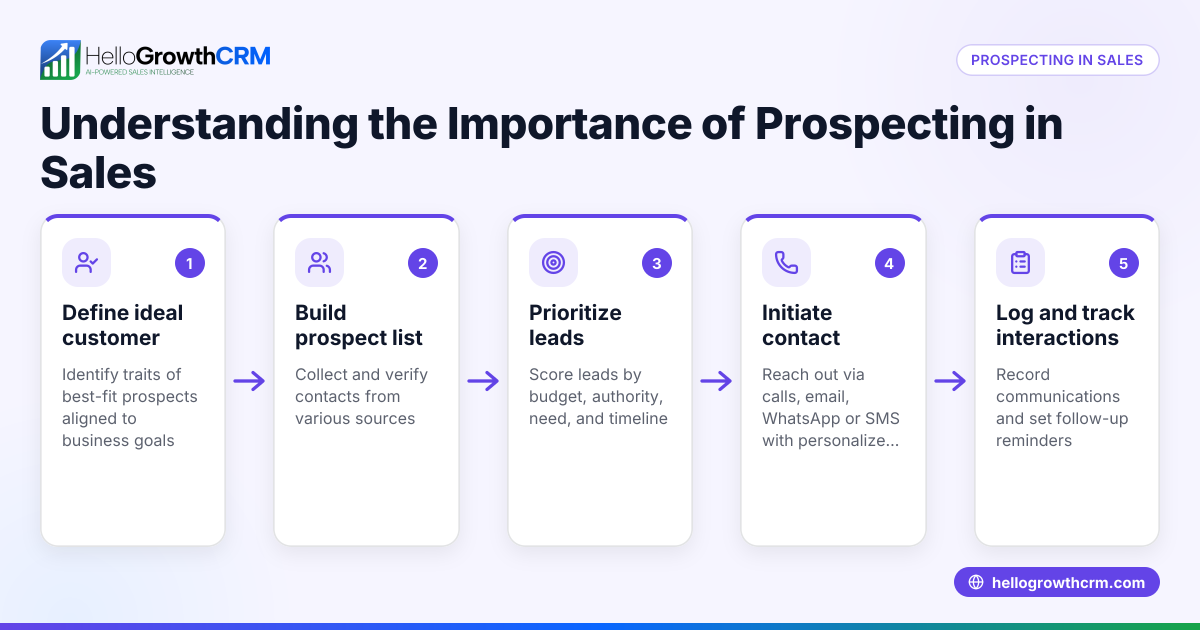
- Qualify and prioritize leads: Evaluate leads to identify which have the highest potential to convert. Regularly review and update lead priority based on new information.
- Track deals through pipeline stages: Move each potential sale through defined stages such as contact made, quote sent, and negotiation. Set follow-up dates at each stage to ensure timely progression and avoid forgotten deals.
- Assign territories or sales reps: If your business has field sales or distributors, define territories and assign ownership. Check that sales reps log their daily visits and activities to maintain accountability.
- Monitor sales activities and commissions: Track calls, visits, and commissions earned to motivate your team and spot bottlenecks.
- Review sales forecasts regularly: Analyze your pipeline data to predict revenue and adjust your sales strategies accordingly.
Using tools like HelloGrowthCRM can help centralize this process, especially capturing leads automatically from web forms, calls, and WhatsApp, assigning owners, and tracking deals through pipeline stages. Learn more about HelloGrowthCRM for the United States, WhatsApp and SMS CRM, and the built-in CRM dialer.
Example (fictional figures)
Consider GreenLeaf Landscaping, a small landscaping company in Charlotte, North Carolina. On 04/01/2026, they received 10 new leads from their website and phone inquiries.
- Total new leads: 10
- Average deal size: $5,000
- Expected conversion rate: 30%
Calculations:
$5,000 × 10 leads = $50,000 potential revenue $50,000 × 30% conversion = $15,000 expected revenue
GreenLeaf assigns each lead to a sales rep with follow-up tasks. They move deals through pipeline stages and set reminders to close sales on time. This organized approach helps them avoid losing any leads and improves their chances of closing deals.
Common mistakes
- Not centralizing lead information: Leads scattered across emails, notebooks, or messages get lost. Prevent this by capturing all leads in one system like HelloGrowthCRM.
- Ignoring follow-up timing: Delayed responses reduce your chance of closing deals. Use reminders and scheduled tasks to stay prompt.
- Failing to qualify leads: Spending time on low-potential leads wastes resources. Regularly prioritize leads based on readiness to buy.
- Overlooking pipeline stages: Without tracking deal stages, it’s hard to know the status of sales. Define clear pipeline steps and update them consistently.
- Neglecting field sales tracking: Field reps’ activities often go unrecorded, causing missed opportunities. Use mobile tools to log visits and routes.
- Not reviewing sales data: Without regular analysis, you miss chances to improve. Schedule frequent reviews of sales reports and forecasts.
Doing this in HelloGrowthCRM
HelloGrowthCRM helps small businesses manage sales efficiently. Every enquiry from a form, call, or WhatsApp lands as a lead with an assigned owner and next step, instead of being lost in a notebook. Its deals (pipeline) feature tracks quotations and follow-ups so no opportunity is forgotten. For businesses with field reps, territory and visit logging tools let managers see daily sales activities and routes. Learn more about HelloGrowthCRM for the United States, WhatsApp and SMS CRM, and the built-in CRM dialer to improve your sales management.
Frequently asked questions
What is sales management and why is it important? Sales management organizes and directs sales activities to increase revenue. It ensures leads are followed up promptly, deals progress smoothly, and sales goals are met.
How can small businesses improve their sales follow-up? Centralize lead capture, assign owners, qualify leads, and set reminders for follow-ups. A CRM helps automate these tasks and keeps the team accountable.
What role do territories and field operations play in sales management? Assigning territories organizes sales reps’ efforts geographically. Tracking field visits and activities ensures reps are productive and managers have visibility.
How does tracking pipeline stages help sales? It provides clarity on where each deal stands, helps prioritize actions, and improves forecasting accuracy.
Can a CRM like HelloGrowthCRM help with sales management? Yes, it captures leads automatically, tracks deals through pipeline stages, assigns owners, and supports field sales operations, making sales management more efficient.
Key takeaways
- Centralize lead capture and assign ownership to avoid lost opportunities.
- Qualify and prioritize leads to focus efforts on high-potential sales.
- Track deals through defined pipeline stages with follow-up dates.
- Use territory and field sales tools to monitor reps’ activities.
- Regularly review sales data to adjust strategies and improve results.
- Avoid common mistakes like scattered leads and delayed follow-ups.
Start improving your sales management today with HelloGrowthCRM. Start on the Free Forever plan (200 leads, no credit card).
Ready to put this into practice?
Set up your pipeline, WhatsApp follow-ups, and AI lead scoring in minutes — free, no credit card.
Try HelloGrowthCRM freeGet CRM tips in your inbox
Join thousands of sales professionals who get weekly insights on CRM strategy, AI automation, and pipeline optimization.

The HelloGrowthCRM team publishes guides on CRM strategy, AI sales tools, and revenue operations for small business sales teams.