HelloGrowthCRM software
Built for real small-business sales teams
HelloGrowthCRM helps reps qualify faster, follow up on time, and close more deals—with practical automation in one place.
- AI lead scoring and pipeline visibility
- Built-in dialer, WhatsApp, and email automation
- Sales forecasting and RevOps-ready reporting
Customer feedback is important because it provides clear insights into your customers’ experiences and expectations. This information helps you improve your products, services, and customer satisfaction, which can increase sales and loyalty. Without feedback, you risk making decisions based on assumptions rather than facts.
Why this comes up / what goes wrong
Small-business owners often struggle to grow or retain customers because they lack timely and actionable feedback. Many rely on informal comments or guesses about what customers want. This can lead to unresolved issues like poor product quality, slow service, or unmet expectations. When businesses miss these signals, customers may leave negative reviews or switch to competitors, hurting revenue and reputation.
Step-by-step
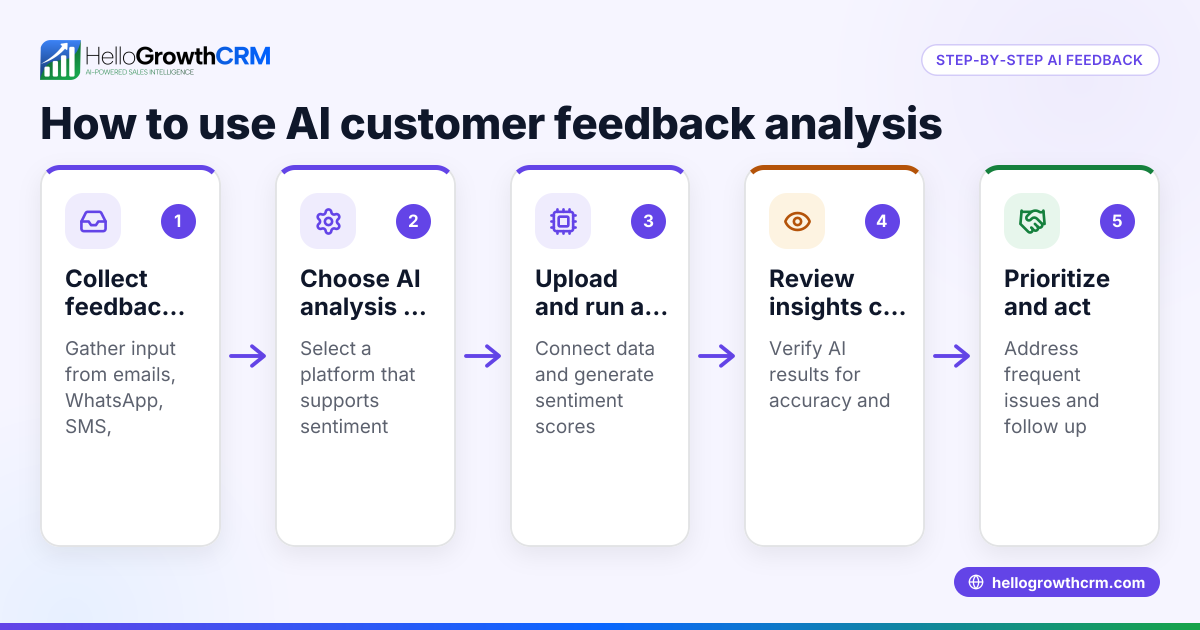
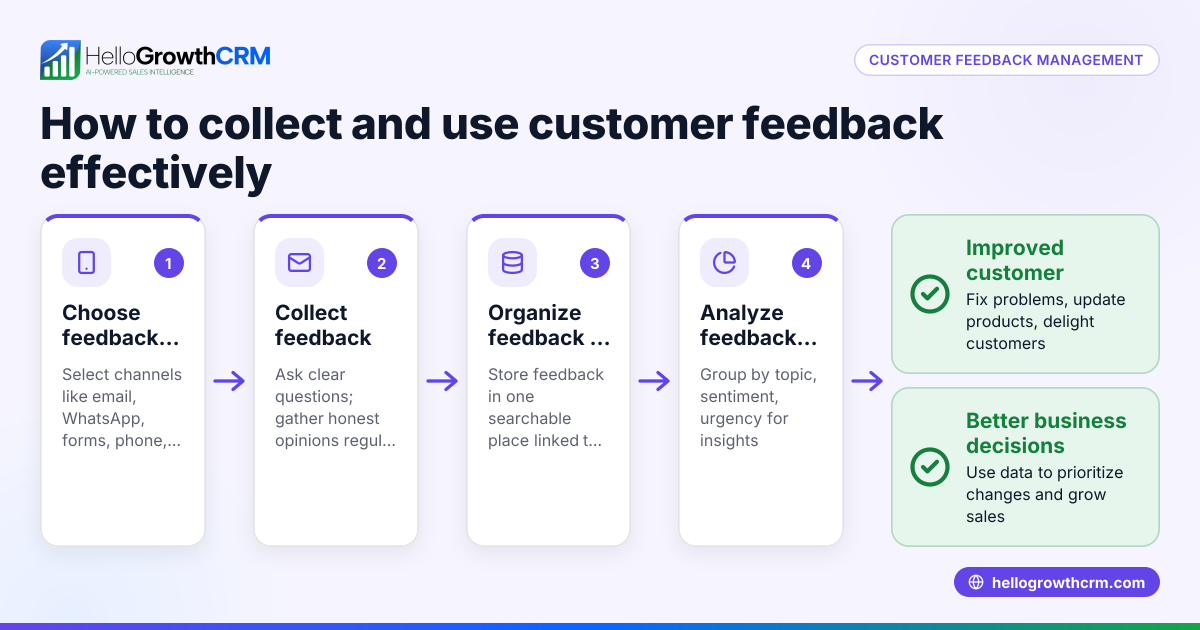
- Ask for feedback regularly: Reach out to customers soon after purchase or service using surveys, emails, or direct conversations. Check that the timing makes sense to capture fresh impressions.
- Choose clear, focused questions: Ask about specific aspects like product quality, delivery speed, or overall satisfaction. Avoid vague questions to get useful answers.
- Use multiple channels to collect feedback: Combine online surveys, phone calls, social media, and face-to-face methods to reach different customer groups and improve response rates.
- Organize feedback data in one place: Store all responses together to identify trends and recurring issues. Check for common complaints or praise that indicate strengths or weaknesses.
- Respond promptly to feedback: Acknowledge all feedback, especially negative comments, to show customers you care and are taking action.
- Use feedback to improve your business: Make changes to products, services, or processes based on what customers say. Verify that these changes address the issues raised.
- Track results over time: Monitor if improvements lead to higher satisfaction or increased sales. Use tools like a customer health score (/product/customer-health-score) to measure ongoing engagement.
- Encourage referrals and repeat business: Satisfied customers can become promoters. Set up referral programs and maintain good communication to encourage loyalty.
Example (fictional figures)
A B2B software reseller in Denver, Colorado, launched a new product on 03/01/2026 and collected customer feedback.
- They surveyed 200 customers and received 80 responses.
- 50 customers rated the product 4 or 5 stars.
- 20 customers reported issues needing support.
- The company spent $5,000 improving the product based on feedback.
- After improvements, customer retention increased by 10%, leading to an extra $30,000 in sales.
Calculations:
Response rate = (80 / 200) × 100 = 40% Positive feedback rate = (50 / 80) × 100 = 62.5% Support issues rate = (20 / 80) × 100 = 25%
Additional sales from retention = $30,000
Total investment = $5,000
Return on investment (ROI) = $30,000 - $5,000 = $25,000
This example shows how collecting and acting on feedback can lead to measurable business benefits.
Common mistakes
- Ignoring feedback: Not acting on feedback frustrates customers. Prevent this by scheduling regular reviews of feedback.
- Asking too many questions: Overwhelming customers reduces response rates. Use concise surveys with focused questions.
- Collecting feedback from only one channel: Limits perspective. Use multiple methods like surveys, phone calls, and social media to get a fuller picture.
- Not closing the feedback loop: Failing to inform customers about changes made after their feedback. Always communicate improvements to build trust.
- Mixing feedback with sales data without context: This can lead to wrong conclusions. Analyze feedback separately to understand customer sentiment.
Doing this in HelloGrowthCRM
HelloGrowthCRM helps you manage customer feedback and service requests by keeping support tickets and knowledge base entries on the same customer record as the deal. This centralization makes it easier to track issues and responses after the sale. You can also manage referrals and provide a branded customer portal for self-service and ongoing communication. Learn more about these features in HelloGrowthCRM for the United States (/usa).
Frequently asked questions
Why is customer feedback important for small businesses? Customer feedback reveals what your customers value or dislike, helping you improve your products and services. It guides your business decisions and can reduce customer churn.
How often should I collect customer feedback? Collect feedback regularly, especially after purchases, support interactions, or product updates. Frequent feedback helps catch problems early and track satisfaction trends.
What is the best way to handle negative feedback? Respond quickly and professionally. Acknowledge the issue, offer solutions, and follow up to ensure resolution. This can turn unhappy customers into loyal ones.
Can customer feedback improve sales forecasting? Yes, understanding customer satisfaction and needs helps predict repeat business and referrals. Tools like a customer health score (/product/customer-health-score) can quantify this.
How does HelloGrowthCRM support customer feedback management? It centralizes support tickets and feedback on the same record as sales deals, making follow-up and service improvements easier. It also supports referral tracking and a customer portal for self-service and feedback.
Is it necessary to use a CRM for managing feedback? While not mandatory, a CRM like HelloGrowthCRM streamlines collecting, organizing, and acting on feedback, especially as your business grows and feedback volume increases.
Key takeaways
- Customer feedback provides essential insights to improve products and services.
- Collect feedback regularly using focused questions and multiple channels.
- Respond promptly and communicate improvements to build trust.
- Avoid common mistakes like ignoring feedback or relying on a single feedback channel.
- HelloGrowthCRM organizes feedback and service requests on customer records for better follow-up and customer management.
Start managing customer feedback effectively with HelloGrowthCRM. Start on the Free Forever plan (200 leads, no credit card).
Ready to put this into practice?
Set up your pipeline, WhatsApp follow-ups, and AI lead scoring in minutes — free, no credit card.
Try HelloGrowthCRM freeGet CRM tips in your inbox
Join thousands of sales professionals who get weekly insights on CRM strategy, AI automation, and pipeline optimization.

The HelloGrowthCRM team publishes guides on CRM strategy, AI sales tools, and revenue operations for small business sales teams.