HelloGrowthCRM software
Built for real small-business sales teams
HelloGrowthCRM helps reps qualify faster, follow up on time, and close more deals—with practical automation in one place.
- AI lead scoring and pipeline visibility
- Built-in dialer, WhatsApp, and email automation
- Sales forecasting and RevOps-ready reporting
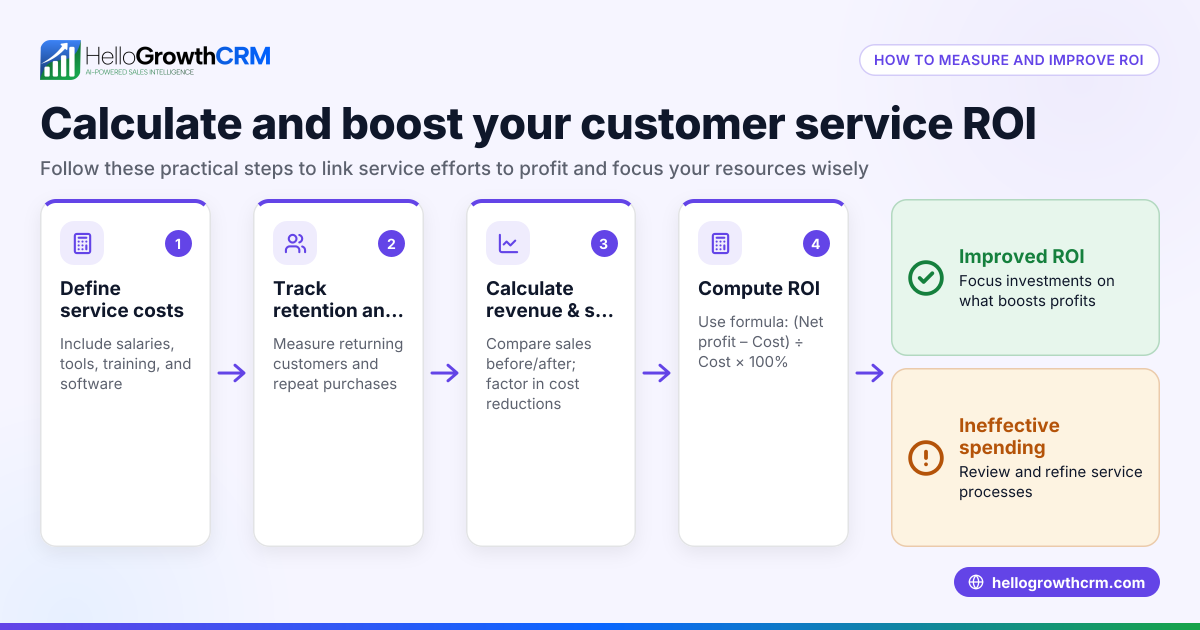
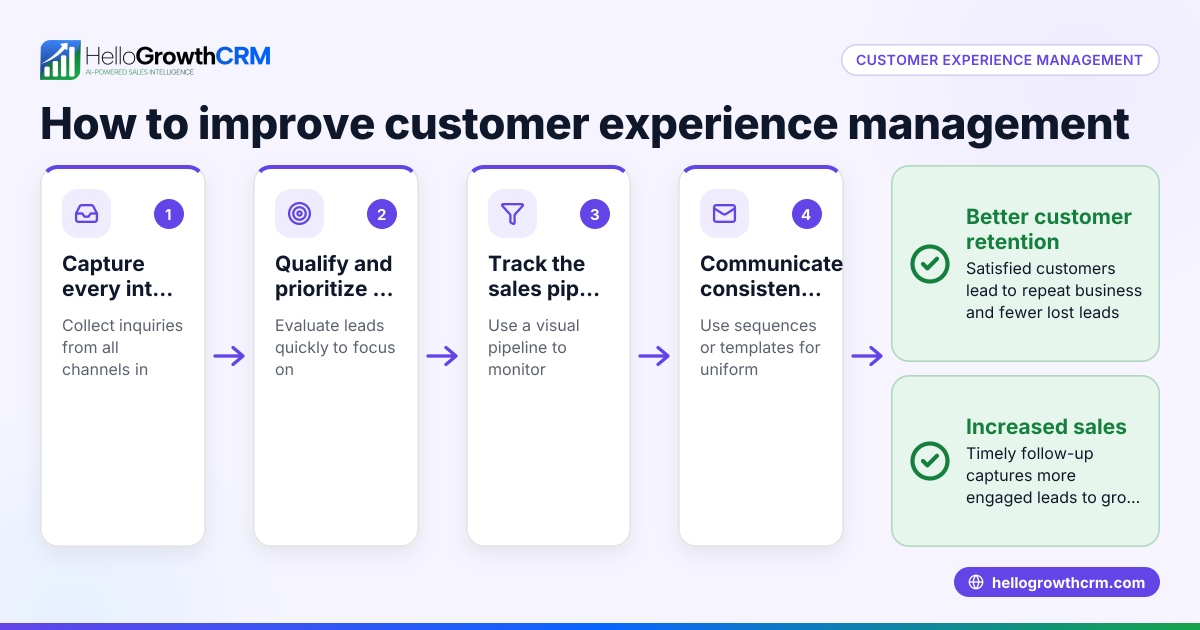
Improving customer care means responding quickly to customer needs, resolving issues efficiently, and keeping all interactions organized in one place. This article explains why customer care often falls short in small businesses, provides step-by-step actions to improve it, includes a practical example with calculations, highlights common mistakes to avoid, and shows how HelloGrowthCRM helps manage customer service effectively.
Why this comes up / what goes wrong
Small business owners often face challenges in customer care because their teams handle many roles without clear systems. Customer requests and leads arrive through texts, emails, or calls and can get lost or delayed. Without a central system to track service requests and follow-ups, customers feel ignored or frustrated. Sales and support teams may work separately, causing repeated questions and confusion. This disorganization lowers customer satisfaction and reduces repeat business opportunities.
Step-by-step
- Centralize customer information: Collect all customer details, past purchases, and service requests in a single place. Check that your team can access this data easily to avoid asking customers for the same information repeatedly.
- Set clear response time goals: Define how quickly your team must respond to inquiries and complaints. Regularly check that your team meets these targets to maintain customer satisfaction.
- Implement a ticketing system for service requests: Assign a ticket to each customer issue to track its progress until resolution. Check that tickets are resolved promptly and do not stay open unnecessarily.
- Create a knowledge base: Compile answers to frequently asked questions and common problems. Ensure your team and customers can find solutions quickly without waiting for support.
- Encourage referrals and gather feedback: Ask satisfied customers to refer others and provide feedback to improve your service. Monitor referral program results and customer satisfaction regularly.
- Train your team regularly: Make sure everyone understands customer care policies and how to use your tools. Keep training records and hold refresh sessions to maintain skills.
- Monitor customer health score: Track customer engagement and satisfaction levels to prioritize follow-ups and improve service. Learn more about customer health score at customer health score.
Example (fictional figures)
A residential real-estate team in Phoenix, Arizona, wants to improve customer care by reducing response times and organizing service requests.
- Current average response time: 48 hours
- Target response time: 12 hours
- Number of monthly service requests: 100
- Average time to resolve each request: 1 hour
- Current monthly time spent resolving requests: 100 requests × 1 hour = 100 hours
By reducing response time from 48 to 12 hours, customer satisfaction improves, leading to a 10% increase in referrals.
- Current monthly referrals: 10
- Average referral value: $10,000
Calculations:
10 referrals × $10,000 = $100,000 in new business
This example shows how faster response times and organized service requests can directly increase revenue and customer satisfaction.
Common mistakes
- Ignoring follow-up deadlines: Prevent this by setting reminders and tracking tickets in a CRM.
- Using multiple unconnected tools: Prevent by centralizing customer data and communication in one system.
- Not training staff on customer care tools: Prevent with regular training and easy access to a knowledge base.
- Failing to collect customer feedback: Prevent by implementing referral and feedback programs.
- Overlooking customer health metrics: Prevent by monitoring scores to identify issues early; see customer health score.
Doing this in HelloGrowthCRM
HelloGrowthCRM supports customer care by keeping service requests, tickets, and referrals linked directly to the same customer record as the deal. It includes a branded self-service customer portal where customers can find answers and submit support tickets easily. The integrated knowledge base helps your team and customers access solutions quickly. Learn more about these features in HelloGrowthCRM’s WhatsApp and SMS CRM and explore HelloGrowthCRM for the United States at hellogrowthcrm.com/usa.
Frequently asked questions
How can I measure if customer care is improving? Track response times, ticket resolution rates, customer satisfaction surveys, and referral numbers. Monitoring customer health scores helps prioritize customers needing attention. See customer health score for details.
What is the benefit of a knowledge base in customer care? A knowledge base provides quick answers to common questions, reducing the volume of tickets and speeding up resolution times. It also empowers customers to help themselves, improving satisfaction.
How do referrals improve customer care? Referrals show satisfied customers and help grow your business. Tracking referrals through your CRM ensures you reward customers and identify what works well in your service.
Why centralize service requests in one system? Centralizing prevents lost or delayed follow-ups, ensures consistent communication, and gives your team full context on each customer. This leads to faster, more accurate service.
Can small teams manage customer care without a CRM? While possible, using spreadsheets and separate apps often causes errors and delays. A CRM designed for WhatsApp and SMS like HelloGrowthCRM helps small teams stay organized and responsive.
Key takeaways
- Centralize customer data and service requests to avoid lost information.
- Set and monitor clear response time goals.
- Use a ticketing system and knowledge base to handle issues efficiently.
- Encourage referrals and collect customer feedback regularly.
- Train your team on customer care tools and policies.
- Monitor customer health scores to prioritize support efforts.
Improving customer care starts with organizing your customer interactions and setting clear standards your team follows. To try managing customer care efficiently, start on the Free Forever plan (200 leads, no credit card) with HelloGrowthCRM.
Ready to put this into practice?
Set up your pipeline, WhatsApp follow-ups, and AI lead scoring in minutes — free, no credit card.
Try HelloGrowthCRM freeGet CRM tips in your inbox
Join thousands of sales professionals who get weekly insights on CRM strategy, AI automation, and pipeline optimization.

The HelloGrowthCRM team publishes guides on CRM strategy, AI sales tools, and revenue operations for small business sales teams.