HelloGrowthCRM software
Built for real small-business sales teams
HelloGrowthCRM helps reps qualify faster, follow up on time, and close more deals—with practical automation in one place.
- AI lead scoring and pipeline visibility
- Built-in dialer, WhatsApp, and email automation
- Sales forecasting and RevOps-ready reporting
Marketing automation for startups means using software to automate repetitive marketing tasks such as follow-ups, emails, and lead routing, saving time and improving sales efficiency. This article explains why startups need automation, provides step-by-step guidance to choose the right tools, includes a practical US-based example, highlights common mistakes, and describes how HelloGrowthCRM supports marketing automation.
Why this comes up / what goes wrong
Startups in the US typically operate with small teams and limited budgets while aiming to grow quickly. Founders or accountants often handle marketing manually, sending emails, texting leads, and tracking prospects using spreadsheets. This manual approach wastes time and risks losing leads due to slow or inconsistent follow-up. Marketing automation helps startups keep leads engaged without extra manual effort, allowing the small team to focus on closing deals and product development. However, startups need automation tools that fit their size, budget, and sales process without adding unnecessary complexity. Choosing the wrong tool or over-automating can overwhelm the team and reduce effectiveness.
Step-by-step
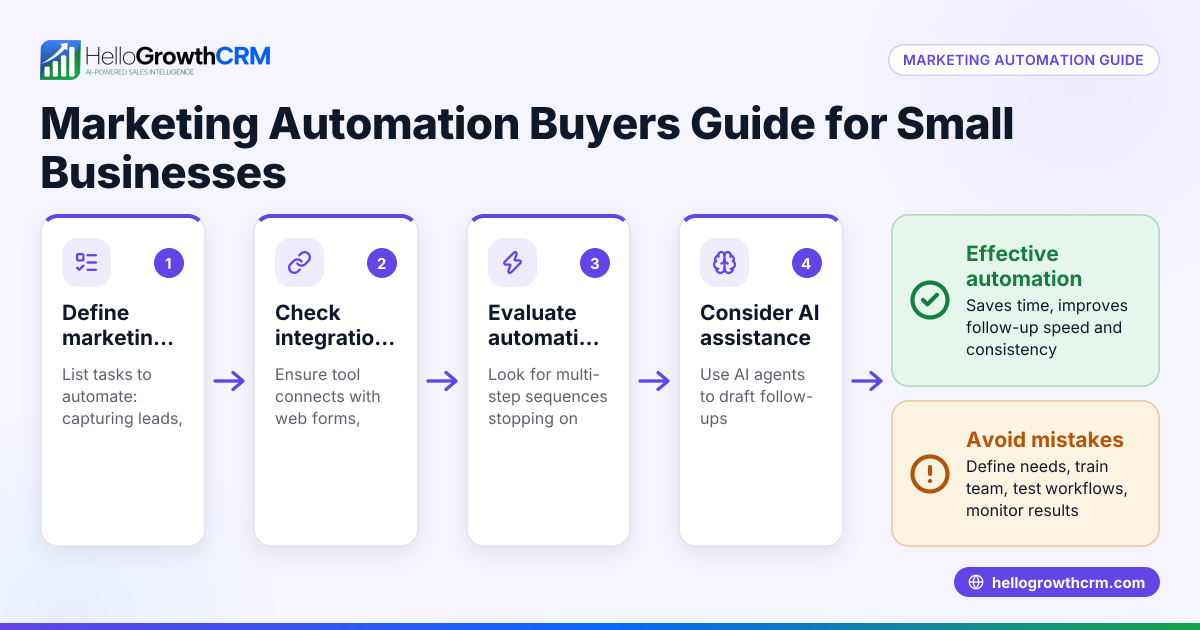
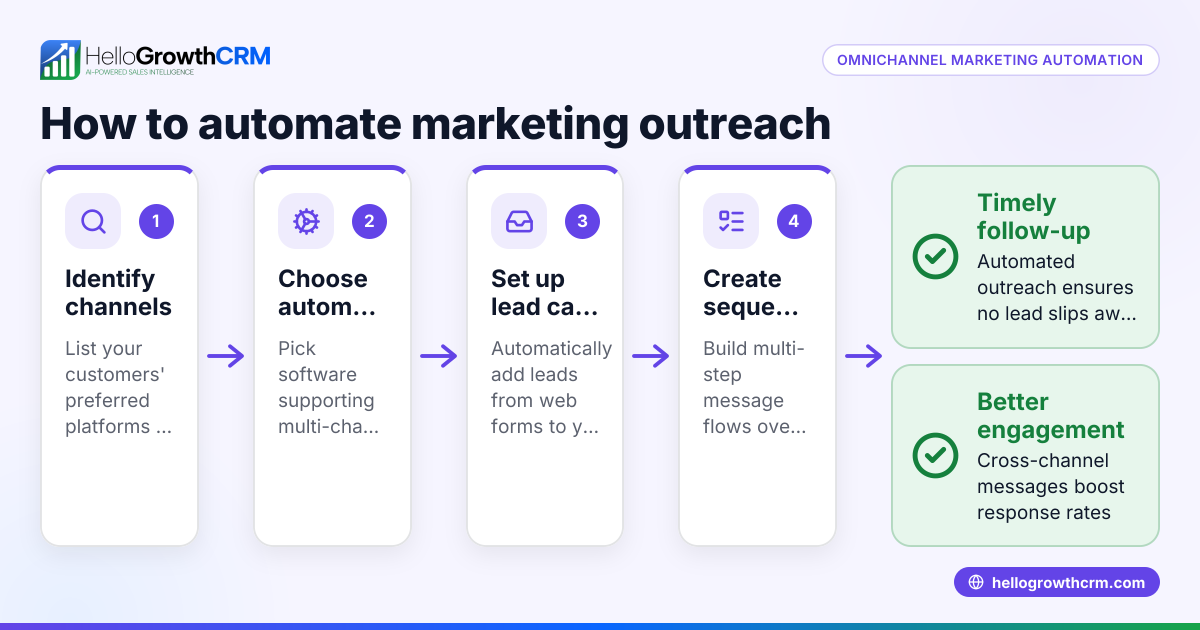
- Identify your marketing goals and tasks to automate
- List repetitive marketing tasks that consume time, such as lead follow-up, email sequences, or lead assignment.
- Decide which communication channels you need, like email, SMS, or WhatsApp.
- Check integration capabilities
- Verify the automation tool connects with your lead sources such as web forms or your CRM.
- Ensure it supports your preferred communication channels.
- Evaluate ease of use and team adoption
- Choose tools with simple interfaces suitable for small teams.
- Look for features that automate task creation and lead routing to reduce manual work.
- Assess automation features
- Look for multi-step sequences that automatically stop when a lead replies.
- Consider AI-assisted drafting of follow-up messages to save time.
- Review pricing and scalability
- Select a solution that fits within your startup’s budget.
- Confirm it can grow with your business as lead volume and team size increase.
- Pilot a campaign
- Run a small automated campaign to test if automation improves follow-up speed and lead engagement.
- Adjust sequences and workflows based on the results.
- Train your team
- Provide training so everyone understands how to use automation features.
- Monitor adoption and tweak processes for better outcomes.
Example (fictional figures)
A software startup in Austin, Texas, called "TechBoost" wants to automate lead follow-up to save time and increase demo bookings.
- They receive 150 leads monthly from their website.
- Currently, follow-up is manual via email and text, taking 10 minutes per lead.
- Staff cost for follow-up: $25/hour.
Calculate current monthly follow-up cost:
150 leads × 10 minutes = 1,500 minutes = 25 hours
25 hours × $25/hour = $625
TechBoost implements a five-step automated sequence running over two weeks that stops when a lead replies.
- Initial setup takes 8 hours at $25/hour = $200
- Automation reduces manual follow-up time significantly (example estimate).
Calculate new monthly follow-up cost:
Manual time now 20% of before: 25 hours × 20% = 5 hours
5 hours × $25/hour = $125
Monthly savings:
$625 - $125 = $500
Annual savings:
$500 × 12 = $6,000
TechBoost saves $6,000 yearly and gains faster, consistent follow-up.
Common mistakes
- Choosing complex tools too early
- Prevent by starting with simple automation that fits your startup’s size and needs.
- Ignoring team training
- Prevent by scheduling training sessions and creating clear usage guides.
- Not integrating with existing lead sources
- Prevent by verifying integration capabilities before purchase.
- Over-automating and losing personalization
- Prevent by using AI agents to draft messages for review before sending, maintaining a personal touch.
- Failing to monitor and adjust workflows
- Prevent by regularly reviewing campaign performance and tweaking sequences as needed.
Doing this in HelloGrowthCRM
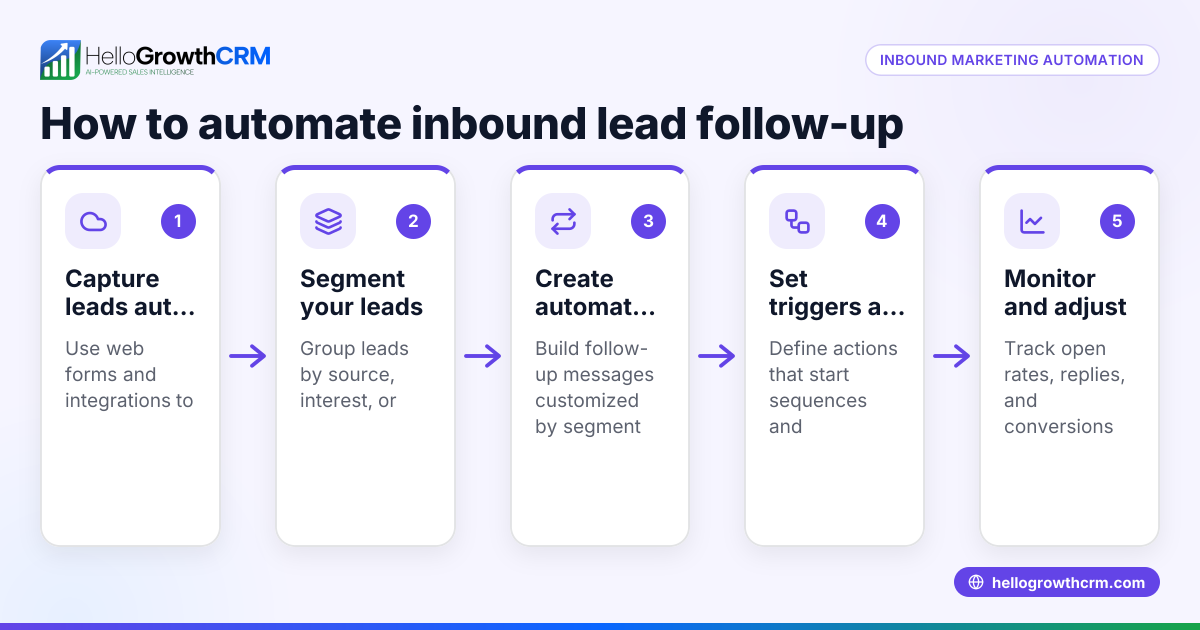
HelloGrowthCRM offers sequences and campaigns that automate a five-step follow-up over two weeks and stop immediately when the prospect replies, saving your team time and ensuring no lead is missed. Its AI agents draft follow-up messages after calls so reps only review and send, reducing manual typing. Workflows, lead routing, and validation rules automate lead assignment and task creation, so your team knows exactly what to do next without manual tracking. Learn more about these features on the AI CRM page.
Frequently asked questions
What is marketing automation for startups? Marketing automation for startups involves using software to automate repetitive marketing tasks such as sending follow-up emails, routing leads, and running campaigns. This helps small teams save time and improve lead engagement.
How do I pick the right marketing automation tool for my startup? Focus on ease of use, integration with your lead sources, support for your communication channels, and pricing that fits your budget. Test the tool with a small campaign before fully committing.
Can marketing automation replace personal contact with leads? No, automation supports your team by handling routine tasks while allowing personalized follow-up when needed. Features like AI agents draft messages but keep reps in control.
How does lead routing help startups? Lead routing automatically assigns new leads to the right team member based on rules such as territory or round-robin, ensuring quick follow-up and balanced workloads.
Is marketing automation suitable for very early-stage startups? Yes, but start with simple automation to avoid complexity. As your lead volume grows, you can add more advanced workflows and AI features. See how HelloGrowthCRM supports Startups and technology companies in the US on our HelloGrowthCRM for the United States page.
Key takeaways
- Startups benefit from marketing automation by saving time on repetitive tasks.
- Choose automation tools that integrate with your lead sources and support your communication channels.
- Simple, multi-step sequences that stop when prospects reply improve follow-up efficiency.
- AI agents can draft follow-ups to reduce manual effort while keeping personalization.
- Automating lead routing and task creation ensures no lead is missed and workload is balanced.
- Regularly monitor and adjust your automation workflows for best results.
Marketing automation can help your startup grow by improving lead follow-up without adding staff. To get started, try HelloGrowthCRM’s Free plan, which supports 200 leads with no credit card required. Visit Start on the Free Forever plan (200 leads, no credit card) to begin.
Ready to put this into practice?
Set up your pipeline, WhatsApp follow-ups, and AI lead scoring in minutes — free, no credit card.
Try HelloGrowthCRM freeGet CRM tips in your inbox
Join thousands of sales professionals who get weekly insights on CRM strategy, AI automation, and pipeline optimization.

The HelloGrowthCRM team publishes guides on CRM strategy, AI sales tools, and revenue operations for small business sales teams.