HelloGrowthCRM software
Built for real small-business sales teams
HelloGrowthCRM helps reps qualify faster, follow up on time, and close more deals—with practical automation in one place.
- AI lead scoring and pipeline visibility
- Built-in dialer, WhatsApp, and email automation
- Sales forecasting and RevOps-ready reporting
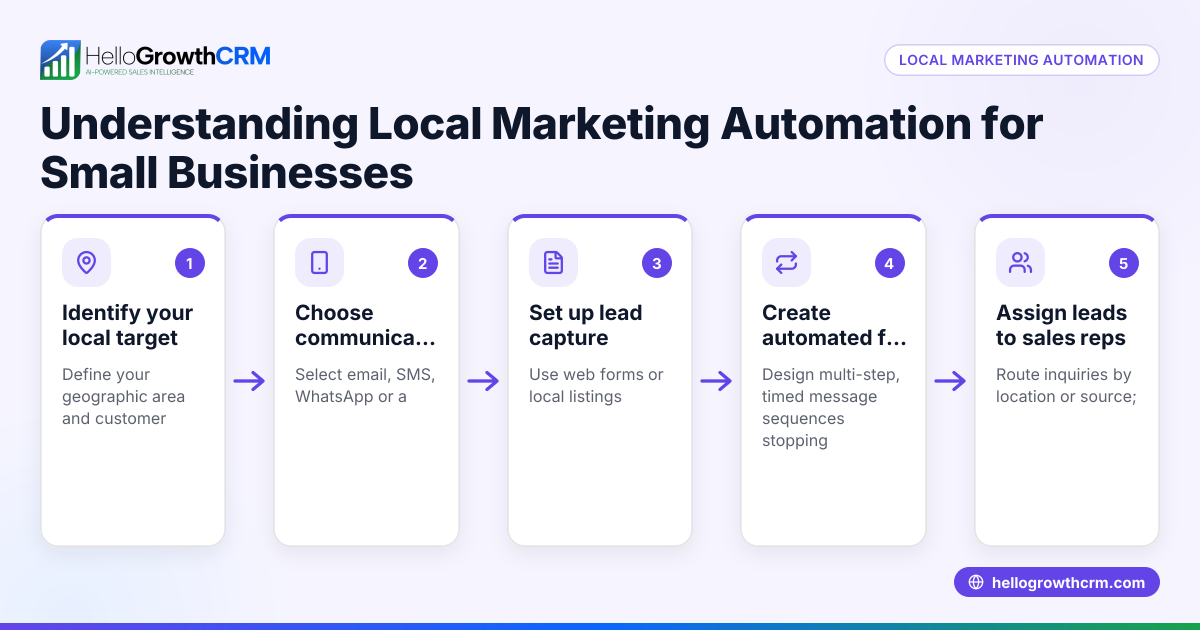
A marketing automation funnel is a systematic sequence of automated marketing actions designed to move prospects through stages of interest, consideration, and decision until they become customers. It uses technology to deliver timely, relevant messages across channels like email, SMS, and WhatsApp, reducing manual effort and speeding up lead follow-up.
Why this comes up / what goes wrong
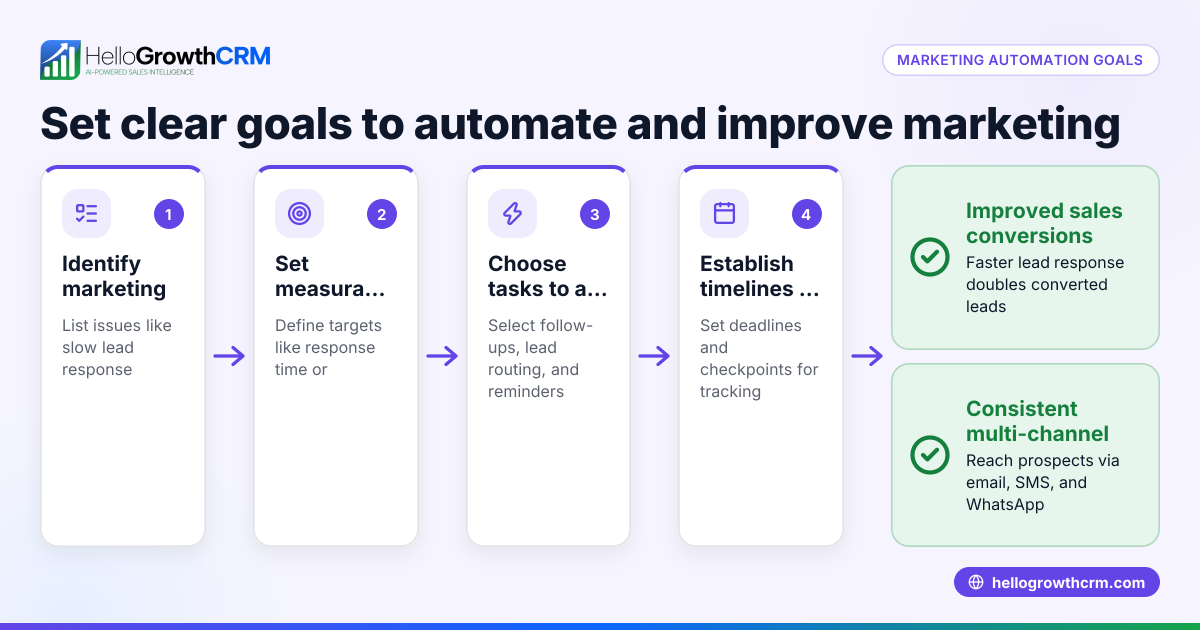
Small-business owners often struggle with slow or inconsistent follow-up on leads, losing potential sales. Managing marketing and sales manually with spreadsheets, emails, and text messages can cause leads to slip through the cracks. Without automation, it's hard to maintain timely contact, segment prospects effectively, or measure which messages work best. A marketing automation funnel helps by structuring these interactions and automating repetitive tasks, so your team can focus on closing deals.
Step-by-step
- Define your funnel stages: Identify key steps your customer goes through, such as awareness, interest, consideration, and decision. Check that each stage has clear criteria.
- Map automated messages to stages: For each stage, create messages that educate, engage, or prompt action. Ensure messages are relevant and timed appropriately.
- Choose your channels: Decide which channels (email, SMS, WhatsApp) to use for each message. Check that your tools support these channels.
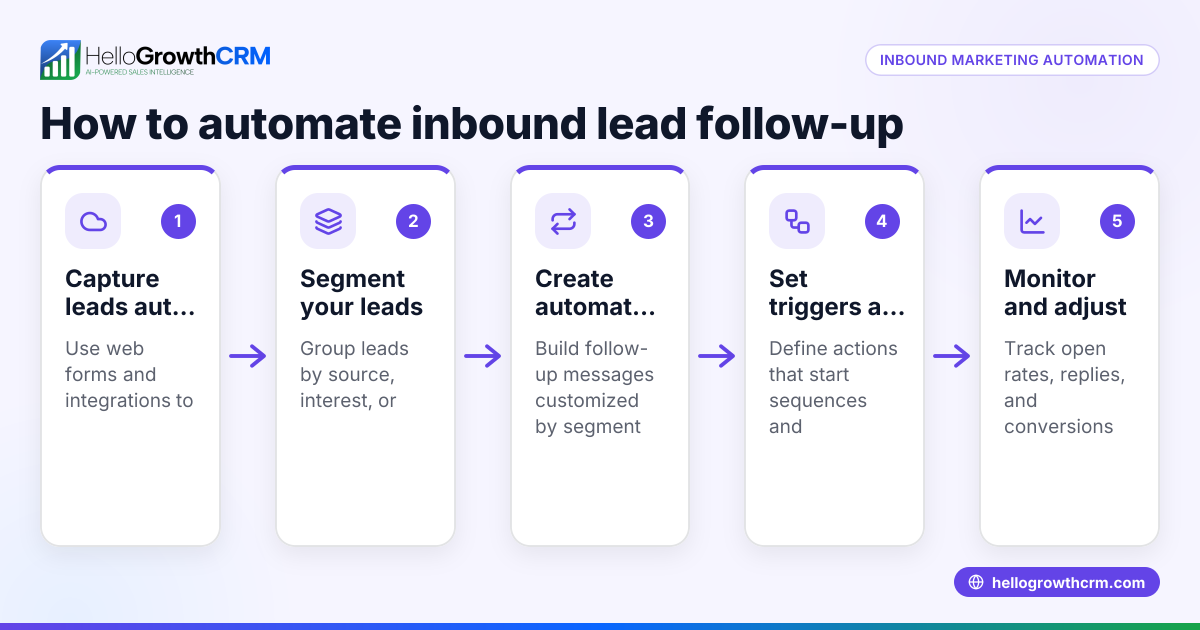
- Set up sequences and triggers: Build automated workflows that send messages based on triggers like form submissions or stage changes. Verify timing and stop conditions (e.g., stop if the prospect replies).
- Capture and segment leads: Use web forms or integrations to capture leads automatically. Check that leads are tagged or segmented for personalized messaging.
- Track and move deals through the pipeline: Monitor leads as deals in your sales pipeline. Confirm follow-up dates are set so no deal is forgotten.
- Analyze and optimize: Regularly review funnel performance metrics (open rates, responses, conversions). Adjust messages, timing, or segmentation based on results.
For more on automating outreach with email, SMS, and WhatsApp, see WhatsApp and SMS CRM.
Example (fictional figures)
A residential real-estate team in Phoenix, Arizona, wants to automate lead follow-up to close more home sales.
- They define funnel stages: Lead captured, Contacted, Interested, Quotation sent, Closed.
- They set a sequence of 5 messages over 14 days after a lead fills their web form.
- They use email and SMS for messages.
- They capture 100 new leads monthly.
- Their average deal value is $350,000.
- They track deals in the pipeline and set follow-up reminders.
Calculations:
100 leads × 20% conversion rate = 20 closed deals
20 deals × $350,000 average deal value = $7,000,000 in sales
By automating follow-up, they aim to increase conversion to 25%:
100 leads × 25% conversion rate = 25 closed deals
25 deals × $350,000 = $8,750,000 in sales
This $1,750,000 increase shows the potential impact of a well-run marketing automation funnel.
Common mistakes
- Not defining clear funnel stages: Leads get lost when stages are vague. Prevent by mapping stages precisely.
- Sending generic messages: Irrelevant content lowers engagement. Prevent by segmenting leads and personalizing messages.
- Ignoring responses: Automation should pause when prospects reply. Prevent by setting sequences to stop on reply.
- Overloading prospects with messages: Too many contacts cause opt-outs. Prevent by spacing messages reasonably.
- Failing to track deals: Without pipeline tracking, follow-ups are missed. Prevent by using a deals pipeline with follow-up dates.
Learn more about managing deals and follow-ups at AI CRM.
Doing this in HelloGrowthCRM
HelloGrowthCRM supports marketing automation funnels with these features:
- Deals (pipeline): Track open opportunities from first contact through close. For example, a quotation sent last week appears as a deal at the 'quote sent' stage with a follow-up date, so it is not forgotten.
- Sequences and campaigns: Run automated multi-step outreach workflows across email, SMS, and WhatsApp. A five-step follow-up over two weeks runs on its own and stops immediately when the prospect replies.
- AI agents (Beta): An AI agent drafts follow-up messages after calls, so reps only review and send, saving time.
Explore these features to automate your marketing funnel efficiently.
Frequently asked questions
What is the difference between a marketing funnel and a marketing automation funnel?
A marketing funnel is the conceptual journey customers take from awareness to purchase. A marketing automation funnel uses technology to automate communications and actions within that journey, improving speed and consistency.
Can small businesses benefit from marketing automation funnels?
Yes. Even small teams can save time and avoid lost leads by automating follow-ups. It helps maintain regular contact without extra manual work.
Which channels work best for marketing automation?
Common channels include email, SMS, and WhatsApp. The best choice depends on your audience preferences and the tools you use. Multi-channel sequences improve reach and engagement.
How do I know if my marketing automation funnel is working?
Track metrics like open rates, response rates, lead-to-deal conversion, and sales revenue. Regularly review and adjust your funnel based on these data.
Is HelloGrowthCRM suitable for managing marketing automation funnels?
HelloGrowthCRM offers pipeline management, multi-channel sequences, and AI agents to automate and track your marketing funnel effectively. Learn more about HelloGrowthCRM for the US market at HelloGrowthCRM for the United States.
Key takeaways
- A marketing automation funnel automates lead nurturing through defined stages using timely, relevant messages.
- Defining clear funnel stages and mapping messages to each stage is essential.
- Automate sequences across email, SMS, and WhatsApp, and stop sequences when prospects reply.
- Track leads as deals in a pipeline with follow-up dates to avoid lost opportunities.
- Avoid common mistakes like generic messaging, unclear stages, and ignoring responses.
- HelloGrowthCRM supports funnels with deals pipelines, sequences, and AI agents to streamline your sales process.
Start automating your marketing funnel today. Start on the Free Forever plan (200 leads, no credit card).
Ready to put this into practice?
Set up your pipeline, WhatsApp follow-ups, and AI lead scoring in minutes — free, no credit card.
Try HelloGrowthCRM freeGet CRM tips in your inbox
Join thousands of sales professionals who get weekly insights on CRM strategy, AI automation, and pipeline optimization.

The HelloGrowthCRM team publishes guides on CRM strategy, AI sales tools, and revenue operations for small business sales teams.