HelloGrowthCRM software
Built for real small-business sales teams
HelloGrowthCRM helps reps qualify faster, follow up on time, and close more deals—with practical automation in one place.
- AI lead scoring and pipeline visibility
- Built-in dialer, WhatsApp, and email automation
- Sales forecasting and RevOps-ready reporting
Marketing automation for industrial companies means using software to automate repetitive marketing tasks like lead follow-up, email sequences, and lead routing. This helps industrial businesses respond faster to inquiries, nurture leads over time, and prioritize sales efforts efficiently. This article explains why marketing automation matters for industrial companies, provides a step-by-step approach to implement it, highlights common mistakes, and shows how HelloGrowthCRM supports these tasks.
Why this comes up / what goes wrong
Industrial companies often face long sales cycles and complex customer needs. Small and mid-sized businesses in this sector frequently lose leads because their sales teams rely on manual follow-up methods like spreadsheets, text messages, or email chains. These manual processes slow down response times and make it hard to track which leads need attention. As a result, promising leads may go cold or be forgotten. Automation addresses these issues by ensuring timely, consistent communication and better lead management.
Step-by-step
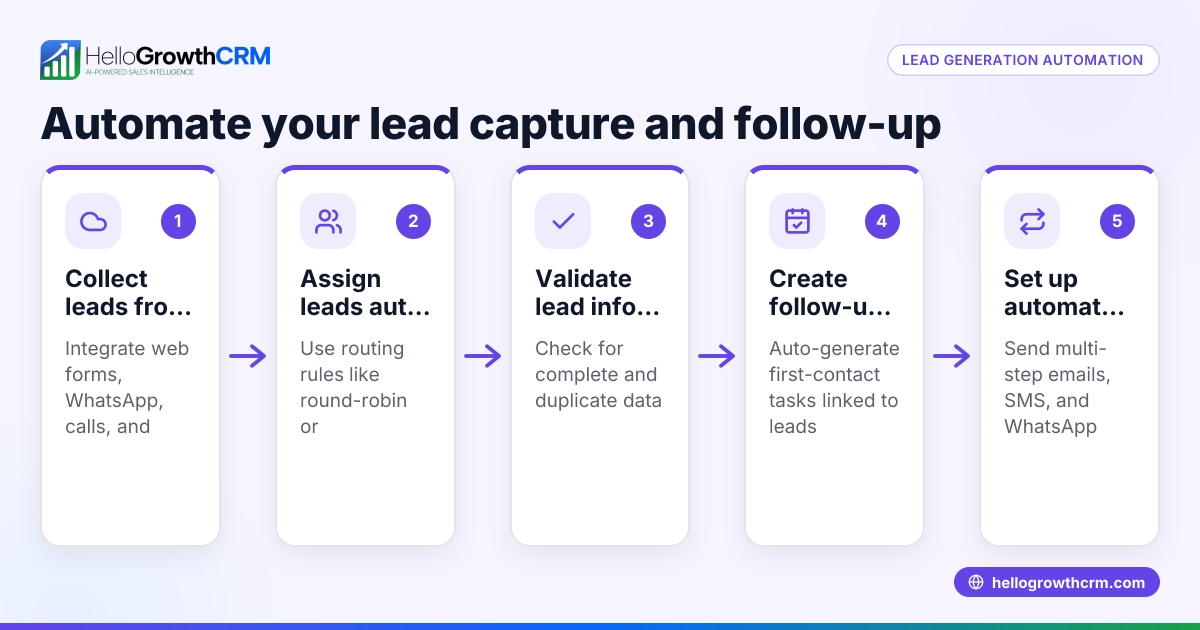
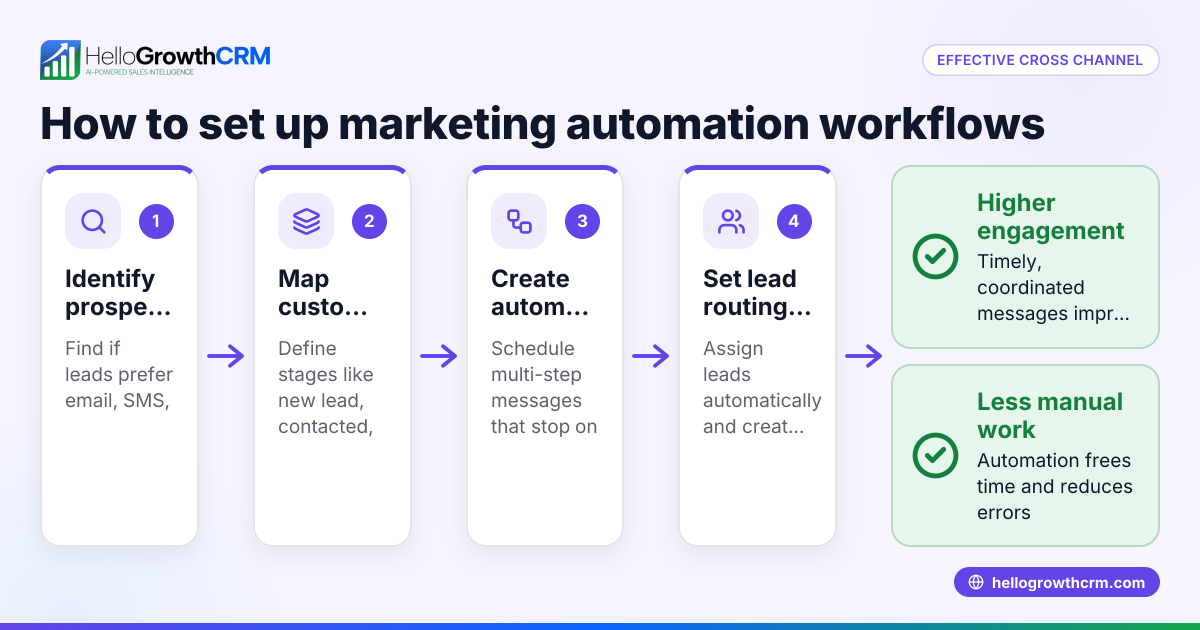
- Identify your lead sources and data entry points. Check where your leads come from—website forms, trade shows, emails, or phone inquiries—and ensure they are captured automatically into a central system.
- Set up automated lead assignment. Define rules to assign leads to sales reps based on territory, product line, or availability. Use round-robin or territory-based routing to balance workloads.
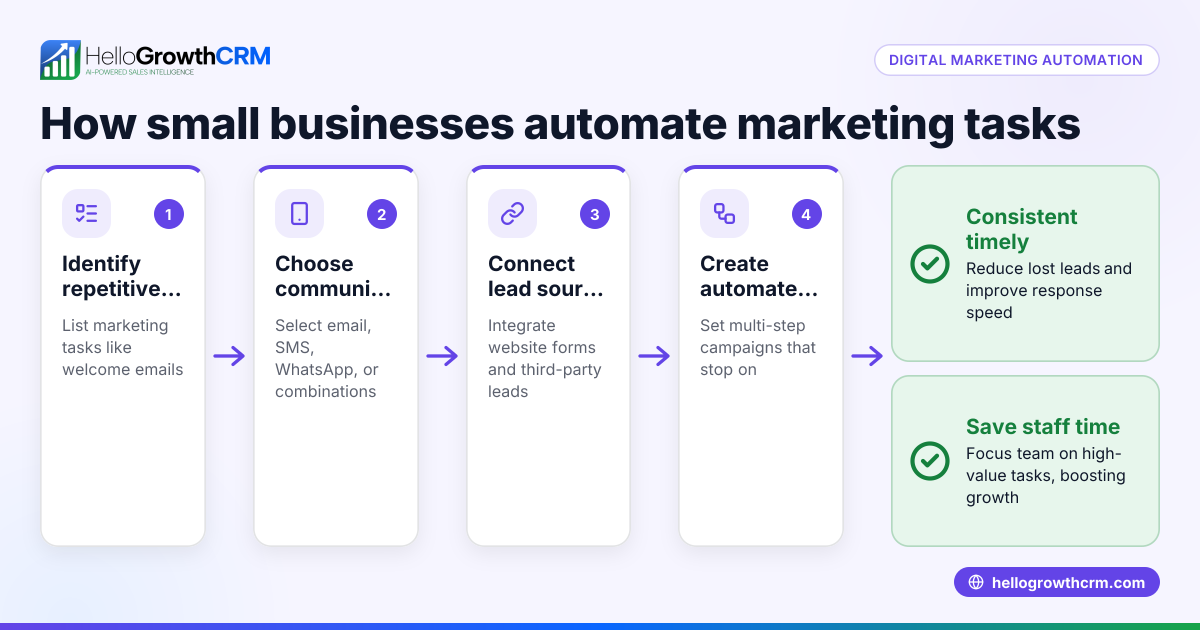
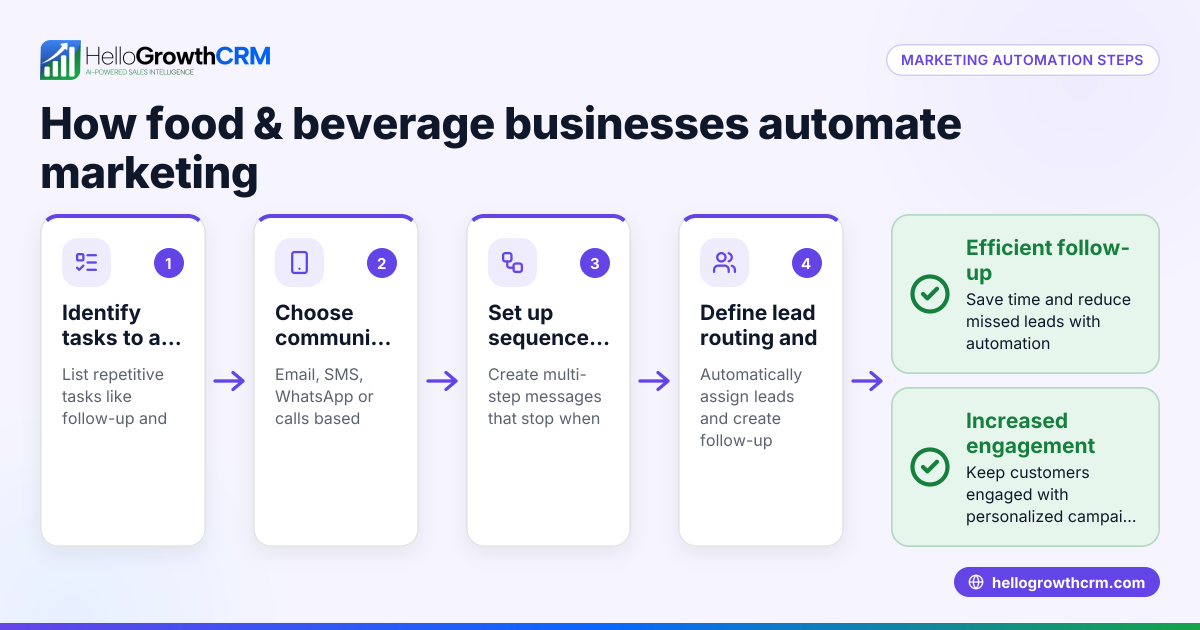
- Create multi-step follow-up sequences. Design a series of timed messages via email, SMS, or WhatsApp that automatically reach out to leads over days or weeks until they respond.
- Use AI assistance to draft follow-ups. Implement AI agents that generate follow-up messages after calls or interactions, so sales reps only need to review and send.
- Build workflows to automate tasks. Automate task creation, notifications, and record updates based on lead activity or status changes.
- Monitor and adjust your campaigns. Regularly review performance metrics like response rates and pipeline movement to optimize your sequences and workflows.
- Train your sales team on the system. Ensure everyone understands how to use the automation tools effectively and knows how to intervene when personal attention is needed.
These steps help industrial companies speed up lead response, reduce manual work, and increase sales efficiency. For more on automation tools, see AI CRM and WhatsApp and SMS CRM.
Example (fictional figures)
Columbus Industrial Supplies is a two-location business in Columbus, Ohio, selling machinery parts. They receive about 100 leads monthly from their website and trade shows. Before automation, follow-up was manual and slow, causing some leads to go uncontacted.
- Leads per month = 100
- Average lead value = $5,000
After implementing marketing automation with a five-step follow-up sequence over two weeks, they improved response and lead management.
Suppose automation helped them recover 20 additional leads monthly.
Recovered revenue = 20 × $5,000 = $100,000 per month
This example shows how automating lead follow-up can recover significant revenue by ensuring timely contact and nurturing.
Common mistakes
- Neglecting data capture automation: Relying on manual entry leads to lost or delayed leads. Prevent by integrating web forms and inquiry sources directly into your CRM.
- Overloading sequences: Sending too many messages too quickly can annoy prospects. Prevent by spacing messages appropriately and stopping sequences once a reply is received.
- Ignoring lead assignment rules: Without clear routing, leads may be ignored or duplicated. Prevent by setting up round-robin or territory-based lead assignment.
- Not training sales reps: Automation tools are only effective if the team uses them properly. Prevent by providing training and clear guidelines.
- Failing to review and optimize: Static automation can become ineffective. Prevent by regularly analyzing campaign results and adjusting sequences and workflows.
For more on avoiding these mistakes and best practices, check HelloGrowthCRM for the United States.
Doing this in HelloGrowthCRM
HelloGrowthCRM offers key features to automate marketing for industrial companies:
- Sequences and campaigns: Run a five-step follow-up over two weeks that sends timed messages via email, SMS, and WhatsApp automatically and stops as soon as the prospect replies.
- AI agents: Beta AI agents draft follow-up messages after calls, so reps only need to review and send, saving time.
- Workflows, lead routing, and validation rules: Automate lead assignment by round-robin or other rules, and create tasks automatically for first calls or follow-ups.
These features help industrial sales teams respond faster and manage leads efficiently. Learn more at AI CRM.
Frequently asked questions
What is marketing automation specifically for industrial companies? Marketing automation in industrial companies uses software to automate repetitive marketing tasks like lead follow-up, lead assignment, and multi-channel messaging. It helps manage long sales cycles and complex customer interactions more effectively.
How can automation improve sales follow-up in industrial businesses? Automation speeds up response times by sending scheduled messages and alerts automatically. It ensures no lead is forgotten and helps sales reps prioritize their efforts based on lead activity.
Can small industrial companies benefit from marketing automation? Yes, even small businesses with limited sales teams benefit by saving time, improving lead tracking, and increasing conversion rates without needing large resources.
What channels are best for industrial marketing automation? Email, SMS, and WhatsApp are effective channels for industrial marketing automation because they allow timely, direct communication with prospects and customers.
How do AI agents assist in marketing automation? AI agents can draft follow-up messages and update records automatically, reducing manual work for sales reps and speeding up communications.
Key takeaways
- Marketing automation helps industrial companies automate lead capture, follow-up, and assignment.
- A step-by-step approach includes capturing leads, routing them, setting up sequences, and using AI assistance.
- Common mistakes include poor data capture, over-messaging, and lack of training.
- HelloGrowthCRM supports automation with sequences, AI agents, and workflows for efficient lead management.
- Automation improves response times, reduces lost leads, and increases sales efficiency.
Start automating your industrial business marketing today. Start on the Free Forever plan (200 leads, no credit card).
Ready to put this into practice?
Set up your pipeline, WhatsApp follow-ups, and AI lead scoring in minutes — free, no credit card.
Try HelloGrowthCRM freeGet CRM tips in your inbox
Join thousands of sales professionals who get weekly insights on CRM strategy, AI automation, and pipeline optimization.

The HelloGrowthCRM team publishes guides on CRM strategy, AI sales tools, and revenue operations for small business sales teams.