HelloGrowthCRM software
Built for real small-business sales teams
HelloGrowthCRM helps reps qualify faster, follow up on time, and close more deals—with practical automation in one place.
- AI lead scoring and pipeline visibility
- Built-in dialer, WhatsApp, and email automation
- Sales forecasting and RevOps-ready reporting
Proactive customer communications means reaching out to your customers with helpful information, updates, or offers before they ask or encounter issues. It keeps customers informed, builds trust, and can prevent problems. This article explains why proactive communication matters, how to do it step-by-step, common mistakes to avoid, and how HelloGrowthCRM helps you manage it all easily.
Why this comes up / what goes wrong
Small business owners often find themselves reacting to customer questions or complaints after the fact. They rely on customers to initiate contact, which can delay problem resolution and damage customer satisfaction. Without proactive communication, customers may feel ignored or uninformed, leading to lost sales or churn. For example, a landscaping business might wait for a customer to call about a missed appointment instead of sending a reminder in advance. This reactive approach wastes time and risks customer trust.
Step-by-step
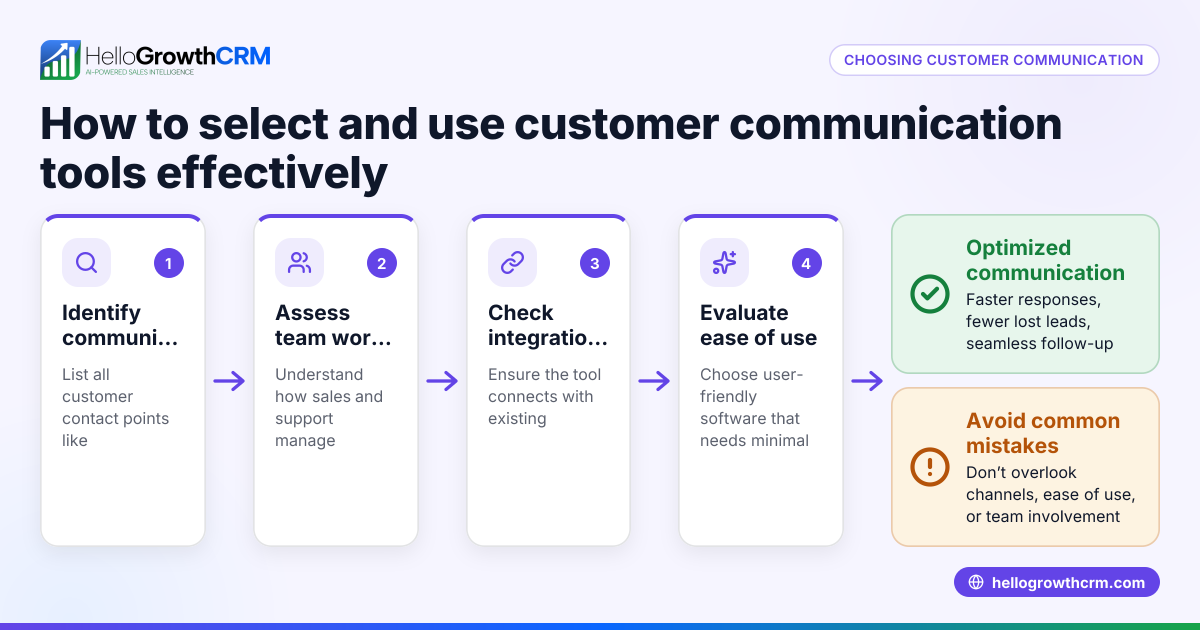
- Identify key customer touchpoints: List moments when your customers benefit from updates or check-ins, such as order confirmation, appointment reminders, or service follow-ups. Check your sales and service processes to find these.
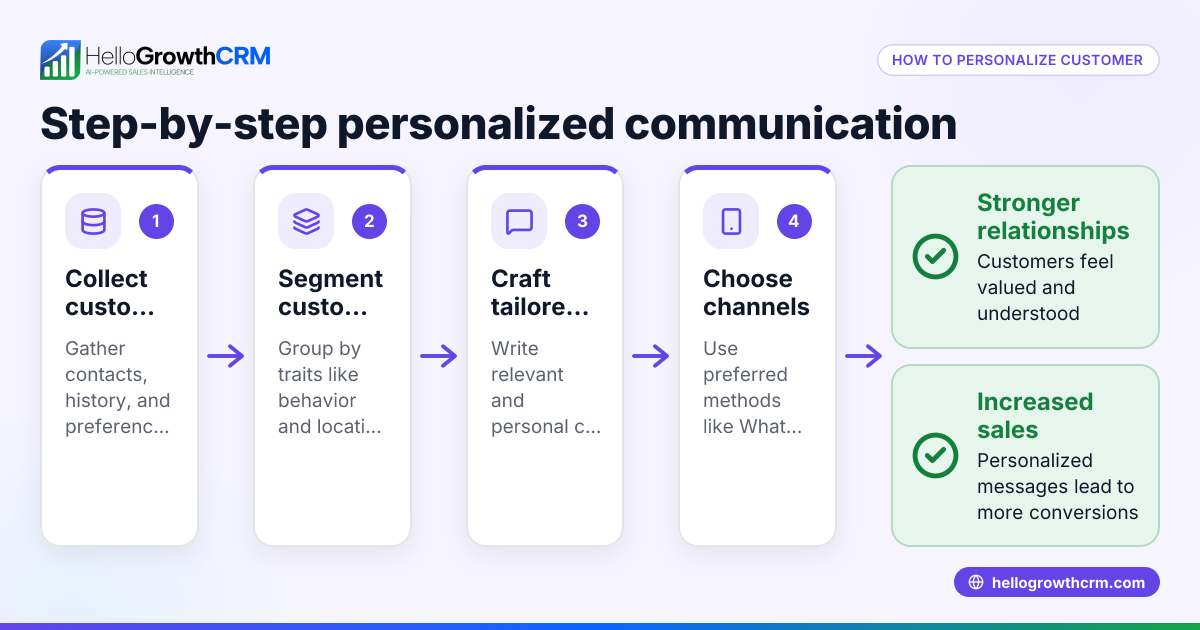
- Gather accurate customer contact info: Verify phone numbers, emails, and preferred communication channels. Check for consent to send messages.
- Create clear, concise messages: Write messages that add value, such as status updates, helpful tips, or personalized offers. Avoid generic or overly salesy language.
- Choose communication channels: Decide whether to use WhatsApp, SMS, email, or phone calls based on customer preferences and message type. Check your team's ability to manage these channels.
- Schedule and automate messages: Set up reminders or sequences to send messages at the right time, like 24 hours before a service date. Check automation tools for scheduling and tracking.
- Monitor customer responses and feedback: Track replies and any issues raised. Check for patterns to improve your communication.
- Adjust and improve over time: Use customer feedback and metrics to refine message timing, content, and channels.
For managing communications, consider tools like HelloGrowthCRM which supports WhatsApp and SMS CRM for easy message sequences and tracking. Learn more about WhatsApp and SMS CRM.
Example (fictional figures)
GreenLeaf Landscaping in Charlotte, North Carolina, wants to improve proactive communications by sending appointment reminders and follow-ups.
- They schedule a reminder 2 days before each lawn care appointment.
- Each reminder message costs $0.05 to send via SMS.
- They have 200 appointments monthly.
Calculations:
200 appointments × $0.05 per SMS = $10 monthly on reminders
They also send a follow-up message 3 days after service offering a discount on next service:
200 follow-ups × $0.05 = $10 monthly
Total monthly messaging cost = $10 + $10 = $20
By investing $20 monthly, GreenLeaf reduces no-shows and increases repeat bookings, improving revenue and customer satisfaction.
Common mistakes
- Sending messages without customer consent: This can annoy customers or violate regulations. Prevent by asking permission and respecting opt-outs.
- Overloading customers with too many messages: Too frequent contact feels spammy. Prevent by setting reasonable limits and focusing on value.
- Using only one communication channel: Not all customers prefer the same channel. Prevent by offering WhatsApp, SMS, and email options and checking preferences.
- Ignoring customer replies or feedback: Failing to respond breaks trust. Prevent by monitoring replies and assigning team members to manage responses.
- Lack of personalization: Generic messages feel impersonal. Prevent by using customer data to tailor messages.
- Not tracking communication effectiveness: Without tracking, you won’t know what works. Prevent by analyzing response rates and adjusting accordingly. See how to improve with a customer health score.
Doing this in HelloGrowthCRM
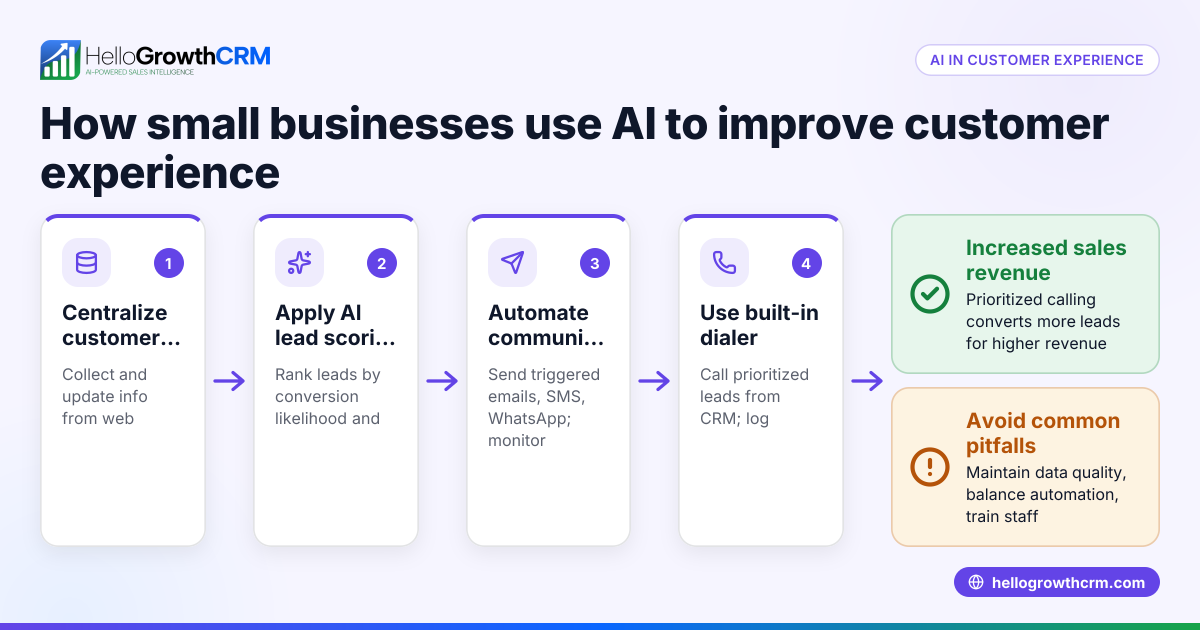
HelloGrowthCRM helps you manage proactive customer communications by keeping all service requests, tickets, and customer interactions on the same record as the deal. You can use the branded self-service customer portal to let customers track their requests, access a knowledge base, and submit tickets. Referral program tracking and a reference library help maintain engagement after the sale. This centralized system simplifies follow-up and builds stronger customer relationships. Learn more about HelloGrowthCRM for the United States.
Frequently asked questions
What is the difference between proactive and reactive customer communication? Proactive communication involves reaching out to customers before they contact you, providing updates or helpful info in advance. Reactive communication waits for customers to initiate contact, often responding to problems after they arise.
How often should I send proactive messages to customers? Frequency depends on your business and customer preferences. Avoid overwhelming customers; focus on key touchpoints like order confirmations, appointment reminders, and follow-ups. Monitor feedback and adjust accordingly.
Can I use WhatsApp for proactive customer communications? Yes, WhatsApp is a popular channel for proactive messages, especially for quick updates and personalized contact. Tools like HelloGrowthCRM support WhatsApp and SMS CRM to automate and track these communications.
How do I measure if my proactive communications are effective? Track customer responses, engagement rates, and changes in customer satisfaction or repeat business. Using a customer health score can help quantify the impact.
What if customers don’t respond to proactive messages? Not all customers will reply, but many appreciate the information. Review message content and timing, and consider offering multiple communication channels to increase engagement.
Key takeaways
- Proactive customer communications mean reaching out before customers ask or encounter issues.
- Identify key touchpoints and use clear, valuable messages tailored to customer preferences.
- Avoid common mistakes like over-messaging, ignoring consent, or failing to respond.
- Use multiple channels such as WhatsApp, SMS, and email to reach customers effectively.
- Track communication success with metrics like customer health scores and adjust your approach.
- HelloGrowthCRM centralizes customer requests and communications to support proactive engagement.
Start improving your customer communications today. Start on the Free Forever plan (200 leads, no credit card).
Ready to put this into practice?
Set up your pipeline, WhatsApp follow-ups, and AI lead scoring in minutes — free, no credit card.
Try HelloGrowthCRM freeGet CRM tips in your inbox
Join thousands of sales professionals who get weekly insights on CRM strategy, AI automation, and pipeline optimization.

The HelloGrowthCRM team publishes guides on CRM strategy, AI sales tools, and revenue operations for small business sales teams.