HelloGrowthCRM software
Built for real small-business sales teams
HelloGrowthCRM helps reps qualify faster, follow up on time, and close more deals—with practical automation in one place.
- AI lead scoring and pipeline visibility
- Built-in dialer, WhatsApp, and email automation
- Sales forecasting and RevOps-ready reporting
Retention email marketing is the practice of sending targeted emails to your existing customers to keep them engaged, encourage repeat purchases, and build long-term loyalty. Unlike acquisition emails that focus on new leads, retention emails nurture relationships with customers who already know your brand. This article covers why small businesses need retention email marketing, a step-by-step process for setting it up, a practical example with figures, common mistakes to avoid, and how HelloGrowthCRM can help streamline your campaigns.
Why this comes up / what goes wrong
Small business owners often find that after making a sale, customer engagement drops. Without regular contact, customers may forget your brand, switch to competitors, or miss out on new offerings. Many businesses rely on manual follow-ups through email or text messages, which can be inconsistent or slow. This leads to lost opportunities for repeat sales and referrals. Retention email marketing addresses this by automating regular, relevant communication that keeps your customers connected to your business.
Step-by-step
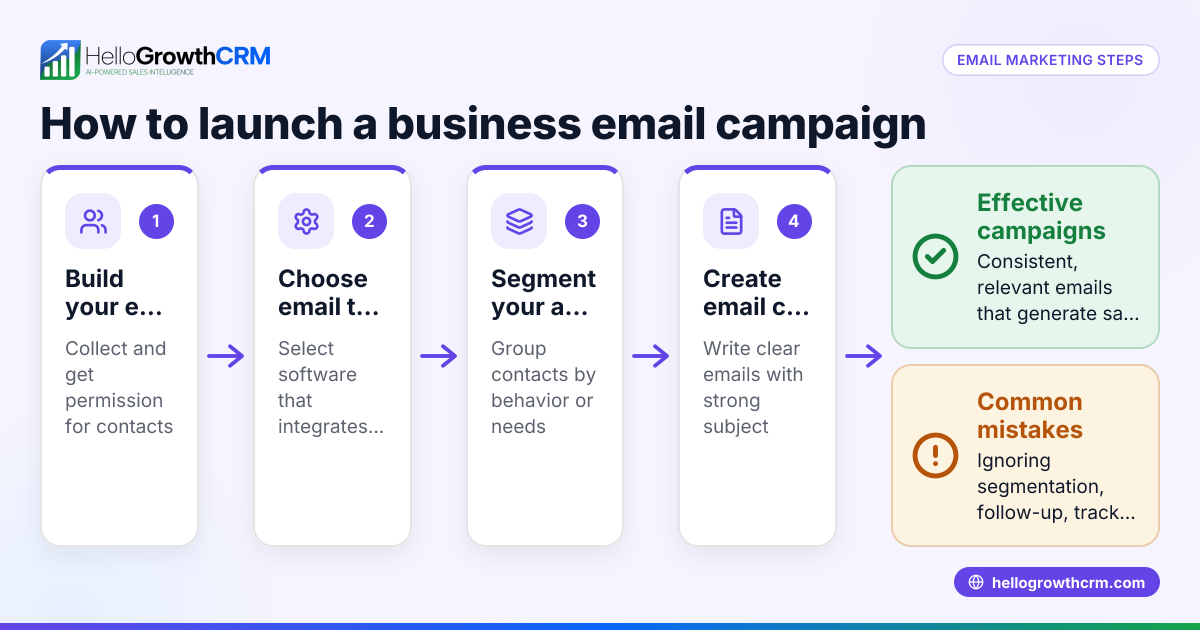
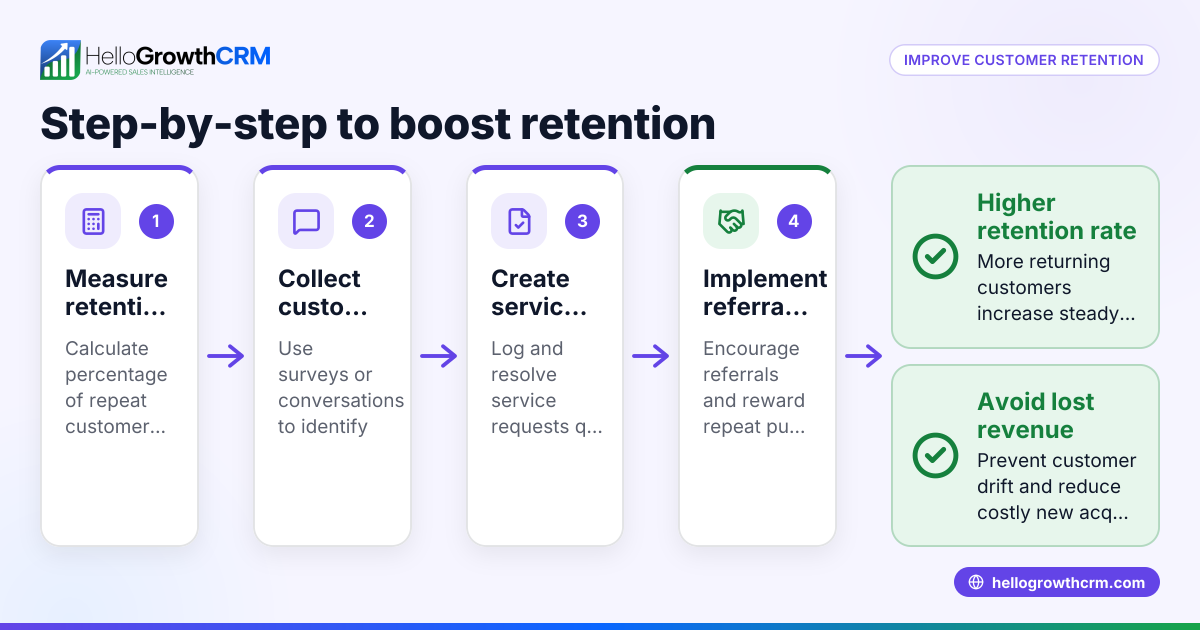
- Segment your customers: Group your customers based on criteria like purchase history, product type, or engagement level. Check that your email list is clean and up to date.
- Define your goals: Decide what you want to achieve—repeat purchases, upsells, referrals, or feedback. Clear goals help tailor your messages.
- Plan your email content: Create emails that add value, such as special offers, tips, product updates, or personalized recommendations. Check that your messages are relevant to each segment.
- Set a schedule: Decide how often to send emails—weekly, biweekly, or monthly. Avoid overwhelming customers but keep regular contact.
- Use automation sequences: Automate your email series so follow-ups happen without manual effort. Check that the sequence stops when a customer replies or takes action.
- Monitor performance: Track open rates, click-throughs, and conversions. Check which emails perform best and adjust your content or timing accordingly.
- Gather feedback and refine: Ask customers for input on your emails and improve based on their responses.
This approach ensures your retention email marketing is organized, relevant, and effective. For more on automation, see email automation and sequences.
Example (fictional figures)
Consider a plumbing company in Austin, Texas, that wants to increase repeat service calls through retention email marketing.
- Current monthly revenue from repeat customers: $30,000
- Goal: Increase repeat revenue by 20% over 6 months
They create a five-step email sequence over two weeks offering tips on home plumbing maintenance, seasonal discounts, and referral rewards.
Assuming a 10% increase in repeat revenue:
$30,000 × 10% = $3,000 (monthly increase)
Over 6 months:
$3,000 × 6 = $18,000 (total increase)
New monthly revenue from repeat customers:
$30,000 + $3,000 = $33,000
This example shows how retention email marketing can boost revenue by keeping customers engaged with timely, helpful content.
Common mistakes
- Sending irrelevant emails: Avoid generic messages. Prevent this by segmenting your list and tailoring content to each group.
- Over-emailing customers: Too many emails can annoy recipients. Prevent this by setting a reasonable schedule and monitoring unsubscribe rates.
- Ignoring customer replies: Failing to respond to replies can damage relationships. Use tools like HelloMail shared inbox so the whole team sees replies and can act promptly.
- Not tracking results: Without tracking, you won’t know what works. Prevent this by regularly reviewing email metrics and adjusting campaigns.
- Manual follow-ups only: Relying on manual emails can cause delays and missed opportunities. Prevent this by using automated sequences that run on their own and stop when the customer replies, as supported in HelloGrowthCRM.
Doing this in HelloGrowthCRM
HelloGrowthCRM offers features to support retention email marketing effectively. Its HelloMail shared inbox lets your team see all replies to quotation or follow-up emails on the deal record, ensuring no customer message is missed. After the sale, service requests stay linked on the same customer record using the customer portal, referrals, tickets and knowledge base, helping you track ongoing engagement. Automated sequences and campaigns enable a multi-step follow-up over two weeks that runs automatically and stops as soon as the customer replies, saving time and improving responsiveness.
Frequently asked questions
What is retention email marketing? Retention email marketing involves sending emails to existing customers to keep them engaged and encourage repeat business. It focuses on relationship-building rather than new customer acquisition.
How often should I send retention emails? A typical schedule is once every one to two weeks. This keeps your brand top of mind without overwhelming customers. Adjust based on customer feedback and engagement metrics.
What content works best for retention emails? Content that adds value, such as exclusive offers, tips related to your product or service, updates on new features, or personalized recommendations, tends to perform well.
How do I measure the success of my retention emails? Track open rates, click-through rates, repeat purchase rates, and unsubscribe rates. These metrics indicate engagement and whether your emails drive the desired action.
Can I automate retention email marketing? Yes, automation tools like the sequences and campaigns in HelloGrowthCRM let you set up multi-step email workflows that run automatically and stop when the customer replies.
Key takeaways
- Retention email marketing targets existing customers to boost repeat sales and loyalty.
- Segment customers and tailor email content to keep messages relevant.
- Automate sequences to save time and ensure timely follow-ups.
- Track email performance and customer responses to improve campaigns.
- Avoid common mistakes like over-emailing or ignoring replies.
- HelloGrowthCRM features like HelloMail shared inbox and automated sequences support efficient retention email marketing.
Retention email marketing helps turn one-time buyers into loyal customers by maintaining regular, personalized contact. To start managing your retention email campaigns easily, explore HelloGrowthCRM and start on the Free Forever plan (200 leads, no credit card).
Ready to put this into practice?
Set up your pipeline, WhatsApp follow-ups, and AI lead scoring in minutes — free, no credit card.
Try HelloGrowthCRM freeGet CRM tips in your inbox
Join thousands of sales professionals who get weekly insights on CRM strategy, AI automation, and pipeline optimization.

The HelloGrowthCRM team publishes guides on CRM strategy, AI sales tools, and revenue operations for small business sales teams.