HelloGrowthCRM software
Built for real small-business sales teams
HelloGrowthCRM helps reps qualify faster, follow up on time, and close more deals—with practical automation in one place.
- AI lead scoring and pipeline visibility
- Built-in dialer, WhatsApp, and email automation
- Sales forecasting and RevOps-ready reporting
Retention in business refers to the ability of a company to keep its customers over a period of time, encouraging repeat purchases and ongoing engagement. For small and mid-sized businesses, focusing on retention means building relationships that lead to loyal customers who generate consistent revenue. This article covers why retention is important, practical steps to improve it, a detailed example, common mistakes, and how HelloGrowthCRM helps manage customer relationships and follow-up efficiently.
Why this comes up / what goes wrong
Many small-business owners struggle with retention because they focus heavily on finding new customers but neglect the existing ones. Losing customers means lost revenue and higher costs since acquiring new leads often requires more marketing spend and effort. Without a clear system to track customer satisfaction, follow up on service requests, or encourage repeat sales, customers may drift away to competitors. Slow or inconsistent communication, no clear referral or loyalty program, and poor after-sale service can all cause retention problems.
Step-by-step
- Measure your current retention rate: Calculate the percentage of customers who return over a specific period. Check your sales records or CRM data to identify repeat buyers.
- Collect customer feedback: Use surveys or direct conversations to understand why customers stay or leave. Check for common complaints or unmet needs.
- Create a customer service process: Establish clear steps to handle service requests and issues quickly. Check that all requests are logged and resolved.
- Implement a referral or loyalty program: Encourage satisfied customers to refer others or reward repeat purchases. Track participation and results.
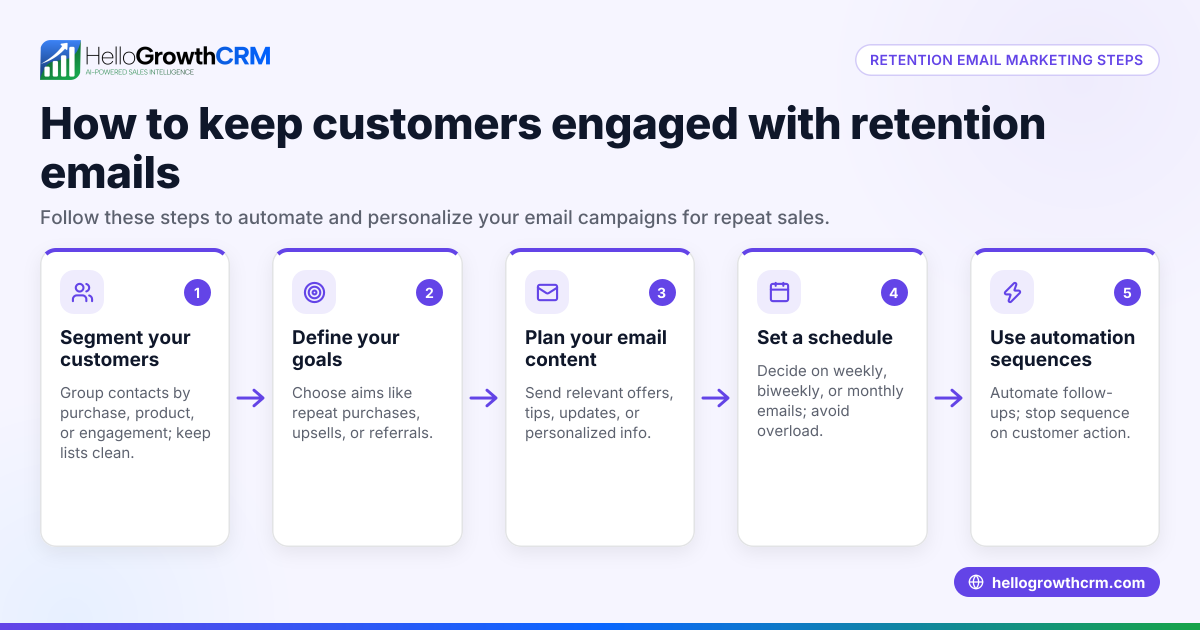
- Follow up consistently: Use email, WhatsApp, SMS, or calls to keep in touch after the sale. Check that follow-ups are timely and personalized.
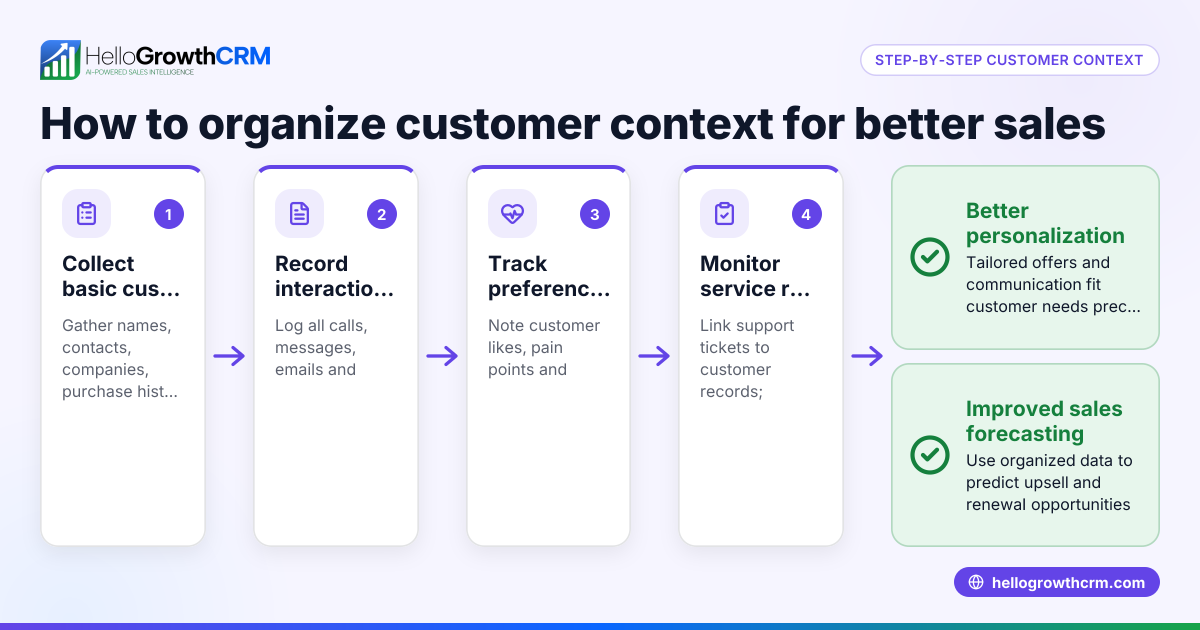
- Use a CRM to centralize data: Keep all customer interactions, service tickets, and referrals in one place. Check that sales and support teams update records regularly.
Example (fictional figures)
Phoenix Home Realty is a residential real-estate team in Phoenix, Arizona. They want to improve retention among their home buyers.
- Number of customers at start of year (01/01/2025): 200
- Number of returning customers by end of year (12/31/2025): 110
Retention rate = (Returning customers / Total customers) × 100 Retention rate = (110 / 200) × 100 = 55%
They aim to raise retention to 70% next year by:
- Sending monthly follow-ups via SMS and WhatsApp
- Logging all service requests in their CRM
- Launching a referral program offering discounts
If 200 customers × 70% retention = 140 returning customers, that is 30 more repeat buyers than before, increasing revenue steadily.
Common mistakes
- Ignoring after-sale communication: Prevent by scheduling regular follow-ups using sequences in your CRM.
- No centralized customer data: Prevent by using a CRM that tracks tickets and referrals on the same customer record.
- Failing to act on feedback: Prevent by reviewing survey results monthly and adjusting service accordingly.
- Overlooking referral incentives: Prevent by promoting and tracking referral programs clearly.
- Slow response to service issues: Prevent by setting SLA policies and monitoring ticket status.
- Not training sales teams on retention: Prevent by coaching reps on customer health score and follow-up best practices (/product/customer-health-score).
Doing this in HelloGrowthCRM
HelloGrowthCRM supports retention by keeping service requests, referrals, and tickets linked to the same customer record after the sale. This helps your team see the full customer history in one place. The built-in dialer allows reps to work through customer lists efficiently, logging call outcomes directly on lead records (/product/crm-dialer). Using HelloGrowthCRM's customer portal and referral tracking features helps manage ongoing engagement and encourages repeat business. For US businesses running sales on WhatsApp and SMS, HelloGrowthCRM provides sequences to automate follow-ups and keep customers connected (/product/whatsapp-sms-crm).
Frequently asked questions
What is a good retention rate for small businesses? Retention rates vary by industry, but generally, higher than 60% is considered good for many small businesses. Tracking your rate over time helps you set realistic goals and measure improvement.
How do I measure customer retention? Calculate retention by dividing the number of customers who return during a period by the total number of customers at the start to understand customer loyalty trends. Use sales data or CRM reports to get accurate counts.
Why is retention more cost-effective than acquiring new customers? Retaining customers costs less because you avoid marketing and sales expenses needed to find new leads. Existing customers also tend to buy more and refer others, increasing lifetime value.
How can technology improve retention? A CRM centralizes customer information, tracks interactions, automates follow-ups, and manages service tickets, all of which improve communication and customer satisfaction.
What role do referrals play in retention? Referrals encourage loyal customers to spread the word, bringing in new leads who are more likely to convert and stay. Tracking referrals helps reward customers and grow your base.
Key takeaways
- Retention means keeping customers coming back and is essential for steady revenue.
- Measure retention rates and gather customer feedback regularly.
- Use a clear process for service requests and timely follow-up.
- Implement referral and loyalty programs to encourage repeat business.
- Avoid common mistakes like poor communication and lack of centralized data.
- HelloGrowthCRM helps manage retention with customer portals, referral tracking, tickets, and a built-in dialer.
Start improving your retention today. Start on the Free Forever plan (200 leads, no credit card) and see how HelloGrowthCRM can help you keep customers loyal and grow your business.
Ready to put this into practice?
Set up your pipeline, WhatsApp follow-ups, and AI lead scoring in minutes — free, no credit card.
Try HelloGrowthCRM freeGet CRM tips in your inbox
Join thousands of sales professionals who get weekly insights on CRM strategy, AI automation, and pipeline optimization.

The HelloGrowthCRM team publishes guides on CRM strategy, AI sales tools, and revenue operations for small business sales teams.