HelloGrowthCRM software
Built for real small-business sales teams
HelloGrowthCRM helps reps qualify faster, follow up on time, and close more deals—with practical automation in one place.
- AI lead scoring and pipeline visibility
- Built-in dialer, WhatsApp, and email automation
- Sales forecasting and RevOps-ready reporting
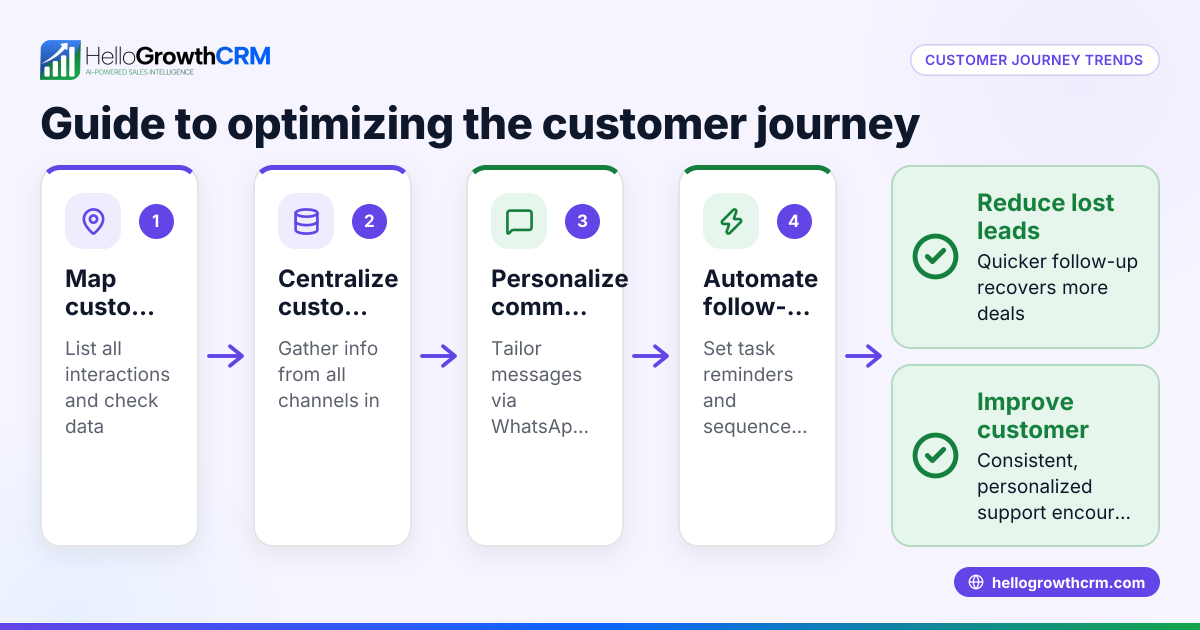
The SaaS customer journey describes every interaction a potential or current customer has with your software-as-a-service business. It starts with lead capture and continues through qualification, sales engagement, onboarding, support, renewal, and referrals. Understanding and managing this journey helps you convert more leads, keep customers satisfied, and grow your revenue.
Why this comes up / what goes wrong
Many SaaS business owners and accountants in the US face challenges like slow follow-up on leads, juggling sales communication across email, WhatsApp, SMS, and spreadsheets, and losing track of customer interactions after the sale. These problems cause lost deals, poor customer experience, and missed upsell or referral opportunities. Without a clear customer journey map, teams work in silos, making it hard to deliver consistent service or forecast sales accurately.
Step-by-step
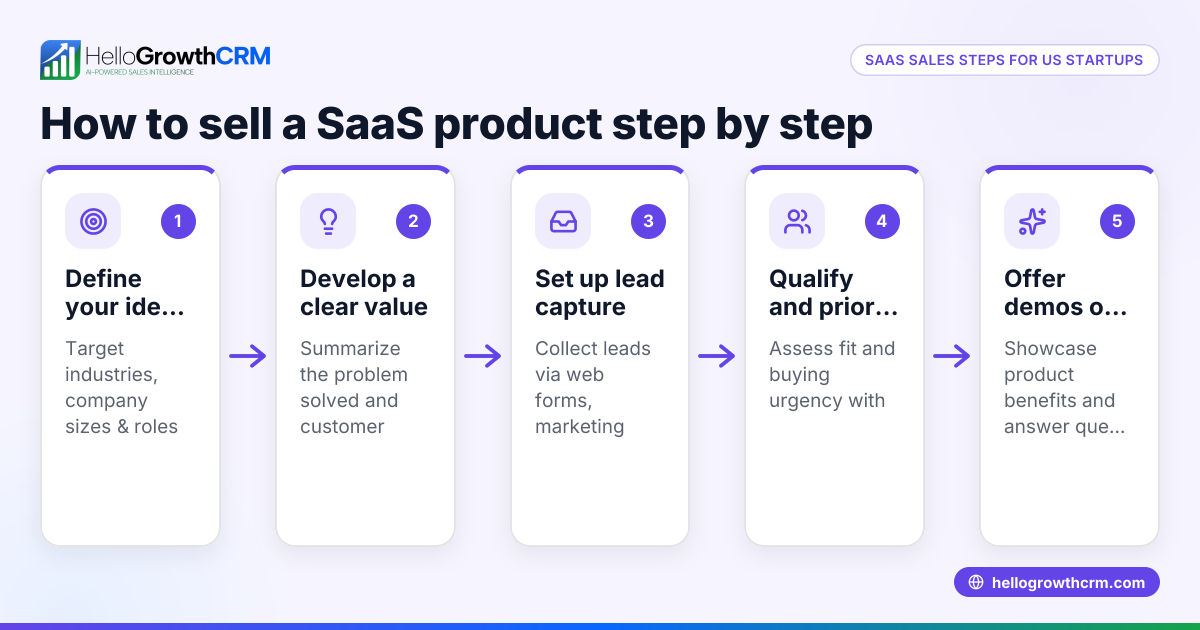
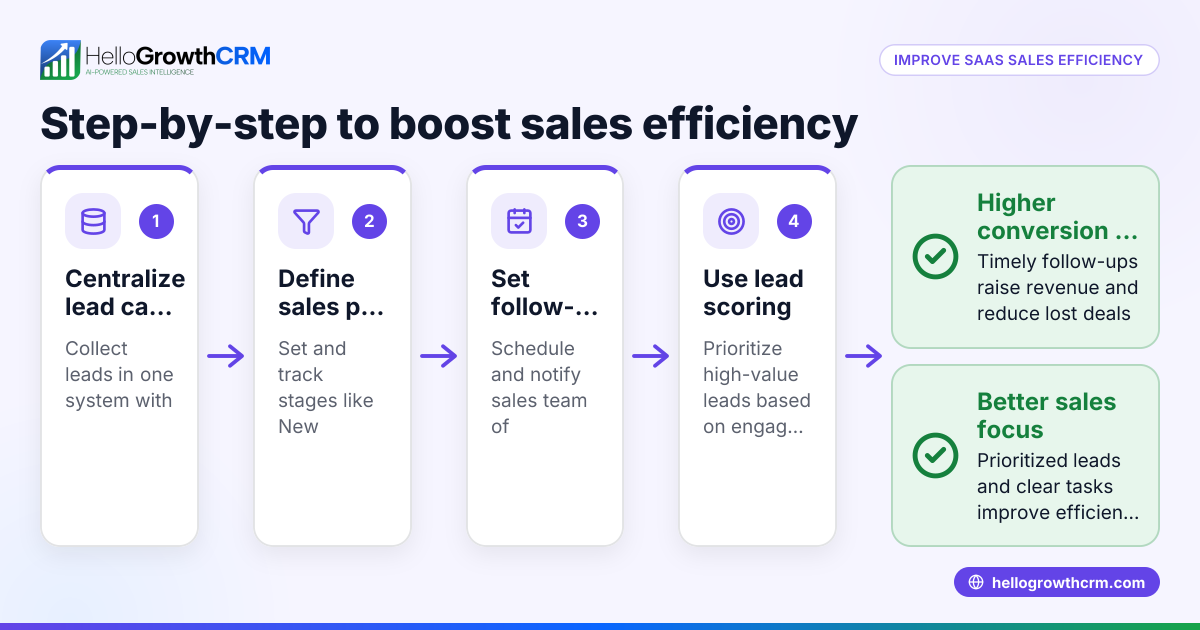
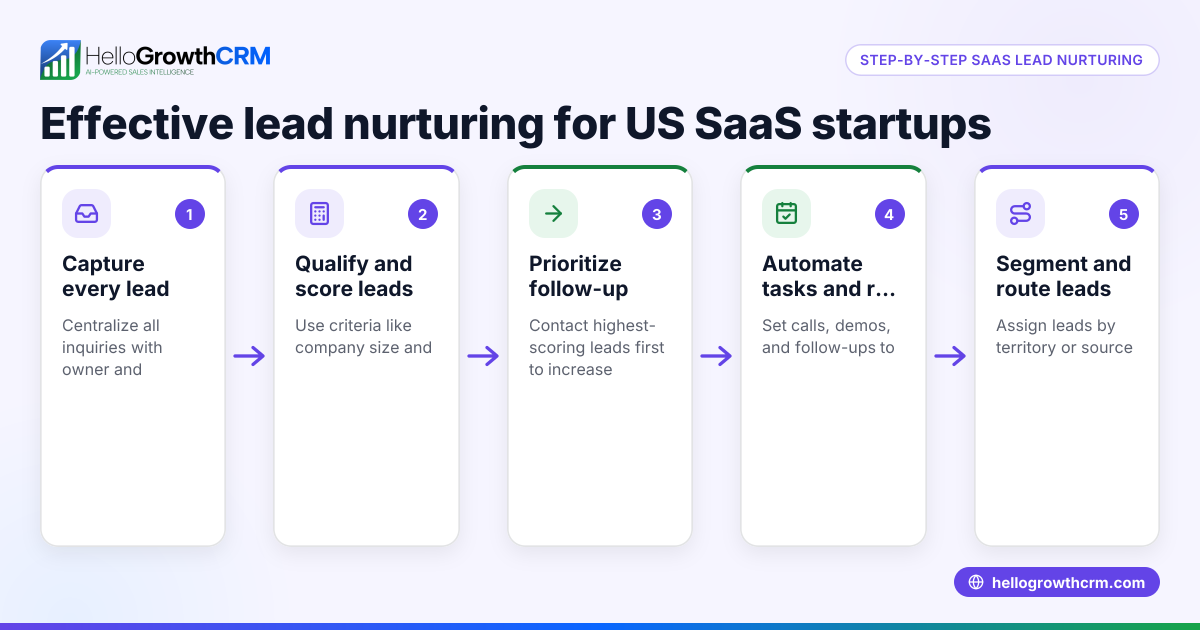
- Capture and centralize leads: Gather leads from your website forms, ads, and integrations. Check that all leads flow into one system for easy tracking and follow-up.
- Qualify leads with SaaS-specific criteria: Assess leads based on company size, budget, and product fit. Use AI lead scoring if available to prioritize high-potential leads.
- Engage leads promptly via multiple channels: Reach out through email, WhatsApp, and SMS quickly. Track all conversations in one place to avoid missed messages.
- Manage demos and trials effectively: Schedule product demos or trial activations without delay. Confirm follow-up tasks to move leads forward in your pipeline.
- Close deals and onboard customers: After closing a sale, provide clear onboarding instructions and resources to ensure a smooth start.
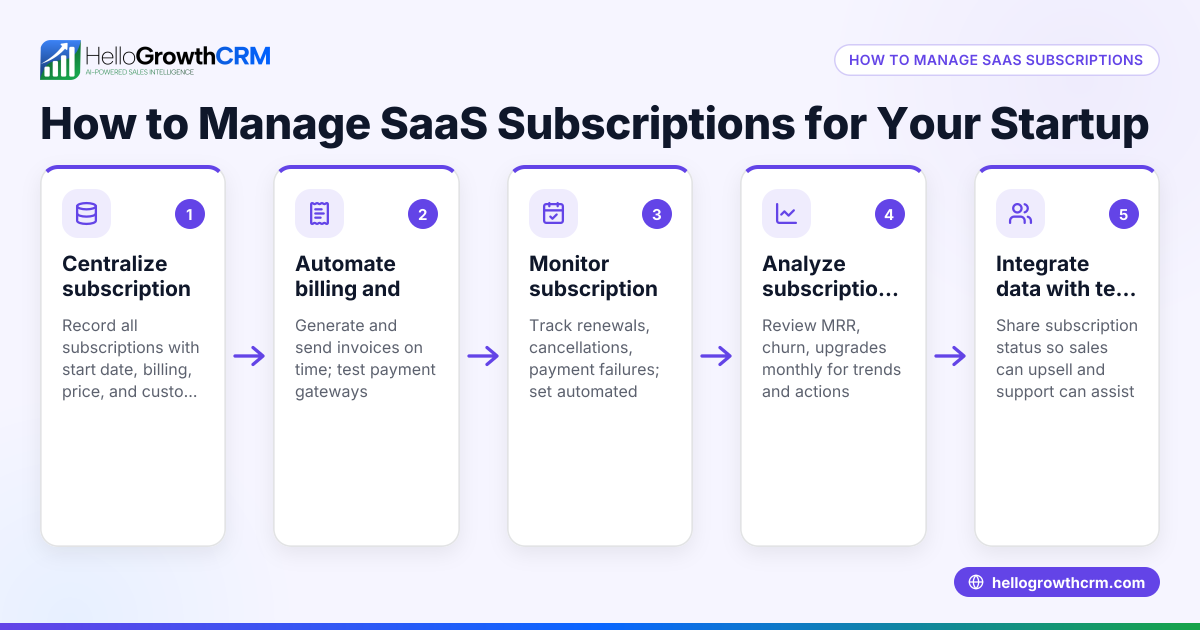
- Handle post-sale support and service requests: Manage support tickets and service requests efficiently, keeping all interactions linked to the customer record.
- Encourage referrals and upsells: Implement referral programs and track them to grow your customer base. Identify opportunities for upselling or cross-selling.
- Review pipeline and forecast sales regularly: Analyze your sales data to forecast revenue and adjust your strategies accordingly.
At each step, verify that your sales and support teams have access to up-to-date customer data to maintain coordination and avoid silos. For more on tracking customer engagement, see customer health score.
Example (fictional figures)
Consider a SaaS startup based in Seattle, Washington, offering a marketing automation tool. In Q2 2026, they capture 1,200 leads.
- Leads captured: 1,200
- AI lead scoring qualifies 360 as sales-ready
- 180 demos booked
- 90 trials activated
- 54 deals closed at $1,500 average annual contract value
Calculations:
360 qualified leads × 50% demo booking rate = 180 demos 180 demos × 50% trial activation rate = 90 trials 90 trials × 60% conversion rate = 54 deals 54 deals × $1,500 = $81,000 in new annual recurring revenue (ARR)
This example shows how tracking each stage helps predict revenue and identify where leads drop off, allowing targeted improvements.
Common mistakes
- Relying on a single communication channel: Using only email or one platform causes missed leads. Prevent this by combining email, WhatsApp, and SMS outreach.
- Scattered customer data: Managing leads, sales, and support across multiple disconnected tools leads to confusion and lost information. Centralize data in one CRM that links all interactions.
- Neglecting post-sale service: Failing to track support tickets and service requests reduces customer satisfaction and renewal rates. Use a system that keeps service linked to the customer record.
- Ignoring referral tracking: Missing out on organic growth potential. Implement referral programs and monitor their effectiveness.
- Poor sales forecasting: Without clear pipeline visibility, forecasting is inaccurate and planning suffers. Use regular data reviews and forecasting tools.
For SaaS startups, managing customer health and engagement is critical. See Startups and technology companies for more insights.
Doing this in HelloGrowthCRM
HelloGrowthCRM supports the SaaS customer journey by keeping sales and service data unified. After the sale, service requests stay on the same customer record as the deal, ensuring seamless tracking of support tickets and knowledge base interactions. The branded customer portal lets customers self-serve, while referral program tracking helps you grow your customer base. This integration reduces friction and improves customer experiences. Learn more about HelloGrowthCRM for US SaaS businesses at HelloGrowthCRM for the United States.
Frequently asked questions
What stages make up the SaaS customer journey? The journey typically includes lead capture, qualification, engagement, demos or trials, deal closing, onboarding, support, renewal, and referrals. Each stage impacts conversion and retention.
How can SaaS businesses improve lead follow-up? Use multichannel communication like email, WhatsApp, and SMS to reach prospects quickly. Prioritize leads with AI lead scoring and track all interactions in one system.
Why is post-sale support important in SaaS? Good support boosts customer satisfaction, reduces churn, and encourages referrals. Tracking tickets and providing self-service options help maintain engagement.
How does referral tracking benefit SaaS companies? Referrals lower acquisition costs and bring high-quality leads. Tracking referrals ensures you reward advocates and measure program success.
Can SaaS sales forecasting be done without a CRM? Manual methods exist but are prone to errors and lack real-time updates. A CRM centralizes data and automates forecasting for better accuracy.
Key takeaways
- The SaaS customer journey covers all stages from lead capture to post-sale service and referrals.
- Use multichannel outreach and AI lead scoring to engage and prioritize leads effectively.
- Centralize all customer interactions, including support tickets and referrals, in one CRM.
- Track every stage to forecast sales and identify where leads drop off.
- Avoid mistakes like scattered data, single-channel outreach, and neglecting post-sale engagement.
- HelloGrowthCRM offers tools like customer portals, tickets, and referral tracking to manage the full journey.
Start improving your SaaS customer journey today. Start on the Free Forever plan (200 leads, no credit card) to see how HelloGrowthCRM can help.
Ready to put this into practice?
Set up your pipeline, WhatsApp follow-ups, and AI lead scoring in minutes — free, no credit card.
Try HelloGrowthCRM freeGet CRM tips in your inbox
Join thousands of sales professionals who get weekly insights on CRM strategy, AI automation, and pipeline optimization.

The HelloGrowthCRM team publishes guides on CRM strategy, AI sales tools, and revenue operations for small business sales teams.