HelloGrowthCRM software
Built for real small-business sales teams
HelloGrowthCRM helps reps qualify faster, follow up on time, and close more deals—with practical automation in one place.
- AI lead scoring and pipeline visibility
- Built-in dialer, WhatsApp, and email automation
- Sales forecasting and RevOps-ready reporting
Sales growth strategies are specific actions a business takes to increase its sales revenue over time. These include expanding customer reach, improving lead follow-up, optimizing sales processes, and using data to prioritize efforts. This article covers why sales growth is challenging, step-by-step strategies to grow sales, a practical example, common mistakes to avoid, and how HelloGrowthCRM supports these efforts.
Why this comes up / what goes wrong
Small-business owners often face stagnant or slow sales growth due to limited resources and time. Many rely on manual methods like spreadsheets, text messages, and email chains to track leads and sales activities. This leads to missed follow-ups, lost leads, and poor pipeline visibility. Without clear sales growth strategies, businesses struggle to prioritize high-value prospects or scale their sales efforts efficiently.
Owners may also lack sales management support, making it hard to maintain consistent outreach or measure what works. As a result, opportunities slip through the cracks, and revenue plateaus.
Step-by-step
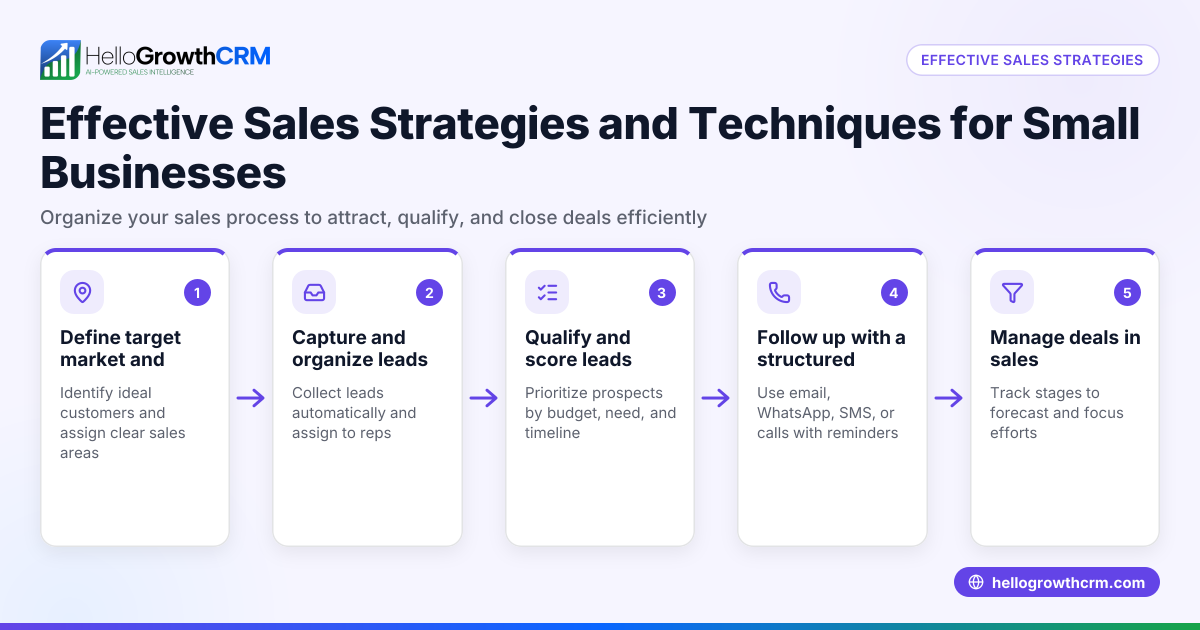
- Define your sales goals clearly. Set specific revenue targets and timelines. Check that goals are realistic and measurable.
- Identify and segment your target customers. Understand who benefits most from your product or service. Check customer data or feedback to refine segments.
- Capture and organize leads systematically. Use tools or forms to gather leads from your website, social media, or referrals. Check that no lead is lost or forgotten.
- Prioritize leads using scoring or qualification criteria. Focus on leads with higher chances of closing. Check lead status regularly to update priorities.
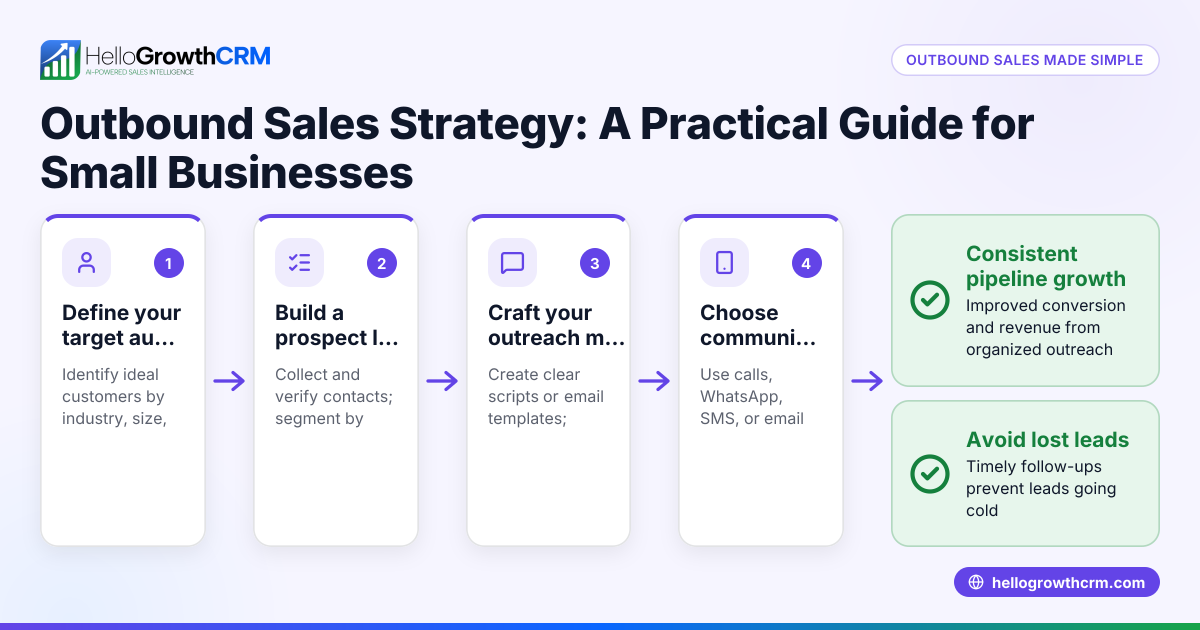
- Create a structured follow-up process. Use scheduled calls, emails, and messages to engage leads consistently. Check that follow-ups happen on time.
- Track sales opportunities in a pipeline. Move deals through stages from initial contact to close. Check pipeline health weekly to spot bottlenecks.
- Analyze sales data and adjust strategies. Review which products, customer segments, or approaches generate the most revenue. Check conversion rates and cycle times.
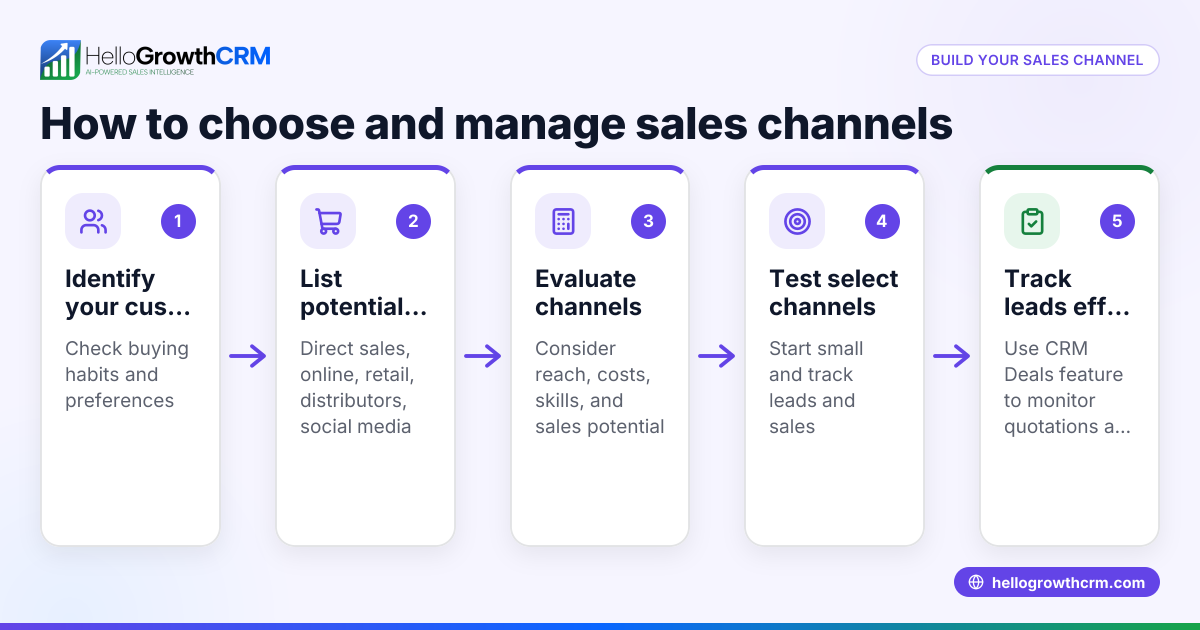
- Expand sales channels and partnerships. Explore distributors, resellers, or online marketplaces to reach more customers. Check partner performance regularly.
- Train and motivate your sales team. Provide coaching, incentives, and clear roles. Check team activity and results.
- Automate repetitive tasks where possible. Use CRM tools for reminders, sequences, and reporting. Check automation effectiveness periodically.
Example (fictional figures)
A B2B software reseller in Denver, Colorado, wants to increase annual sales from $1,200,000 to $1,560,000 by 12/31/2026.
They set a goal to grow sales by 30%:
$1,200,000 × 30% = $360,000
$1,200,000 + $360,000 = $1,560,000
Step 1: They identify their top customer segment as mid-sized tech firms.
Step 2: They capture 500 new leads via web forms and events.
Step 3: Using lead scoring, they prioritize 150 leads likely to close within 6 months.
Step 4: They set a follow-up schedule of calls and WhatsApp messages.
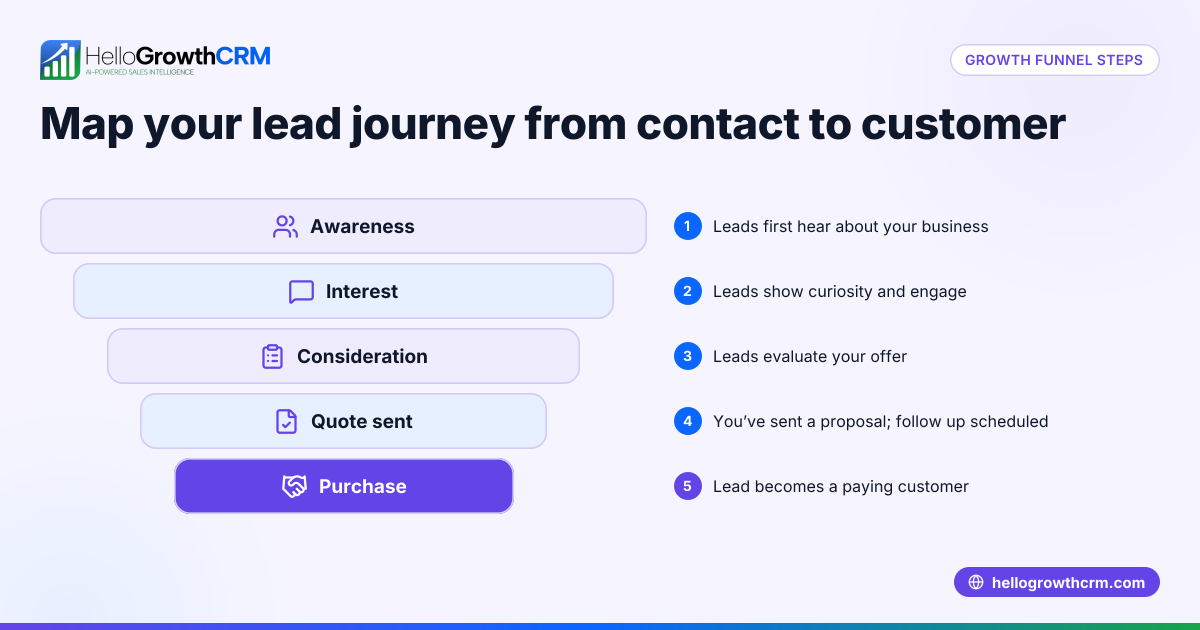
Step 5: They track deals in a pipeline with stages: Contacted, Demo Scheduled, Quote Sent, Negotiation, Closed.
Step 6: Weekly pipeline reviews identify stuck deals in Negotiation stage.
Step 7: They add a distributor partner to expand reach.
Step 8: Sales reps receive monthly coaching and commission incentives.
This structured approach helps them focus efforts on high-potential leads and steadily increase sales.
Common mistakes
- Ignoring lead follow-up schedules. Leads go cold if not contacted promptly. Prevent by setting reminders and using CRM follow-up features.
- Relying on manual tracking (spreadsheets, texts). This causes lost data and missed opportunities. Use a CRM pipeline to centralize sales info.
- Not segmenting customers. Treating all leads the same wastes time. Prevent by analyzing customer profiles and prioritizing segments.
- Failing to analyze sales data. Without review, ineffective tactics continue. Prevent by scheduling regular sales performance reviews.
- Overloading sales reps with unqualified leads. This lowers morale and efficiency. Prevent by applying lead scoring and qualification rules.
- Neglecting sales team training and motivation. Skills and drive decline over time. Prevent by regular coaching and clear incentives.
For better pipeline management and follow-up, see how HelloGrowthCRM’s Deals (pipeline) feature helps track quotations and next steps.
Doing this in HelloGrowthCRM
HelloGrowthCRM supports sales growth by managing your sales pipeline with the Deals feature, where a quotation sent last week appears at the 'quote sent' stage with a follow-up date, ensuring no opportunity is forgotten. For businesses with field sales, the Territories, field operations and commissions tools let reps log visits from their phones and managers track daily activities. If you lack a sales manager, Managed RevOps provides weekly follow-up execution and pipeline hygiene support, helping maintain consistent sales momentum. Learn more about these features at HelloGrowthCRM for the United States.
Frequently asked questions
What are the most effective sales growth strategies for small businesses? Effective strategies include setting clear goals, prioritizing leads, maintaining consistent follow-up, tracking deals in a pipeline, analyzing sales data, and expanding sales channels. Training your sales team and using automation tools also help.
How can I improve lead follow-up to increase sales? Use a structured schedule for calls, emails, and messages. Leverage CRM tools to set reminders and track communication history. Prioritize leads based on interest or potential value to focus efforts.
Why is sales pipeline management important? A sales pipeline provides visibility into the status of all deals, helping you identify bottlenecks and forecast revenue. It ensures no opportunity is overlooked and resources target the right prospects.
How can HelloGrowthCRM help with sales growth? HelloGrowthCRM offers a Deals pipeline to track sales stages and follow-ups, Territories tools for field sales activity logging, and Managed RevOps support for consistent lead follow-up and pipeline management. These features help small businesses organize and accelerate sales efforts.
What common mistakes should I avoid when trying to grow sales? Avoid neglecting lead follow-up, using manual tracking methods, failing to segment customers, ignoring sales data, overloading sales reps with unqualified leads, and skipping sales team training. Implementing structured processes prevents these issues.
Key takeaways
- Set clear, measurable sales goals and define your target customers.
- Use lead capture and scoring to prioritize high-potential prospects.
- Maintain a structured follow-up schedule and track deals in a sales pipeline.
- Analyze sales data regularly to refine strategies and identify bottlenecks.
- Avoid manual tracking and inconsistent outreach by using CRM tools.
- Support your sales team with training, motivation, and automation.
Start growing your sales today by organizing your pipeline and follow-ups with HelloGrowthCRM. Start on the Free Forever plan (200 leads, no credit card).
Ready to put this into practice?
Set up your pipeline, WhatsApp follow-ups, and AI lead scoring in minutes — free, no credit card.
Try HelloGrowthCRM freeGet CRM tips in your inbox
Join thousands of sales professionals who get weekly insights on CRM strategy, AI automation, and pipeline optimization.

The HelloGrowthCRM team publishes guides on CRM strategy, AI sales tools, and revenue operations for small business sales teams.