HelloGrowthCRM software
Built for real small-business sales teams
HelloGrowthCRM helps reps qualify faster, follow up on time, and close more deals—with practical automation in one place.
- AI lead scoring and pipeline visibility
- Built-in dialer, WhatsApp, and email automation
- Sales forecasting and RevOps-ready reporting
Sales objectives examples are specific targets such as increasing monthly sales revenue, generating new qualified leads per quarter, or improving the closing rate within a set timeframe. These goals help small business owners focus their sales efforts and measure progress effectively. This article covers why sales objectives come up, how to set them step-by-step, a worked example with realistic figures, common mistakes to avoid, and how a CRM supports managing sales objectives.
Why this comes up / what goes wrong
Small business owners often struggle with unclear or unfocused sales goals. Without clear sales objectives, sales teams may waste time on unproductive leads or lose track of follow-ups. For example, a business running sales through text messages, emails, and spreadsheets can easily miss timely follow-up or fail to prioritize high-potential prospects. This leads to lost revenue and missed growth opportunities. Setting clear sales objectives helps owners and teams align efforts, track progress, and improve sales performance.
Step-by-step
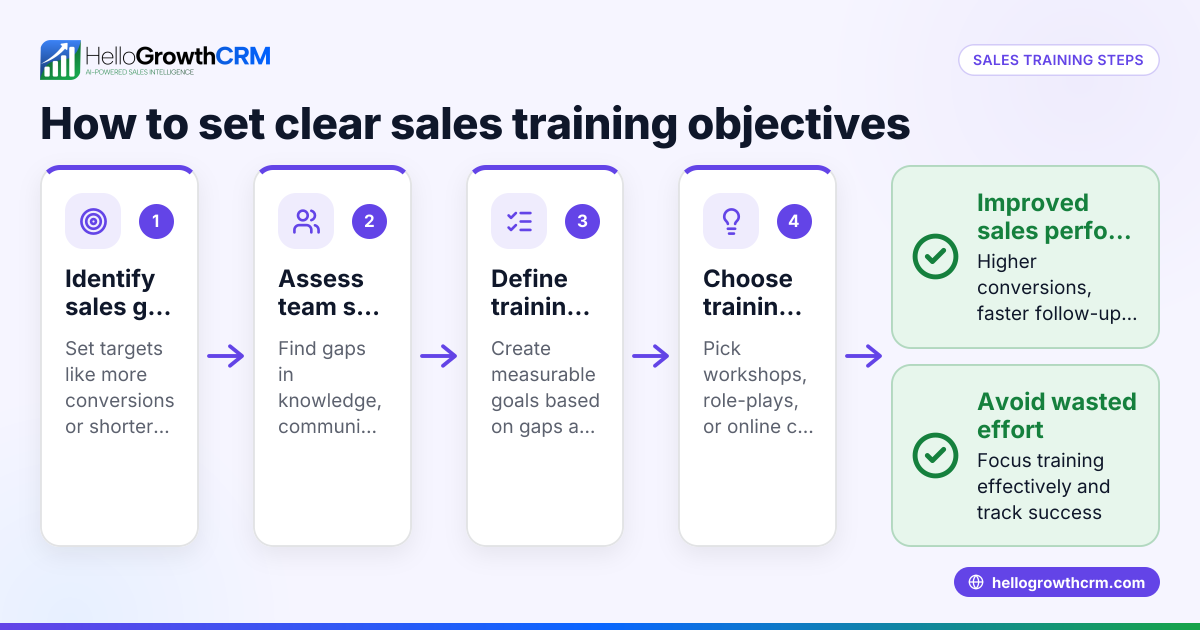
- Define what you want to achieve: Choose a clear, measurable goal such as increasing revenue, number of new customers, or improving conversion rates.
- Set a specific target: Quantify the goal, for example, increase monthly sales revenue by $10,000 or add 20 new qualified leads each month.
- Choose a time frame: Decide when you want to achieve the goal, such as within 3 months or by the end of the fiscal year.
- Identify key activities: Determine the sales actions needed to reach the target, like increasing cold calls, improving email follow-ups, or running targeted campaigns.
- Assign responsibility: Decide who on your team owns each objective and their tasks.
- Set checkpoints and review dates: Schedule regular reviews to measure progress and adjust plans.
- Use tools to track progress: Manage your deals and follow-ups using CRM features like pipeline stages and task boards to avoid missed opportunities.
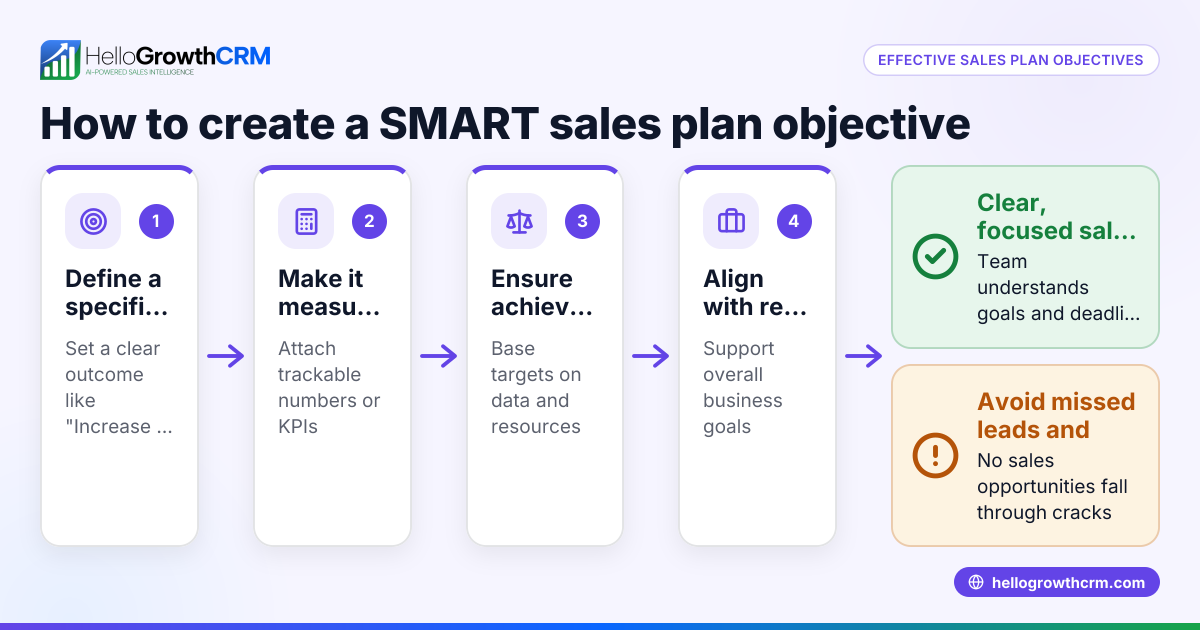
Check that your objectives are SMART (Specific, Measurable, Achievable, Relevant, Time-bound) to ensure clarity and accountability. For tracking, consider a CRM with WhatsApp and SMS integration and a built-in dialer to streamline communication and follow-up scheduling. See WhatsApp and SMS CRM and built-in CRM dialer for examples.
Example (fictional figures)
A B2B software reseller in Denver, Colorado, wants to increase its monthly sales revenue by 15% over the next 6 months. Their current average monthly revenue is $80,000.
- Current monthly revenue = $80,000
- Target increase = 15%
- Increase amount = $80,000 × 15% = $12,000
- New monthly revenue target = $80,000 + $12,000 = $92,000
They plan to achieve this by:
- Adding 30 new qualified leads per month
- Increasing the closing rate from 20% to 25%
The company sets monthly review meetings to track progress and uses a CRM’s Deals pipeline to monitor quotations and follow-up tasks, ensuring no opportunity is missed.
Common mistakes
- Setting vague objectives: Avoid goals like "increase sales" without numbers or deadlines. Prevent this by always quantifying and dating your objectives.
- Ignoring follow-up management: Leads can slip through cracks if follow-ups are not tracked. Use CRM tools with deal stages and reminders to prevent this.
- Not assigning responsibility: Without clear ownership, objectives stall. Assign tasks explicitly to team members.
- Setting unrealistic targets: Overambitious goals demotivate teams. Base targets on past performance and market conditions.
- Failing to review progress regularly: Without checkpoints, you won’t know if you’re on track. Schedule weekly or monthly reviews.
- Relying on scattered tools: Managing sales with only email, text, and spreadsheets can cause disorganization. Consolidate sales activities in one platform with features like pipeline tracking and task boards.
See how a CRM with WhatsApp and SMS capabilities and a built-in dialer can centralize your sales communication and follow-up: WhatsApp and SMS CRM and built-in CRM dialer.
Doing this in HelloGrowthCRM
HelloGrowthCRM supports sales objectives through its Deals (pipeline) feature, where quotations appear as deals in the 'quote sent' stage with follow-up dates, preventing lost opportunities. For teams with field sales, Territories, field operations and commissions tools allow reps to log visits via mobile, while managers monitor daily activity. Founders without sales managers can use Managed RevOps, which provides weekly follow-up execution and pipeline hygiene, keeping sales objectives on track. Learn more about these features at HelloGrowthCRM for the United States.
Frequently asked questions
What are some good sales objectives for a small business? Good sales objectives are specific and measurable, such as increasing monthly revenue by a fixed amount, adding a certain number of qualified leads, improving the sales closing rate, or shortening the sales cycle. They should be realistic and time-bound.
How do I track progress toward sales objectives? Track progress by setting clear metrics and using tools like a CRM to monitor deals, follow-ups, and sales activities. Regular reviews help adjust strategies and keep the team accountable.
Can sales objectives change over time? Yes, sales objectives should be reviewed and adjusted based on performance data, market changes, and business priorities. Flexibility helps maintain realistic and relevant goals.
How does a CRM help with sales objectives? A CRM organizes your sales pipeline, tracks customer interactions, schedules follow-ups, and provides reporting. This ensures no lead or deal is forgotten and helps measure progress against objectives.
What if I don’t have a sales manager to oversee objectives? Services like Managed RevOps provide done-for-you revenue operations support, including weekly follow-up execution and pipeline cleanup, helping founders keep sales objectives on track without a dedicated manager.
Key takeaways
- Sales objectives are specific, measurable goals that guide your sales efforts.
- Set SMART objectives with clear targets, deadlines, and assigned responsibilities.
- Use CRM tools with pipeline and communication features to track deals and follow-ups.
- Regularly review objectives and progress to stay on track and adjust as needed.
- Avoid vague goals, missed follow-ups, and unassigned tasks to improve sales outcomes.
Start organizing your sales objectives and tracking them effectively. Start on the Free Forever plan (200 leads, no credit card).
Ready to put this into practice?
Set up your pipeline, WhatsApp follow-ups, and AI lead scoring in minutes — free, no credit card.
Try HelloGrowthCRM freeGet CRM tips in your inbox
Join thousands of sales professionals who get weekly insights on CRM strategy, AI automation, and pipeline optimization.

The HelloGrowthCRM team publishes guides on CRM strategy, AI sales tools, and revenue operations for small business sales teams.