HelloGrowthCRM software
Built for real small-business sales teams
HelloGrowthCRM helps reps qualify faster, follow up on time, and close more deals—with practical automation in one place.
- AI lead scoring and pipeline visibility
- Built-in dialer, WhatsApp, and email automation
- Sales forecasting and RevOps-ready reporting
A sales pipeline is a structured way to organise and track your sales opportunities as they progress through different stages, such as Lead, Contacted, Quotation Sent, Negotiation, and Closed (Won or Lost). It gives you a clear view of where each deal stands and what actions are needed next to move it forward.
Why this comes up / what goes wrong
Many Indian small business owners lose leads or deals because they do not track prospects systematically. Sales often happen informally via WhatsApp messages or phone calls, and follow-ups get missed or delayed. Without a clear sales pipeline, it is difficult to forecast revenue or identify which deals need urgent attention. This results in slow responses, lost sales, and unpredictable cash flow.
Step-by-step
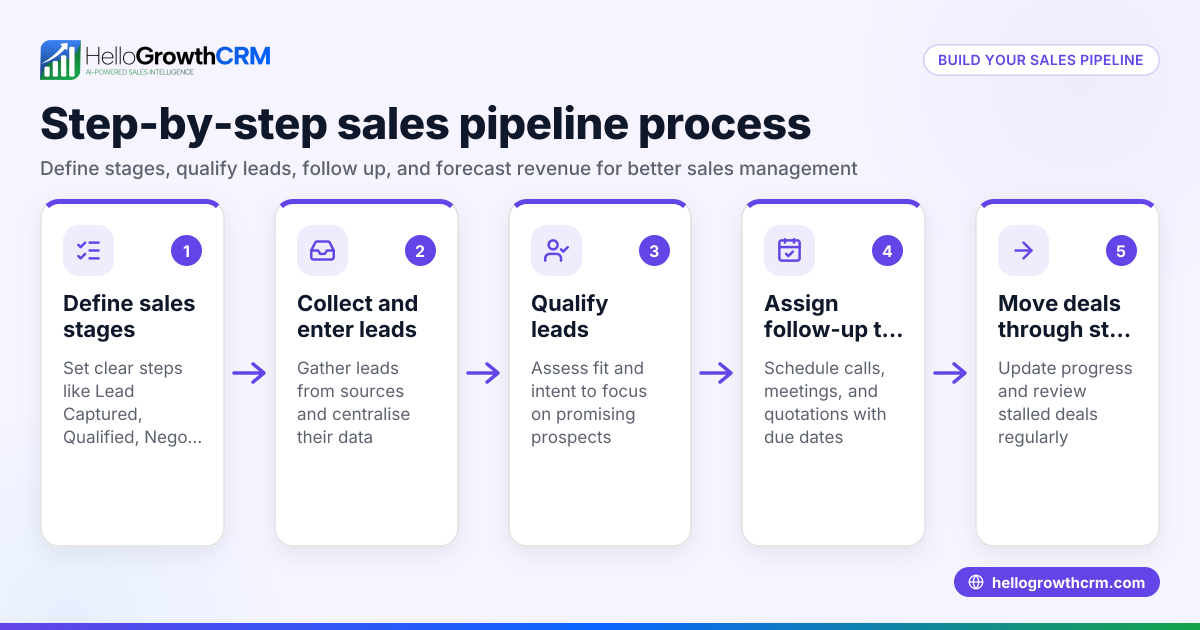
- Define your sales stages clearly. Decide the key steps your sales process follows, for example: Lead, Contacted, Quote Sent, Negotiation, and Closed Won/Lost. Each stage should represent a meaningful step in your sales journey.
- Capture every lead immediately. Add all enquiries from sources like IndiaMART, JustDial, WhatsApp, or web forms into your pipeline so no opportunity is missed.
- Assign follow-up tasks and dates. For each deal, set reminders for the next contact or action. This ensures timely follow-ups and prevents deals from being forgotten.
- Update deal stages regularly. Move deals forward as prospects respond or pause them if there is no progress.
- Review your pipeline weekly. Check which deals are stuck or delayed, understand why, and plan actions to move them ahead.
- Forecast your revenue. Estimate expected income by multiplying deal values by their likelihood to close based on the current stage.
- Maintain pipeline hygiene. Remove dead leads or stale deals regularly to keep your pipeline focused and accurate.
- Use templates and tools. Employ sales templates and calculators to standardise your sales communications and calculations. See our sales templates and free sales tools and calculators for resources.
Example (fictional figures)
On 01/06/2024, a small electronics distributor in Pune has these deals:
- Deal 1: Quotation sent for ₹1,50,000, follow-up due
- Deal 2: Negotiation stage, potential ₹2,00,000
- Deal 3: Lead contacted, potential ₹1,00,000
They estimate probabilities of closing as:
- Quote Sent stage: 50%
- Negotiation stage: 70%
- Lead Contacted stage: 30%
Calculate expected revenue:
₹1,50,000 × 50% = ₹75,000
₹2,00,000 × 70% = ₹1,40,000
₹1,00,000 × 30% = ₹30,000
Total expected revenue = ₹75,000 + ₹1,40,000 + ₹30,000 = ₹2,45,000
This forecast helps the distributor plan purchases and manage cash flow effectively.
Common mistakes
- Not defining sales stages: Without clear stages, leads get lost or overlooked. Prevent this by standardising your sales pipeline stages.
- Failing to update the pipeline: Old or stalled deals clutter your view and mislead revenue forecasts. Schedule weekly reviews to keep data current.
- Ignoring follow-ups: Deals stall when no one follows up. Use reminders and task boards to track next actions.
- Mixing pipeline deals with closed deals: Keep closed deals separate so you can focus on active opportunities.
- Relying only on WhatsApp or spreadsheets: These methods can be disorganised and error-prone. Use dedicated pipeline tools for better tracking.
- Skipping pipeline audits: Without regular audits, you miss bottlenecks and inaccurate data. Audits improve pipeline hygiene and governance.
- Not using sales templates: Without templates, communications can be inconsistent. Use standard templates to save time and improve professionalism.
Doing this in HelloGrowthCRM
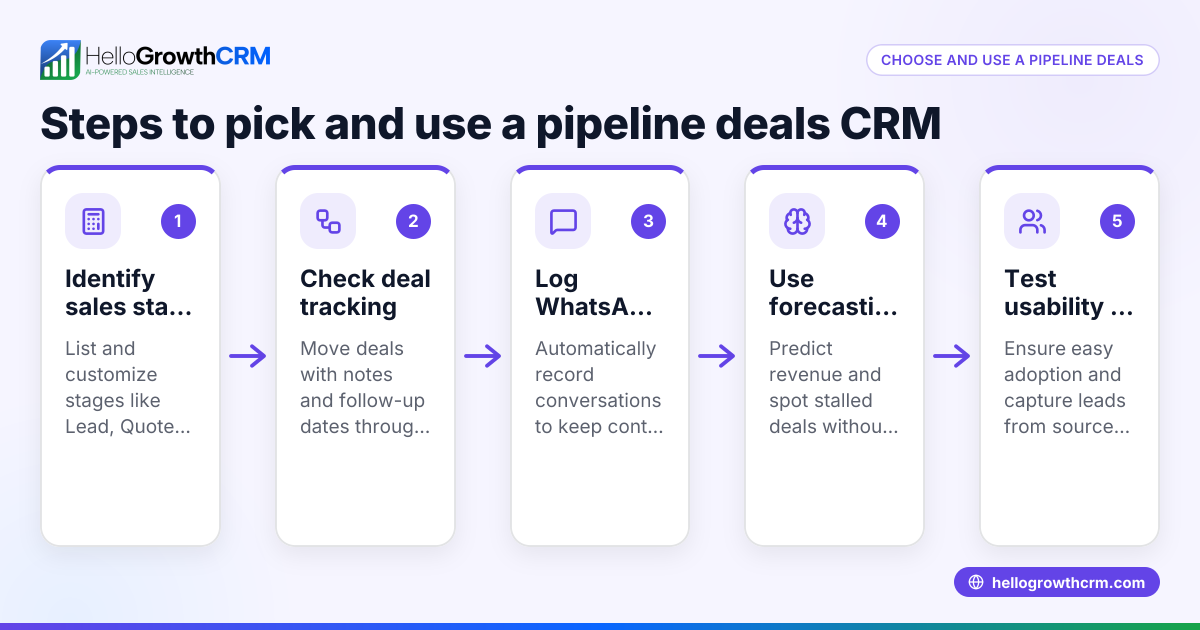
HelloGrowthCRM offers a deals pipeline that tracks open opportunities from first contact through close, with stage movement and follow-up dates so no deal is forgotten. For example, a quotation sent last week appears as a deal at the 'quote sent' stage with a follow-up date. The system provides pipeline forecast and AI insights to show which stage deals are stalling without building a spreadsheet. For distributors, territory and field operations tools enable field reps to log visits from their phones, and managers can see the day's activity. Learn more about these features on the AI CRM, sales forecasting, and HelloGrowthCRM for India pages.
Frequently asked questions
What are the stages of a sales pipeline? Sales pipeline stages vary by business but commonly include Lead, Contacted, Quote Sent, Negotiation, and Closed Won or Lost. Each stage marks progress and helps prioritise follow-ups.
What is pipeline velocity? Pipeline velocity measures how quickly deals move through the sales pipeline. Faster velocity means quicker sales cycles and revenue. Tracking velocity helps identify delays and improve sales efficiency.
How do I audit my sales pipeline? A sales pipeline audit involves reviewing all deals to check for accuracy, removing stale leads, verifying follow-up dates, and ensuring deals are assigned to correct stages. This keeps your pipeline clean and reliable.
What is pipeline hygiene and why is it important? Pipeline hygiene means keeping your sales pipeline updated and free from outdated or irrelevant deals. Good hygiene improves forecasting accuracy and helps the sales team focus on real opportunities.
How can I manage sales pipelines for multiple territories? Managing pipelines by territory means assigning leads and deals to specific sales reps or regions. HelloGrowthCRM supports territory management and field operations, letting field reps log visits and managers track sales activity efficiently.
Key takeaways
- A sales pipeline maps your sales process with clear stages.
- Capture and follow up on every lead to avoid lost deals.
- Update and audit your pipeline regularly to maintain hygiene.
- Forecast revenue by multiplying deal values by stage probabilities.
- Use sales templates and calculators to standardise processes.
- Tools like HelloGrowthCRM help manage pipelines, forecast sales, and track field operations.
Start managing your sales pipeline effectively today with HelloGrowthCRM. Start on the Free Forever plan (200 leads, no credit card) and see how it simplifies your sales process.
Ready to put this into practice?
Set up your pipeline, WhatsApp follow-ups, and AI lead scoring in minutes — free, no credit card.
Try HelloGrowthCRM freeGet CRM tips in your inbox
Join thousands of sales professionals who get weekly insights on CRM strategy, AI automation, and pipeline optimization.

The HelloGrowthCRM team publishes guides on CRM strategy, AI sales tools, and revenue operations for small business sales teams.