HelloGrowthCRM software
Built for real small-business sales teams
HelloGrowthCRM helps reps qualify faster, follow up on time, and close more deals—with practical automation in one place.
- AI lead scoring and pipeline visibility
- Built-in dialer, WhatsApp, and email automation
- Sales forecasting and RevOps-ready reporting
A sales pipeline spreadsheet template helps small and mid-sized New Zealand businesses organise and track their sales leads through defined stages such as prospecting, qualification, quotation, and closing. Using a ready-to-use spreadsheet format lets you manage your sales process without complex software, ensuring no leads fall through the cracks.
Why this comes up / what goes wrong
Many New Zealand small business owners start managing sales with text messages, emails, or basic lists. Without a clear pipeline format, leads get lost or forgotten, follow-ups are missed, and revenue opportunities slip away. A spreadsheet template offers a simple, low-cost way to track each lead’s progress, expected value, and next action. However, building one from scratch can be time-consuming, and common mistakes like missing dates or unclear stages reduce its usefulness.
Step-by-step
- Download a free NZ sales pipeline spreadsheet template: Use a template designed for New Zealand businesses that includes columns for lead name, contact information, deal value (in NZ$), sales stage, next follow-up date, and notes. You can find such templates in free sales tools and calculators.
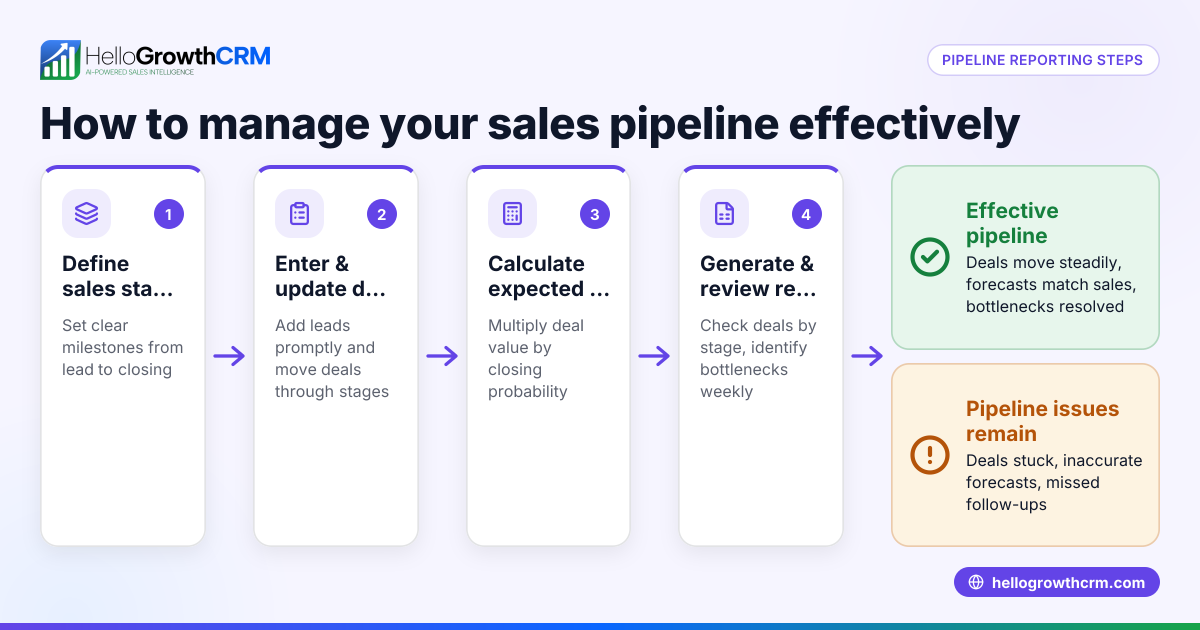
- Define your sales stages clearly: Typical stages include Lead, Contacted, Qualified, Quote Sent, Negotiation, and Closed Won/Lost. Each stage should reflect your actual sales process and be meaningful to your team.
- Enter your current leads and deals: Populate the spreadsheet with existing leads, including realistic deal values and dates. Update the sales stage and follow-up date as conversations progress.
- Set reminders for follow-ups: Use conditional formatting or filters in your spreadsheet to highlight leads with overdue follow-ups, ensuring no opportunities are missed.
- Review and update regularly: Update your pipeline at least weekly to reflect new leads, stage changes, and closed deals. This keeps your sales forecast accurate and your team aligned.
- Check for completeness and accuracy: Verify that no lead is missing a sales stage or follow-up date. Confirm deal values are realistic and based on current information.
- Use the template to forecast sales: Sum the potential deal values by stage to estimate expected revenue and identify where deals are stalling.
Example (fictional figures)
A Christchurch-based building company uses the pipeline spreadsheet to track a new project lead:
| Lead Name | Contact | Deal Value (NZ$) | Stage | Next Follow-up | Notes |
|---|---|---|---|---|---|
| Green Homes | 021 123 4567 | 350,000 | Quote Sent | 25/07/2024 | Waiting for client feedback |
Calculation of expected revenue:
Deal Value = NZ$350,000
Assuming 60% probability at 'Quote Sent' stage (NEEDS EXPERT REVIEW), expected revenue = NZ$350,000 × 60% = NZ$210,000
This calculation helps the owner forecast likely income and plan resources accordingly.
Common mistakes
- Not updating the pipeline regularly: Leads become outdated and inaccurate. Prevent this by scheduling weekly reviews.
- Missing follow-up dates: Leads can be forgotten without reminders. Use spreadsheet alerts or conditional formatting to highlight these.
- Unclear sales stages: This confuses the team and reporting. Define and document stages clearly for everyone.
- Overestimating deal value or probability: Leads to unrealistic forecasts. Base values on past data or conservative estimates.
- Using multiple disconnected spreadsheets: Causes data fragmentation and errors. Keep one master pipeline file.
To avoid these errors, consider digital tools with built-in reminders and AI insights such as the Deals (pipeline) feature, which tracks deals from first contact through to close with follow-up dates to prevent leads being forgotten. You can also download free sales templates without signing up at free sales tools and calculators.
Doing this in HelloGrowthCRM
HelloGrowthCRM offers a Deals (pipeline) feature that tracks open opportunities from first contact through to close, showing quotations sent as deals at the 'quote sent' stage with follow-up dates so no leads are forgotten. You can download free sales tools, templates, and calculators without creating an account at free sales tools and calculators. For owners who want to avoid spreadsheets, pipeline forecasting and AI insights help identify where deals stall without manual tracking. Learn more about these features at AI CRM and sales forecasting.
Frequently asked questions
What should a sales pipeline spreadsheet include? A good sales pipeline spreadsheet includes columns for lead name, contact details, deal value in NZ dollars, sales stage, next follow-up date, and notes. This allows you to track progress and plan next steps effectively.
How often should I update my sales pipeline? Update your sales pipeline at least once a week to keep data current, avoid missed follow-ups, and maintain accurate sales forecasts.
Can I use Google Sheets instead of Excel? Yes, Google Sheets works well and allows easy sharing with your team. Just ensure your template is compatible and regularly backed up.
Are there free NZ-specific sales pipeline templates? Yes, you can download free New Zealand sales pipeline templates and other useful sales tools from the free sales tools and calculators page without needing an account.
How do I avoid losing leads when using spreadsheets? Set follow-up reminders using conditional formatting or filters, and review your pipeline regularly. Alternatively, use a CRM with deal tracking and automated reminders.
What is the benefit of using a CRM over spreadsheets? A CRM with deal tracking and follow-up dates helps prevent leads being forgotten and provides AI insights on pipeline health, reducing manual updates and improving sales focus.
Key takeaways
- Use a ready-made NZ sales pipeline spreadsheet template with clear stages and follow-up dates.
- Update the pipeline weekly to keep leads current and avoid missed opportunities.
- Define sales stages clearly to improve team understanding and reporting accuracy.
- Prevent common mistakes like missing follow-ups by using reminders or conditional formatting.
- Consider digital tools with automated deal tracking, free sales templates, and AI-driven forecasting.
Start managing your sales pipeline more effectively today. You can Start on the Free Forever plan (200 leads, no credit card) to try pipeline tracking without spreadsheets.
Ready to put this into practice?
Set up your pipeline, WhatsApp follow-ups, and AI lead scoring in minutes — free, no credit card.
Try HelloGrowthCRM freeGet CRM tips in your inbox
Join thousands of sales professionals who get weekly insights on CRM strategy, AI automation, and pipeline optimization.

The HelloGrowthCRM team publishes guides on CRM strategy, AI sales tools, and revenue operations for small business sales teams.