HelloGrowthCRM software
Built for real small-business sales teams
HelloGrowthCRM helps reps qualify faster, follow up on time, and close more deals—with practical automation in one place.
- AI lead scoring and pipeline visibility
- Built-in dialer, WhatsApp, and email automation
- Sales forecasting and RevOps-ready reporting
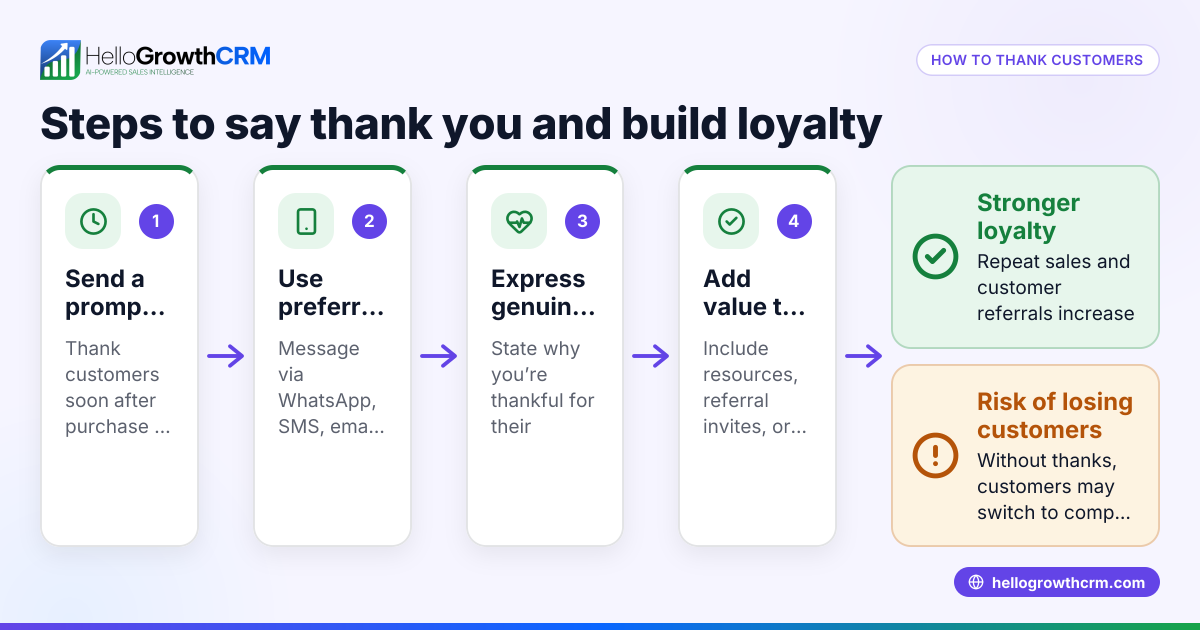
Customer loyalty is important because it leads to repeat sales, lowers marketing costs, and generates referrals that bring in new customers without extra acquisition expenses. Loyal customers tend to spend more over time and provide valuable feedback that helps improve your products or services. Building customer loyalty creates a stable revenue base and helps small businesses grow sustainably. This article explains why customer loyalty is important, outlines clear steps to build it, shares a practical example, highlights common mistakes, and shows how HelloGrowthCRM supports customer loyalty management.
Why this comes up / what goes wrong
Small-business owners in the US often face challenges such as inconsistent sales and high costs to attract new customers. Without loyal customers, businesses must constantly find new leads, which can be time-consuming and expensive. Many businesses rely on disconnected tools like text messages, email, and spreadsheets to manage sales and customer communication. This scattered approach makes it hard to track customer history, service requests, or referrals, leading to missed opportunities to nurture loyalty. Customers may switch to competitors if follow-up is slow or service is poor, causing revenue loss.
Step-by-step
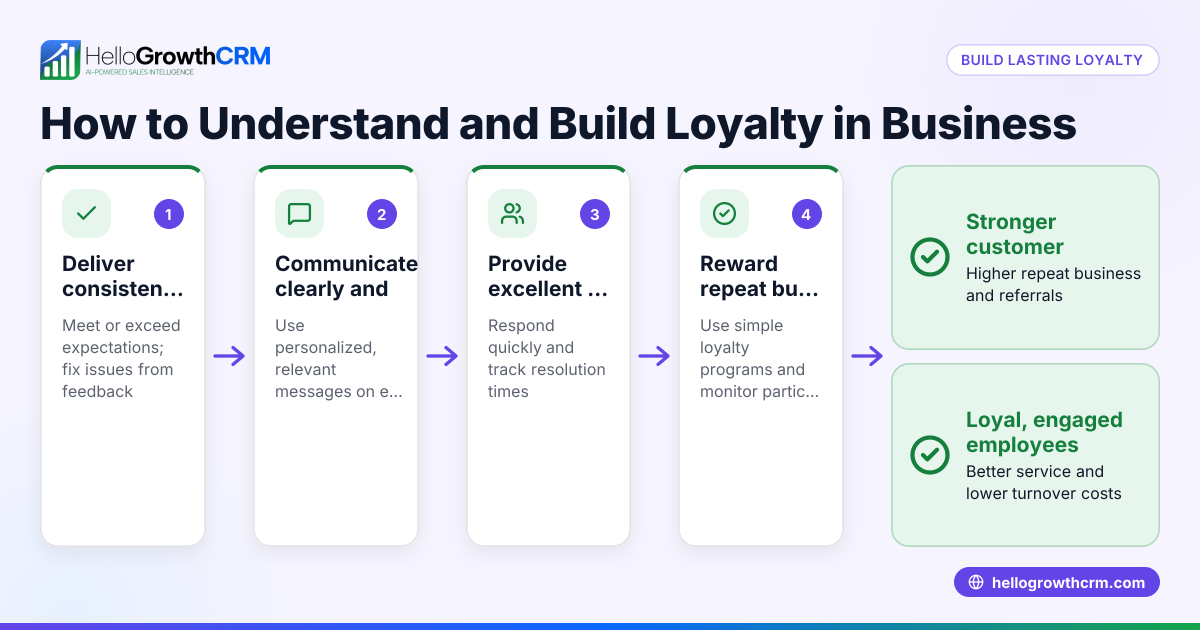
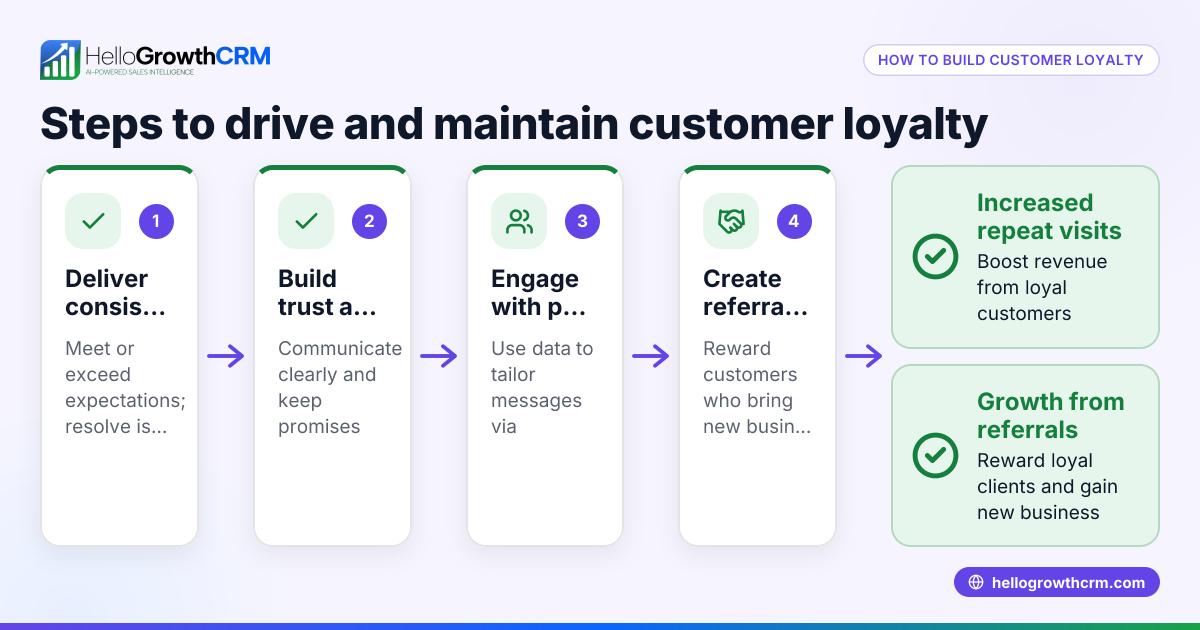
- Identify your loyal customers: Review your sales records or CRM data to find customers who buy repeatedly or refer others. Check purchase frequency and referral sources.
- Engage with personalized communication: Send targeted messages via email, WhatsApp, or SMS that relate to customers’ interests or past purchases. Ensure messaging is timely and relevant.
- Provide excellent after-sale service: Respond promptly to service requests and support tickets. Keep all interactions linked to the customer’s record for a complete history.
- Encourage referrals: Create a referral program that rewards customers for bringing in new clients. Track referrals to measure program success.
- Offer a branded customer portal: Allow customers to view order history, submit support tickets, and access a knowledge base. This empowers self-service and builds trust.
- Measure customer health regularly: Use metrics like repeat purchase rates, referral counts, and satisfaction scores to assess loyalty. Tools like customer health scores (/product/customer-health-score) can help you monitor and improve engagement.
- Centralize communication: Use a CRM that supports WhatsApp, SMS, and email sequences (/product/whatsapp-sms-crm) to keep all messages organized and personalized.
Example (fictional figures)
A plumbing company in Austin, Texas, wants to increase customer loyalty to boost revenue.
Current annual revenue from repeat customers = $300,000 Average repeat customer spends $600 per year Number of repeat customers = 500 Goal: increase repeat customer spend by 10% through loyalty efforts
Calculation: $600 × 10% = $60 additional spend per customer $60 × 500 customers = $30,000 additional revenue
New annual revenue from repeat customers = $300,000 + $30,000 = $330,000
By focusing on loyalty and referrals, the plumbing company can increase revenue without spending more on acquiring new customers.
Common mistakes
- Ignoring after-sale service: Customers expect support after purchase. Prevent this by using a system that keeps service requests linked to customer deals.
- Using scattered communication tools: Managing texts, emails, and spreadsheets separately leads to lost information. Prevent by centralizing communication with a WhatsApp and SMS CRM like HelloGrowthCRM (/product/whatsapp-sms-crm).
- Not rewarding referrals: Missing out on word-of-mouth growth. Prevent by tracking referrals and incentivizing customers.
- Failing to measure loyalty: Without metrics, you cannot improve loyalty efforts. Prevent by regularly reviewing customer health scores (/product/customer-health-score).
- Overlooking customer self-service: Customers want quick answers. Prevent by offering a branded customer portal with support tickets and a knowledge base.
- Neglecting personalized engagement: Sending generic messages reduces impact. Prevent by tailoring communication to customer preferences and history.
Doing this in HelloGrowthCRM
HelloGrowthCRM helps you keep all customer interactions in one place. After the sale, support tickets and service requests stay on the same customer record as the deal, making follow-up easier and more organized. Use the branded self-service customer portal to empower customers with access to their order history, support tickets, and a knowledge base. Track referrals directly and manage your support resources to reduce response time. This centralized approach supports building and maintaining customer loyalty efficiently. Learn more about HelloGrowthCRM for the United States (/usa).
Frequently asked questions
What is customer loyalty and why does it matter? Customer loyalty means customers repeatedly buy from your business and recommend it to others. It matters because loyal customers increase revenue, reduce marketing costs, and provide business stability.
How can I measure customer loyalty? You can measure it by tracking repeat purchase rates, referral counts, customer satisfaction scores, and engagement metrics. Tools like customer health scores (/product/customer-health-score) help consolidate these indicators.
How does a referral program improve loyalty? Referral programs reward customers for bringing in new clients, encouraging ongoing engagement and positive word-of-mouth, which expands your customer base.
Why use a customer portal? A customer portal offers self-service options such as viewing order history and submitting support tickets, which improves customer satisfaction and reduces your support workload.
Can I manage all customer communication in one place? Yes, using a CRM that supports WhatsApp, SMS, and email sequences (/product/whatsapp-sms-crm) helps keep communication organized and personalized, improving the customer experience.
Key takeaways
- Loyal customers buy more often, cost less to serve, and refer others.
- Identify and engage loyal customers with personalized messages and referral programs.
- Provide excellent after-sale service linked to customer records.
- Use a customer portal and knowledge base to empower customers and reduce support time.
- Measure loyalty with customer health scores and adjust strategies accordingly.
- Centralize communication using WhatsApp and SMS CRM features for better engagement.
Start building customer loyalty today. Start on the Free Forever plan (200 leads, no credit card) to organize your sales and service in one place.
Ready to put this into practice?
Set up your pipeline, WhatsApp follow-ups, and AI lead scoring in minutes — free, no credit card.
Try HelloGrowthCRM freeGet CRM tips in your inbox
Join thousands of sales professionals who get weekly insights on CRM strategy, AI automation, and pipeline optimization.

The HelloGrowthCRM team publishes guides on CRM strategy, AI sales tools, and revenue operations for small business sales teams.