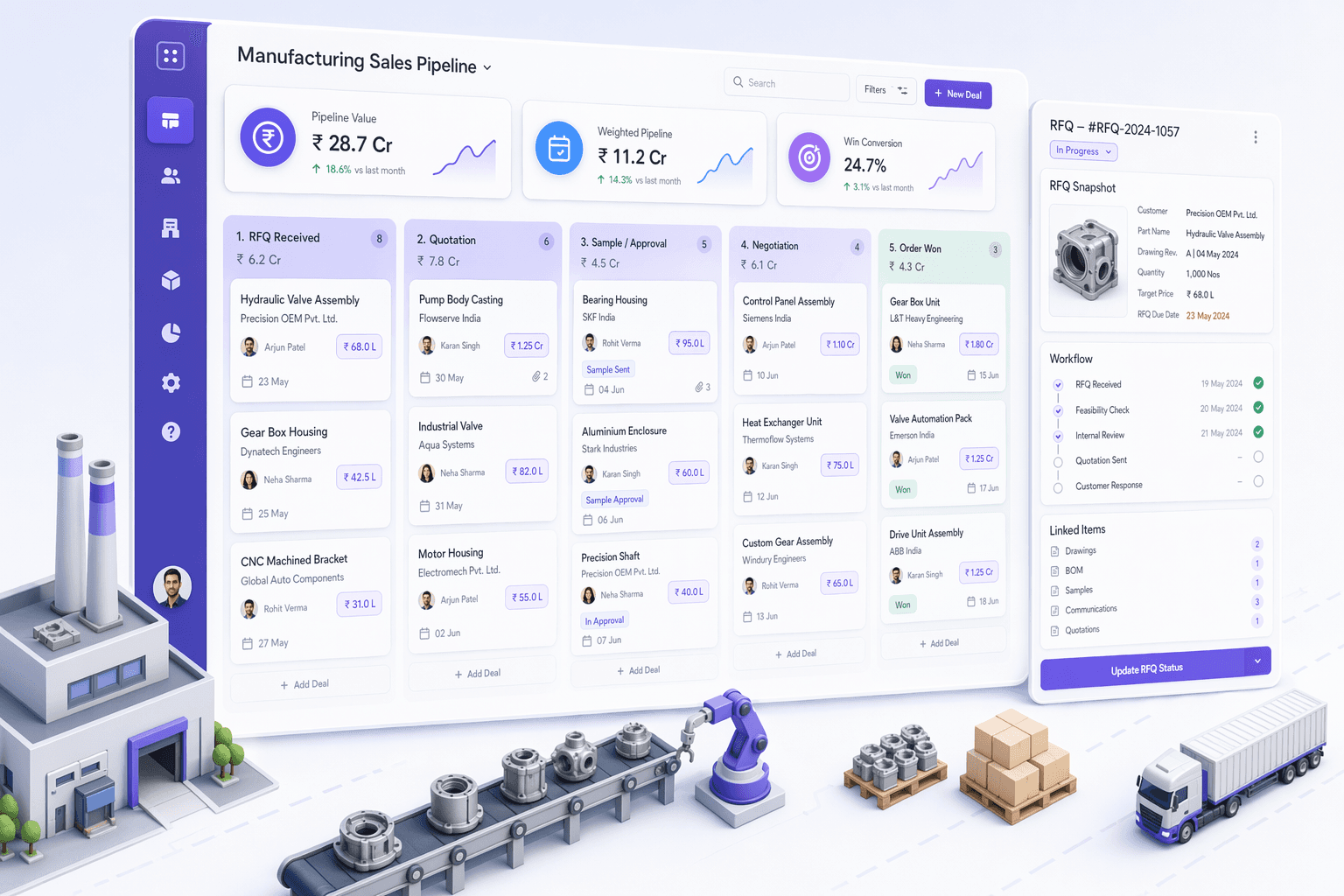
What is different about manufacturing in India
Buyers in Indian manufacturing come through IndiaMART and TradeIndia RFQs, GeM tenders for government orders, trade fair leads, and long-standing distributor referrals rather than cold web forms. Deals often route through multiple layers — a dealer, a sub-dealer, then the actual factory buyer — with WhatsApp used for sample photos, price lists and revised quotations. A CRM pipeline needs stages for RFQ, sample dispatch, price negotiation and PO confirmation, not a generic demo stage.
GST registration and HSN-coded, e-invoice-compliant billing sit behind every B2B quote, and many buyers ask for the Udyam (MSME) registration number before releasing payment terms. Factories carrying BIS certification for regulated products should have that certificate number on the account record. Data collected from RFQ portals falls under the DPDP Act 2023, so consent for follow-up calls matters. Enquiry volume rises before Diwali and the March fiscal year-end, when factories rush to close orders and clear GST returns.
Set up your CRM for India manufacturing teams
- Add an HSN code and GST invoice number field to every quote so it matches the buyer's PO paperwork.
- Create pipeline stages for RFQ, sample approval and PO confirmation, since IndiaMART leads rarely close on a single call.
- Store the Udyam (MSME) registration number on the account record, since many distributors ask for it before payment terms.