HelloGrowthCRM software
Built for real small-business sales teams
HelloGrowthCRM helps reps qualify faster, follow up on time, and close more deals—with practical automation in one place.
- AI lead scoring and pipeline visibility
- Built-in dialer, WhatsApp, and email automation
- Sales forecasting and RevOps-ready reporting
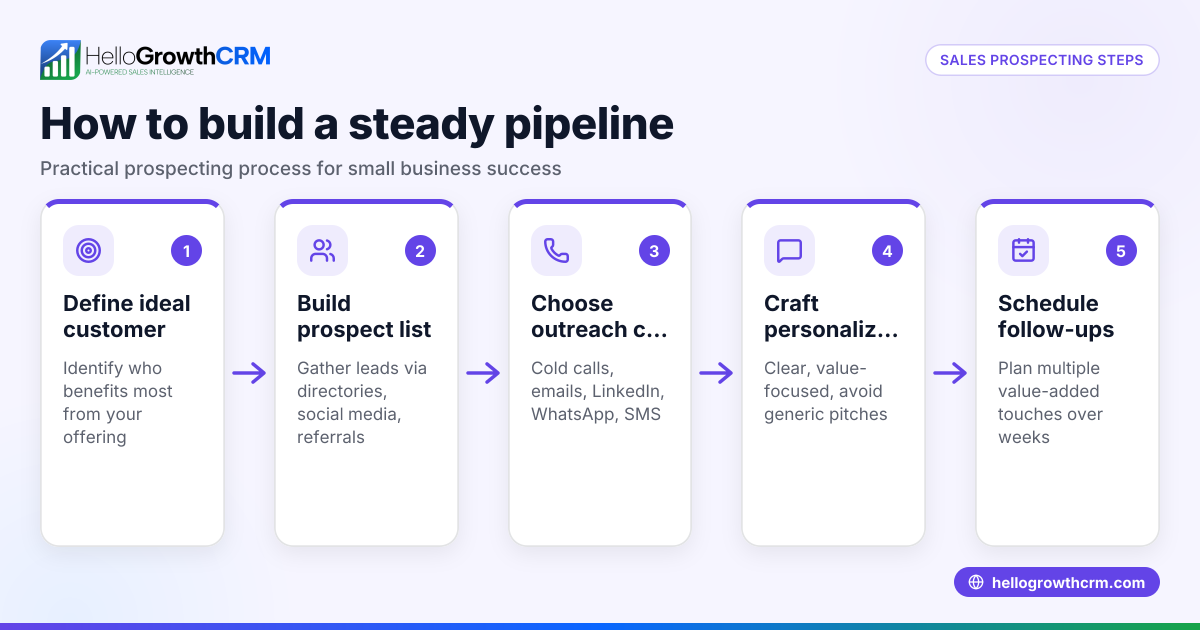
The 7 sales steps are: prospecting, preparation, approach, presentation, handling objections, closing, and follow-up. These steps help small business owners turn leads into customers by providing a clear framework to engage prospects and manage sales opportunities. This article covers why these steps matter, detailed instructions for each, a worked example, common pitfalls, and how HelloGrowthCRM supports your sales process.
Why this comes up / what goes wrong
Small business owners often struggle to convert leads because their sales process is unstructured or inconsistent. They may lose track of leads due to slow follow-up, rely on scattered tools like text messages, emails, and spreadsheets, or fail to engage prospects effectively. Without clear sales steps, opportunities fall through the cracks, deals stall, and revenue growth slows. Understanding and applying the 7 sales steps provides a repeatable path to closing deals and improving sales efficiency.
Step-by-step
- Prospecting: Identify potential customers who might benefit from your product or service. Check that your leads are qualified to save time and effort.
- Preparation: Research your prospect’s business, needs, and pain points. Prepare your sales materials and plan your approach.
- Approach: Make initial contact through a call, email, or message. Aim to build rapport and set the stage for a deeper conversation.
- Presentation: Demonstrate how your product or service solves the prospect’s problem. Tailor your pitch to their specific needs and highlight benefits.
- Handling Objections: Listen to concerns or hesitations. Address them honestly and provide clear answers or alternatives.
- Closing: Ask for the sale or agreement. Confirm details like pricing, delivery, and next steps.
- Follow-up: Stay in touch to ensure customer satisfaction and identify upsell or referral opportunities. Check that no deal is forgotten and tasks are completed.
Each step requires clear actions and checks to keep the sales process moving forward and avoid missed opportunities.
Example (fictional figures)
A B2B software reseller in Denver, Colorado, follows the 7 sales steps for a new lead on 05/10/2026.
- Prospecting: They identify a mid-sized logistics company needing route optimization software.
- Preparation: Research shows the company struggles with delivery delays and high fuel costs.
- Approach: On 05/11/2026, the reseller calls the logistics manager to introduce their solution.
- Presentation: On 05/12/2026, they present a demo showing a 15% potential fuel savings.
- Handling Objections: The manager worries about integration time. The reseller offers a phased rollout plan.
- Closing: On 05/15/2026, the manager agrees to a $120,000 contract.
- Follow-up: The reseller schedules a follow-up call for 06/01/2026 to review implementation progress.
This example shows clear dates and amounts, helping track progress and revenue expectations.
Common mistakes
- Skipping prospect qualification: Contacting unqualified leads wastes time. Prevent by setting clear criteria for prospects.
- Poor preparation: Going into a call without research leads to weak presentations. Prevent by gathering key info before meetings.
- Ignoring objections: Avoiding tough questions loses trust. Prevent by actively listening and addressing concerns.
- Failing to follow up: Leads are lost when no follow-up happens. Prevent by setting reminders and using pipeline tools like HelloGrowthCRM Deals (pipeline).
- Disorganized sales data: Using separate tools causes missed tasks. Prevent by centralizing sales activities in one system with features like built-in CRM dialer.
- Not tracking field sales activity: For businesses with reps in the field, missing visit logs hurts visibility. Prevent by using territories and field operations.
Doing this in HelloGrowthCRM
HelloGrowthCRM helps you manage the 7 sales steps efficiently. Deals (pipeline) track your open opportunities from first contact through close, showing stages like 'quote sent' with follow-up dates so you never forget a lead. For businesses with field reps, territories and field operations tools let reps log visits via mobile, and managers can see daily activity. If you lack a dedicated sales manager, Managed RevOps support keeps your follow-up queue active every week, ensuring leads are worked promptly. Learn more about HelloGrowthCRM’s features for the US market in HelloGrowthCRM for the United States.
Frequently asked questions
What is the most important sales step? Every step is important, but follow-up is crucial because many sales are lost due to slow or no follow-up. Staying organized with tools like HelloGrowthCRM’s pipeline ensures no lead is forgotten.
How long should the sales process take? The duration depends on your industry and deal size. Small purchases may close in days, while complex B2B deals can take weeks or months. Track your pipeline stages to identify bottlenecks.
Can I automate any of these sales steps? Yes, automating follow-up sequences via email, WhatsApp, or SMS can save time and keep prospects engaged. HelloGrowthCRM supports these communication channels to streamline outreach.
How do I handle objections effectively? Listen carefully, empathize with the prospect’s concerns, and provide clear, honest answers. Preparation helps anticipate common objections before they arise.
What if I have no sales manager? Managed RevOps from HelloGrowthCRM offers done-for-you revenue operations support, helping founders keep their sales process on track without hiring a full-time manager.
How can I track commissions and field sales visits? HelloGrowthCRM’s territories and field operations tools let you define sales territories, log reps’ visits from mobile devices, and track commissions linked to deal outcomes.
Key takeaways
- The 7 sales steps are prospecting, preparation, approach, presentation, handling objections, closing, and follow-up.
- Following these steps creates a structured, repeatable sales process that reduces lost leads.
- Common mistakes include poor qualification, lack of preparation, ignoring objections, and failing to follow up.
- HelloGrowthCRM’s Deals (pipeline) and field operations features help manage and track your sales activities effectively.
- Managed RevOps support is available for founders without dedicated sales managers.
Start applying these 7 sales steps today to improve your sales outcomes and customer relationships.
For a practical start, try HelloGrowthCRM’s Free Forever plan with 200 leads and no credit card required at Start on the Free Forever plan.
Ready to put this into practice?
Set up your pipeline, WhatsApp follow-ups, and AI lead scoring in minutes — free, no credit card.
Try HelloGrowthCRM freeGet CRM tips in your inbox
Join thousands of sales professionals who get weekly insights on CRM strategy, AI automation, and pipeline optimization.

The HelloGrowthCRM team publishes guides on CRM strategy, AI sales tools, and revenue operations for small business sales teams.