HelloGrowthCRM software
Built for real small-business sales teams
HelloGrowthCRM helps reps qualify faster, follow up on time, and close more deals—with practical automation in one place.
- AI lead scoring and pipeline visibility
- Built-in dialer, WhatsApp, and email automation
- Sales forecasting and RevOps-ready reporting
A customer success team structure organizes roles and processes to ensure customers achieve their desired outcomes using your product or service. Typically, it includes roles like Customer Success Managers, Support Specialists, and Onboarding Coordinators. This article explains why structuring your team matters, provides step-by-step guidance, a US-based example, common pitfalls, and how HelloGrowthCRM supports customer success.
Why this comes up / what goes wrong
Small-business owners often struggle with customer retention and satisfaction because their customer success efforts are unstructured or reactive. Without a clear team structure, responsibilities overlap or are neglected. For example, sales teams might hand off customers without proper onboarding, or support requests get lost in emails and spreadsheets. This leads to slow issue resolution, unhappy customers, and lost referrals. A clear customer success team structure helps assign ownership, track customer health, and deliver consistent service.
Step-by-step
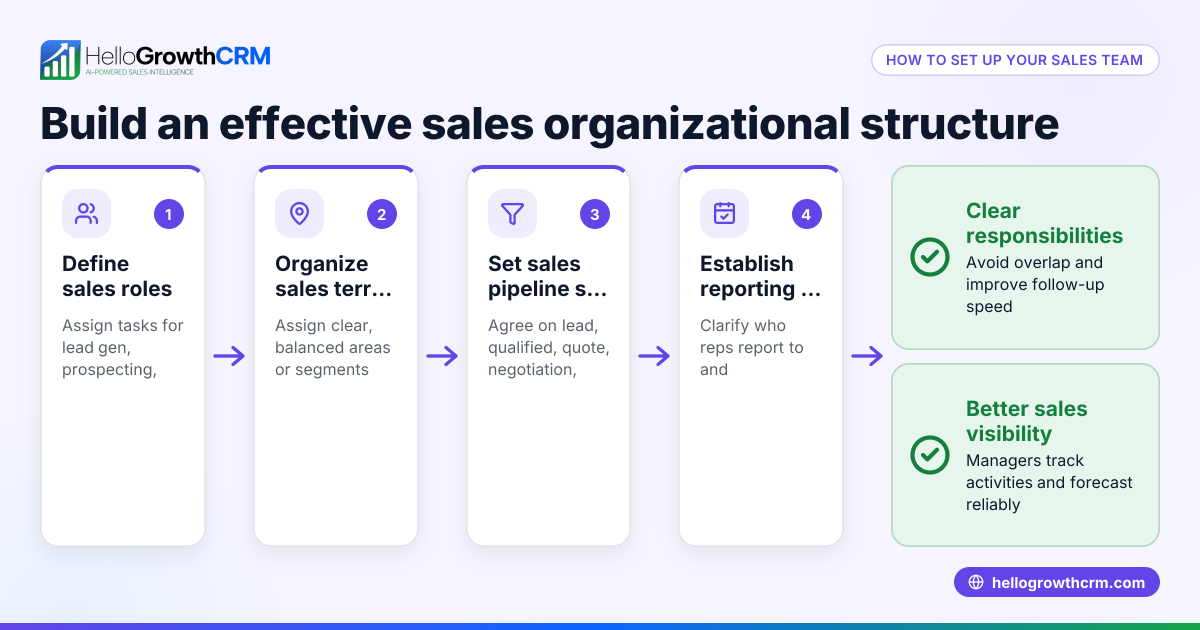
- Define clear roles: Assign specific responsibilities such as onboarding, ongoing support, and renewals. Check that each role has measurable goals.
- Establish handoff processes: Create documented steps for transitioning customers from sales to success teams to ensure smooth onboarding.
- Implement customer tracking: Use tools to monitor customer health and support tickets. Verify that customer issues are logged and responded to promptly.
- Set communication channels: Decide how your team interacts with customers (phone, email, WhatsApp). Confirm all team members use the same channels to avoid lost messages.
- Train your team: Provide training on product knowledge and customer communication skills. Check that training materials are accessible.
- Measure performance: Track metrics like customer satisfaction, ticket resolution time, and renewal rates. Review regularly to improve team effectiveness.
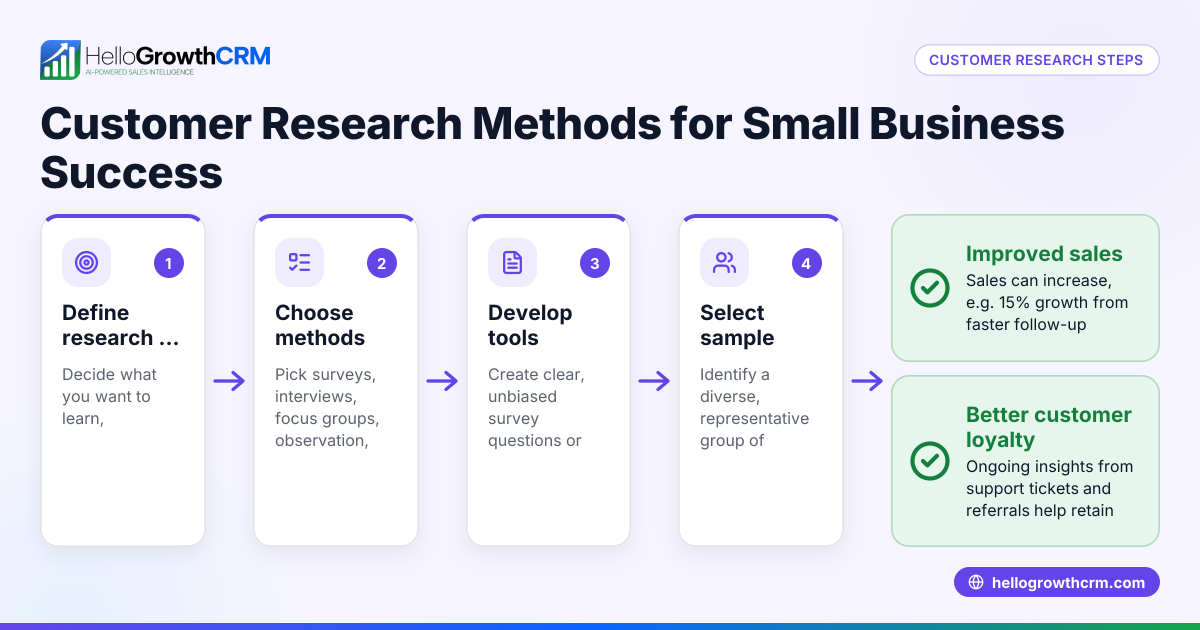
- Gather customer feedback: Use surveys or direct conversations to understand customer needs and adjust your team’s approach.
These steps help build a customer success team that proactively supports clients and drives growth.
Example (fictional figures)
A two-location dental practice in Columbus, Ohio, with 20 employees wants to improve patient retention by structuring its customer success team.
- They assign 1 Customer Success Manager (CSM) responsible for onboarding new patients and follow-ups.
- 2 Support Specialists handle appointment scheduling issues and patient questions.
Costs:
- CSM salary: $60,000 per year
- Support Specialists salary (2 × $40,000): $80,000 per year
Total annual team cost = $60,000 + $80,000 = $140,000
They estimate that better service will reduce patient churn from 20% to 15%, retaining an additional 100 patients annually.
Average revenue per patient = $1,000
Additional revenue = 100 patients × $1,000 = $100,000
Net impact = $100,000 additional revenue − $140,000 cost = −$40,000 (initially a loss)
However, improved reputation and referrals are expected to increase new patient acquisition by 50 patients annually:
New revenue from referrals = 50 × $1,000 = $50,000
Total revenue impact = $100,000 + $50,000 = $150,000
Net gain = $150,000 − $140,000 = $10,000 profit
This example shows how structuring a customer success team can be an investment with measurable returns.
Common mistakes
- Undefined roles: Avoid overlapping duties by clearly defining each team member’s responsibilities.
- Poor communication channels: Prevent lost customer messages by standardizing communication platforms like WhatsApp and email. See WhatsApp and SMS CRM.
- Ignoring customer feedback: Regularly collect and act on feedback to improve service.
- No performance tracking: Use metrics such as customer health score to monitor success. Learn more about customer health score.
- Neglecting handoffs: Ensure smooth transitions from sales to success teams to prevent customers feeling abandoned.
Doing this in HelloGrowthCRM
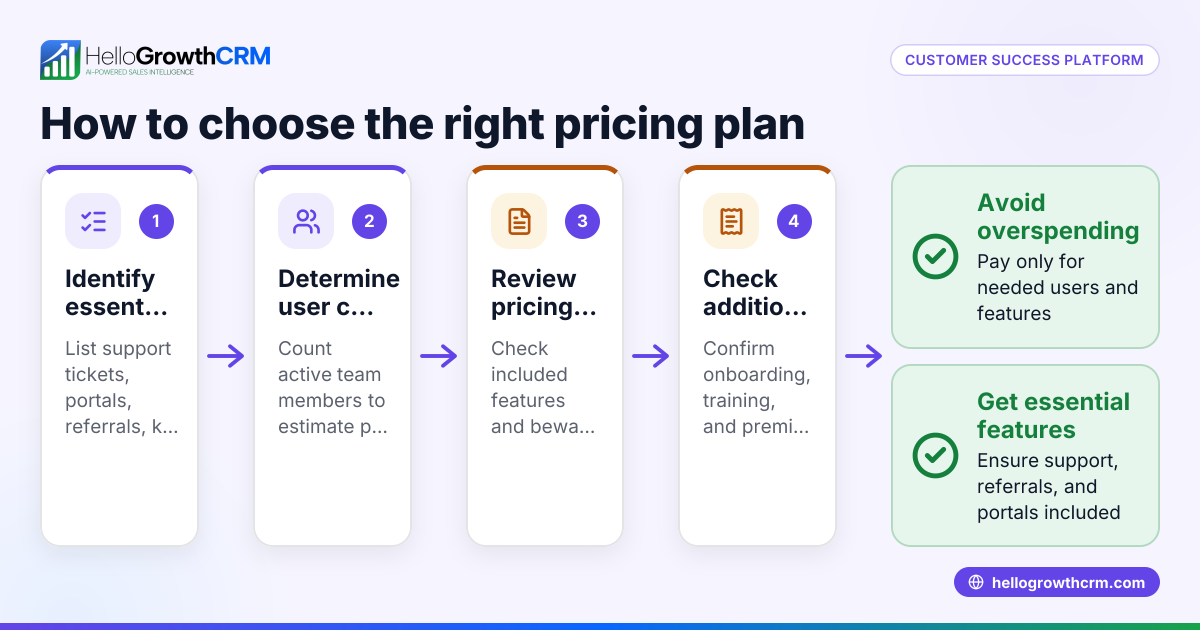
HelloGrowthCRM supports customer success teams with a branded customer portal where clients can submit and track support tickets. Referrals are tracked within the CRM, and a knowledge base helps customers find answers independently. Importantly, after the sale, service requests stay on the same customer record as the deal, keeping all information centralized. Learn more about these features in HelloGrowthCRM for the United States at hellogrowthcrm.com/usa.
Frequently asked questions
What roles make up a customer success team? Common roles include Customer Success Managers who handle onboarding and retention, Support Specialists who manage day-to-day issues, and Onboarding Coordinators who ensure new customers start smoothly. The team size depends on your business scale.
How do I measure customer success team performance? Track metrics like customer satisfaction scores, ticket resolution time, renewal rates, and customer health scores. These indicators show how well your team supports customers and identifies areas for improvement.
How important is communication channel consistency? Very important. Using consistent channels such as WhatsApp, SMS, or email avoids lost messages and confusion. HelloGrowthCRM’s WhatsApp and SMS CRM features help unify communications.
Can small businesses afford a dedicated customer success team? Small businesses can start with a few roles or assign customer success tasks to existing staff. Tracking customer health and using CRM tools can help maximize efficiency.
What is a customer health score? A customer health score is a metric that indicates how engaged and satisfied a customer is, based on factors like usage, support tickets, and feedback. HelloGrowthCRM offers customer health score features to help monitor this.
Key takeaways
- Define clear roles and responsibilities within your customer success team.
- Establish smooth handoff processes from sales to customer success.
- Use consistent communication channels to avoid lost messages.
- Track performance with metrics like customer health score and ticket resolution.
- Use customer feedback to improve service continuously.
- HelloGrowthCRM centralizes customer service requests and supports referrals and knowledge base management.
Start structuring your customer success team today to improve retention and grow your business. To get started with managing customer relationships efficiently, try HelloGrowthCRM’s free plan. Start on the Free Forever plan (200 leads, no credit card).
Ready to put this into practice?
Set up your pipeline, WhatsApp follow-ups, and AI lead scoring in minutes — free, no credit card.
Try HelloGrowthCRM freeGet CRM tips in your inbox
Join thousands of sales professionals who get weekly insights on CRM strategy, AI automation, and pipeline optimization.

The HelloGrowthCRM team publishes guides on CRM strategy, AI sales tools, and revenue operations for small business sales teams.