HelloGrowthCRM software
Built for real small-business sales teams
HelloGrowthCRM helps reps qualify faster, follow up on time, and close more deals—with practical automation in one place.
- AI lead scoring and pipeline visibility
- Built-in dialer, WhatsApp, and email automation
- Sales forecasting and RevOps-ready reporting
Customer research methods are practical ways to gather insights about your customers’ needs, preferences, and behaviors. These methods help small businesses make informed decisions about marketing, sales, and product improvements. This article explains why customer research matters, provides step-by-step instructions, a realistic example with USD figures, common mistakes to avoid, and how to manage customer insights after the sale.
Why this comes up / what goes wrong
Small business owners often find it difficult to understand their customers well enough to tailor their sales and marketing efforts effectively. Without clear customer insights, businesses may waste resources on offers that don’t connect or miss chances to improve service and grow. For instance, a local home services company might rely on guesswork or limited feedback, resulting in slow follow-up on leads or losing customers to competitors who better meet their needs. This challenge makes customer research essential for improving sales and customer loyalty.
Step-by-step
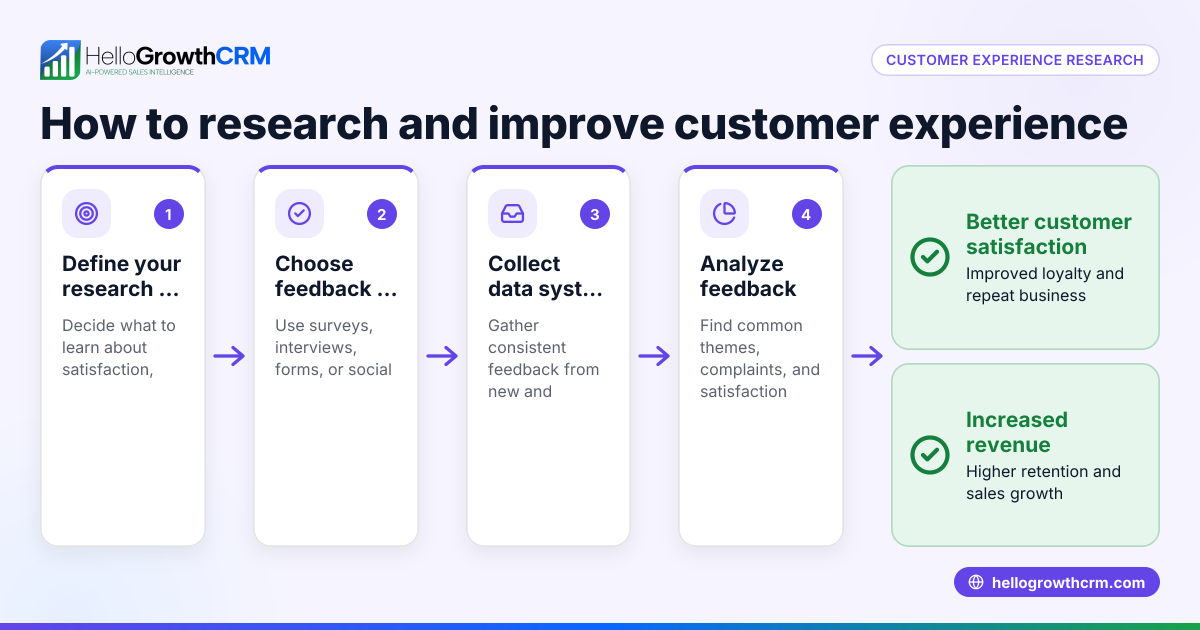
Follow these steps to conduct effective customer research:
- Define your research goals. Decide exactly what you want to learn, such as customer preferences, buying habits, satisfaction levels, or pain points.
- Choose your research methods. Common methods include surveys, interviews, focus groups, direct observation, and analyzing sales or support data.
- Develop your research tools. Create clear, unbiased survey questions, interview guides, or checklists for observations.
- Select your sample. Identify a representative group of customers or prospects to participate, avoiding bias.
- Collect data. Use phone calls, emails, web forms, in-person meetings, or digital feedback tools to gather responses.
- Analyze the results. Look for patterns, themes, or measurable trends to understand your customers better.
- Act on insights. Use the findings to improve products, messaging, sales processes, or customer service.
- Track changes and follow up. Measure how your actions affect customer behavior and repeat research regularly.
Make sure your data collection respects customer privacy and consent. Tools that centralize customer information and communication, like a CRM, can help organize and track this process efficiently. For example, tracking referrals and support tickets can provide ongoing insights. Learn more about managing customer health scores here.
Example (fictional figures)
A residential real-estate team in Phoenix, Arizona wants to understand why some leads drop off after initial contact.
- They set the goal: identify barriers in their sales process.
- They choose phone interviews and sales data analysis.
- They prepare interview questions focused on customer concerns.
- They select 50 recent leads who did not proceed.
- They conduct 30 interviews over two weeks.
- They find many leads want faster follow-up and clearer pricing.
- They decide to speed up response times and provide transparent cost details.
- They monitor lead conversion rates monthly.
For instance, before changes, their monthly lead conversion was $40,000 in closed sales. After speeding up follow-up, it increased by 15%.
Calculation: $40,000 × 15% = $6,000 (increase) $40,000 + $6,000 = $46,000 (new monthly sales)
This example shows how customer research can lead to measurable improvements in sales.
Common mistakes
- Skipping clear goals. Without defined goals, research can be unfocused. Prevent by specifying what you want to learn before starting.
- Using too small or biased samples. This skews results. Prevent by choosing diverse, representative participants.
- Asking leading or vague questions. This distorts answers. Prevent by testing questions for clarity and neutrality.
- Ignoring data privacy. This risks trust and legal issues. Prevent by obtaining consent and securing data.
- Failing to act on findings. Research is wasted if insights are not implemented. Prevent by planning actionable steps.
- Relying on one method only. This limits perspective. Prevent by combining qualitative and quantitative methods.
Using a CRM that supports tracking referrals and support tickets can help prevent slow follow-up and lost leads. See how WhatsApp and SMS CRM features support this here.
Managing customer insights after the sale
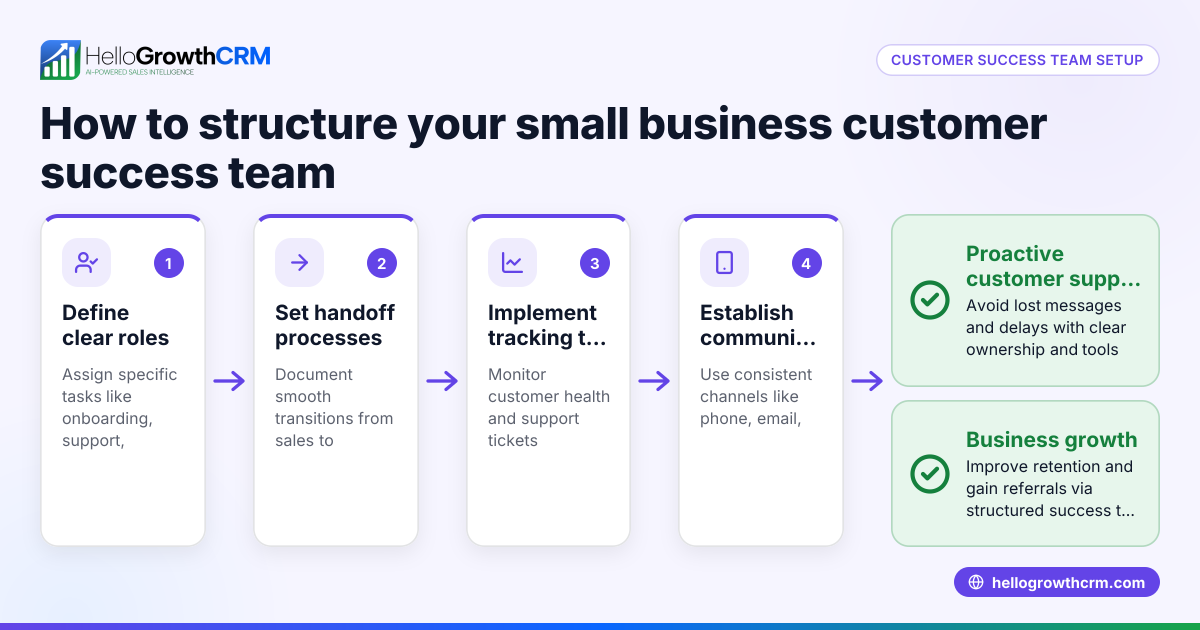
After the sale, keeping track of service requests and ongoing customer interactions is key. A system with a customer portal, referral tracking, support tickets, and a knowledge base helps manage these efficiently. Service requests stay linked to the same customer record as the deal, so nothing is missed. This approach maintains customer satisfaction and uncovers new insights for future sales. Learn more about this approach for US businesses here.
Frequently asked questions
What are the best customer research methods for small businesses? Surveys, interviews, and analyzing sales data are effective and affordable methods for small businesses. Combining these with observations or feedback from support tickets provides a fuller picture.
How often should I conduct customer research? Regular research every quarter or twice a year is ideal to keep up with changing customer needs. Continuous feedback from a customer portal can supplement this.
Can I do customer research without a big budget? Yes. Simple surveys via email or WhatsApp messages, phone interviews, and reviewing sales records are low-cost methods.
How does tracking referrals and tickets help customer research? Tracking referrals and support tickets helps you gather ongoing feedback and spot issues early. This data adds to your understanding of customer needs and satisfaction.
What is a customer health score? A customer health score measures engagement and satisfaction to predict retention or churn. This helps prioritize follow-up efforts and improve service. Learn more about customer health scores here.
Key takeaways
- Define clear goals before starting customer research.
- Use multiple methods for reliable insights.
- Select representative samples and respect data privacy.
- Act promptly on research findings to improve sales and service.
- Avoid pitfalls like vague questions or ignoring results.
- Manage customer insights after the sale with a customer portal, referrals, tickets, and knowledge base.
Start improving your customer understanding today. Start on the Free Forever plan (200 leads, no credit card) at HelloGrowthCRM.
Ready to put this into practice?
Set up your pipeline, WhatsApp follow-ups, and AI lead scoring in minutes — free, no credit card.
Try HelloGrowthCRM freeGet CRM tips in your inbox
Join thousands of sales professionals who get weekly insights on CRM strategy, AI automation, and pipeline optimization.

The HelloGrowthCRM team publishes guides on CRM strategy, AI sales tools, and revenue operations for small business sales teams.