HelloGrowthCRM software
Built for real small-business sales teams
HelloGrowthCRM helps reps qualify faster, follow up on time, and close more deals—with practical automation in one place.
- AI lead scoring and pipeline visibility
- Built-in dialer, WhatsApp, and email automation
- Sales forecasting and RevOps-ready reporting
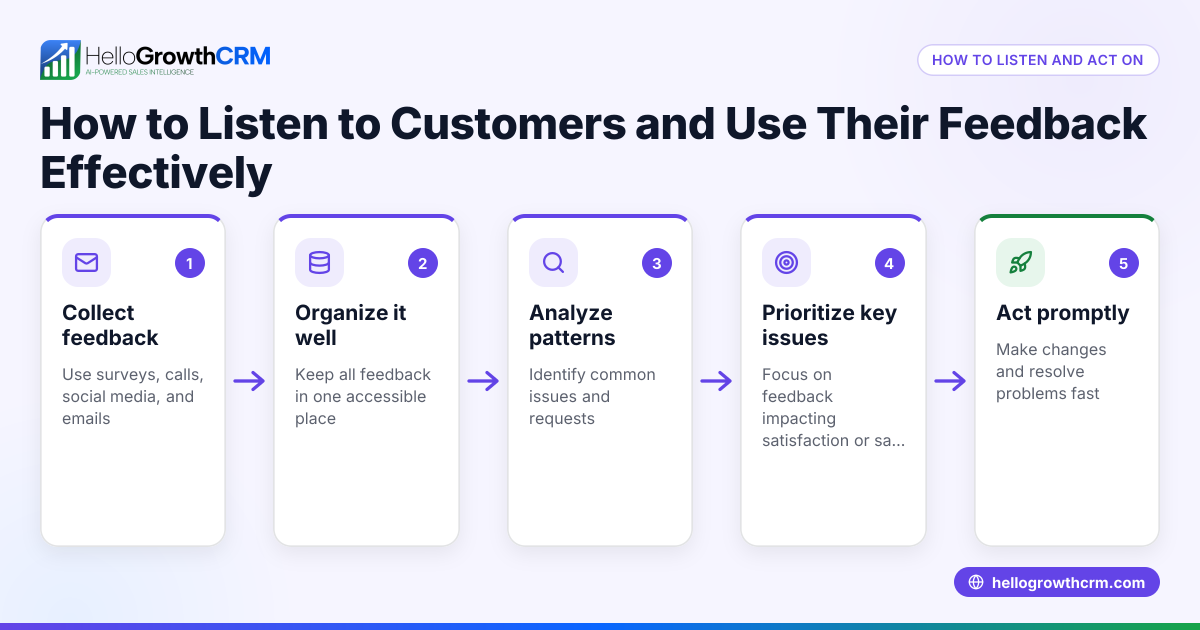
Active listening in sales means giving your full attention to the customer, hearing not just their words but also the feelings and intentions behind them. It’s about understanding their needs deeply to tailor your sales approach and build trust. This article covers why active listening is crucial for small-business sales, step-by-step instructions to practice it, a realistic example, common pitfalls, and how HelloGrowthCRM’s tools make it easier to track and follow up on sales conversations.
Why this comes up / what goes wrong
Many small-business owners and sales teams lose leads because they don’t listen actively. They may be distracted, focus on their own pitch, or rush to close without fully understanding the customer’s problems. This leads to poor rapport, missed objections, and lost sales. For example, a business owner juggling multiple tasks might respond to a prospect’s question with a generic answer, missing the real concern behind it. Without active listening, sales conversations become one-sided and ineffective.
Step-by-step
- Prepare to listen: Before the call or meeting, clear distractions. Focus fully on the prospect.
- Use open body language: Nod, maintain eye contact, and avoid interrupting.
- Hear the whole message: Listen to words, tone, and emotions. Don’t plan your reply while they speak.
- Ask clarifying questions: If something isn’t clear, ask politely to confirm understanding.
- Paraphrase and summarize: Repeat key points in your own words to show you understand.
- Respond thoughtfully: Tailor your answers and solutions based on what you heard.
- Take notes and set follow-ups: Record important details and schedule next steps.
Check after each step if you have truly understood the prospect’s needs and if your responses address them directly. Use tools like HelloGrowthCRM’s Deals pipeline to track follow-up dates and stages, ensuring no lead is forgotten Deals (pipeline).
Example (fictional figures)
A B2B software reseller in Denver, Colorado, received an inquiry on 04/15/2026 about a product integration.
Step 1: The sales rep listens fully to the prospect’s concern about compatibility.
Step 2: They ask clarifying questions: "Can you tell me which software you currently use?"
Step 3: The prospect says they use a specific CRM.
Step 4: The rep paraphrases: "So, you want to ensure our software integrates smoothly with your CRM to avoid data loss."
Step 5: The rep offers a tailored demo focusing on integration features.
Step 6: The rep logs the deal in HelloGrowthCRM at the 'quote sent' stage with a follow-up date 04/22/2026.
Step 7: On the follow-up date, the rep uses the built-in dialer to call the prospect, logs the call outcome, and schedules the next action.
This approach increases the chance of closing the deal and builds trust.
Common mistakes
- Interrupting the prospect: Prevent by consciously pausing before responding.
- Focusing on your pitch, not their needs: Prevent by asking open questions and summarizing their points.
- Ignoring non-verbal cues: Prevent by observing tone and body language.
- Failing to follow up: Prevent by using CRM tools like HelloGrowthCRM’s deal stages and reminders built-in CRM dialer.
- Taking poor notes: Prevent by recording key points immediately during or after the conversation.
Doing this in HelloGrowthCRM
HelloGrowthCRM helps your sales team practice active listening by organizing follow-ups and call outcomes. When a quotation is sent, it appears as a deal at the 'quote sent' stage with a follow-up date, so no lead is forgotten Deals (pipeline). The built-in dialer lets telecallers call prospects directly from the CRM, logging each call’s outcome on the lead record built-in CRM dialer. For field sales, distributors can log visits from their phones, and managers see daily activity Territories, field operations and commissions. These features keep your sales process organized and ensure you act on what you learn from listening.
Frequently asked questions
What is the difference between hearing and active listening in sales? Hearing is passively receiving sound, while active listening means fully concentrating, understanding, and responding to the prospect’s message. Active listening requires focus and engagement beyond just hearing words.
How can I improve my active listening skills? Practice by eliminating distractions, asking clarifying questions, summarizing what you hear, and taking notes. Use tools like HelloGrowthCRM to track conversations and follow-ups, helping you stay organized and responsive.
Why is active listening important in sales? It builds trust, uncovers true customer needs, and helps tailor your solutions. Without it, sales conversations often miss key objections or opportunities, leading to lost deals.
Can technology help with active listening? Yes. CRM tools like HelloGrowthCRM provide pipelines to track deals, built-in dialers to log calls, and territory management to monitor field visits, helping sales teams act on what they hear and follow up promptly.
How do I handle a prospect who talks too much? Let them speak but gently guide the conversation with questions or summaries to keep it focused. Active listening means balancing listening with steering the discussion toward solutions.
Key takeaways
- Active listening means fully focusing on and understanding the prospect’s needs.
- Use clear steps: prepare, listen fully, ask questions, paraphrase, and respond thoughtfully.
- Avoid common mistakes like interrupting or neglecting follow-up.
- HelloGrowthCRM’s deals pipeline, built-in dialer, and territory tools help track and act on sales conversations.
- Practicing active listening builds trust and improves sales outcomes.
Start improving your sales conversations today by practicing active listening and using tools that help you follow up effectively. Start on the Free Forever plan (200 leads, no credit card).
Ready to put this into practice?
Set up your pipeline, WhatsApp follow-ups, and AI lead scoring in minutes — free, no credit card.
Try HelloGrowthCRM freeGet CRM tips in your inbox
Join thousands of sales professionals who get weekly insights on CRM strategy, AI automation, and pipeline optimization.

The HelloGrowthCRM team publishes guides on CRM strategy, AI sales tools, and revenue operations for small business sales teams.