HelloGrowthCRM software
Built for real small-business sales teams
HelloGrowthCRM helps reps qualify faster, follow up on time, and close more deals—with practical automation in one place.
- AI lead scoring and pipeline visibility
- Built-in dialer, WhatsApp, and email automation
- Sales forecasting and RevOps-ready reporting
Listening to customers means actively paying attention to their feedback, needs, and concerns to improve your products, services, and relationships. This article explains why listening matters, provides clear steps to do it well, highlights common mistakes to avoid, and shows how a CRM can help you manage customer feedback efficiently.
Why this comes up / what goes wrong
Small-business owners often find themselves losing sales or repeat business because they don’t fully understand what their customers want or need. They might rely on guesswork, miss complaints, or fail to act on feedback. This leads to slow responses, unhappy customers, and lost referrals. Without a clear process to listen to customers, businesses struggle to improve their offerings or build loyalty. Sales teams working with texts, emails, and spreadsheets can also lose track of customer conversations, making listening inconsistent.
Step-by-step
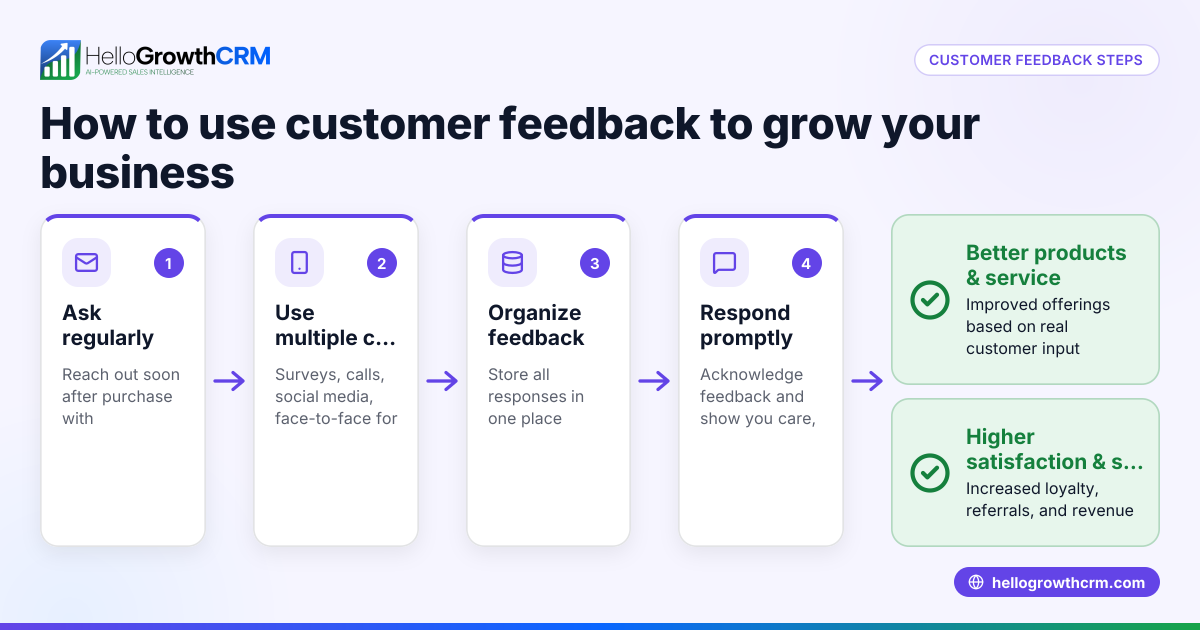
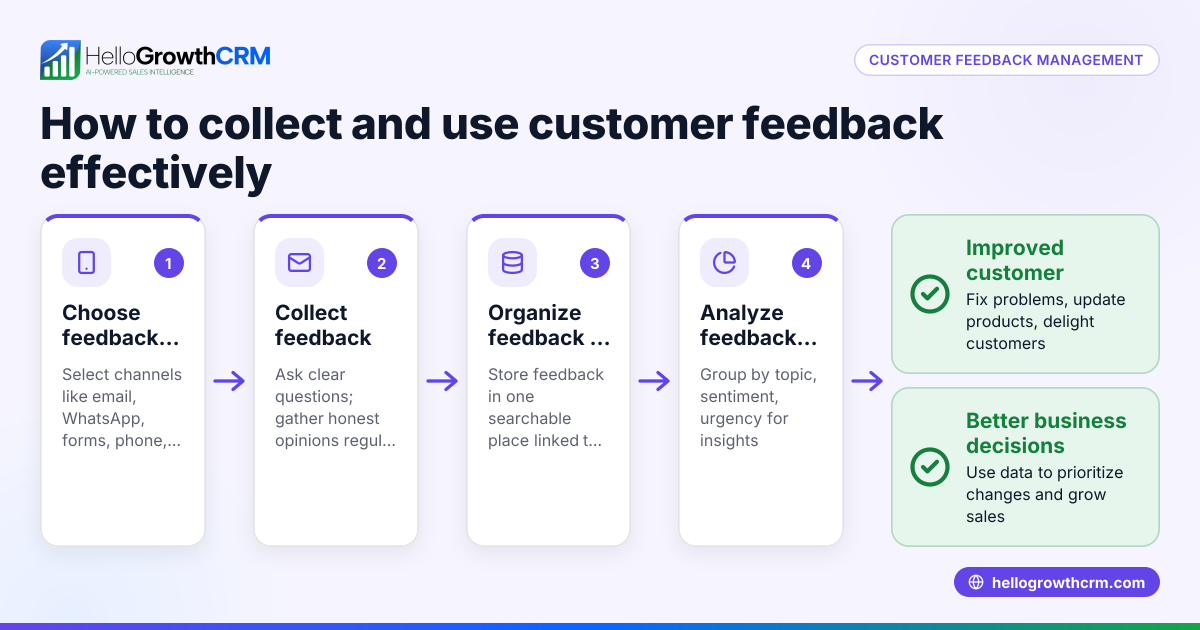
- Collect customer feedback systematically. Use surveys, direct questions during sales or support calls, social media comments, or emails. Check that you have multiple channels open for customers to share their thoughts.
- Record and organize feedback clearly. Keep all customer comments in one place where your team can access them easily. Check that no feedback is lost or scattered across emails or spreadsheets.
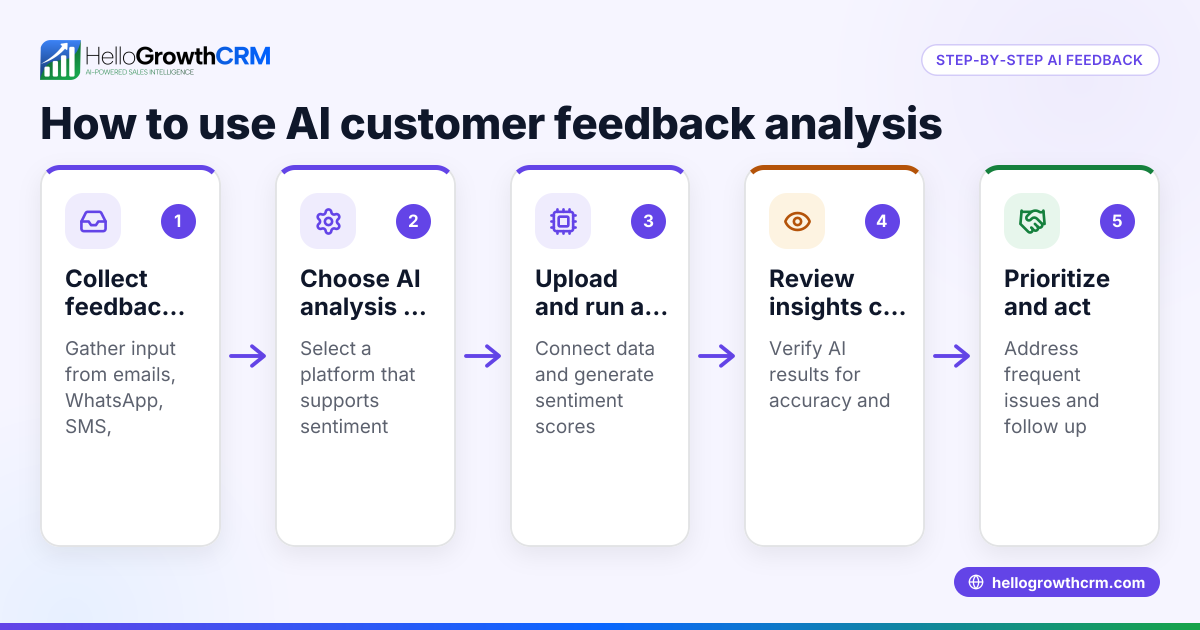
- Analyze feedback for patterns. Look for common complaints, requests, or praise. Check if issues relate to product features, service speed, pricing, or communication.
- Prioritize issues to address. Decide which feedback items have the biggest impact on customer satisfaction or sales. Check that your priorities align with your business goals.
- Act on the feedback promptly. Implement changes, answer questions, or resolve problems. Check that customers see you have listened and taken their input seriously.
- Follow up with customers. Confirm that solutions worked and ask for further input. Check that customers feel valued and heard.
- Use tools to track feedback and actions. Ensure your team logs service requests and referrals on the same customer record for full context.
Example (fictional figures)
GreenLeaf Landscaping in Charlotte, North Carolina, wants to improve customer satisfaction by listening better.
- They send a survey to 100 customers and get 40 responses.
- 15 of those 40 responses mention slow response times as an issue.
- They decide to prioritize improving response speed.
Calculation:
Number of customers reporting slow response = 15
They estimate losing about 10 customers annually due to this issue.
Average contract value per customer = $5,000
Potential lost revenue = 10 customers × $5,000 = $50,000
By improving response times, they aim to recover up to $50,000 in revenue.
Common mistakes
- Ignoring feedback channels. Prevent by setting up clear, multiple ways for customers to share feedback.
- Scattered data storage. Prevent by centralizing feedback in one accessible system.
- Delaying action. Prevent by assigning responsibility and deadlines for follow-up.
- Not closing the loop. Prevent by informing customers about changes made based on their input.
- Focusing only on negative feedback. Prevent by recognizing positive comments to reinforce strengths and encourage referrals (see referrals in the CRM).
Doing this in HelloGrowthCRM
The CRM helps you keep service requests, referrals, tickets, and knowledge base articles all linked to the same customer record. This means after the sale, any service requests stay connected to the deal, helping your team track and act on customer feedback efficiently. You can also manage referrals and provide a branded self-service customer portal to empower customers to share feedback and request support easily. Learn more about the customer health score and how the CRM integrates WhatsApp and SMS communication in its WhatsApp and SMS CRM to improve listening and response.
Frequently asked questions
What does listening to customers really mean? Listening to customers means actively gathering and understanding their feedback, concerns, and preferences, then using that information to improve your business.
How can I collect customer feedback effectively? Use multiple channels like surveys, direct conversations, social media, and emails. Make it easy for customers to share their thoughts and ensure your team records all feedback in one place.
Why is it important to act on customer feedback quickly? Prompt action shows customers you value their input, improves satisfaction, and prevents small issues from becoming bigger problems.
How does the CRM support customer listening? It keeps service tickets, referrals, and support requests linked to the same customer record, making it easier to track and respond to feedback. It also offers a customer portal for self-service and feedback collection.
Can listening to customers increase sales? Yes. By understanding and responding to customer needs, you build loyalty, improve products, and encourage referrals, all of which can boost sales.
How can I avoid losing customer feedback? Centralize feedback in a CRM or other system, assign responsibility for follow-up, and use tools to keep everything organized.
Key takeaways
- Listening to customers means actively collecting, organizing, and acting on their feedback.
- Use multiple channels and centralize feedback to avoid losing important information.
- Prioritize and address key issues promptly to improve satisfaction and sales.
- Avoid common mistakes like ignoring feedback or delaying responses.
- The CRM helps by linking service requests, referrals, and tickets to the same customer record.
- Following up with customers after acting on feedback strengthens relationships and encourages referrals.
Start listening to your customers better today. Start on the Free Forever plan (200 leads, no credit card) and see how the CRM can help you organize feedback and improve customer relationships.
Ready to put this into practice?
Set up your pipeline, WhatsApp follow-ups, and AI lead scoring in minutes — free, no credit card.
Try HelloGrowthCRM freeGet CRM tips in your inbox
Join thousands of sales professionals who get weekly insights on CRM strategy, AI automation, and pipeline optimization.

The HelloGrowthCRM team publishes guides on CRM strategy, AI sales tools, and revenue operations for small business sales teams.