HelloGrowthCRM software
Built for real small-business sales teams
HelloGrowthCRM helps reps qualify faster, follow up on time, and close more deals—with practical automation in one place.
- AI lead scoring and pipeline visibility
- Built-in dialer, WhatsApp, and email automation
- Sales forecasting and RevOps-ready reporting
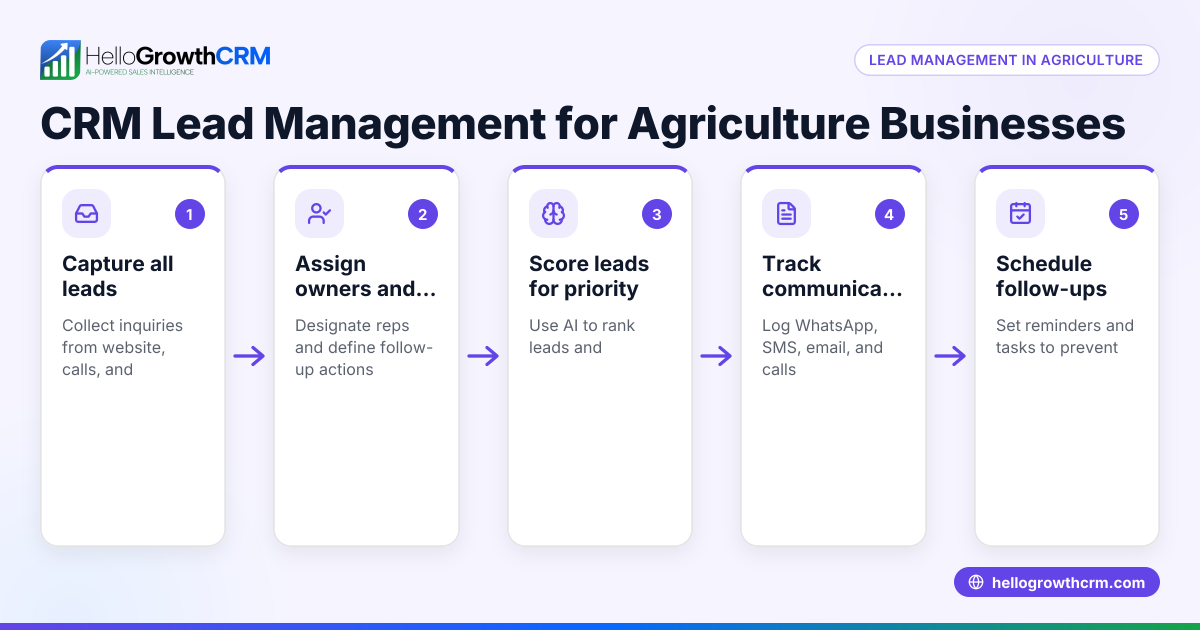
Agriculture CRM development means building or adopting a CRM system designed to handle the specific workflows, customer interactions, and sales processes of agriculture businesses. These systems track leads from farm suppliers, buyers, and distributors, manage communication often done via mobile messaging, and help forecast sales of crops, equipment, or services.
Why this comes up / what goes wrong
Agriculture business owners and accountants often struggle with managing leads and customer follow-ups because their sales processes are fragmented. They may rely on text messages, emails, and spreadsheets, which leads to slow or missed follow-ups and lost sales opportunities. Unlike generic CRMs, agriculture businesses need systems that handle seasonality, varied customer types (farmers, wholesalers, retailers), and communication channels like WhatsApp or SMS popular in rural areas. Without a tailored CRM, tracking orders, managing multiple contacts, and forecasting sales becomes inefficient and error-prone.
Step-by-step
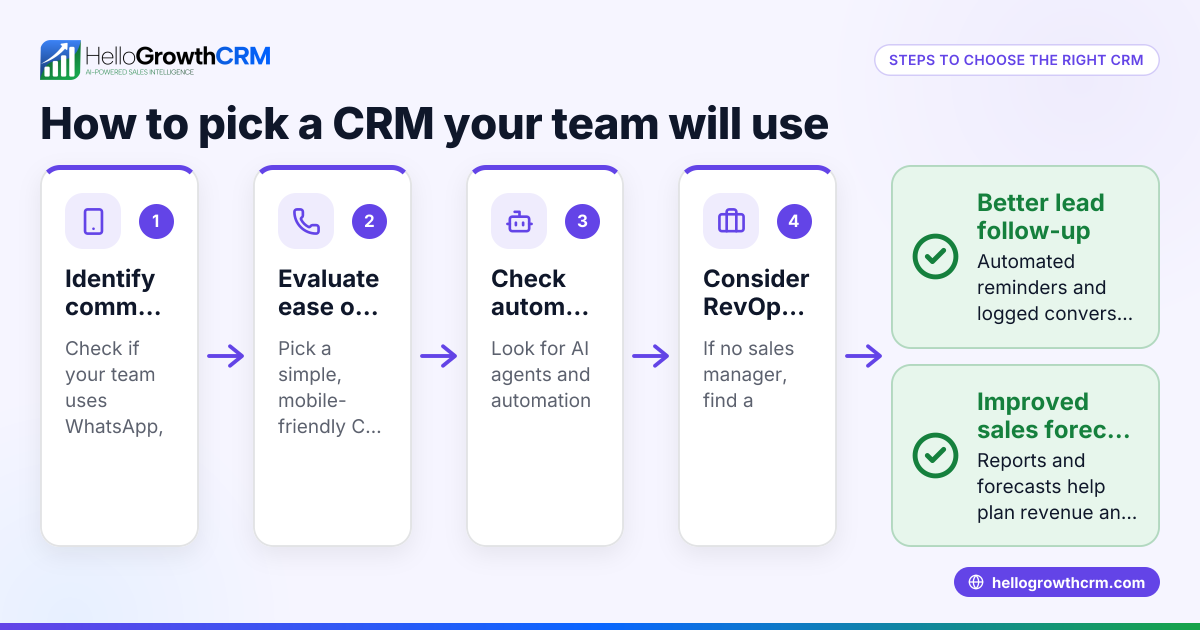
- Identify Your Agriculture Business Needs
- List key sales and customer management tasks specific to your farm or agri-trading business.
- Check which communication channels your customers use most (e.g., WhatsApp, SMS, email).
- Evaluate CRM Features for Agriculture
- Look for lead capture from web forms or integrations with farm supply platforms.
- Ensure the CRM supports mobile messaging like WhatsApp and SMS to log conversations.
- Check for pipeline and task boards to manage seasonal sales cycles.
- Consider AI Assistance
- Explore options where AI agents can draft follow-up messages or update records to save time.
- Note that some AI features may be in beta and assess if that fits your business.
- Test Usability with Your Team
- Involve sales reps and accountants to try the CRM interface.
- Confirm the CRM is easy to use on mobile devices since agriculture teams are often on the move.
- Check Pricing and Plans
- Start with free or trial plans that allow managing a small pipeline without upfront costs.
- Verify which features are included in each plan, especially messaging and calling capabilities.
- Plan Data Migration and Integration
- Prepare to import existing contacts and sales data from spreadsheets or other tools.
- Ensure the CRM integrates with your current farm management software if needed.
- Implement and Train
- Roll out the CRM in phases, starting with lead capture and communication.
- Provide training focused on agriculture-specific workflows.
For more on agriculture business needs, see Agricultural trading and agri businesses.
Example (fictional figures)
A farm equipment supplier in Des Moines, Iowa, wants to develop an agriculture CRM to track leads and manage sales calls during the planting season.
- They expect 500 new leads monthly from web forms and trade shows.
- They want to send follow-ups using WhatsApp and SMS.
- Their sales cycle averages 30 days.
Steps:
- Lead capture: 500 leads/month
- Follow-up messages drafted by AI agents after calls, reducing rep time by 20 minutes per lead.
- Pipeline management to track 500 leads × $1,200 average sale = potential $600,000 monthly sales.
Calculations:
$1,200 × 500 leads = $600,000 potential sales
If AI agents save 20 minutes per lead and reps work 160 hours/month:
20 minutes × 500 leads = 10,000 minutes = 166.67 hours saved
This time saving allows reps to focus on closing more deals.
Common mistakes
- Choosing a generic CRM without agriculture features: Prevent by listing agriculture-specific needs first.
- Ignoring mobile messaging channels: Prevent by verifying WhatsApp and SMS support.
- Overlooking team usability: Prevent by involving reps in testing.
- Skipping data migration planning: Prevent by preparing data imports in advance.
- Underestimating training needs: Prevent by scheduling focused sessions.
- Selecting expensive plans before testing free options: Prevent by starting with free plans to validate fit.
For CRM mobile messaging, see WhatsApp and SMS CRM.
Doing this in HelloGrowthCRM
HelloGrowthCRM supports agriculture CRM development with WhatsApp and SMS messaging workflows that log conversations on lead records and enable timely follow-ups. Its AI agents (in beta) draft follow-up messages after calls, so sales reps only review and send them, saving time. For small teams, the Free Forever plan lets two users manage a pipeline at no cost until calling or WhatsApp automation is needed. This makes it suitable for agriculture businesses starting CRM adoption or testing workflows.
Frequently asked questions
What is an agriculture CRM? An agriculture CRM is a customer relationship management system tailored for farm and agriculture businesses. It helps manage leads, communications, and sales pipelines specific to agriculture products and services.
Why use WhatsApp and SMS in agriculture CRM? Many agriculture customers prefer mobile messaging channels like WhatsApp and SMS for quick communication. A CRM that supports these channels improves follow-up speed and lead engagement.
Can small agriculture businesses start with a free CRM? Yes, some CRMs offer free plans for small teams to manage leads and pipelines without upfront costs, allowing businesses to grow into paid features as needed.
How can AI help in agriculture CRM? AI agents can automate drafting follow-up messages and updating records, reducing manual work for sales reps and ensuring timely communication.
What should I ask before choosing an agriculture CRM? Ask about support for your main communication channels, ease of use on mobile devices, pipeline management capabilities, AI features availability, and pricing plans including free options.
For more on US agriculture CRM needs, see HelloGrowthCRM for the United States.
Key takeaways
- Agriculture CRM development focuses on managing leads and sales specific to farm and agri-trading businesses.
- Mobile messaging like WhatsApp and SMS is essential for effective customer communication.
- AI agents can save time by drafting follow-ups and updating records.
- Start with a free CRM plan to test workflows before scaling up.
- Involve your sales team in CRM testing to ensure usability.
- Plan data migration and training carefully to avoid implementation issues.
Start managing your agriculture sales pipeline today with HelloGrowthCRM. Start on the Free Forever plan (200 leads, no credit card).
Ready to put this into practice?
Set up your pipeline, WhatsApp follow-ups, and AI lead scoring in minutes — free, no credit card.
Try HelloGrowthCRM freeGet CRM tips in your inbox
Join thousands of sales professionals who get weekly insights on CRM strategy, AI automation, and pipeline optimization.

The HelloGrowthCRM team publishes guides on CRM strategy, AI sales tools, and revenue operations for small business sales teams.