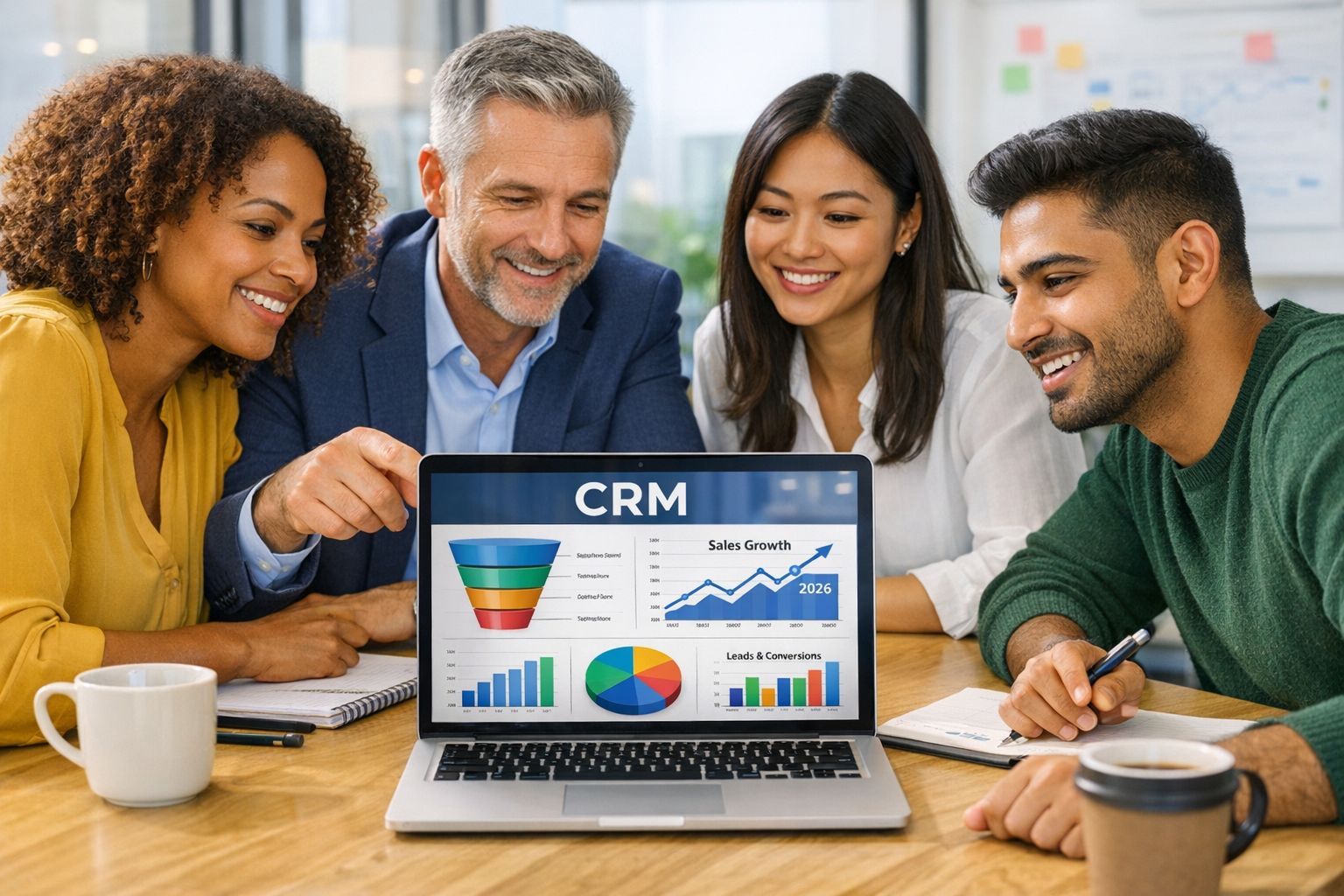
HelloGrowthCRM software
Built for real small-business sales teams
HelloGrowthCRM helps reps qualify faster, follow up on time, and close more deals—with practical automation in one place.
- AI lead scoring and pipeline visibility
- Built-in dialer, WhatsApp, and email automation
- Sales forecasting and RevOps-ready reporting
Understanding AI CRM
AI CRM stands for Artificial Intelligence Customer Relationship Management. It is a big step forward for small businesses. This system helps manage customer interactions and data effectively.
Traditional CRM systems mainly store customer information. In contrast, AI CRM uses smart algorithms. These algorithms analyze data and predict customer behavior. This ability helps small businesses personalize marketing efforts. It also improves customer service.
By adding AI to CRM, businesses can automate routine tasks. This reduces human error and boosts efficiency. The benefits of AI CRM extend beyond managing data.
Small businesses can gain valuable insights into customer preferences. They can also spot trends in customer behavior. This information allows them to tailor products and services to meet customer needs.
Moreover, AI CRM can identify potential leads. It highlights opportunities for businesses. This helps them focus on the most promising prospects. Overall, AI CRM can drive growth for small businesses.
Key Features of AI CRM
AI CRM comes with several important features. These features can help small businesses thrive. Here are some key features to consider:
- Data Analysis: AI CRM analyzes customer data quickly. It finds patterns and trends that humans might miss.
- Predictive Analytics: This feature predicts future customer behavior. Businesses can use this to make informed decisions.
- Automation: Routine tasks are automated. This saves time and reduces errors.
- Personalization: AI CRM helps personalize marketing messages. This makes customers feel valued and understood.
- Lead Scoring: The system can rank leads based on their potential. This helps businesses focus on the best opportunities.
These features make AI CRM a powerful tool for small businesses. They can enhance customer relationships and drive growth.
Benefits of Using AI CRM
Using AI CRM offers many benefits for small businesses. Here are some of the most significant advantages:
- Improved Customer Insights: Gain a deeper understanding of customer preferences. This helps businesses create better products and services.
- Enhanced Customer Engagement: Personalized marketing messages lead to higher engagement. Customers are more likely to respond positively.
- Increased Efficiency: Automating tasks frees up time for employees. They can focus on more strategic activities.
- Better Decision Making: Predictive analytics provide valuable insights. Businesses can make data-driven decisions.
- Higher Sales: By identifying leads and opportunities, businesses can increase sales. This leads to overall growth.
These benefits show why AI CRM is essential for small businesses. It helps them stay competitive and meet customer needs.
How to Choose the Right AI CRM
Choosing the right AI CRM can be challenging. Here are some tips to help you make the best decision:
- Identify Your Needs: Determine what features are most important for your business.
- Consider Your Budget: Look for a solution that fits your budget. Check Pricing options.
- Check Integrations: Ensure the CRM can integrate with your existing tools. This will enhance its functionality.
- Read Reviews: Look for customer reviews and testimonials. This can give you insights into the software's performance.
- Request a Demo: Many providers offer demos. This allows you to see the software in action before purchasing.
Taking these steps will help you choose the right AI CRM for your business.
Implementing AI CRM in Your Business
Once you select an AI CRM, the next step is implementation. Here are some steps to guide you through the process:
- Set Clear Goals: Define what you want to achieve with the AI CRM. This will guide your implementation.
- Train Your Team: Provide training for your employees. They need to know how to use the new system effectively.
- Migrate Data: Transfer existing customer data to the new CRM. Ensure the data is accurate and complete.
- Customize the System: Tailor the CRM to fit your business needs. Adjust settings and features as necessary.
- Monitor Performance: Track how the AI CRM is performing. Make adjustments as needed to improve results.
Following these steps will help ensure a smooth implementation of your AI CRM.
Best Practices for Using AI CRM
To get the most out of your AI CRM, follow these best practices:
- Regularly Update Data: Keep customer data current. This ensures accurate analysis and predictions.
- Utilize Automation: Take advantage of automation features. This will save time and reduce errors.
- Engage with Customers: Use insights from the CRM to engage with customers. Personalize your communication for better results.
- Analyze Performance: Regularly review the performance of your CRM. Look for areas to improve.
- Stay Informed: Keep up with new features and updates. This will help you maximize the benefits of your AI CRM.
Implementing these best practices will enhance your experience with AI CRM.
Common Misconceptions About AI CRM
There are some common misconceptions about AI CRM. Understanding these can help you make better decisions:
- AI CRM Replaces Humans: Many believe AI CRM will replace human workers. In reality, it enhances human capabilities. It automates tasks, allowing employees to focus on strategic work.
- AI CRM is Only for Large Businesses: Some think AI CRM is only for big companies. However, many solutions are designed specifically for small businesses.
- AI CRM is Too Complex: Many believe AI CRM is hard to use. Most modern systems are user-friendly and easy to navigate.
- AI CRM is Too Expensive: While some options can be costly, many affordable solutions exist. Explore Pricing to find what fits your budget.
- AI CRM Doesn’t Provide Real Value: Some doubt the effectiveness of AI CRM. However, many businesses see improved customer relationships and increased sales.
By understanding these misconceptions, small business owners can make informed choices.
FAQ
What is AI CRM?
AI CRM is a system that uses artificial intelligence to manage customer relationships. It analyzes data to improve customer interactions.
How can AI CRM benefit small businesses?
AI CRM can enhance customer insights, automate tasks, and improve engagement. This leads to higher sales and growth.
Is AI CRM easy to use?
Yes, most AI CRM systems are designed to be user-friendly. Training can help employees get comfortable with the software.
Can AI CRM integrate with other tools?
Yes, many AI CRM systems offer integrations with existing tools. This enhances their functionality and makes them more effective.
How do I choose the right AI CRM for my business?
Consider your needs, budget, and integrations. Read reviews and request demos to find the best fit.
Ready to enhance your customer relationships and drive growth? Try HelloGrowthCRM today! Sign up for a Free Trial or request a Demo to see how it can work for you.
Frequently Asked Questions
Ready to put this into practice?
Set up your pipeline, WhatsApp follow-ups, and AI lead scoring in minutes — free, no credit card.
Try HelloGrowthCRM freeGet CRM tips in your inbox
Join thousands of sales professionals who get weekly insights on CRM strategy, AI automation, and pipeline optimization.

The HelloGrowthCRM team publishes guides on CRM strategy, AI sales tools, and revenue operations for small business sales teams.