HelloGrowthCRM software
Built for real small-business sales teams
HelloGrowthCRM helps reps qualify faster, follow up on time, and close more deals—with practical automation in one place.
- AI lead scoring and pipeline visibility
- Built-in dialer, WhatsApp, and email automation
- Sales forecasting and RevOps-ready reporting
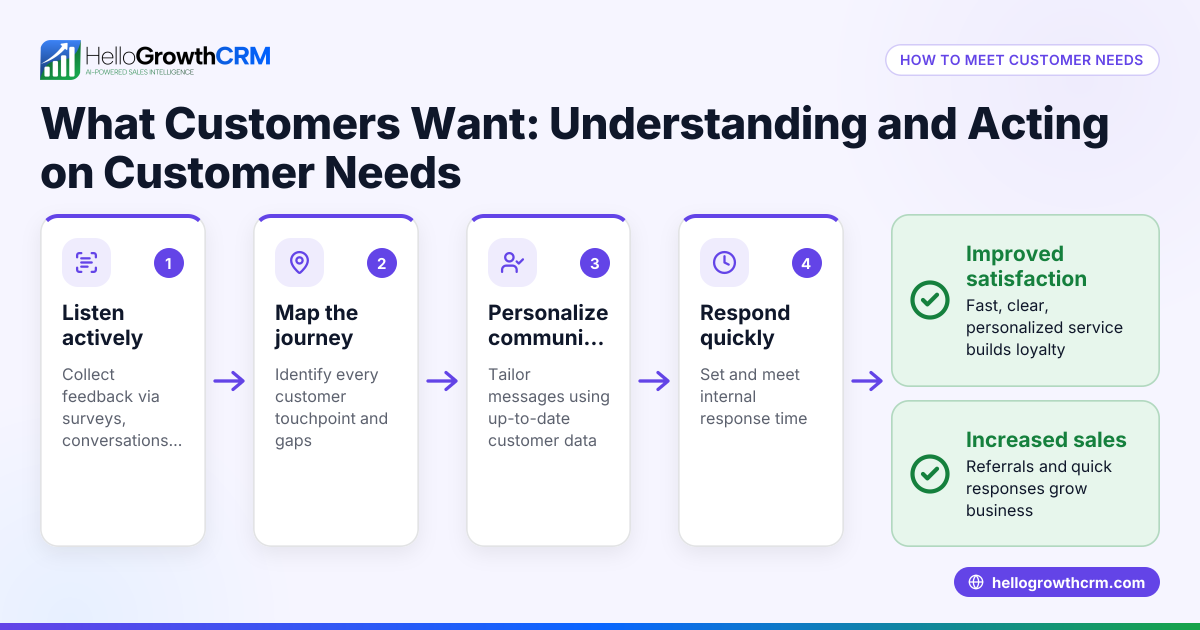
Anticipating customer needs means understanding what your customers require before they explicitly ask. It helps you provide timely solutions that improve satisfaction and loyalty. This article explains why anticipating needs matters for small businesses, offers step-by-step guidance, a practical example, common mistakes to avoid, and how HelloGrowthCRM supports this process with customer portals and linked service requests.
Why this comes up / what goes wrong
Small-business owners often find themselves reacting to customer requests rather than anticipating them. This reactive approach can cause delays in service, missed sales opportunities, and frustrated customers. For example, a landscaping business might only hear from customers when a problem arises rather than proactively offering seasonal maintenance tips or reminders. Without anticipating customer needs, businesses risk losing clients to competitors who respond faster or provide more personalized service. Additionally, managing customer requests separately from sales records can fragment information, making it harder to spot patterns or predict future needs.
Business owners may also struggle to keep track of all customer interactions when they rely on separate tools like email, spreadsheets, and text messages. This fragmentation leads to slow follow-up and lost leads. Anticipating needs requires a unified view of customer data and service history to identify opportunities for proactive outreach.
Step-by-step
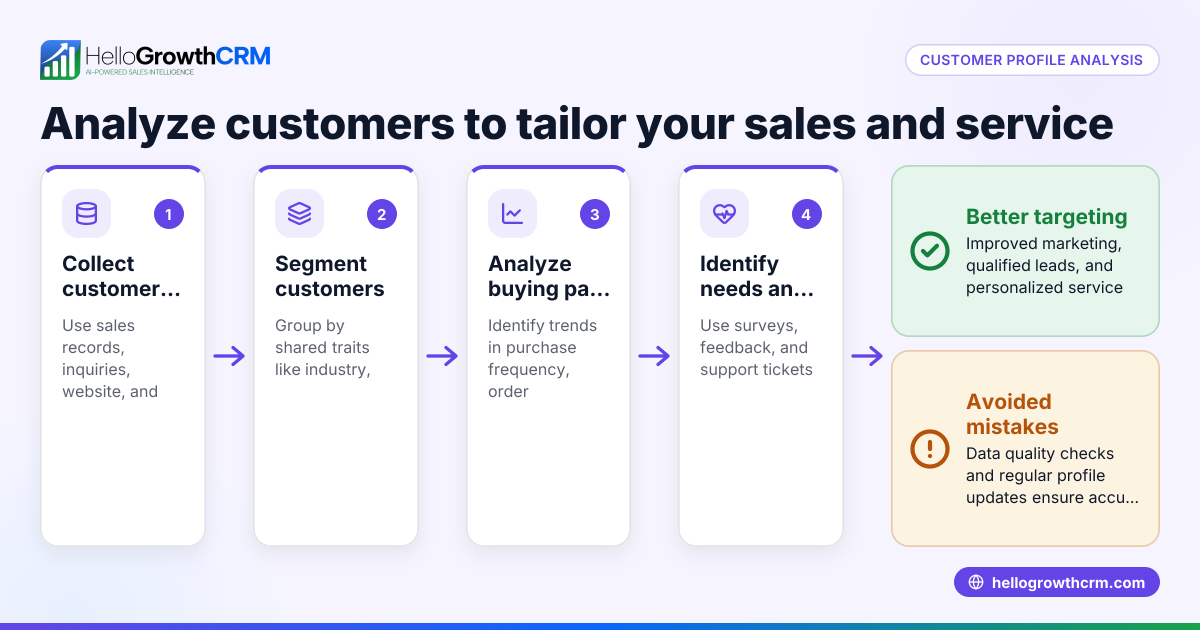
- Collect customer information consistently: Gather data from sales conversations, service requests, and customer feedback. Check for recurring questions, complaints, or requests.
- Analyze behavior and purchase patterns: Identify trends such as frequent product purchases, seasonal service demands, or repeated issues. Check if customers show preferences or common pain points.
- Segment customers into meaningful groups: Group customers by similar needs, behaviors, or demographics. Check if different segments respond better to specific communication styles or offers.
- Forecast future needs based on data and trends: Use past behavior and industry insights to predict what customers might require next. Check for upcoming product launches, service updates, or seasonal changes.
- Reach out proactively with relevant information or offers: Contact customers before they ask, with tailored messages or reminders. Check that communications are timely, clear, and personalized.
- Monitor responses and adjust your approach: Track engagement and feedback after outreach. Check if customers respond positively or if messaging needs refinement.
Using tools like a customer health score can help track customer engagement and flag when proactive contact is needed. Also, automating personalized messages through a WhatsApp and SMS CRM ensures timely follow-up without manual effort.
Example (fictional figures)
A plumbing company in Austin, Texas, wants to anticipate maintenance needs for its residential customers.
- The company has 500 active customers.
- Historical data shows 20% request drain cleaning every year.
- Average charge per drain cleaning is $150.
Step 1: Calculate expected drain cleaning demand.
500 customers × 20% = 100 customers needing drain cleaning
Step 2: Calculate potential revenue from proactive offers.
100 customers × $150 = $15,000 potential revenue
Step 3: Estimate cost of outreach campaign.
Assuming $1 per customer for communication × 500 customers = $500
Step 4: Calculate net potential revenue.
$15,000 - $500 = $14,500
By anticipating this need and contacting customers before problems occur, the company can generate $14,500 in additional revenue while improving customer satisfaction.
Common mistakes
- Ignoring customer data: Not collecting or reviewing customer interactions leads to missed signals. Prevent by scheduling regular data analysis.
- Treating all customers the same: Overgeneralizing needs causes irrelevant offers. Prevent by segmenting customers carefully.
- Delaying proactive outreach: Waiting too long reduces chances to resolve issues early. Prevent by setting reminders for timely communication.
- Focusing only on sales, not service: Neglecting support needs can hurt loyalty. Prevent by tracking service requests on the same customer record.
- Failing to measure impact: Without tracking results, you can’t improve. Prevent by monitoring engagement and adjusting strategies.
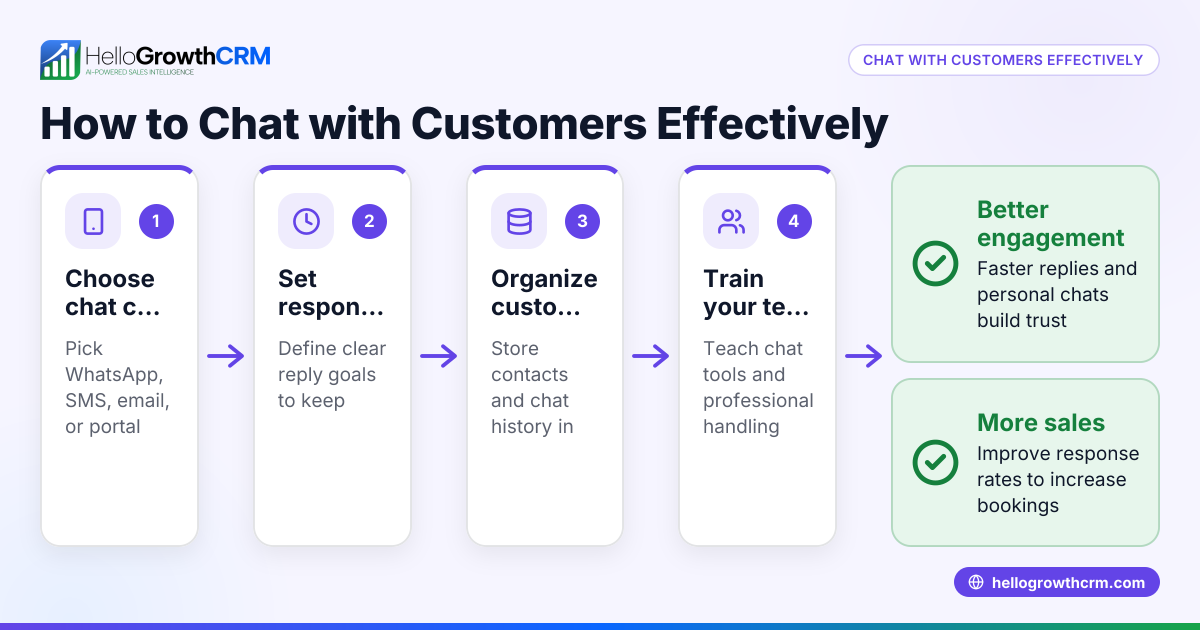
Using a WhatsApp and SMS CRM can automate timely, personalized messages and reduce follow-up delays.
Doing this in HelloGrowthCRM
HelloGrowthCRM helps small businesses anticipate customer needs by keeping service requests, referrals, tickets, and knowledge base information linked to the same customer record as the deal. Its branded self-service customer portal allows customers to submit tickets easily, while the knowledge base provides answers proactively. This integrated approach gives you a complete view of each customer’s interactions, so you can act before issues escalate. Learn more about HelloGrowthCRM for the United States here.
Frequently asked questions
How can I start anticipating customer needs without complex software? Start by collecting customer feedback and purchase data manually, then look for patterns. Simple spreadsheets can help identify common needs and timing.
What are signs that I’m not anticipating my customers’ needs well? Frequent complaints, repeated service requests for the same issues, and declining repeat sales indicate you may be reacting too late.
How often should I update my customer data? Regular updates—at least monthly—help catch new trends or changes in customer behavior early.
Can HelloGrowthCRM help with customer segmentation? Yes, it tracks customer interactions and service requests on unified records, making it easier to segment and target customers effectively.
What is the benefit of a customer portal in anticipating needs? A customer portal allows customers to submit requests and find answers independently, giving you early insight into potential issues and needs.
Key takeaways
- Anticipating customer needs means acting before customers ask for help.
- Collect and analyze customer data regularly for patterns.
- Segment customers to tailor proactive communication.
- Use timely outreach to increase revenue and satisfaction.
- Avoid common mistakes like ignoring data or waiting too long.
- Keep service requests linked to customer records for a full view.
Start anticipating your customers’ needs today to improve satisfaction and grow your business. You can start on the Free Forever plan (200 leads, no credit card) with HelloGrowthCRM.
Ready to put this into practice?
Set up your pipeline, WhatsApp follow-ups, and AI lead scoring in minutes — free, no credit card.
Try HelloGrowthCRM freeGet CRM tips in your inbox
Join thousands of sales professionals who get weekly insights on CRM strategy, AI automation, and pipeline optimization.

The HelloGrowthCRM team publishes guides on CRM strategy, AI sales tools, and revenue operations for small business sales teams.