HelloGrowthCRM software
Built for real small-business sales teams
HelloGrowthCRM helps reps qualify faster, follow up on time, and close more deals—with practical automation in one place.
- AI lead scoring and pipeline visibility
- Built-in dialer, WhatsApp, and email automation
- Sales forecasting and RevOps-ready reporting
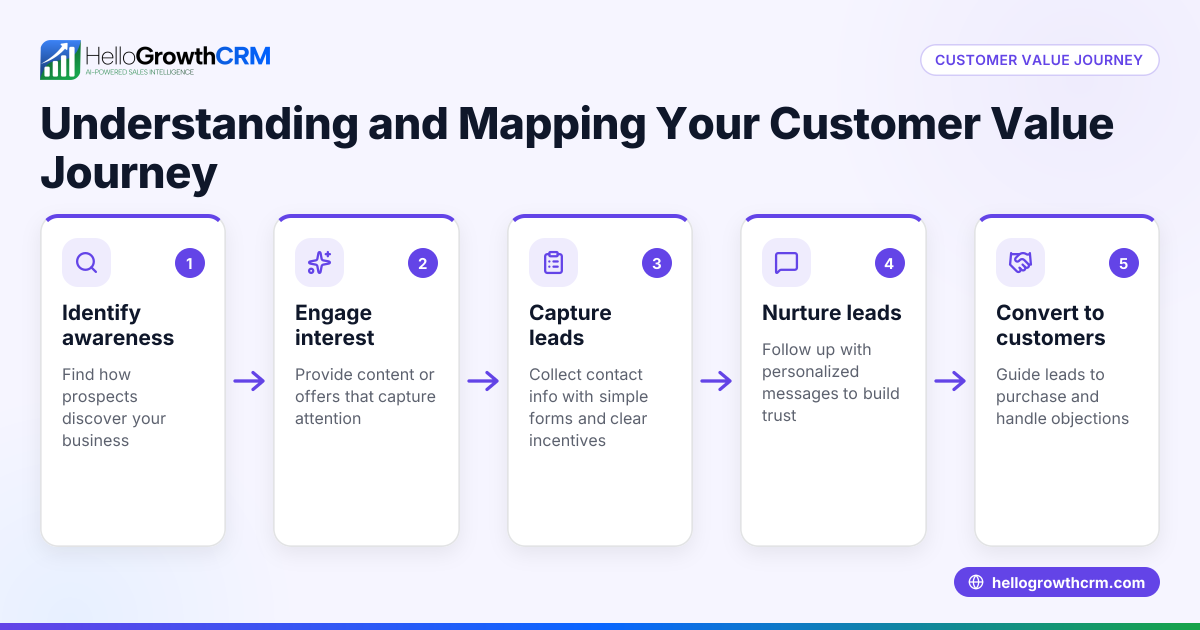
B2B customer journey mapping is a visual representation of every step a business customer takes when interacting with your company—from discovering your business, considering your offerings, making a purchase, and continuing through post-sale support. By mapping this journey, you gain insight into your customers’ needs and challenges at each stage, enabling you to tailor your sales and service processes to close deals more efficiently and keep customers satisfied.
Why this comes up / what goes wrong
Small and mid-sized businesses often face challenges in tracking their sales and service processes clearly. Leads may enter through various channels such as web forms, WhatsApp, email, or phone calls, and inconsistent or slow follow-up can cause lost opportunities. Without a clear understanding of the customer journey, it’s difficult to identify where prospects drop off or where service gaps exist after the sale. This can lead to lost revenue, unhappy customers, and wasted effort.
Mapping the B2B customer journey provides a structured view of these interactions. It helps your team coordinate efforts, assign responsibilities, and improve communication with prospects and clients. This clarity reduces lead loss and improves customer retention.
Step-by-step
- Define your customer personas: Identify your typical business customers by industry, company size, role, and needs. Check that these personas reflect your actual customers to tailor your messaging effectively.
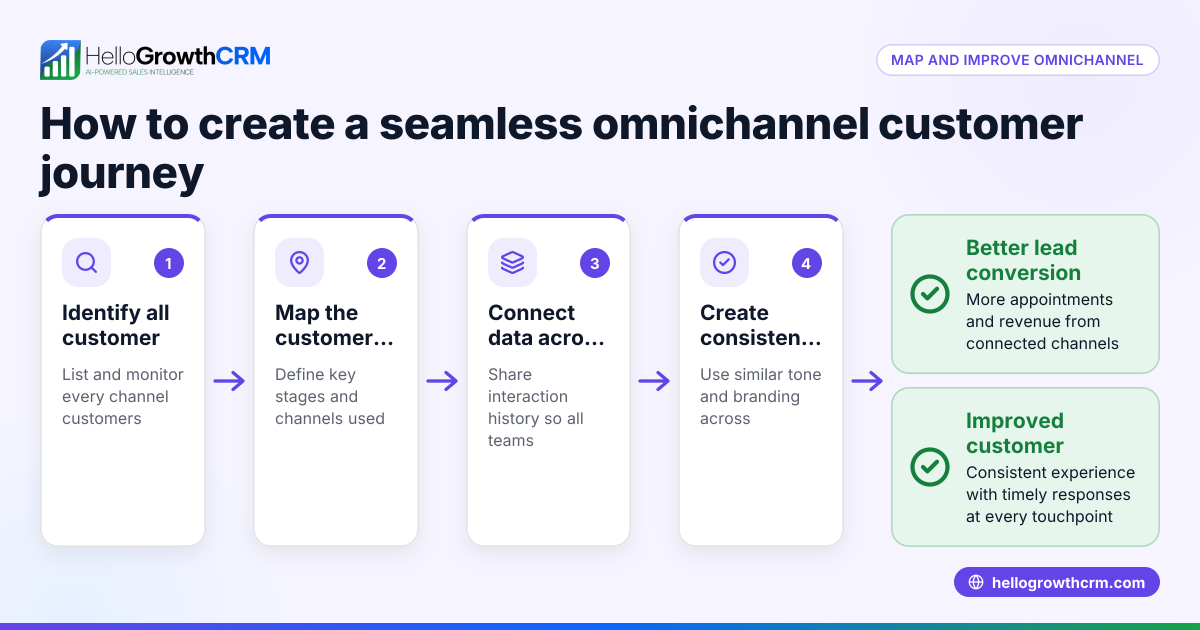
- List all customer touchpoints: Document every way customers interact with your business. Include website visits, WhatsApp messages, emails, phone calls, referrals, support tickets, and any other channels. Verify you capture both sales and post-sale service interactions.
- Map the stages of the journey: Break the journey into clear stages such as Awareness, Consideration, Decision, Purchase, and Post-Sale Support. Check that these stages match how your customers behave and make decisions.
- Identify customer goals and challenges at each stage: Understand what your customers want to achieve and what obstacles they face at every stage. Confirm your insights with customer feedback or data.
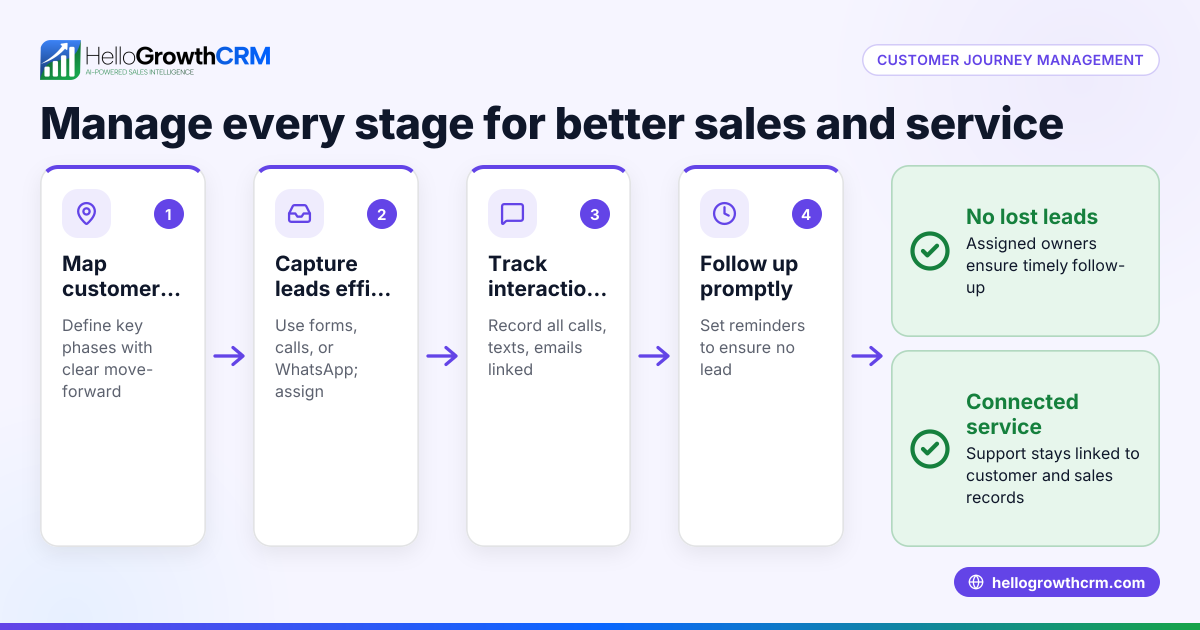
- Assign internal responsibilities: Determine which team members handle each stage or touchpoint. Clear ownership ensures consistent follow-up and communication.
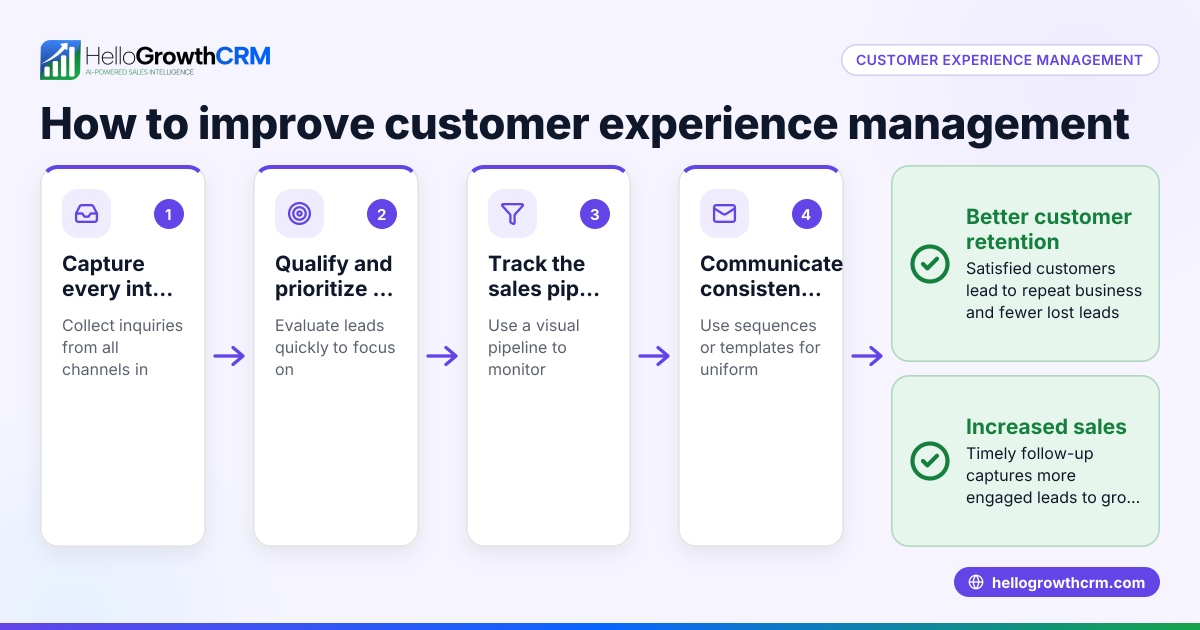
- Use tools to track and automate: Implement systems that capture leads automatically from web forms, WhatsApp, and email. Set up automated follow-ups and reminders to avoid losing leads. Check that your CRM supports these features.
- Review and update regularly: Customer behaviors and markets change. Schedule regular reviews to update your journey map based on new data or feedback.
For ongoing customer engagement, consider using a customer health score to monitor relationship strength.
Example (fictional figures)
Consider a plumbing company in Austin, Texas, "Austin Pro Plumbing," mapping its B2B journey:
- Awareness: They run Google ads and receive 500 website visits monthly.
- Consideration: 100 visitors fill out a web form requesting a quote.
- Decision: 40 leads receive personalized WhatsApp follow-ups.
- Purchase: 25 customers sign contracts averaging $5,000 each.
- Post-Sale: Service tickets are logged for maintenance and repairs.
Calculations:
Leads from web forms = 100 Conversion to contract = 25 Conversion rate = 25 ÷ 100 = 25%
Revenue from contracts = 25 × $5,000 = $125,000
Austin Pro Plumbing uses these numbers to identify that improving WhatsApp follow-up could increase contract signings and revenue.
Common mistakes
- Ignoring post-sale stages: Not mapping service and support leads to poor customer retention. Prevent this by including support tickets, referrals, and customer portal interactions in your map.
- Overcomplicating the map: Too many details make the map hard to use. Keep it focused on key stages and touchpoints.
- Not assigning responsibilities: Without clear owners for each stage, leads slip through cracks. Assign team members explicitly.
- Failing to update the map regularly: Markets and customer behaviors evolve. Schedule periodic reviews.
- Using separate tools for sales and support: Fragmented data causes lost context. Use a CRM that keeps all interactions on one customer record.
HelloGrowthCRM’s WhatsApp and SMS CRM helps unify communication channels and keeps your customer data in one place.
Doing this in HelloGrowthCRM
HelloGrowthCRM supports B2B customer journey mapping by keeping all service requests, referrals, tickets, and knowledge base entries on the same customer record as the deal. Its branded self-service customer portal streamlines post-sale support, making it easier to track customer needs and improve satisfaction. This integration helps your team manage the entire journey from lead capture to ongoing service without losing context.
Frequently asked questions
What is the difference between B2B and B2C customer journey mapping? B2B customer journeys usually involve multiple decision-makers, longer sales cycles, and more complex touchpoints than B2C. Mapping B2B journeys focuses on business needs, procurement processes, and relationship management.
How often should I update my customer journey map? Review your map at least quarterly or whenever you notice significant changes in customer behavior, sales processes, or market conditions.
Can small businesses benefit from customer journey mapping? Yes. Even small teams gain clarity on sales and service workflows, helping prevent lost leads and improve customer satisfaction.
What tools can help with journey mapping? Many CRMs offer lead capture, communication tracking, and service ticketing. HelloGrowthCRM consolidates these on one platform, including WhatsApp and SMS channels.
How does customer journey mapping improve sales forecasting? By understanding each stage and conversion rates, you can better predict revenue and allocate resources more effectively.
Key takeaways
- B2B customer journey mapping visualizes every step your business customers take.
- Mapping reveals pain points and opportunities to improve sales and service.
- Clear stages, assigned responsibilities, and regular updates keep your map effective.
- Integrating sales and support data in one CRM prevents lost leads and improves customer experience.
- HelloGrowthCRM helps manage the entire journey with unified customer records and service tools.
Start improving your sales process today by mapping your B2B customer journey. Start on the Free Forever plan (200 leads, no credit card).
Ready to put this into practice?
Set up your pipeline, WhatsApp follow-ups, and AI lead scoring in minutes — free, no credit card.
Try HelloGrowthCRM freeGet CRM tips in your inbox
Join thousands of sales professionals who get weekly insights on CRM strategy, AI automation, and pipeline optimization.

The HelloGrowthCRM team publishes guides on CRM strategy, AI sales tools, and revenue operations for small business sales teams.